How the 2023 Tax Brackets Calculator Shapes Your Financial Strategy
Table of Contents
- The Complete Overview of the 2023 Tax Brackets Calculator
- Historical Background and Evolution
- Core Mechanisms: How It Works
- Key Benefits and Crucial Impact
- Major Advantages
- Comparative Analysis
- Future Trends and Innovations
- Conclusion
- Comprehensive FAQs
- Q: How do I use the 2023 tax brackets calculator to estimate my refund?
- Q: Why did my 2023 tax bill increase even though my salary stayed the same?
- Q: Can I lower my 2023 taxable income by contributing to a retirement account?
- Q: How do phase-outs affect my deductions in the 2023 tax brackets calculator?
- Q: What’s the difference between the 2023 tax brackets calculator and a tax estimator?
- Q: Are there any last-minute moves I can make in December 2023 to reduce my 2023 tax bill?
Taxes are the silent architect of financial freedom—or financial frustration. For millions of Americans, the 2023 tax brackets calculator became the difference between a refund check and an unexpected bill, especially after years of inflation-driven wage stagnation. The IRS’s progressive system, designed to balance fairness and fiscal responsibility, doesn’t just determine what you owe—it dictates how much you keep, invest, or save. Yet, despite its ubiquity, the calculator remains misunderstood, often reduced to a checkbox in tax software or a last-minute calculation before filing. The truth is more nuanced: it’s a dynamic tool that responds to legislative tweaks, economic shifts, and personal financial maneuvers. Whether you’re a freelancer adjusting quarterly estimates or a homeowner deducting mortgage interest, mastering the 2023 tax brackets calculator isn’t just about compliance—it’s about reclaiming control over your financial narrative.
The 2023 tax season arrived with a twist: after years of pandemic-era relief, the IRS reverted to pre-2020 brackets for standard deductions, but inflation adjustments quietly eroded the value of those thresholds. A single filer earning $50,000 in 2022 might have paid taxes at one rate, only to face a higher effective rate in 2023 due to cost-of-living increases. This wasn’t a glitch—it was the calculator doing its job, forcing taxpayers to recalibrate deductions, credits, and withholding. Meanwhile, the child tax credit’s partial expiration and the return of state and local tax (SALT) deductions added layers of complexity. The result? A system where precision in the 2023 tax brackets calculator could mean the difference between a $500 refund and a $1,000 liability. For businesses, the calculator’s interplay with quarterly estimated taxes and payroll withholding became a high-stakes game of predicting cash flow.
The stakes were never higher. With the IRS processing over 160 million returns annually, the 2023 tax brackets calculator served as the backbone of a $4.1 trillion revenue system—yet its inner workings remain opaque to most. How does it adjust for inflation? Why do married couples filing jointly see different thresholds than single filers? And how do phase-outs for deductions like the mortgage interest or student loan interest actually function? These questions aren’t just academic; they directly impact how much you pay, when you pay, and what strategies you might employ to minimize your burden. The calculator isn’t static—it’s a reflection of tax policy, economic conditions, and individual circumstances. Ignoring its intricacies could cost you thousands, while leveraging it effectively could unlock savings you didn’t know were possible.
The Complete Overview of the 2023 Tax Brackets Calculator
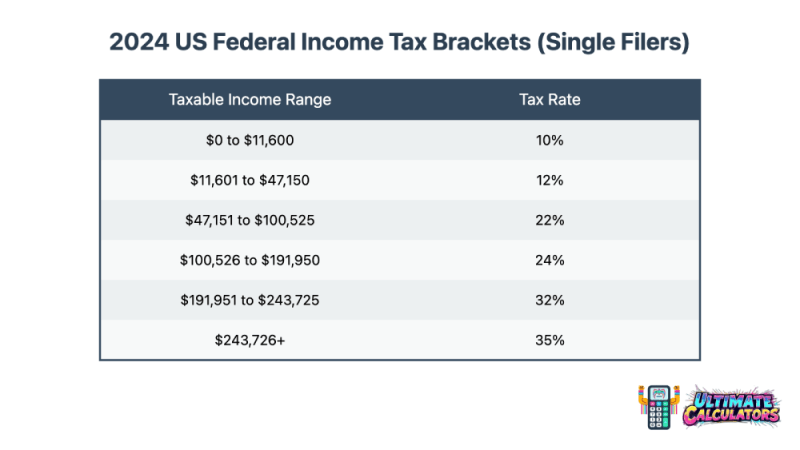
The 2023 tax brackets calculator operates as a tiered system where income is divided into segments, each taxed at an increasing rate. This isn’t a flat tax—it’s a progressive model where higher earners pay proportionally more, but the rates apply only to the income within each bracket. For instance, a single filer earning $75,000 in 2023 might pay 10% on the first $11,000, 12% on the next $39,475, and 22% on the remaining $24,525—not 22% on the entire amount. The calculator’s magic lies in this marginal rate structure, which ensures that only the income exceeding each threshold is taxed at the higher rate. This design incentivizes work and investment while distributing the tax load based on ability to pay. However, the calculator’s effectiveness hinges on accurate input: misreporting deductions, credits, or filing status can skew results, leading to overpayments or audits.What makes the 2023 iteration distinct is the interplay between inflation adjustments and legislative changes. The IRS annually indexes brackets for inflation, but the 2023 update was particularly significant due to a 6.5% cost-of-living increase—the highest since 1982. This meant that the threshold for the 24% bracket jumped from $95,375 to $100,525 for single filers, while the top 37% bracket kicked in at $578,125 instead of $539,900. Yet, these adjustments didn’t fully offset inflation’s bite on everyday expenses, leaving many taxpayers in a higher effective tax bracket than they anticipated. The calculator also reflected the expiration of pandemic-era provisions, such as the expanded child tax credit and above-the-line deduction for college tuition. For taxpayers accustomed to these benefits, the shift required a recalibration of expectations—and a closer look at how the calculator’s underlying formulas now applied to their situation.
Historical Background and Evolution
The modern tax brackets calculator traces its roots to the Revenue Act of 1913, which established the first federal income tax in the U.S. Initially, the system was flat—every dollar earned was taxed at the same rate—but by the 1930s, progressive brackets emerged as a response to the Great Depression. The goal was to redistribute wealth while maintaining economic growth, a balance that still defines the calculator’s purpose today. Over the decades, the number of brackets has fluctuated: in the 1950s, there were 21; by the 1980s, Ronald Reagan’s Tax Reform Act reduced them to two. The current seven-bracket structure was solidified in the 1990s, with rates ranging from 10% to 37%. Each iteration of the calculator has been shaped by political priorities—whether it’s stimulus packages during recessions or tax cuts aimed at spurring investment.The 2023 tax brackets calculator is a product of these evolutionary pressures, but it also reflects the IRS’s ongoing battle with complexity. The Affordable Care Act’s individual mandate penalty, for example, temporarily added a 0.9% Medicare surtax for high earners, while the Tax Cuts and Jobs Act of 2017 nearly doubled the standard deduction, altering how the calculator interacted with itemized deductions. The 2023 version also incorporated lessons from the COVID-19 pandemic, where remote work blurred state tax lines and stimulus checks temporarily suppressed taxable income. Historically, the calculator has been a tool of economic management—during World War II, rates topped 94% to fund the war effort, while the 1980s saw a shift toward lower rates to encourage business growth. Today, the calculator remains a policy instrument, but its real-world impact is felt most acutely by individuals navigating its brackets, deductions, and credits.
Core Mechanisms: How It Works
At its core, the 2023 tax brackets calculator functions by applying marginal tax rates to incremental portions of income. For a single filer, the first $11,000 is taxed at 10%, the next $39,475 at 12%, and so on, up to the top 37% bracket. This isn’t additive—only the income within each bracket is taxed at that rate. For example, a filer earning $80,000 pays:The calculator also accounts for filing status—married couples filing jointly have wider brackets, while heads of household fall somewhere in between. This structure ensures that two identical earners pay less if they file jointly, a feature designed to incentivize marriage and family formation.
Beyond brackets, the calculator integrates deductions, credits, and phase-outs. Standard deductions (e.g., $13,850 for single filers in 2023) reduce taxable income upfront, while itemized deductions (mortgage interest, charitable donations) offer alternatives. Credits, such as the Earned Income Tax Credit (EITC) or Child Tax Credit (up to $2,000 per child in 2023), directly reduce tax liability dollar-for-dollar. Phase-outs add another layer: deductions like student loan interest or medical expenses vanish entirely once income exceeds certain thresholds. The calculator’s precision lies in these interactions—where a $10,000 deduction might drop you into a lower bracket, or a credit could eliminate tax owed entirely. Missteps here can lead to overpayments or missed savings opportunities, making the calculator’s mechanics as much an art as a science.
Key Benefits and Crucial Impact
The 2023 tax brackets calculator isn’t just a compliance tool—it’s a financial lever that can amplify savings, investments, or charitable giving. For small business owners, it determines whether quarterly estimated taxes should be adjusted upward or downward based on projected income. For retirees, it dictates how much of Social Security benefits become taxable, potentially altering withdrawal strategies from IRAs or 401(k)s. Even for average earners, the calculator’s brackets and deductions can mean the difference between a modest refund and a windfall. The IRS estimates that nearly 70% of taxpayers itemize deductions or claim credits, making the calculator’s accuracy critical to their financial health. Yet, its impact extends beyond individual filers: businesses use it to optimize payroll withholding, while policymakers rely on it to model revenue projections and economic stimulus.The calculator’s influence is also cultural. It shapes how Americans view work, savings, and civic responsibility. A teacher deducting classroom supplies might see the calculator as a tool for reinvestment in their profession, while a freelancer uses it to justify higher quarterly payments. For nonprofits, the charitable deduction’s interaction with the calculator drives donor behavior—knowing that a $10,000 donation could push them into a higher bracket might incentivize larger gifts. Even the political debate over tax reform hinges on how the calculator’s brackets and rates affect different income groups. In this sense, the 2023 tax brackets calculator is more than a spreadsheet—it’s a reflection of societal values, economic priorities, and the delicate balance between individual freedom and collective responsibility.
"Taxes are the price we pay for a civilized society." — Oliver Wendell Holmes Jr.
Yet, the 2023 tax brackets calculator reveals that the price isn’t fixed—it’s negotiated through deductions, credits, and the strategic use of the progressive system. The challenge isn’t avoiding taxes entirely, but optimizing how much you pay, when, and in what form.
Major Advantages
- Precision Tax Planning: The calculator allows taxpayers to simulate different scenarios—such as adjusting withholding, timing income, or claiming deductions—to minimize liability. For example, a freelancer might defer income to 2024 to stay in a lower bracket, while a homeowner might bundle repairs into a single year to maximize deductions.
- Inflation Protection: Annual adjustments to brackets ensure that taxpayers aren’t pushed into higher rates solely due to rising costs. Without these adjustments, a $5,000 raise could catapult someone into a new bracket, increasing their effective tax rate.
- Targeted Relief: Credits like the EITC or Child Tax Credit provide direct financial support to low- and middle-income families, using the calculator’s structure to deliver aid where it’s needed most.
- Business Optimization: Employers and self-employed individuals use the calculator to fine-tune payroll withholding, ensuring they neither overpay nor face penalties for underpayment of estimated taxes.
- Policy Flexibility: Governments can adjust brackets, deductions, or credits to achieve economic goals—whether stimulating growth, funding social programs, or addressing inequality—without overhauling the entire system.
Comparative Analysis
| 2023 Tax Brackets Calculator | 2022 Tax Brackets Calculator |
|---|---|
| Standard deduction: $13,850 (single), $27,700 (married) | Standard deduction: $12,950 (single), $25,900 (married) |
| Top bracket threshold: $578,125 (single), $693,750 (married) | Top bracket threshold: $539,900 (single), $647,850 (married) |
| Child Tax Credit: $2,000 per child (no refundability for most) | Child Tax Credit: $3,600 per child (fully refundable for 2021) |
| Inflation adjustment: +6.5% (highest since 1982) | Inflation adjustment: +5.4% |

Future Trends and Innovations
The 2023 tax brackets calculator is already evolving, with trends pointing toward greater personalization and automation. The IRS’s push for real-time tax calculation—where withholding is adjusted dynamically based on income changes—could render annual filing obsolete for many taxpayers. Advances in AI-driven tax software are also making the calculator more accessible, with tools that auto-populate deductions and flag potential errors. However, these innovations raise privacy concerns: if algorithms predict taxable income with high accuracy, could they also become targets for audits or data breaches? Meanwhile, global remote work is forcing states to reconcile conflicting tax laws, with some adopting "convenience of the employer" rules to tax nonresidents.Legislatively, the calculator’s future may hinge on bipartisan tax reform. Proposals to simplify brackets, eliminate certain deductions, or introduce a consumption tax could reshape how the calculator functions. The rise of gig economy income—where freelancers and contractors navigate complex classification rules—will also demand updates to how the calculator handles self-employment taxes. For taxpayers, the key takeaway is adaptability: the 2023 version may be the last they recognize. As technology and policy converge, the calculator could shift from a static tool to a dynamic, always-on system—one that learns from individual behavior and economic trends. The challenge will be ensuring it remains fair, transparent, and responsive to the needs of a rapidly changing workforce.
Conclusion
The 2023 tax brackets calculator is more than a line item in tax software—it’s a reflection of America’s economic priorities and a critical tool for financial strategy. Its brackets, deductions, and credits don’t just determine how much you owe; they shape decisions about saving, spending, and investing. For the self-employed, it’s a quarterly planning tool; for families, it’s a gateway to credits that ease the cost of raising children; for businesses, it’s a factor in payroll and expansion. Understanding its mechanics isn’t just about compliance—it’s about leveraging the system to your advantage. Yet, the calculator’s complexity also underscores the need for vigilance: a small misstep in reporting income or claiming deductions can have outsized consequences. As the IRS continues to refine its methods and technology reshapes how we interact with taxes, the calculator will remain a cornerstone of financial literacy.The lesson of 2023 is clear: the calculator rewards those who engage with it proactively. Whether you’re adjusting withholding, timing deductions, or exploring credits, the effort invested in mastering the 2023 tax brackets calculator pays dividends in saved dollars and financial clarity. In an era of economic uncertainty, that clarity is power—and the calculator is your most potent tool to wield it.
Comprehensive FAQs
Q: How do I use the 2023 tax brackets calculator to estimate my refund?
Start by gathering your total income (W-2s, 1099s, etc.), deductions (standard or itemized), and credits. Input these into the calculator, which will apply the progressive rates to your taxable income. Subtract your total tax from your withheld payments to estimate your refund. For example, if you owe $8,000 but had $10,000 withheld, you’d expect a $2,000 refund. Tools like the IRS’s Tax Withholding Estimator can automate this process.
Q: Why did my 2023 tax bill increase even though my salary stayed the same?
Several factors could cause this: inflation-adjusted brackets may have pushed you into a higher marginal rate, deductions or credits may have phased out, or changes to withholding tables (e.g., post-2017 tax law) could mean less was deducted from paychecks. For instance, if you’re a single filer earning $80,000, the 2023 brackets might have moved you into the 22% rate, whereas 2022’s lower threshold kept you in the 22% bracket but with a smaller taxable portion.
Q: Can I lower my 2023 taxable income by contributing to a retirement account?
Yes. Contributions to traditional IRAs or 401(k)s reduce taxable income dollar-for-dollar. For 2023, the contribution limit for 401(k)s is $22,500 ($30,000 if age 50+), while IRAs cap at $6,500 ($7,500 for 50+). For example, a $10,000 IRA contribution could drop your taxable income by $10,000, potentially shifting you into a lower bracket and reducing your tax liability.
Q: How do phase-outs affect my deductions in the 2023 tax brackets calculator?
Phase-outs reduce or eliminate deductions as income rises. For 2023, the mortgage interest deduction phases out for single filers earning over $730,000 (or $730,000 for married couples). Similarly, student loan interest deductions vanish entirely at $85,000 (single) or $170,000 (married). The calculator accounts for these by gradually reducing the deduction’s value until it’s zero. For example, if your income exceeds the threshold by $10,000, your mortgage interest deduction might be cut by $1,000.
Q: What’s the difference between the 2023 tax brackets calculator and a tax estimator?
A tax brackets calculator applies marginal rates to income segments, while a tax estimator (like the IRS’s Free File Tool) provides a broader projection of your total tax liability, including deductions, credits, and prior-year adjustments. The calculator is a component of the estimator—think of it as the engine, while the estimator is the full dashboard. For precise planning, use both: the calculator to understand bracket impacts and the estimator to see the big picture.
Q: Are there any last-minute moves I can make in December 2023 to reduce my 2023 tax bill?
Yes. Consider these strategies:
- Bunch deductions (e.g., donate to charity, prepay medical bills) to exceed the standard deduction threshold.
- Harvest investment losses to offset capital gains.
- Max out retirement contributions (IRA, HSA) before the deadline.
- Adjust withholding if you’re owed a large refund (or owe a bill).
Leave a Comment
Comments are moderated before appearing. The data you submit is processed according to the Privacy Policy of versiliasolutions.oneagency.co.