The Rise of Apps for Instant Money: How Digital Solutions Are Redefining Financial Access
Table of Contents
- The Complete Overview of Apps for Instant Money
- Historical Background and Evolution
- Core Mechanisms: How It Works
- Key Benefits and Crucial Impact
- Major Advantages
- Comparative Analysis
- Future Trends and Innovations
- Conclusion
- Comprehensive FAQs
- Q: Are apps for instant money safe to use?
- Q: Can I get an instant loan with bad credit?
- Q: How do I avoid fees with instant money apps ?
- Q: What’s the difference between a cash advance app and a payday loan?
- Q: Can I use instant money apps internationally?
- Q: What happens if I can’t repay an instant loan?
- Q: Are there instant money apps for business expenses?
- Q: How do instant money apps make money?
The global shift toward digital-first financial solutions has made apps for instant money a cornerstone of modern personal finance. These platforms—ranging from cash advance services to instant loan providers—have dismantled traditional barriers, offering users immediate access to funds without the bureaucratic delays of conventional banking. The appeal lies in their speed: approvals in minutes, disbursements in hours, and minimal documentation. Yet beneath the convenience lies a complex ecosystem of algorithms, credit risk assessments, and regulatory landscapes that dictate who qualifies and at what cost.
For millions, these tools represent a lifeline. Gig workers, freelancers, and individuals facing unexpected expenses no longer rely on payday lenders with predatory interest rates. Instead, they turn to instant money apps that leverage AI-driven underwriting, open banking integrations, and micro-loan structures to deliver liquidity with relative transparency. The catch? Not all solutions are created equal. Some prioritize speed over affordability, while others embed hidden fees in their "instant" promises. Navigating this terrain requires understanding the mechanics, the trade-offs, and the evolving role of technology in reshaping financial inclusion.
The proliferation of apps for instant money mirrors broader fintech trends: the erosion of physical branches, the rise of embedded finance, and the blurring lines between banking and lifestyle services. What began as a niche offering for emergencies has expanded into a multi-billion-dollar industry, with startups and legacy institutions racing to refine their models. But as convenience grows, so do concerns—about debt cycles, data privacy, and the long-term sustainability of instant-gratification finance. The question isn’t whether these tools will persist, but how they’ll evolve to balance accessibility with responsibility.
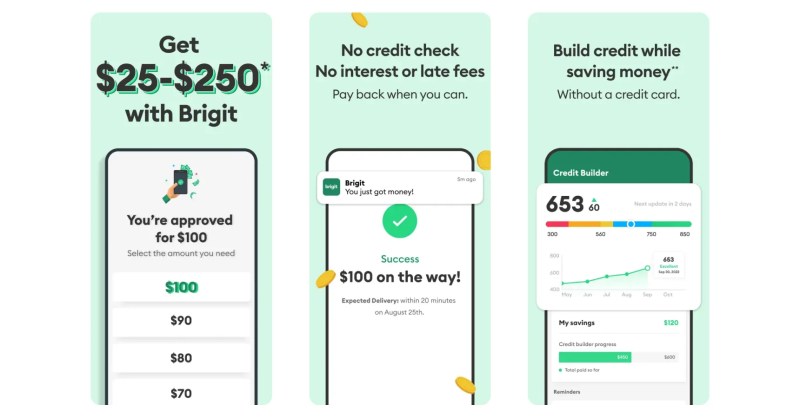
The Complete Overview of Apps for Instant Money
The term "apps for instant money" encompasses a broad spectrum of digital financial tools designed to provide rapid access to capital. At its core, the concept revolves around bypassing traditional lending processes—where credit checks, collateral, and manual reviews can take days or weeks—to deliver funds within hours, often via mobile wallets or direct deposits. These solutions cater to diverse needs: from covering a $200 utility bill to funding a $5,000 emergency car repair. The unifying factor is immediacy, achieved through technological innovations like real-time bank verification, alternative credit scoring (e.g., rent or utility payment history), and automated underwriting.The market’s fragmentation reflects its adaptability. Some instant money apps operate as standalone platforms (e.g., Earnin, Dave), while others integrate with existing financial infrastructure (e.g., Chime’s early access to paychecks or Revolut’s instant top-ups). Regulatory environments further segment the landscape: in the U.S., platforms like Cash App or Venmo leverage payment networks for peer-to-peer transfers, whereas in Europe, open banking APIs enable instant loans from neobanks. The result is a patchwork of offerings, each tailored to local consumer behavior, legal frameworks, and technological maturity.
Historical Background and Evolution
The origins of apps for instant money trace back to the early 2010s, when mobile banking gained traction and fintech startups began experimenting with alternative lending models. Traditional payday lenders, known for exorbitant interest rates (often exceeding 300% APR), dominated the space until digital disruptors introduced lower-cost, data-driven alternatives. Earnin, launched in 2014, pioneered the "advance wage" model, allowing employees to access portions of their earned (but not yet paid) salaries—effectively turning payroll into a liquid asset. This innovation sidestepped usury laws by framing advances as "earned wages" rather than loans, a legal distinction that became a blueprint for the industry.The next wave arrived with the rise of instant money apps that decoupled funding from employment status. Platforms like Dave (2016) and Brigit (2017) introduced overdraft protection and cash advances backed by subscriptions or tip-based revenue models, reducing reliance on interest income. Meanwhile, neobanks such as N26 and Monzo embedded instant top-up features, leveraging open banking to pull funds from linked accounts. The COVID-19 pandemic accelerated adoption, as lockdowns and economic uncertainty drove demand for quick, no-questions-asked liquidity. Governments and regulators responded with guidelines—such as the UK’s FCA crackdown on high-cost short-term credit—to curb predatory practices, forcing instant money apps to prioritize affordability alongside speed.
Core Mechanisms: How It Works
The functionality of apps for instant money hinges on three pillars: real-time data verification, automated risk assessment, and instant disbursement channels. When a user requests funds, the app typically requires minimal input—often just a bank account connection (via Plaid or similar APIs) and basic personal details. Advanced platforms may also pull transaction history to gauge spending patterns or cross-reference with alternative credit bureaus (e.g., Experian Boost for utility payments). This data feeds into an AI model that determines eligibility and loan terms within seconds, eliminating the need for manual underwriting.Disbursement speed varies by platform and region. In the U.S., apps like MoneyLion or Albert use ACH transfers for same-day deposits, while European solutions like Tinkoff or N26 may rely on SEPA instant payments (available 24/7). Some services, such as Chime’s SpotMe, offer overdraft protection tied to direct deposit schedules, ensuring users don’t overdraw without triggering fees. The trade-off? Fees or interest rates may apply if repayment isn’t automated. For example, Earnin’s "tipping" system incentivizes users to contribute voluntarily, while Dave charges a $1 monthly fee with optional paid subscriptions for larger advances. The mechanics thus reflect a delicate balance between user experience, regulatory compliance, and profitability.
Key Benefits and Crucial Impact
The primary allure of apps for instant money lies in their ability to democratize access to capital. For the unbanked or underbanked—groups disproportionately affected by financial exclusion—these tools bridge gaps left by traditional institutions. A 2023 Federal Reserve study found that 5.4% of U.S. households were unbanked, often due to credit score barriers or lack of documentation. Instant money apps mitigate these hurdles by focusing on cash flow rather than creditworthiness, enabling users to qualify based on income verification alone. This shift has particular relevance for gig economy workers, whose irregular paychecks make them ineligible for conventional loans.Beyond accessibility, these platforms introduce operational efficiencies that benefit both consumers and businesses. For users, the elimination of paperwork and in-person visits reduces friction, while for lenders, automated systems lower overhead costs. The environmental impact is also notable: digital transactions require fewer physical resources than traditional lending, aligning with sustainability goals. However, the benefits are not universally distributed. Critics argue that the convenience of instant funds can mask the risks of overborrowing, particularly for users with poor financial literacy or unstable incomes.
> "Instant money apps are a double-edged sword: they empower individuals to navigate financial emergencies but also risk normalizing debt as a default solution. The challenge for the industry is to design products that provide liquidity without perpetuating cycles of dependency." — Dr. Meghan McCoy, Financial Inclusion Researcher, Harvard Business School
Major Advantages
- Speed and Convenience: Approvals and disbursements occur within minutes to hours, often via mobile apps without leaving home. Unlike bank loans requiring branch visits or paperwork, instant money apps streamline the process to a few taps.
- Lower Barriers to Entry: Many platforms only require proof of income (e.g., pay stubs, bank statements) or employment verification, making them accessible to gig workers, students, and those with thin credit files.
- Transparency in Fees: Reputable instant money apps disclose all costs upfront—whether through flat fees (e.g., $5 for a $100 advance) or interest rates (e.g., 10% monthly for short-term loans). This contrasts with payday lenders that bury fees in fine print.
- Financial Literacy Tools: Leading platforms integrate budgeting features, spending insights, or repayment planning to help users avoid debt traps. For example, Dave offers free credit score monitoring alongside its cash advance service.
- Regulatory Safeguards: In regions with strict fintech oversight (e.g., the EU’s PSD2 or the U.S. CFPB guidelines), instant money apps must adhere to consumer protection laws, limiting predatory practices like mandatory rollovers or hidden penalties.
Comparative Analysis
| Feature | Instant Money Apps (e.g., Earnin, Dave) | Traditional Payday Lenders | Neobank Overdrafts (e.g., Chime, Revolut) |
|---|---|---|---|
| Approval Time | Instant to 1 hour (via app) | 15–60 minutes (in-store or online) | Same-day (linked to direct deposits) |
| Interest/Rates | $0–$10 flat fee or tip-based; no interest | 300–700% APR (equivalent to $15–$30 per $100 for 2 weeks) | 0% if repaid by next payday; otherwise, $5–$20 fee |
| Eligibility Requirements | Income verification (pay stubs, bank statements) | Active bank account + ID (credit score often ignored) | Direct deposit setup + account age (e.g., 30+ days) |
| Repayment Terms | Flexible (e.g., pay back over 2–4 pay cycles) | Full repayment due on next payday | Automatic deduction from next deposit |

Future Trends and Innovations
The next frontier for apps for instant money lies in embedded finance—the integration of lending features into non-financial platforms. Imagine ordering groceries on Instacart and opting for an instant $50 credit applied to your cart, or booking a flight on Skyscanner with a "pay later" option tied to your bank account. Companies like Affirm and Klarna are already embedding buy-now-pay-later (BNPL) tools into e-commerce, but the evolution will extend to utilities, healthcare, and even social media. For example, a user might receive an instant loan offer when their phone bill is about to be cut off, with repayment linked to their next paycheck.Another transformative trend is decentralized instant money via blockchain and stablecoins. Projects like Goldfinch (a decentralized credit protocol) or MakerDAO’s DAI stablecoin enable peer-to-peer lending without intermediaries, reducing costs and increasing speed. While regulatory hurdles remain, these innovations could democratize access further, particularly in regions with weak banking infrastructure. Additionally, AI will play a larger role in dynamic pricing—adjusting loan terms in real time based on macroeconomic data, user behavior, or even weather patterns (e.g., offering higher limits during natural disasters). The goal is to make instant money apps not just reactive tools for emergencies, but predictive financial assistants that anticipate needs before they arise.
Conclusion
The rise of apps for instant money represents a paradigm shift in how society accesses liquidity. What began as a niche solution for payday borrowers has matured into a mainstream financial utility, reshaping consumer expectations around speed, transparency, and inclusivity. Yet the industry’s growth is not without challenges. The tension between convenience and responsibility persists, as the ease of instant funds can obscure the long-term costs of debt. Regulators, fintech firms, and consumers must collaborate to ensure these tools serve as bridges—not traps—into sustainable financial health.The future of instant money apps will be defined by their ability to innovate responsibly. As embedded finance and decentralized models gain traction, the line between borrowing and spending will blur further. For users, the key will be to leverage these tools judiciously, treating them as what they are: temporary solutions for genuine needs, not substitutes for disciplined savings or long-term planning. In an era where financial technology moves faster than ever, the onus is on both providers and users to navigate this landscape with clarity and caution.
Comprehensive FAQs
Q: Are apps for instant money safe to use?
A: Reputable instant money apps prioritize security with encryption, biometric authentication, and regulatory compliance (e.g., GDPR, CFPB). However, risks include data breaches, hidden fees, or debt cycles if overused. Always review terms, check for licenses (e.g., state money transmitter permits in the U.S.), and avoid platforms with no transparency on costs.
Q: Can I get an instant loan with bad credit?
A: Many instant money apps focus on income verification rather than credit scores, making them viable for users with poor or no credit. Platforms like Earnin or Dave typically only require proof of employment or bank activity. However, traditional lenders (e.g., credit cards) may still deny applications based on credit history.
Q: How do I avoid fees with instant money apps?
A: Opt for apps with flat fees (e.g., $5 for a $100 advance) over interest-based models. Some, like Chime, offer fee-free overdrafts if you meet direct deposit requirements. Others, such as Earnin, use a voluntary tipping system. Always compare platforms and read the fine print for repayment terms.
Q: What’s the difference between a cash advance app and a payday loan?
A: Cash advance apps (e.g., Earnin) typically provide funds based on earned but unpaid wages, avoiding usury laws by framing them as advances. Payday loans, meanwhile, are short-term, high-interest loans due on your next payday, often with APRs exceeding 300%. Cash advance apps usually have lower costs and no mandatory repayment dates.
Q: Can I use instant money apps internationally?
A: Most instant money apps are region-specific due to regulatory differences. For example, Dave operates in the U.S., while European alternatives like N26 or Monzo serve local markets. Some platforms (e.g., Revolut) offer cross-border instant transfers, but cash advances or loans may require local residency or bank accounts.
Q: What happens if I can’t repay an instant loan?
A: Policies vary by app. Some, like Dave, offer extensions or fee waivers if you contact customer support. Others may report late payments to credit bureaus or impose penalties. Always clarify repayment terms before borrowing. If you’re struggling, explore local financial aid programs or credit counseling services.
Q: Are there instant money apps for business expenses?
A: Yes, but they’re less common. Platforms like Kabbage or Fundbox offer instant business lines of credit based on revenue or bank transactions. Alternatively, some instant money apps (e.g., PayPal Working Capital) provide merchant cash advances tied to sales data. These typically require a business bank account and may have higher costs than consumer-focused tools.
Q: How do instant money apps make money?
A: Revenue models include:
- Subscription fees (e.g., Dave’s $4/month tier)
- Flat transaction fees (e.g., $1–$10 per advance)
- Tip-based contributions (e.g., Earnin’s voluntary tips)
- Interest on high-risk loans (less common in consumer apps)
- Partnerships with merchants (e.g., cashback or referral bonuses)
Leave a Comment
Comments are moderated before appearing. The data you submit is processed according to the Privacy Policy of versiliasolutions.oneagency.co.