How Apps That Lend You Money Are Reshaping Finance in 2024
Table of Contents
- The Complete Overview of Apps That Lend You Money
- Historical Background and Evolution
- Core Mechanisms: How It Works
- Key Benefits and Crucial Impact
- Major Advantages
- Comparative Analysis
- Future Trends and Innovations
- Conclusion
- Comprehensive FAQs
- Q: Are apps that lend you money safe to use?
- Q: Can using these apps improve my credit score?
- Q: What happens if I can’t repay a loan from one of these apps?
- Q: How do apps that lend you money make money?
- Q: Are there alternatives to apps that lend you money for emergencies?
- Q: Can I get a loan from these apps if I have bad credit?
The global shift toward digital-first financial services has birthed a new category of tools: apps that lend you money—platforms designed to bridge cash-flow gaps with unprecedented speed. No longer confined to payday lenders with exorbitant interest rates, today’s lending apps leverage AI-driven underwriting, open banking, and alternative credit scoring to extend credit to millions who were previously overlooked by traditional banks. The convenience is undeniable: a few taps on a smartphone can unlock hundreds—or even thousands—of dollars within hours, often without hard credit checks. Yet beneath this veneer of accessibility lies a complex ecosystem where user behavior, regulatory scrutiny, and technological innovation collide.
Critics argue these money-lending apps perpetuate a cycle of debt for the financially vulnerable, while proponents highlight their role in democratizing access to emergency funds. The debate hinges on one critical question: Are these tools empowering consumers or exploiting their immediate needs? The answer depends on how they’re used—and whether borrowers fully grasp the terms buried in the fine print. With the market projected to exceed $1.2 trillion by 2027, the stakes are higher than ever. Understanding the mechanics, risks, and ethical implications of apps that provide instant loans is no longer optional for the modern consumer.
The Complete Overview of Apps That Lend You Money
The proliferation of apps that lend you money marks a seismic shift in how individuals manage short-term liquidity. Unlike traditional loans requiring collateral or lengthy approval processes, these platforms prioritize speed and accessibility, often at the cost of higher interest rates or fees. The core appeal lies in their ability to serve niche demographics—gig workers, freelancers, and young adults with thin credit histories—who lack alternatives from banks. However, this convenience comes with trade-offs: repayment terms can be aggressive, and the lack of transparency in some models has sparked regulatory crackdowns in jurisdictions like California and New York.What distinguishes today’s money-lending apps from their predecessors is the integration of behavioral data. Instead of relying solely on credit scores, algorithms analyze spending patterns, social media activity, and even utility bill payments to assess risk. This shift has expanded eligibility but also raised concerns about data privacy and predatory lending practices. For instance, an app might approve a loan based on a user’s consistent Uber earnings, only to charge fees that effectively trap them in a cycle of borrowing. The balance between innovation and consumer protection remains a contentious issue as these platforms scale globally.
Historical Background and Evolution
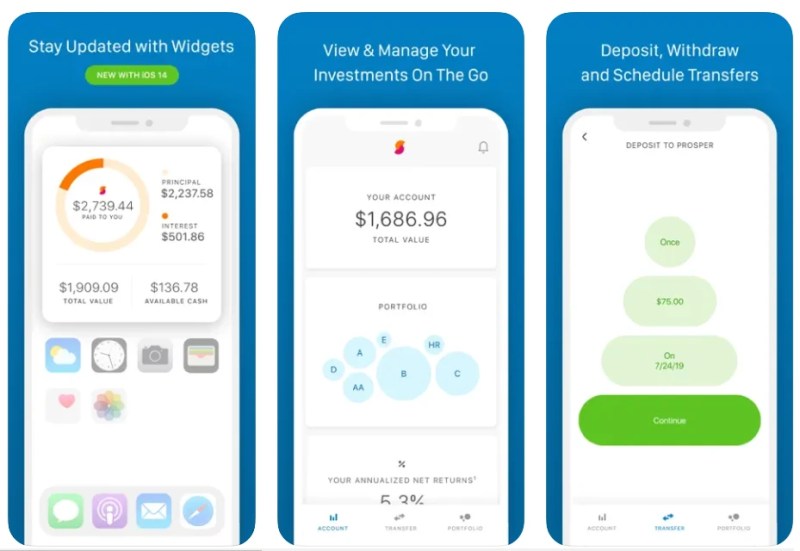
The origins of apps that lend you money trace back to the 2010s, when fintech startups began experimenting with peer-to-peer lending models. Early players like LendingClub and Prosper focused on personal loans, but the real disruption came with the rise of "neobanks" and digital-first lenders. The 2016 launch of earned wage access (EWA) apps—such as Even and PayActiv—marked a turning point by offering advances against wages, bypassing traditional payday loan structures. These platforms framed their services as "salary loans" rather than credit, avoiding some regulatory hurdles.The COVID-19 pandemic accelerated adoption, as millions turned to money-lending apps for emergency funds amid job losses and economic uncertainty. Companies like Dave and Chime saw explosive growth, offering instant cash advances with minimal friction. However, the rapid expansion also exposed flaws: some apps were accused of misleading users about fees or failing to disclose APRs clearly. Regulators responded with stricter disclosure rules, forcing platforms to rethink their pricing models. Today, the landscape is fragmented, with some apps specializing in installment loans (e.g., Affirm), others in microloans (e.g., Tala in Africa), and a third wave focusing on buy-now-pay-later (BNPL) integrations.
Core Mechanisms: How It Works
At their core, apps that lend you money operate on three pillars: instant approval, alternative underwriting, and automated repayment. The process typically begins with a user submitting basic information—such as employment details, bank account access (via open banking APIs), and sometimes selfies for identity verification. Unlike banks, which pull hard credit reports, these apps often use "soft pulls" or proprietary scoring models that evaluate cash flow rather than credit history. For example, an app might analyze a user’s direct deposit frequency or recurring subscriptions to determine affordability.Once approved, funds are deposited within minutes, often via digital wallets or instant bank transfers. Repayment structures vary: some apps offer fixed installments over weeks, while others charge daily or weekly fees until the loan is repaid. The latter model—common in BNPL services—can lead to "revolving debt" if users miss payments. Behind the scenes, AI monitors user behavior in real time, adjusting credit limits or triggering alerts for potential defaults. This dynamic underwriting sets money-lending apps apart from static loan products, but it also raises questions about algorithmic fairness and bias in risk assessment.
Key Benefits and Crucial Impact
The rise of apps that lend you money reflects a broader trend toward financial inclusion, particularly for underserved populations. For gig economy workers, freelancers, and those with limited credit, these platforms provide a lifeline during cash-flow crunches. Unlike predatory payday lenders, many modern apps offer structured repayment plans and transparent fee structures. Additionally, the speed of approval—often under 24 hours—can be a game-changer for emergencies, from medical bills to car repairs. The psychological relief of knowing help is just a few taps away cannot be overstated for users who’ve been denied by traditional lenders.Yet the impact is not uniformly positive. Critics highlight the risk of money-lending apps creating new debt traps, especially when users rely on them repeatedly. Studies show that borrowers with lower incomes are more likely to face late fees or rollover loans, exacerbating financial stress. The lack of standardized disclosures across platforms further complicates comparisons, leaving users vulnerable to hidden costs. As these apps become more embedded in daily life—through integrations with shopping apps or ride-hailing services—their influence on spending habits and debt cycles will only grow.
"These apps are a double-edged sword: they offer liquidity to those who need it most, but without guardrails, they can deepen inequality by targeting the most financially fragile consumers." — Dr. Meghan Morris, Financial Inclusion Researcher, Harvard
Major Advantages
- Speed and Accessibility: Approval and funding within hours, often without hard credit checks. Ideal for urgent expenses like medical emergencies or car repairs.
- Credit-Builder Features: Some apps (e.g., Chime Credit Builder) report on-time payments to credit bureaus, helping users establish or repair credit histories.
- Flexible Repayment Terms: Options range from short-term advances (7–30 days) to longer installment loans (3–24 months), catering to varying financial situations.
- Alternative Underwriting: Uses cash flow data, rent payments, or utility bills to assess eligibility, expanding access for those with thin credit files.
- Integration with Daily Life: Many apps sync with bank accounts or shopping platforms (e.g., Affirm at Walmart), making borrowing seamless but potentially addictive.
Comparative Analysis
| Feature | Traditional Banks | Apps That Lend You Money |
|---|---|---|
| Approval Time | Days to weeks (hard credit pull) | Minutes to hours (soft pull or no credit check) |
| Interest Rates | 5%–36% APR (varies by credit) | 100%–300% APR (some BNPL services) |
| Eligibility Criteria | Strong credit score required | Cash flow, employment verification, or social data |
| Regulatory Oversight | Strict (FDIC, CFPB) | Varies by state/country; some operate in gray areas |
Future Trends and Innovations
The next frontier for apps that lend you money lies in AI-driven personalization and decentralized finance (DeFi) integrations. As machine learning improves, these platforms will likely offer hyper-targeted loan terms based on real-time behavioral data, such as spending triggers or savings goals. For example, an app might automatically adjust a user’s credit limit if their utility bills are paid on time but reduce it if they frequently max out BNPL services. Meanwhile, DeFi protocols are experimenting with "flash loans" and algorithmic underwriting, potentially bypassing traditional lenders entirely.Regulatory pressure will also shape the industry. Governments are increasingly scrutinizing money-lending apps for fair lending practices, data privacy, and consumer protection. In the EU, the Digital Operational Resilience Act (DORA) may impose stricter cybersecurity requirements on fintech lenders, while the U.S. CFPB continues to crack down on misleading fee structures. On the innovation front, expect more collaborations between neobanks and traditional lenders to create hybrid products—combining the speed of digital apps with the stability of bank-backed credit. The challenge will be balancing progress with ethical safeguards to prevent another financial crisis fueled by unchecked lending.
Conclusion
The democratization of credit through apps that lend you money is one of the most transformative developments in modern finance. For the unbanked, underbanked, and credit-invisible, these tools have opened doors previously locked by rigid lending criteria. However, the lack of uniform regulations and the potential for exploitation demand vigilance from both users and policymakers. The key to harnessing these platforms responsibly lies in transparency: borrowers must scrutinize terms, fees, and repayment structures, while regulators must adapt to the speed of fintech innovation without stifling progress.As the industry evolves, the line between empowerment and entrapment will blur further. The onus is on consumers to treat money-lending apps as tools—not crutches—and on developers to design systems that prioritize sustainability over short-term gains. One thing is certain: the era of instant credit is here to stay, and its impact on global financial health will be measured in decades to come.
Comprehensive FAQs
Q: Are apps that lend you money safe to use?
A: Safety depends on the platform’s licensing, data security, and transparency. Reputable apps use encryption, comply with local financial laws, and disclose all fees upfront. Avoid unregulated services or those with poor user reviews. Always check for FDIC insurance (if applicable) and read terms for hidden charges.
Q: Can using these apps improve my credit score?
A: Some apps (e.g., Chime, Credit Karma) report on-time payments to credit bureaus, which can help build credit. Others, like payday-style lenders, do not. If credit-building is your goal, prioritize apps that explicitly state they’ll report activity to Experian, Equifax, or TransUnion.
Q: What happens if I can’t repay a loan from one of these apps?
A: Most apps have automated repayment systems, but missed payments can trigger late fees, higher interest rates, or collection actions. Some may offer hardship programs or extensions, but defaults can harm your credit score. Always contact the app’s customer service if you’re struggling—some are willing to negotiate terms.
Q: How do apps that lend you money make money?
A: Revenue models vary: some charge flat fees (e.g., $5 per advance), others apply daily or weekly interest (e.g., 10% per week), and BNPL services often rely on merchant partnerships. The most profitable apps combine high-volume lending with aggressive fee structures, which is why comparing APRs is critical.
Q: Are there alternatives to apps that lend you money for emergencies?
A: Yes. Consider:
- Negotiating payment plans with creditors or service providers.
- Using a low-interest credit card or personal loan from a bank.
- Accessing community resources (e.g., local charities, faith-based organizations).
- Exploring side gigs or selling unused items for quick cash.
Q: Can I get a loan from these apps if I have bad credit?
A: Many money-lending apps are designed for users with poor or no credit, as they rely on cash flow rather than traditional scores. However, approval odds improve if you can demonstrate stable income (e.g., direct deposits, gig earnings). Apps like Earnin or Dave may offer smaller advances without credit checks, while others (e.g., Upstart) consider factors beyond credit history.
Leave a Comment
Comments are moderated before appearing. The data you submit is processed according to the Privacy Policy of versiliasolutions.oneagency.co.