Unlocking Precision: The Essential Guide to Area and Circumference of a Circle Formula
Table of Contents
- The Complete Overview of Area and Circumference of a Circle Formula
- Historical Background and Evolution
- Core Mechanisms: How It Works
- Key Benefits and Crucial Impact
- Major Advantages
- Comparative Analysis
- Future Trends and Innovations
- Conclusion
- Comprehensive FAQs
- Q: Why is π (pi) irrational, and how does this affect circle formulas?
- Q: Can the area and circumference of a circle formula be applied to non-circular shapes?
- Q: How do architects use the area and circumference of a circle formula in real projects?
- Q: What happens if you mistakenly use diameter instead of radius in the formulas?
- Q: Are there alternative ways to calculate a circle’s area or circumference without π?
The circle’s influence stretches across civilizations, from the wheel’s invention to the orbits of planets. Yet, beneath its simplicity lies a mathematical elegance that defines its essence: the area and circumference of a circle formula. These formulas—πr² for area and 2πr for circumference—are not just abstract concepts but the bedrock of engineering, physics, and design. Whether you’re measuring a pizza’s surface or designing a satellite’s trajectory, these calculations ensure accuracy.
The beauty of these formulas lies in their universality. A baker relies on them to determine dough quantity, while an astronomer uses them to predict celestial movements. The relationship between a circle’s radius and its perimeter (circumference) or enclosed space (area) reveals a harmony between simplicity and precision. This balance is why the area and circumference of a circle formula remains a cornerstone of mathematical education and real-world problem-solving.
At its core, the circle’s geometry transcends cultural boundaries. Ancient Egyptians approximated π for pyramid construction, while modern engineers use it to optimize pipelines and wheels. The formulas themselves—derived from centuries of observation and refinement—embody humanity’s quest to quantify the infinite.
The Complete Overview of Area and Circumference of a Circle Formula
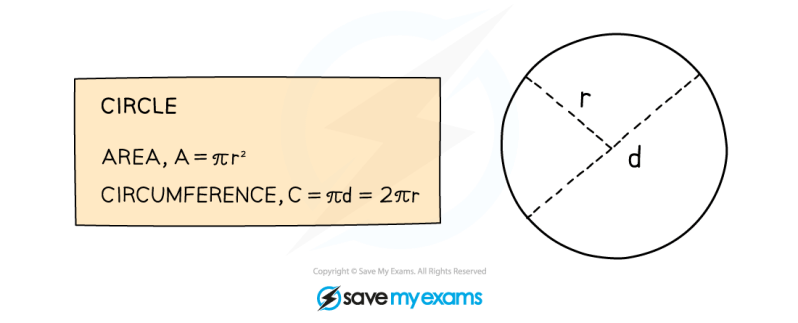
The area and circumference of a circle formula are fundamental to geometry, serving as the mathematical language for describing circular shapes. The area formula, πr², calculates the space enclosed within the circle’s boundary, where r is the radius (half the diameter). Meanwhile, the circumference formula, 2πr, defines the circle’s perimeter—the distance around its edge. Together, they form a duality: one measures what’s inside, the other what’s around.These formulas are interconnected through π (pi), the irrational constant (~3.14159) representing the ratio of a circle’s circumference to its diameter. This relationship was first articulated in ancient civilizations, evolving from empirical approximations to the precise calculations used today. Understanding both formulas is essential for fields ranging from architecture to aerospace, where circular shapes dominate structural and functional designs.
Historical Background and Evolution
The pursuit of the area and circumference of a circle formula dates back to 1800 BCE, when Babylonian mathematicians used clay tablets to approximate π by comparing circle circumferences to their diameters. The Egyptians later refined this with the Rhind Papyrus (c. 1650 BCE), which described a method to calculate the area of a circle by squaring the diameter and multiplying by 3.1605—a remarkably close approximation for the era.The Greek mathematician Archimedes (c. 287–212 BCE) elevated these calculations to theoretical rigor. By inscribing and circumscribing polygons around circles, he proved that π lies between 3+10/71 and 3+1/7, a range that remained unmatched for centuries. His work laid the foundation for the modern area and circumference of a circle formula, demonstrating that geometry could bridge practical measurement with abstract proof.
Core Mechanisms: How It Works
The area formula, πr², emerges from integrating infinitesimal sectors of the circle. Imagine slicing a circle into countless triangles; as their number approaches infinity, their combined area converges to πr². This integral approach, formalized in calculus, reveals why the formula holds true regardless of the circle’s size.Similarly, the circumference formula, 2πr, stems from the definition of π as the ratio of circumference (C) to diameter (d): C/d = π. Rearranging gives C = πd, and since d = 2r, it simplifies to 2πr. This derivation underscores the formula’s elegance—its universality applies to any circle, from a coin to a galaxy.
Key Benefits and Crucial Impact
The area and circumference of a circle formula are more than academic exercises; they are tools that drive innovation. In engineering, these calculations determine material requirements for pipes, gears, and wheels, optimizing efficiency and reducing waste. Architects use them to design domes and arches, balancing structural integrity with aesthetic harmony. Even in everyday life, from calculating the area of a garden to fitting a tire onto a rim, these formulas ensure precision.Their versatility extends to technology. Computer graphics rely on circle formulas to render 3D models, while robotics uses them to program circular motion paths. The formulas’ adaptability—scaling from microscopic particles to planetary orbits—makes them indispensable in both theoretical and applied sciences.
"Geometry will draw the soul toward truth and create the spirit of philosophy." —Plato
Major Advantages
- Universal Applicability: The formulas work for any circle, regardless of size, making them foundational in physics, astronomy, and engineering.
- Precision in Design: Architects and engineers use them to minimize material costs while maximizing structural stability.
- Educational Gateway: Mastery of these formulas builds critical thinking skills, essential for advanced mathematics and problem-solving.
- Technological Integration: From CAD software to GPS systems, circle calculations underpin modern innovations.
- Everyday Practicality: Simple tasks like measuring fabric for a circular tablecloth or calculating pizza slices rely on these principles.
Comparative Analysis
| Aspect | Area Formula (πr²) | Circumference Formula (2πr) |
|---|---|---|
| Purpose | Calculates enclosed space (e.g., land area, material coverage). | Measures perimeter (e.g., wire length, track distance). |
| Key Variable | Radius (r) squared. | Radius (r) multiplied by 2π. |
| Units | Square units (e.g., m², cm²). | Linear units (e.g., m, cm). |
| Real-World Use | Calculating paint for a circular wall, land plots. | Determining fence length, tire circumference. |

Future Trends and Innovations
As technology advances, the area and circumference of a circle formula will continue to evolve in application. Machine learning algorithms now use circle geometry to optimize 3D printing paths, reducing material usage by up to 30%. Meanwhile, quantum computing may refine π’s precision beyond current limits, unlocking new possibilities in cryptography and physics.In sustainability, these formulas are being repurposed to design eco-friendly structures, such as circular solar panels that maximize energy capture per unit area. The future will likely see even deeper integration with AI, where circle calculations power autonomous systems—from drones mapping circular crop fields to robots assembling circular components in factories.
Conclusion
The area and circumference of a circle formula exemplify mathematics’ power to simplify complexity. From ancient approximations to modern computations, their evolution mirrors humanity’s relentless pursuit of precision. Whether in a classroom, a construction site, or a high-tech lab, these formulas remain the invisible hand guiding circular design.Their enduring relevance is a testament to the timelessness of geometry—a field where abstract theory meets tangible reality. As innovation progresses, the circle’s formulas will continue to shape the world, proving that some truths are as infinite as π itself.
Comprehensive FAQs
Q: Why is π (pi) irrational, and how does this affect circle formulas?
A: π is irrational because its decimal representation never ends or repeats, meaning it cannot be expressed as a simple fraction. This property ensures that the area and circumference of a circle formula (πr² and 2πr) always yield precise, non-repeating results, regardless of the circle’s size. While approximations like 3.14 or 22/7 are used for practicality, the exact value of π guarantees infinite precision in theoretical calculations.
Q: Can the area and circumference of a circle formula be applied to non-circular shapes?
A: Directly, no—the formulas are specific to circles. However, the principles can be adapted. For example, approximating irregular shapes (like a kidney bean) by dividing them into circular segments or using calculus (integration) to derive area/circumference-like metrics. In engineering, "effective radius" concepts extend these ideas to non-circular geometries, such as elliptical orbits or toroidal designs.
Q: How do architects use the area and circumference of a circle formula in real projects?
A: Architects leverage these formulas for structural and aesthetic purposes. For instance, calculating the area of a circular dome (πr²) determines the volume of concrete needed, while the circumference (2πr) informs the length of supporting ribs or decorative moldings. In modern designs, parametric software automates these calculations, allowing architects to explore circular forms—like the Sydney Opera House’s sail-like shells—with geometric precision.
Q: What happens if you mistakenly use diameter instead of radius in the formulas?
A: Using diameter (d) instead of radius (r) in the area formula (πd²) would overestimate the area by a factor of 4, since d = 2r and (2r)² = 4r². For circumference, substituting d directly (πd) would underestimate the result by half, as the correct formula is 2πr (or πd). Always verify units: radius is half the diameter, and consistency is key to accurate area and circumference of a circle formula applications.
Q: Are there alternative ways to calculate a circle’s area or circumference without π?
A: Historically, yes. The Egyptians used (4/3)d² ≈ 3.1605d²/4 to approximate area, while the Babylonians employed empirical ratios. Modern alternatives include Monte Carlo methods for area (randomly sampling points within a square circumscribing the circle) or using series expansions for π, like the Leibniz formula (π/4 = 1 − 1/3 + 1/5 − 1/7 + ...). However, these methods are less precise or computationally intensive than the standard area and circumference of a circle formula.
Leave a Comment
Comments are moderated before appearing. The data you submit is processed according to the Privacy Policy of versiliasolutions.oneagency.co.