Unlocking Precision: The Area of Circumference Formula Explained
Table of Contents
- The Complete Overview of the Area of Circumference Formula
- Historical Background and Evolution
- Core Mechanisms: How It Works
- Key Benefits and Crucial Impact
- Major Advantages
- Comparative Analysis
- Future Trends and Innovations
- Conclusion
- Comprehensive FAQs
- Q: Why is the area of a circle πr² and not related to its circumference?
- Q: How does the area of circumference formula apply in real-world engineering?
- Q: Can the area of circumference formula be used for non-circular shapes?
- Q: What is the difference between the area of a circle and the area of its circumference?
- Q: How accurate is π in the area of circumference formula?
- Q: Are there alternative formulas for calculating a circle’s area?
The area of circumference formula is more than a mathematical abstraction—it’s a bridge between theoretical geometry and practical problem-solving. Whether you’re designing a circular foundation for a skyscraper, optimizing a pipeline’s cross-section, or calculating the surface area of a spherical tank, understanding this formula’s nuances ensures precision. The relationship between a circle’s radius and its area isn’t just about memorization; it’s about recognizing how fundamental shapes dictate structural integrity, fluid dynamics, and even aesthetic proportions in architecture.
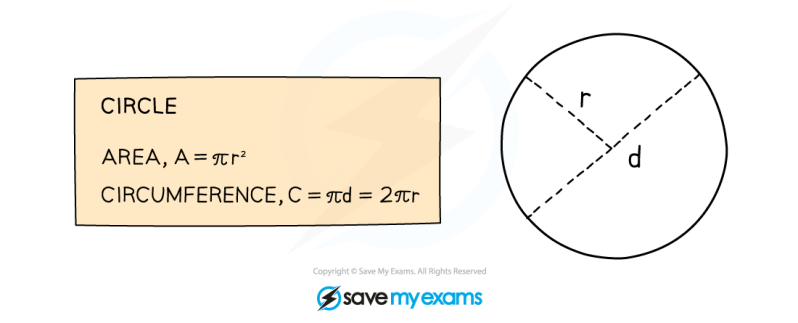
At its core, the formula area of circumference (often misinterpreted as the area of the circumference itself) actually refers to the area enclosed by a circle’s circumference. This distinction matters: the circumference is the perimeter (2πr), while the area is πr². Confusing the two can lead to critical errors in fields like civil engineering, where miscalculations might compromise stability. Yet, the formula’s elegance lies in its simplicity—a single equation that governs everything from the curvature of a planet’s orbit to the radius of a microscopic cell.
The formula’s power lies in its universality. It transcends disciplines, appearing in physics as the cross-sectional area of a wire, in biology as the surface area of a cell membrane, and in computer graphics as the rendering of spherical objects. But how did we arrive at this deceptively simple equation? The answer lies in ancient mathematical breakthroughs that reshaped human understanding of space.
The Complete Overview of the Area of Circumference Formula
The area of circumference formula (πr²) is the mathematical expression that calculates the space enclosed within a circle’s boundary. While the term "circumference" often evokes the perimeter (2πr), the formula in question pertains to the two-dimensional area bounded by that perimeter. This distinction is critical: the circumference defines the circle’s edge, while the area quantifies the space it contains. The formula’s derivation hinges on the relationship between a circle’s radius (r) and its area, a concept that has evolved over millennia from empirical approximations to exact mathematical proofs.Beyond its theoretical importance, the formula serves as a cornerstone in applied sciences. Engineers use it to determine material requirements for circular components, architects rely on it for structural load calculations, and physicists apply it to model rotational systems. Even in everyday contexts—like calculating the paint needed to cover a cylindrical silo or the capacity of a circular swimming pool—the formula’s accuracy is non-negotiable. Its ubiquity stems from the circle’s inherent symmetry, making it a natural choice for optimizing efficiency in design and construction.
Historical Background and Evolution
The quest to quantify the area of circumference traces back to ancient civilizations, where early mathematicians sought to measure land and construct monuments with geometric precision. The Egyptians, around 1650 BCE, approximated the area of a circle using a formula derived from the square of its diameter minus an eighth of that square—a method that, while imprecise, reflected their practical needs. Their approach was empirical, rooted in observation rather than theoretical proof. Meanwhile, the Babylonians used a similar but slightly more accurate ratio, though their methods lacked the rigor of later Greek mathematics.The true breakthrough came with the Greeks, particularly Archimedes of Syracuse, who in the 3rd century BCE provided the first rigorous proof of the formula. By inscribing and circumscribing polygons around a circle and increasing their sides to infinity, Archimedes demonstrated that the area of a circle approaches π times the square of the radius. His work laid the foundation for calculus and established π (pi) as an irrational constant—a milestone that would influence mathematics for centuries. The formula’s evolution continued through the Islamic Golden Age, where scholars like Al-Khwarizmi refined geometric proofs, and later through the Renaissance, as European mathematicians integrated these discoveries into modern science.
Core Mechanisms: How It Works
The area of circumference formula (πr²) emerges from the circle’s defining property: every point on its edge is equidistant from its center. To derive the area, imagine "slicing" the circle into infinitesimally thin sectors and rearranging them into a shape resembling a parallelogram. As the number of sectors approaches infinity, this shape converges into a rectangle with:The area of this rectangle is then r × πr, which simplifies to πr². This geometric intuition aligns with calculus-based proofs, where integration over the circle’s radius confirms the same result. The formula’s elegance lies in its independence from the circle’s size—whether the radius is measured in nanometers or kilometers, the relationship πr² holds true, governed solely by the constant π.
In practical applications, the formula’s simplicity belies its versatility. For instance, in circular segment calculations (the area of a circle cut by a chord), the formula adapts to include trigonometric functions, demonstrating how foundational principles extend to more complex scenarios. Similarly, in polar coordinates, the area of a region is computed by integrating the squared radius over an angle, a direct extension of πr².
Key Benefits and Crucial Impact
The area of circumference formula is a testament to mathematics’ ability to distill complex phenomena into concise, actionable equations. Its impact spans industries where precision is paramount, from aerospace engineering to medical imaging. In structural design, for example, miscalculating the area of a circular column could lead to catastrophic failures under load. Similarly, in fluid dynamics, the cross-sectional area of a pipe—often circular—directly influences flow rates and pressure drops, making πr² indispensable for system optimization.The formula’s influence extends beyond technical fields into art and nature. Artists use it to create harmonious compositions based on the golden ratio, while botanists apply it to model the growth patterns of circular leaves. Even in economics, the concept of "circular flow" in markets borrows from geometric metaphors rooted in similar principles. The formula’s universality underscores a fundamental truth: mathematics is not just a tool but a language that describes the order underlying the universe.
"Geometry will draw the soul toward truth and create the spirit of philosophy." — Plato
Major Advantages
- Precision in Engineering: Ensures accurate material estimates for circular components, reducing waste and improving structural integrity. For example, calculating the area of a turbine blade’s cross-section relies on πr² to optimize aerodynamic efficiency.
- Versatility Across Disciplines: Applicable in physics (rotational motion), biology (cell surface area), and computer science (rendering algorithms), making it a unifying concept in STEM fields.
- Foundation for Advanced Mathematics: Serves as a building block for calculus, trigonometry, and differential equations, enabling solutions to problems in electromagnetism, quantum mechanics, and more.
- Practical Problem-Solving: Simplifies real-world challenges, such as determining the volume of a spherical tank or the surface area of a dome, by breaking them into manageable geometric calculations.
- Cultural and Historical Significance: Reflects humanity’s enduring quest to understand patterns in nature, from ancient Greek proofs to modern computational models.
Comparative Analysis
The area of circumference formula (πr²) is often contrasted with related geometric formulas, each serving distinct purposes. Below is a comparison of key formulas involving circles:| Formula | Description and Use Case |
|---|---|
| Area of a Circle (πr²) | Calculates the space enclosed by a circle’s circumference. Essential for determining material coverage (e.g., paint for a silo) or cross-sectional areas in engineering. |
| Circumference (2πr) | Measures the perimeter of a circle. Used in calculating distances (e.g., tire rotations) or structural reinforcements for circular beams. |
| Area of a Sector (½r²θ) | Quantifies the area of a "pie slice" of a circle, where θ is the central angle in radians. Critical in robotics for path planning or in astronomy for orbital mechanics. |
| Volume of a Sphere (⅔πr³) | Extends the 2D area concept to three dimensions, used in calculating storage capacities (e.g., spherical tanks) or modeling planetary volumes. |

Future Trends and Innovations
As computational power grows, the area of circumference formula is being reimagined in dynamic and adaptive contexts. In parametric design, architects use algorithms to generate circular structures with variable radii, optimizing for both aesthetics and function. For example, a dome’s curvature might adjust based on environmental factors like wind load, with πr² recalculated iteratively to ensure stability. Similarly, in biomedical engineering, researchers are exploring "smart materials" that change shape in response to stimuli, where the formula’s principles guide the design of responsive implants.The rise of machine learning also promises to redefine geometric calculations. AI models can now predict optimal radii for circular components in real-time, factoring in constraints like material stress or thermal expansion—tasks that once relied solely on static πr² calculations. Moreover, in quantum computing, geometric formulas like πr² are being explored to model exotic states of matter, where circular symmetry plays a role in superconductivity and topological insulators. The future of the formula lies not in its obsolescence but in its evolution into a tool for solving increasingly complex, interdisciplinary problems.
Conclusion
The area of circumference formula is a cornerstone of mathematical precision, blending ancient wisdom with modern innovation. Its simplicity masks a depth of application that spans from the microscopic to the cosmic, proving that fundamental principles remain relevant across eras. Whether you’re a student grappling with geometry, an engineer designing infrastructure, or a scientist modeling natural phenomena, πr² is more than a formula—it’s a lens through which to view the orderly patterns governing our world.As technology advances, the formula’s role will expand, integrating with emerging fields like nanotechnology and AI-driven design. Yet, its core remains unchanged: a testament to humanity’s ability to distill complexity into elegance. The next time you encounter a circular shape—whether in a bridge’s arch, a droplet of water, or the orbit of a planet—remember that πr² is the silent force ensuring its harmony.
Comprehensive FAQs
Q: Why is the area of a circle πr² and not related to its circumference?
The formula πr² arises from the circle’s geometric properties: every point on the circumference is equidistant from the center, and the area is derived by integrating these distances over the full angle (2π radians). While the circumference (2πr) measures the perimeter, the area quantifies the enclosed space, requiring a different mathematical operation. The factor of π emerges from the ratio of a circle’s circumference to its diameter, a relationship independent of the area’s derivation.
Q: How does the area of circumference formula apply in real-world engineering?
In engineering, the formula is critical for designing components like pipes, gears, and pressure vessels. For example, calculating the cross-sectional area of a circular pipe (πr²) determines its flow capacity, while the area of a circular gear tooth influences torque transmission. Misapplying the formula could lead to underdesigned structures or inefficient systems. Software tools like AutoCAD or SolidWorks automate these calculations, but understanding πr² ensures accurate input parameters.
Q: Can the area of circumference formula be used for non-circular shapes?
Directly, no—the formula πr² is specific to circles. However, the concept extends to other shapes via decomposition or approximation. For instance, an ellipse’s area is πab (where a and b are semi-axes), a generalization of πr². Similarly, complex shapes are often divided into simpler geometric components (e.g., rectangles, triangles) whose areas are summed. In computational geometry, algorithms like the shoelace formula calculate areas for arbitrary polygons.
Q: What is the difference between the area of a circle and the area of its circumference?
This is a common point of confusion. The "area of a circle" (πr²) refers to the space enclosed by the circle’s boundary. The "circumference" itself is a one-dimensional curve (2πr) and thus has no area—it’s a length. The phrase "area of circumference" is technically incorrect; the correct term is the area of a circle, while the circumference is its perimeter. Clarifying this distinction is vital in technical fields to avoid errors in calculations.
Q: How accurate is π in the area of circumference formula?
π is an irrational number (approximately 3.14159...), meaning its decimal representation never terminates or repeats. For most practical purposes, π is truncated to 3.14 or 22/7, but high-precision applications (e.g., aerospace engineering) may use up to 15 decimal places. The formula πr² remains exact regardless of π’s precision; the error lies in rounding π itself. Modern calculators and programming languages (e.g., Python’s `math.pi`) provide π to arbitrary precision, minimizing approximation errors.
Q: Are there alternative formulas for calculating a circle’s area?
While πr² is the standard, alternative expressions exist based on different parameters. For example:
- Using diameter (d): Area = π(d/2)² = (π/4)d².
- Using circumference (C): Area = (C/2π)² × π = C²/4π.
Leave a Comment
Comments are moderated before appearing. The data you submit is processed according to the Privacy Policy of versiliasolutions.oneagency.co.