How Bank Data Aggregation Is Reshaping Finance—And What You Need to Know
Table of Contents
- The Complete Overview of Bank Data Aggregation
- Historical Background and Evolution
- Core Mechanisms: How It Works
- Key Benefits and Crucial Impact
- Major Advantages
- Comparative Analysis
- Future Trends and Innovations
- Conclusion
- Comprehensive FAQs
- Q: Is my financial data safe with bank data aggregation?
- Q: Can I opt out of bank data aggregation?
- Q: How do aggregators make money?
- Q: What’s the difference between bank data aggregation and open banking?
- Q: Will bank data aggregation replace traditional banking?
- Q: How accurate is the data provided by aggregators?
Financial institutions have long operated in silos, with customer data locked behind logins and legacy systems. That era is ending. Today, bank data aggregation is dismantling those barriers, enabling seamless access to transaction histories, account balances, and credit profiles across multiple providers—all with a single consent. This shift isn’t just about convenience; it’s a fundamental reimagining of how financial decisions are made, from personal budgeting to institutional risk assessment.
The technology behind bank data aggregation relies on standardized APIs, regulatory frameworks like PSD2 in Europe or the Consumer Financial Protection Bureau’s guidelines in the U.S., and a growing ecosystem of third-party aggregators. These platforms act as intermediaries, securely pulling data from banks while ensuring compliance with privacy laws. For consumers, the result is a unified financial dashboard; for businesses, it’s a goldmine of insights—if handled responsibly.
Yet the implications extend beyond mere data consolidation. Bank data aggregation is fueling innovations in fraud detection, personalized lending, and even regulatory reporting. But with great power comes great scrutiny: data breaches, misused permissions, and the ethical dilemmas of algorithmic financial advice are forcing the industry to evolve faster than ever. The question isn’t whether this technology will dominate finance—it’s how.
The Complete Overview of Bank Data Aggregation
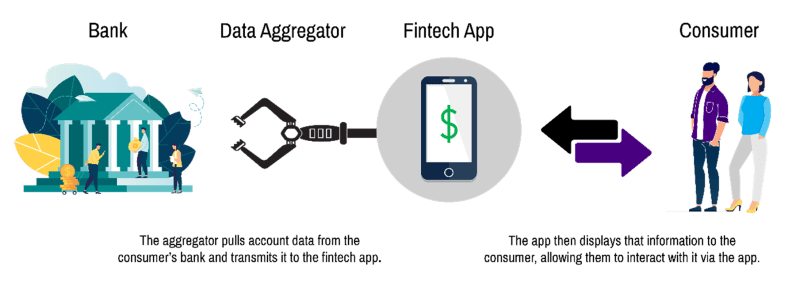
Bank data aggregation refers to the process of collecting, consolidating, and analyzing financial information from multiple banking institutions into a single interface or system. Unlike traditional bank logins, which require separate credentials for each account, aggregation leverages secure APIs to pull real-time data—balances, transactions, loans, investments—with explicit user consent. This methodology is the backbone of modern open banking, enabling fintech startups, neobanks, and even legacy institutions to offer hyper-personalized services.
The technology’s rise is tied to three key developments: the digitization of banking, regulatory mandates pushing for competition and transparency, and the consumer demand for unified financial tools. Where once a user might juggle five different banking apps, today’s platforms—like Yodlee, Plaid, or Tink—provide a consolidated view. For businesses, the shift means richer datasets for underwriting, risk modeling, and customer segmentation. But the underlying infrastructure is far from uniform; differences in API standards, data formats, and regional regulations create both opportunities and friction points.
Historical Background and Evolution
The seeds of bank data aggregation were sown in the early 2000s with the rise of personal finance management (PFM) tools like Mint and Quicken. These platforms used screen scraping—a method of extracting data by mimicking user interactions—to pull account information. While effective, this approach was fragile, often breaking when banks updated their websites, and raised significant security concerns. The real inflection point came with the European Union’s Revised Payment Services Directive (PSD2) in 2018, which mandated that banks provide third-party providers (TPPs) with secure access to customer data via APIs.
Across the Atlantic, the U.S. lagged initially due to stricter data privacy laws and a fragmented regulatory landscape. However, the Consumer Financial Protection Bureau’s (CFPB) 2020 proposal for a national bank data aggregation standard—coupled with fintech innovation—accelerated adoption. Today, the market is bifurcated: Europe leads with robust open banking frameworks, while the U.S. sees a mix of voluntary participation and state-level regulations. The evolution reflects a broader trend: from fragmented, manual processes to a standardized, API-driven ecosystem.
Core Mechanisms: How It Works
At its core, bank data aggregation operates through a three-party system: the user, the bank, and the aggregator. The user initiates the process by granting consent (via OAuth 2.0 or similar protocols) to a third-party service, which then requests data from the bank through a standardized API. The bank authenticates the request, verifies the user’s permissions, and returns the data—typically in formats like JSON or XML—encrypted and tokenized for security. The aggregator then processes this data, often enriching it with additional context (e.g., categorizing transactions by merchant or expense type).
Security is non-negotiable in this process. Aggregators employ multi-layered authentication, data encryption (TLS 1.2+), and strict access controls to prevent breaches. Compliance with regulations like GDPR or the CFPB’s guidelines ensures that user data isn’t misused or shared without consent. Behind the scenes, institutions also employ bank data aggregation internally to monitor fraud, detect anomalies, or comply with anti-money laundering (AML) rules. The infrastructure is complex, but the user experience is designed to be seamless: log in once, authorize access, and gain visibility across all accounts.
Key Benefits and Crucial Impact
The adoption of bank data aggregation is reshaping financial services in measurable ways. For consumers, the primary benefit is simplicity: no more logging into five different apps to track spending or savings goals. For businesses, the value lies in granular, real-time data that powers everything from credit scoring to dynamic pricing. Even governments are leveraging aggregated financial data to combat tax evasion or identify economic trends. Yet the impact isn’t just transactional—it’s cultural, democratizing access to financial insights that were once the domain of wealth managers or institutional analysts.
Critics argue that bank data aggregation introduces new risks, particularly around data privacy and monopolistic control by aggregators. However, the technology’s potential to reduce financial exclusion—by enabling micro-lending, better budgeting tools, or even automated savings—far outweighs the concerns for many. The key lies in balancing innovation with safeguards, ensuring that the benefits of aggregation are inclusive and not concentrated in the hands of a few.
"Bank data aggregation isn’t just about moving data—it’s about moving power. Power to consumers to make informed decisions, and power to businesses to serve them better. The challenge is ensuring that power isn’t hijacked by those who can exploit it."
— Dr. Emily Carter, Chief Data Officer, Open Banking Alliance
Major Advantages
- Unified Financial Visibility: Users gain a single dashboard for all accounts, eliminating the need to manually track balances or reconcile transactions across institutions.
- Enhanced Security: Aggregators use bank-level encryption and multi-factor authentication, often surpassing the security of individual bank logins.
- Personalized Financial Insights: AI-driven tools analyze spending patterns to offer tailored advice on savings, investments, or debt repayment.
- Faster Loan Approvals: Lenders use aggregated data to assess creditworthiness in minutes, reducing friction for borrowers.
- Regulatory Compliance: Businesses leverage aggregated data to meet reporting requirements (e.g., AML, tax filings) with reduced manual effort.
Comparative Analysis
| Feature | Traditional Banking | Bank Data Aggregation |
|---|---|---|
| Data Access | Fragmented; requires separate logins for each institution. | Consolidated via APIs; single sign-on for all accounts. |
| Real-Time Updates | Delayed (often daily batches). | Near-instantaneous, with some providers offering live sync. |
| Third-Party Integration | Limited to bank-specific tools (e.g., mobile apps). | Compatible with fintech, accounting software, and investment platforms. |
| Regulatory Compliance | Subject to bank-specific policies. | Must adhere to open banking standards (e.g., PSD2, CFPB rules). |

Future Trends and Innovations
The next phase of bank data aggregation will be defined by three trends: deeper integration with artificial intelligence, the expansion into non-banking financial data (e.g., insurance, investments), and the rise of decentralized finance (DeFi) aggregators. AI will transform raw transaction data into predictive insights—anticipating cash flow needs, detecting fraud before it occurs, or even suggesting optimal investment allocations. Meanwhile, aggregators may soon pull data from cryptocurrency wallets or peer-to-peer lending platforms, blurring the lines between traditional and alternative finance.
Regulation will remain a wild card. As governments grapple with how to govern cross-border data flows and DeFi integration, some jurisdictions may impose stricter controls, while others could adopt sandbox frameworks to encourage innovation. The biggest disruption may come from bank data aggregation becoming a default feature in smart home ecosystems—imagine your voice assistant automatically adjusting your budget based on real-time spending data. The technology’s trajectory suggests one thing is certain: the financial industry’s relationship with data will never be the same.
Conclusion
Bank data aggregation is more than a technical innovation—it’s a paradigm shift in how financial services are delivered. By breaking down the walls between institutions and empowering users with consolidated, actionable data, it’s democratizing access to financial intelligence. Yet its success hinges on trust: users must feel secure, businesses must innovate responsibly, and regulators must keep pace. The companies that master this balance will redefine customer relationships, while those that ignore it risk obsolescence in an increasingly data-driven world.
The future of finance isn’t about who controls the most data—it’s about who can turn that data into meaningful outcomes. Whether you’re a consumer seeking clarity or a business aiming to compete, understanding bank data aggregation isn’t optional. It’s the new currency of financial empowerment.
Comprehensive FAQs
Q: Is my financial data safe with bank data aggregation?
A: Aggregators use bank-grade encryption and comply with regulations like GDPR or PSD2. However, risks persist if a provider mishandles permissions. Always review consent prompts and choose reputable aggregators with transparent security policies.
Q: Can I opt out of bank data aggregation?
A: Yes. Under laws like PSD2, users can revoke consent at any time by contacting the aggregator or their bank. Some banks also allow you to block third-party access entirely through their settings.
Q: How do aggregators make money?
A: Most aggregators monetize through subscription models (for consumers) or B2B partnerships (e.g., selling anonymized data insights to lenders). Some also earn fees from affiliate services, like investment platforms or credit cards.
Q: What’s the difference between bank data aggregation and open banking?
A: Open banking is the regulatory framework enabling secure data sharing, while bank data aggregation is the technical process of collecting and utilizing that data. Aggregation is a key application of open banking, but not its only use case.
Q: Will bank data aggregation replace traditional banking?
A: Unlikely. Aggregation enhances—not replaces—traditional banking by providing better tools for managing accounts. However, neobanks and fintechs may increasingly use aggregated data to offer bundled services that compete with legacy institutions.
Q: How accurate is the data provided by aggregators?
A: Accuracy depends on the bank’s API reliability and the aggregator’s processing. Most providers offer real-time syncs, but delays can occur during outages or when banks update systems. Always cross-check critical transactions.
Leave a Comment
Comments are moderated before appearing. The data you submit is processed according to the Privacy Policy of versiliasolutions.oneagency.co.