The Best Plant Identification App for Gardeners, Scientists, and Curious Minds
Table of Contents
- The Complete Overview of the Best Plant Identification App
- Historical Background and Evolution
- Core Mechanisms: How It Works
- Key Benefits and Crucial Impact
- Major Advantages
- Comparative Analysis
- Future Trends and Innovations
- Conclusion
- Comprehensive FAQs
- Q: How accurate are the best plant identification apps?
- Q: Can these apps identify indoor plants or non-flowering species?
- Q: Are there free alternatives to paid plant identification apps?
- Q: How do I improve the accuracy of my plant ID results?
- Q: Can plant identification apps help with invasive species reporting?
The first time you spot an unfamiliar leaf or bloom, the urge to know its name—and its secrets—is immediate. A decade ago, this meant hauling a field guide or consulting a botanist. Today, the best plant identification app replaces both with a tap of your screen. These tools leverage machine learning and vast databases to deliver instant answers, democratizing plant knowledge for gardeners, scientists, and casual explorers alike.
Yet not all apps deliver equally. Some excel in accuracy for rare species, others prioritize ease for beginners, and a few integrate with broader ecosystems like gardening journals or conservation networks. The gap between a reliable plant recognition app and a gimmick often hinges on factors like database depth, user interface, and offline capabilities—critical for fieldwork where signal fades. Understanding these nuances separates the useful from the merely functional.
What’s more, the technology behind these apps evolves rapidly. Early versions relied on static databases; now, they adapt to regional variations, user corrections, and even climate shifts. For professionals, this means fieldwork efficiency; for hobbyists, it’s the thrill of uncovering hidden biodiversity in their backyard. But with so many options—from crowd-sourced platforms to academic-backed tools—how do you choose the right one?
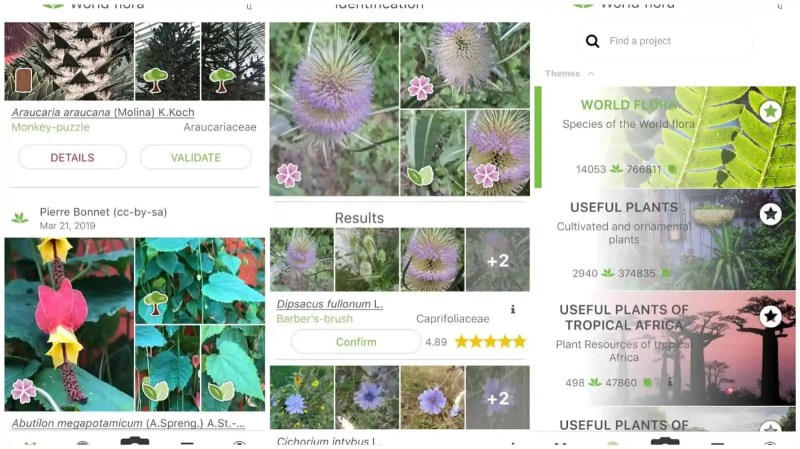
The Complete Overview of the Best Plant Identification App
The modern best plant identification app is more than a digital field guide. It’s a convergence of computer vision, crowdsourced data, and ecological science, designed to bridge the gap between human curiosity and botanical expertise. At its core, these apps function as portable laboratories, analyzing leaf shapes, flower structures, and even bark textures to match visual inputs against millions of cataloged species. The most advanced systems now incorporate geolocation to refine results based on bioregions, a feature that transforms a generic "oak" into "Quercus robur" for European users or "Quercus alba" in North America.
Beyond identification, top-tier plant recognition apps offer layered functionality. Some integrate with seed databases to suggest companion plants; others connect to conservation alerts for endangered species. For example, an app like iNaturalist doesn’t just name a plant—it maps sightings, tracks migration patterns, and flags invasive species. This dual-purpose utility makes them indispensable for both amateur gardeners and field researchers. The shift from passive lookup to active ecological engagement marks the evolution of these tools from convenience to collaboration.
Historical Background and Evolution
The roots of plant identification apps trace back to the late 2000s, when early mobile apps like PlantNet (2013) pioneered crowdsourced plant databases. These platforms relied on user-submitted photos and community verification, a model that, while imperfect, laid the groundwork for today’s AI-driven accuracy. The breakthrough came with the integration of deep learning algorithms, which could parse visual features far more precisely than rule-based systems. Google’s Google Lens (2017) and Apple’s Visual Lookup (2019) further popularized the concept by embedding plant ID into broader image recognition tools, though their botanical databases remained limited compared to specialized apps.
Today, the best plant identification app reflects a fusion of academic rigor and technological innovation. Projects like Flora Incognita, developed by German researchers, combine high-resolution imaging with ecological data to identify plants in real time—even in complex ecosystems. Meanwhile, apps like PictureThis (acquired by Tencent) focus on gardening, offering care tips alongside identification. This bifurcation—between scientific precision and practical utility—highlights how the market has matured to serve distinct user needs, from the backyard enthusiast to the climate scientist tracking vegetation changes.
Core Mechanisms: How It Works
Under the hood, the plant recognition app operates through a multi-step process that begins with image capture. The app’s camera interface uses computational photography to isolate the plant from the background, then extracts key features: leaf venation patterns, flower symmetry, or stem hairiness. These features are converted into numerical vectors via convolutional neural networks (CNNs), which compare them against a labeled dataset of millions of plant images. The most accurate apps, like PlantSnap, employ ensemble models—combining multiple AI techniques—to reduce false positives, especially for visually similar species.
What sets the best plant identification app apart is its ability to contextualize results. For instance, an app might cross-reference your GPS coordinates with regional floras to prioritize native species, then overlay this with user-generated notes (e.g., "This plant thrives in partial shade"). Some advanced systems, such as those used in citizen science projects, allow users to contribute corrections, creating a feedback loop that improves accuracy over time. This dynamic database ensures that identifications stay relevant amid climate change, which alters plant ranges and blooming seasons.
Key Benefits and Crucial Impact
The plant identification app is more than a tool—it’s a force multiplier for biodiversity research, education, and personal connection to nature. For gardeners, it eliminates guesswork in plant care, reducing pesticide use by accurately identifying pests or diseases. Ecologists leverage these apps to monitor invasive species, while students use them to supplement classroom learning with hands-on exploration. The impact extends to conservation: apps like iNaturalist have documented over 1 billion observations globally, a trove of data used to track endangered species and habitat loss.
Yet the benefits aren’t just ecological. For urban dwellers, these apps turn concrete jungles into living classrooms, revealing the hidden diversity of sidewalk cracks and rooftop gardens. Travelers use them to navigate foreign landscapes, while therapists recommend them for "nature therapy," where identifying plants fosters mindfulness. The best plant recognition app thus serves as a bridge between technology and the natural world, making expertise accessible without sacrificing depth.
"A plant identification app is like a Swiss Army knife for botanists—except the blade is sharper, and the handle fits in your pocket."
— Dr. Elena Valdez, Director of Digital Ecology, Royal Botanic Gardens, Kew
Major Advantages
- Instant Accuracy: Top apps achieve >90% accuracy for common species, with some (like Flora Incognita) reaching 95% for regional floras. Machine learning models trained on high-resolution images outperform traditional guides.
- Offline Functionality: Critical for fieldwork, apps like PlantNet download databases for use without internet, ensuring reliability in remote areas.
- Ecological Integration: Many connect to global databases (e.g., GBIF) or local conservation networks, turning identification into actionable data for scientists.
- Multilingual Support: Apps like PictureThis offer translations for plant names and care instructions, breaking language barriers for international users.
- Community Collaboration: Platforms like iNaturalist allow users to verify identifications, creating a crowdsourced safety net that improves over time.
Comparative Analysis
| Feature | Best for... |
|---|---|
| PlantSnap | Global coverage, user-friendly, ideal for casual users and travelers. |
| Flora Incognita | Scientific accuracy, European flora focus, offline-capable. |
| iNaturalist | Citizen science, conservation tracking, community-driven data. |
| PictureThis | Gardening, care tips, multilingual support. |

Future Trends and Innovations
The next generation of plant identification apps will likely incorporate hyperspectral imaging, which detects chlorophyll and nutrient levels beyond visible light. This could enable apps to diagnose plant health or predict drought resistance, transforming them into agricultural tools. Meanwhile, edge computing—processing data on-device—will reduce latency, making real-time identifications seamless even in low-bandwidth areas. For conservation, expect apps to integrate with satellite imagery, allowing users to map entire ecosystems from their phones.
Beyond hardware, the future lies in personalization. Apps may soon adapt to individual user preferences, suggesting plants based on your garden’s soil pH or your climate zone’s microclimates. Ethical considerations, such as preventing biopiracy by indigenous knowledge, will also shape development. As these tools become more sophisticated, the line between plant recognition app and ecological companion will blur, creating a symbiotic relationship between humans and the natural world.
Conclusion
The best plant identification app today is a testament to how far technology has come in serving both practical and intellectual needs. Whether you’re a permaculture designer mapping a food forest or a child curious about the dandelion in the park, these tools lower the barrier to botanical knowledge. Their evolution reflects broader trends: the democratization of expertise, the fusion of science and accessibility, and the growing recognition that technology can enhance—not replace—our connection to nature.
As the apps themselves advance, so too will their role in shaping environmental stewardship. The choice of which plant recognition app to use depends on your goals: accuracy, ease, or community impact. But one thing is certain—these tools are not just identifying plants. They’re rewriting how we interact with the living world.
Comprehensive FAQs
Q: How accurate are the best plant identification apps?
A: Accuracy varies by app and region. Leading tools like Flora Incognita achieve 95%+ accuracy for well-documented European species, while global apps like PlantSnap may drop to 80–90% for rare or visually similar plants. Offline databases can reduce precision if not regularly updated.
Q: Can these apps identify indoor plants or non-flowering species?
A: Yes, but with limitations. Apps like PictureThis specialize in houseplants, while iNaturalist covers ferns, mosses, and even fungi. Non-flowering species (e.g., succulents) are identified via leaf shape, texture, and growth patterns, though accuracy may lag behind flowering plants.
Q: Are there free alternatives to paid plant identification apps?
A: Absolutely. iNaturalist and PlantNet are free and community-driven, though they rely on user contributions for accuracy. Paid apps (e.g., PictureThis) often offer premium features like care guides or offline access.
Q: How do I improve the accuracy of my plant ID results?
A: Capture clear, well-lit images focusing on distinctive features (leaves, flowers, bark). Use the app’s "scan" mode for multiple angles. For tricky species, combine visual input with location data and note unique traits (e.g., "scent," "edibility").
Q: Can plant identification apps help with invasive species reporting?
A: Yes. Apps like iNaturalist integrate with invasive species databases (e.g., USDA’s PLANTS). When you identify a non-native plant, the app can prompt you to report it, contributing to early intervention efforts.
Leave a Comment
Comments are moderated before appearing. The data you submit is processed according to the Privacy Policy of versiliasolutions.oneagency.co.