How BJ's Club Membership Works: Exclusive Perks & Hidden Value
Table of Contents
- The Complete Overview of BJ's Club Membership
- Historical Background and Evolution
- Core Mechanisms: How It Works
- Key Benefits and Crucial Impact
- Major Advantages
- Comparative Analysis
- Future Trends and Innovations
- Conclusion
- Comprehensive FAQs
- Q: Can I use a BJ’s club membership for both personal and business purchases?
- Q: Does BJ’s offer any discounts for first-time members?
- Q: Are there any restrictions on how much I can buy with a BJ’s membership?
- Q: Can I transfer or sell my BJ’s membership?
- Q: Does BJ’s have a business-only membership with additional perks?
- Q: How does BJ’s pricing compare to Costco’s for the same items?
- Q: What happens if I don’t renew my BJ’s membership?
- Q: Can I use my BJ’s membership at other wholesale clubs?
- Q: Does BJ’s offer any loyalty programs or cashback rewards?
BJ's Wholesale Club has quietly built a reputation as one of America’s most underrated retail powerhouses. While Costco and Sam’s Club dominate headlines, BJ’s operates with a leaner model—no frills, just aggressive bulk pricing and a membership structure designed to reward volume shoppers. The BJ’s club membership isn’t just a keycard; it’s a gateway to a shopping ecosystem where every trip feels like a negotiation between retailer and customer. For businesses stocking offices, families prepping for holidays, or individuals chasing the lowest per-unit costs, understanding how BJ’s membership functions is the first step toward financial efficiency.
What sets BJ’s apart isn’t just its pricing—it’s the strategic balance between accessibility and exclusivity. Unlike competitors that bundle memberships with gas rewards or travel points, BJ’s keeps its focus razor-sharp: wholesale savings. This simplicity attracts a niche but fiercely loyal audience. The membership itself is a study in minimalism—no annual fees for the basic tier, no convoluted tiers to navigate. Yet beneath that surface lies a system optimized for those who shop with purpose, not impulse. The real value emerges when you decode how the membership interacts with BJ’s pricing model, supplier relationships, and member-only deals.
For the uninitiated, the BJ’s club membership might seem like a straightforward transaction: pay once, shop forever. But the mechanics are more nuanced. The absence of a premium membership tier (unlike Costco’s Gold Star or Sam’s Club’s Business Plus) forces members to engage differently with the brand. Discounts aren’t tiered—they’re earned through bulk purchases, supplier negotiations, and an understanding of when BJ’s adjusts its pricing playbook. The membership isn’t just a pass; it’s a contract with the retailer to shop smart, and those who do reap rewards that extend beyond the checkout line.
The Complete Overview of BJ's Club Membership
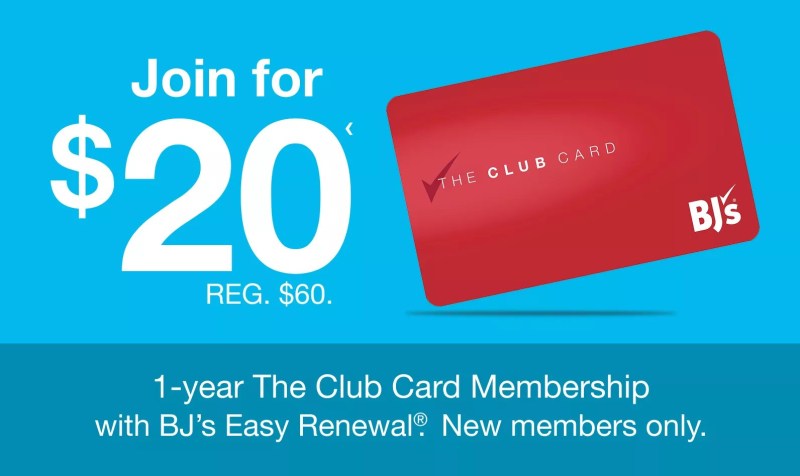
BJ’s Wholesale Club operates on a membership-first model where the cost of entry is the price of admission to a retail environment built for efficiency. The basic membership—currently priced at $55 annually—grants access to a curated selection of non-perishable goods, electronics, furniture, and industrial supplies. Unlike competitors, BJ’s doesn’t offer a "business-only" membership; instead, it markets itself as a hybrid solution for both individual consumers and small enterprises. This dual approach broadens its appeal but also creates a unique dynamic: members must navigate a store layout and inventory that caters to vastly different shopping behaviors.The absence of a premium membership tier is a deliberate choice. BJ’s avoids the complexity of tiered pricing, instead relying on volume discounts and member-exclusive pricing to drive value. For example, a member buying a pallet of paper towels might pay 30% less than a retail shelf price, while a single case could still carry a discount—though not as steep. This model incentivizes larger purchases but doesn’t penalize smaller ones, making it accessible to a wider demographic. The trade-off? BJ’s inventory turns faster, and members must be willing to commit to bulk quantities to maximize savings. The membership itself is a tool, not a destination—its worth is measured in cents per unit, not perks.
Historical Background and Evolution
BJ’s Wholesale Club traces its origins to 1976, when founder Bob Price opened the first BJ’s Wholesale Club in Topeka, Kansas, under the name Big Joe’s Wholesale Club. The concept was simple: offer industrial-sized quantities of goods at wholesale prices to small businesses and savvy shoppers. By 1987, the chain rebranded as BJ’s (a nod to its founder’s nickname, "BJ") and began expanding aggressively across the Midwest. The late 1990s and early 2000s marked a pivotal shift as BJ’s adopted a membership-only model, eliminating walk-in sales and focusing exclusively on cardholders.This transition was risky. While competitors like Costco were building their reputations on member loyalty programs, BJ’s took a leaner approach—no gas stations, no optical centers, no travel services. The strategy paid off. By 2010, BJ’s had grown to over 200 locations, carving out a niche as the affordable alternative to Costco. The membership model remained unchanged: a flat annual fee with no hidden costs. Unlike Sam’s Club (owned by Walmart), BJ’s avoided bundling memberships with other services, keeping its focus squarely on wholesale pricing. Today, the chain operates in 16 states, with a membership base that skews toward small business owners, contractors, and budget-conscious families.
Core Mechanisms: How It Works
The BJ’s club membership functions as a gated-access system where the primary gatekeeper is the annual fee. Once paid, members receive a physical card (or digital equivalent) that grants entry to any BJ’s location. The membership itself doesn’t expire, but the fee must be renewed annually to maintain access. This simplicity extends to the shopping experience: no scanning of membership cards at checkout, no separate business vs. personal designations. The same card works for both, though BJ’s does offer member-exclusive pricing that assumes bulk purchases—whether for a home renovation or a restaurant supply order.Where the membership’s value becomes tangible is in pricing transparency. BJ’s publishes a member price book (available online and in-store) that lists the per-unit cost for nearly every item. This contrasts with competitors that may hide bulk discounts behind "member-only" labels. For instance, a member buying a 40-pound bag of dog food might see a price of $24.99, while a retail store charges $1.20 per pound for a 5-pound bag—effectively $6.00 for the same quantity. The membership doesn’t just open doors; it provides a real-time cost calculator for any purchase. This transparency is BJ’s competitive edge, especially for members who cross-reference prices with competitors like Costco or Amazon Business.
Key Benefits and Crucial Impact
BJ’s club membership isn’t just about saving money—it’s about redefining the economics of bulk shopping. For small business owners, the membership eliminates the need for middlemen, allowing direct access to industrial quantities of supplies at wholesale rates. A local bakery, for example, can purchase a pallet of flour for $120 instead of buying 50 individual bags at retail. For families, the membership turns grocery trips into strategic investments, where a single shopping excursion covers months’ worth of staples. The impact isn’t just financial; it’s operational. Members report reduced trip frequency, lower per-unit costs, and the ability to stockpile without fear of spoilage (thanks to BJ’s emphasis on non-perishables and long shelf-life items).The membership’s design also reflects BJ’s business philosophy: no frills, maximum efficiency. There are no loyalty points to track, no app-based rewards, and no annual fee increases tied to inflation. The $55 price point remains static, which builds trust among members who value predictability. This stability is rare in retail, where membership fees often rise annually. BJ’s avoids this pitfall by absorbing cost increases into product pricing rather than passing them to members. The result? A membership that feels like a fixed cost rather than a variable expense, making it easier to budget for over time.
"BJ’s membership isn’t about perks—it’s about giving you the tools to outsmart the system. If you’re willing to buy in bulk, the savings are undeniable. The real question isn’t whether the membership pays off, but how quickly you can recoup the $55." — Retail Analyst, Supply Chain Weekly
Major Advantages
- Flat-Rate Pricing: No tiers, no surprises. The $55 annual fee is all-inclusive, with no additional charges for business vs. personal use.
- Industrial-Level Discounts: Members access 30–50% off retail prices on pallet quantities, with smaller quantities still discounted (though less aggressively).
- No Hidden Fees: Unlike competitors, BJ’s doesn’t charge for "business-only" items or require separate memberships for different user types.
- Price Transparency: The member price book ensures every item’s cost per unit is visible, allowing for easy comparisons with other retailers.
- Flexible Inventory: BJ’s stock includes non-perishables, electronics, furniture, and commercial supplies, making it versatile for both households and businesses.
Comparative Analysis
| Feature | BJ’s Club Membership | Costco (Gold Star) ||---------------------------|---------------------------------------------------|-------------------------------------------------|
| Annual Fee | $55 (flat rate) | $60 (Executive: $120) |
| Membership Tiers | None | Yes (Basic vs. Executive) |
| Business Use Allowed | Yes (no separate membership) | Yes (but Executive tier required for bulk) |
| Gas Stations | No | Yes (with rewards) |
| Optical/Pharmacy | No | Yes (member-exclusive pricing) |
| Price Transparency | Full member price book published | Limited (some items require membership scan) |

Future Trends and Innovations
BJ’s is poised to leverage its lean, membership-centric model to adapt to evolving retail trends. One likely innovation is digital integration without dilution. While competitors like Costco have expanded into e-commerce and mobile apps, BJ’s has resisted, maintaining a low-tech, high-efficiency approach. However, as Gen Z and younger millennials adopt bulk shopping habits, expect BJ’s to introduce mobile membership verification (replacing physical cards) and a limited e-commerce platform—not as a replacement for in-store shopping, but as a supplement for hard-to-find items.Another frontier is supply chain partnerships. BJ’s has already begun offering member-exclusive supplier deals, where manufacturers provide discounts directly to BJ’s members (bypassing distributors). This model could expand into subscription-based bulk deliveries for businesses, turning the membership into a logistics hub rather than just a shopping pass. The key for BJ’s will be balancing innovation with its core strength: keeping the membership simple and the savings clear. Any deviation from this principle risks alienating the very members who keep the model viable.
Conclusion
BJ’s club membership is more than a retail access pass—it’s a financial tool for those who shop with intention. Its strength lies in its simplicity: no tiers, no gimmicks, just direct wholesale pricing for members willing to buy in volume. For small businesses, the membership can slash supply costs by 40%; for families, it turns grocery budgets into long-term investments. The absence of frills isn’t a limitation; it’s a feature. BJ’s doesn’t compete on perks or convenience—it competes on raw, unfiltered savings, and in an era of rising costs, that’s a proposition few can ignore.The membership’s future hinges on its ability to stay true to its roots while adapting to digital expectations. If BJ’s can introduce smart technology without losing its membership-first ethos, it could redefine wholesale retail for the next decade. For now, the message is clear: pay $55 once a year, and let the savings begin.
Comprehensive FAQs
Q: Can I use a BJ’s club membership for both personal and business purchases?
A: Yes. BJ’s does not separate personal and business memberships. The same $55 annual fee covers all uses, whether you’re stocking an office or your home.
Q: Does BJ’s offer any discounts for first-time members?
A: BJ’s does not typically offer first-time member discounts. The value comes from the member price book, which provides upfront savings on bulk items. Some locations may run limited-time promotions, but these are rare.
Q: Are there any restrictions on how much I can buy with a BJ’s membership?
A: No hard limits exist, but BJ’s reserves the right to restrict bulk purchases for resale (e.g., buying pallets of toilet paper to flip for profit). Members are expected to shop for personal or legitimate business use only.
Q: Can I transfer or sell my BJ’s membership?
A: No. BJ’s memberships are non-transferable and tied to the cardholder’s name. The $55 fee is refundable only if canceled before the renewal date.
Q: Does BJ’s have a business-only membership with additional perks?
A: No. Unlike Costco or Sam’s Club, BJ’s does not offer tiered memberships. All members—personal or business—pay the same $55 fee and receive identical pricing.
Q: How does BJ’s pricing compare to Costco’s for the same items?
A: BJ’s often undercuts Costco on non-perishable staples (e.g., paper goods, cleaning supplies) but may have fewer fresh food or specialty item options. For electronics and furniture, BJ’s tends to offer better bulk discounts than Costco’s Executive tier.
Q: What happens if I don’t renew my BJ’s membership?
A: Your access will be suspended after the renewal date. Unlike some competitors, BJ’s does not offer grace periods, so it’s crucial to renew annually to avoid losing membership benefits.
Q: Can I use my BJ’s membership at other wholesale clubs?
A: No. BJ’s memberships are location-specific and cannot be used at Costco, Sam’s Club, or other warehouse clubs.
Q: Does BJ’s offer any loyalty programs or cashback rewards?
A: No. BJ’s focuses solely on member pricing rather than points or cashback. The savings come from the per-unit cost, not external rewards.
Leave a Comment
Comments are moderated before appearing. The data you submit is processed according to the Privacy Policy of versiliasolutions.oneagency.co.