The Art and Science of Bonding Metal to Metal
Table of Contents
- The Complete Overview of Bonding Metal to Metal
- Historical Background and Evolution
- Core Mechanisms: How It Works
- Key Benefits and Crucial Impact
- Major Advantages
- Comparative Analysis
- Future Trends and Innovations
- Conclusion
- Comprehensive FAQs
- Q: Can dissimilar metals (e.g., steel and aluminum) be bonded together?
- Q: What’s the strongest method for bonding metal to metal?
- Q: How does surface preparation affect metal bonding?
- Q: Are there eco-friendly alternatives to traditional welding?
- Q: What industries rely most on advanced metal bonding?
- Q: Can metal bonding be automated entirely?
Metal doesn’t just resist—it adheres. The fusion of two metallic surfaces isn’t merely a mechanical process; it’s a marriage of physics, chemistry, and engineering precision. Whether in aerospace frames, automotive chassis, or high-end jewelry, the ability to permanently bond metal to metal defines modern manufacturing. Yet beneath the surface of this seemingly straightforward task lies a labyrinth of variables: heat distribution, alloy compatibility, and residual stress—each demanding meticulous control.
The stakes are higher than ever. A poorly executed joint can compromise structural integrity, while a flawless one can extend a part’s lifespan by decades. Take the case of the Boeing 787 Dreamliner, where advanced metal-to-metal bonding techniques reduced weight by 20% without sacrificing strength. Or consider the delicate artistry of goldsmiths, where soldering two pieces of platinum requires temperatures precise to within 10°C. The line between failure and excellence is razor-thin—and the tools to cross it have evolved dramatically over centuries.
Modern industry no longer relies solely on brute force. Ultrasonic welding, friction stir bonding, and even nanoscale adhesive interfaces now sit alongside traditional methods like MIG and TIG. But the core question remains: How do these processes actually work, and why does one technique outperform another in specific applications? The answer lies in understanding the invisible forces at play—the atomic bonds forming, the thermal gradients shifting, and the metallurgical transformations occurring in milliseconds.
The Complete Overview of Bonding Metal to Metal
The science of bonding metal to metal is a study in contrasts. On one hand, it’s an ancient craft—blacksmiths have been forging iron since 1200 BCE, using hammer-and-anvil techniques to create tools and weapons. On the other, it’s a high-tech discipline where lasers and robotic arms replace human hands, achieving tolerances measured in micrometers. The spectrum of methods reflects this duality: from the high-energy spark of arc welding to the cold precision of diffusion bonding, each approach targets a specific balance of strength, ductility, and cost.
What unites these techniques is their reliance on three fundamental principles: thermal activation (melting or softening the metal), mechanical interlocking (forcing surfaces together under pressure), and atomic diffusion (allowing metal atoms to intermingle at the molecular level). The choice of method hinges on material properties—whether the metal is ferrous or non-ferrous, its melting point, and the desired joint characteristics. For example, aluminum, with its oxide layer, demands specialized flux or ultrasonic energy to break through its natural barrier, while steel’s high thermal conductivity makes it ideal for resistance spot welding in automotive assembly lines.
Historical Background and Evolution
The origins of metal-to-metal bonding trace back to prehistoric copper smelting, but the first systematic welding techniques emerged in the Bronze Age. Ancient Egyptians used hammer welding to forge tools, a process where two heated metal surfaces were pounded together until they fused. By the Industrial Revolution, the invention of the oxyacetylene torch in the late 19th century revolutionized the field, enabling large-scale fabrication. This thermal method became the backbone of steel construction, allowing skyscrapers like the Eiffel Tower to rise.
The 20th century brought electric arc welding, which replaced open flames with controlled electrical currents, improving safety and precision. Meanwhile, the aerospace industry drove innovations like electron beam welding (EBW) and laser beam welding (LBW), capable of joining high-strength alloys without distorting their microstructure. Today, additive manufacturing—such as 3D printing with metal powders—has introduced a new paradigm, where metal bonding occurs layer by layer, atom by atom, rather than in a single, high-energy event.
Core Mechanisms: How It Works
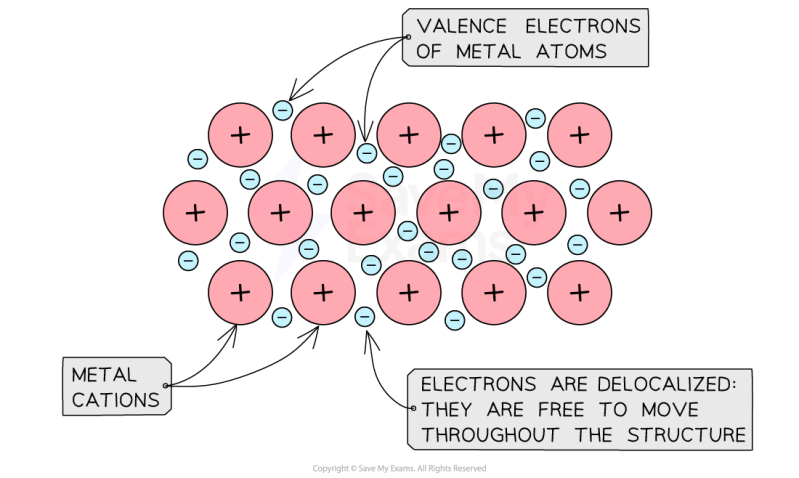
At its core, bonding metal to metal exploits the metallic bond—a sea of delocalized electrons that hold atoms together in a lattice. When two surfaces are brought into contact under the right conditions, these electrons can bridge the gap, creating a cohesive joint. The process varies by method: in fusion welding, heat melts the base metal, forming a molten pool that solidifies as a single mass. In solid-state welding, such as friction stir welding, no melting occurs; instead, mechanical agitation stirs the material at the atomic level, forging a bond through plastic deformation.
The critical factor is surface preparation. Oxides, contaminants, and microscopic imperfections can weaken the bond. That’s why techniques like pickling (acid cleaning) or brushing are essential before welding. Even in modern laser welding, a clean surface ensures optimal energy absorption. The result? A joint that isn’t just strong but also resistant to fatigue, corrosion, and thermal cycling—qualities that make the difference between a bridge that lasts a century and one that collapses within decades.
Key Benefits and Crucial Impact
The ability to permanently bond metal to metal has reshaped industries, from automotive to medical devices. For manufacturers, it means lighter, more efficient structures; for engineers, it unlocks designs previously constrained by assembly limitations. The aerospace sector, for instance, relies on metal-to-metal bonding to create fuel-efficient aircraft, while the medical field uses it to fabricate biocompatible implants. The economic impact is equally significant: a well-executed weld can save millions in material costs by eliminating fasteners or reducing the need for redundant parts.
Yet the benefits extend beyond functionality. Aesthetically, seamless joints are prized in luxury goods, from high-end watches to bespoke firearms. Even in infrastructure, the invisible welds holding together pipelines or bridges are a testament to human ingenuity—silent guardians against failure. The trade-off? Precision demands investment in equipment, training, and quality control. But the payoff—durability, reliability, and performance—justifies the cost.
— Dr. Elena Vasquez, Metallurgical Engineer at MIT
"Modern metal bonding isn’t just about joining two pieces; it’s about engineering the interface at the atomic scale. The future belongs to those who can predict—and control—how metals will behave under stress, heat, and time."
Major Advantages
- Structural Integrity: Welded joints can match or exceed the strength of the base metal, unlike mechanical fasteners that introduce stress concentrations.
- Material Efficiency: Eliminates the need for rivets, bolts, or adhesives, reducing weight and waste in high-performance applications.
- Design Flexibility: Enables complex geometries, such as monocoque structures in cars or hollow turbine blades, that would be impossible with traditional assembly.
- Corrosion Resistance: Properly executed welds create a continuous metal surface, minimizing crevices where corrosion can initiate.
- Cost Savings: While initial setup costs may be high, the long-term reduction in maintenance and part replacement often outweighs expenses.
Comparative Analysis
| Method | Key Characteristics |
|---|---|
| Arc Welding (MIG/TIG) | High heat input; suitable for thick materials; requires filler metal in most cases; visible weld bead. |
| Laser Beam Welding (LBW) | Precision micrometer-scale joins; minimal distortion; ideal for thin or dissimilar metals; high capital cost. |
| Friction Stir Welding (FSW) | No melting; solid-state process; excellent for aluminum alloys; limited to lap or butt joints. |
| Diffusion Bonding | Low-temperature, high-pressure process; used in aerospace for dissimilar metals; requires vacuum or inert atmosphere. |

Future Trends and Innovations
The next frontier in metal-to-metal bonding lies in hybrid techniques and smart materials. Researchers are exploring cold welding, where metals bond at room temperature under extreme pressure, eliminating the need for heat entirely. Meanwhile, self-healing alloys, embedded with microcapsules of bonding agents, promise to repair cracks autonomously. Additive manufacturing is also pushing boundaries, with selective laser melting (SLM) enabling parts with internal lattice structures that were once impossible to weld conventionally.
Automation will further democratize access to high-precision bonding. AI-driven welding robots, equipped with real-time sensors, can adjust parameters mid-process to compensate for material inconsistencies. Meanwhile, nanotechnology is enabling metal bonding at the atomic scale, where carbon nanotubes or graphene layers enhance interfacial strength. The result? Materials that aren’t just joined but optimized for their application, from bend-resistant smartphone frames to self-repairing ship hulls.
Conclusion
The evolution of bonding metal to metal mirrors humanity’s progress—from fire and hammer to lasers and algorithms. What began as a necessity for survival has become a cornerstone of modern innovation. Yet the fundamentals remain unchanged: the pursuit of a bond that is stronger than its components, more reliable than any alternative, and capable of enduring the test of time. As materials science advances, so too will our ability to push the boundaries of what’s possible, one weld at a time.
For engineers, artisans, and manufacturers alike, the challenge is clear: master the science, respect the craft, and never underestimate the power of two metals becoming one.
Comprehensive FAQs
Q: Can dissimilar metals (e.g., steel and aluminum) be bonded together?
A: Yes, but with challenges. Techniques like diffusion bonding or explosion welding can join dissimilar metals by controlling heat and pressure to prevent brittle intermetallic compounds. However, galvanic corrosion may occur, requiring protective coatings.
Q: What’s the strongest method for bonding metal to metal?
A: Electron beam welding (EBW) and laser beam welding (LBW) produce the strongest joints due to deep penetration and minimal heat-affected zones. For certain applications, friction stir welding (FSW) offers superior fatigue resistance in aluminum alloys.
Q: How does surface preparation affect metal bonding?
A: Surface cleanliness is critical. Oxides, grease, or rust can weaken the bond. Methods like pickling, grit blasting, or ultrasonic cleaning remove contaminants, while flux or shielding gas (e.g., argon in TIG welding) prevents re-oxidation during the process.
Q: Are there eco-friendly alternatives to traditional welding?
A: Yes. Cold welding (room-temperature bonding) and ultrasonic welding reduce energy use. Additionally, friction stir welding eliminates filler materials and fumes, making it a sustainable choice for aluminum recycling.
Q: What industries rely most on advanced metal bonding?
A: Aerospace (titanium alloys), automotive (high-strength steels), medical (biocompatible implants), and energy (pipeline construction) are the primary sectors. Each demands specialized techniques to meet performance and safety standards.
Q: Can metal bonding be automated entirely?
A: Nearly. Modern systems use robotic arc welding, laser-guided bonding, and AI for real-time quality control. However, human oversight remains essential for complex or custom applications where adaptability is key.
Leave a Comment
Comments are moderated before appearing. The data you submit is processed according to the Privacy Policy of versiliasolutions.oneagency.co.