Builders Risk Liability Insurance: The Hidden Shield for Construction Projects
Table of Contents
- The Complete Overview of Builders Risk Liability Insurance
- Historical Background and Evolution
- Core Mechanisms: How It Works
- Key Benefits and Crucial Impact
- Major Advantages
- Comparative Analysis
- Future Trends and Innovations
- Conclusion
- Comprehensive FAQs
- Q: What types of projects require builders risk liability insurance?
- Q: Does builders risk liability insurance cover delays caused by labor strikes?
- Q: Can I transfer my builders risk liability insurance to a new contractor mid-project?
- Q: How do premiums for builders risk liability insurance compare to general liability?
- Q: What happens if a project is abandoned before completion?
- Q: Are there state-specific variations in builders risk liability insurance?
The moment a construction project breaks ground, unseen risks materialize alongside the blueprints. A sudden fire could reduce a multi-million-dollar development to smoldering rubble. A faulty subcontractor’s work might trigger lawsuits that cripple a developer’s finances. Yet, many in the industry still treat builders risk liability insurance as an afterthought—until disaster strikes. This specialized coverage isn’t just about mitigating losses; it’s about preserving the viability of an entire enterprise when the unexpected becomes reality.
The construction sector operates on razor-thin margins where a single claim can erase years of profit. Without proper builders risk insurance, a single incident—whether a collapsed crane, a vandalized site, or a design flaw leading to structural failure—can force a company into bankruptcy. The insurance isn’t merely a safety net; it’s the difference between a project’s survival and its collapse. And unlike general liability policies, which often exclude construction-specific exposures, builders risk liability insurance is tailored to the chaotic, high-stakes environment of building.
Even seasoned contractors underestimate how quickly risks escalate. A stolen excavator isn’t just an equipment loss—it’s a delay that triggers liquidated damages clauses in contracts. A third-party injury on-site isn’t just a medical bill; it’s a lawsuit that could expose the project owner to punitive damages. The insurance industry has evolved to address these precise vulnerabilities, but the coverage remains underutilized because its nuances are rarely explained with the clarity they demand.
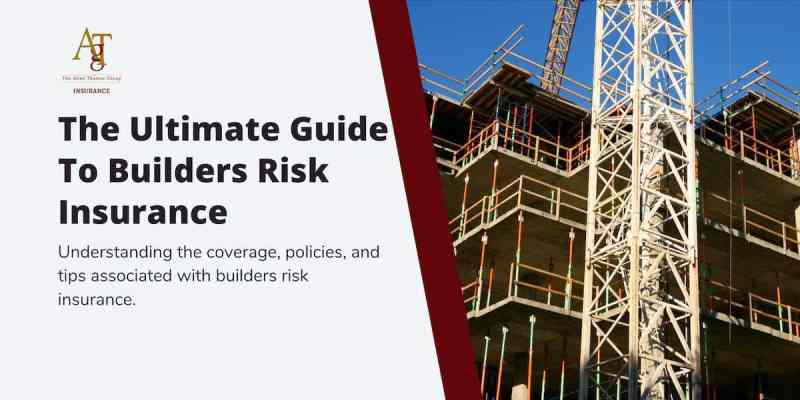
The Complete Overview of Builders Risk Liability Insurance
Builders risk liability insurance is a hybrid policy designed to shield construction projects from two distinct but equally devastating threats: physical property damage and third-party legal liabilities. While traditional builders risk insurance focuses on protecting the structure itself—covering fires, windstorms, or theft—builders risk liability insurance extends protection to the financial repercussions of accidents, errors, or omissions that arise during construction. This dual-layer approach ensures that both the physical assets and the project’s legal standing remain secure, even when subcontractors, suppliers, or unforeseen events introduce risk.The policy’s scope is deliberately broad, addressing gaps left by standard commercial insurance. For example, if a subcontractor’s negligence causes a collapse that injures a passerby, the liability component would cover medical costs and legal defense—whereas the property damage component would repair the structure. This integration makes builders risk liability insurance indispensable for large-scale projects, where a single incident could trigger claims exceeding millions. Without it, project owners and contractors expose themselves to catastrophic financial exposure, often without realizing the full extent of their vulnerability until it’s too late.
Historical Background and Evolution
The origins of builders risk insurance trace back to the early 20th century, when industrialization accelerated construction projects and the financial stakes grew exponentially. Before standardized policies, builders relied on ad-hoc arrangements or self-insurance, which proved disastrous during the Great Depression when construction defaults skyrocketed. The first formal builders risk policies emerged in the 1930s, but they initially focused solely on property damage—ignoring the legal liabilities that would later become the policy’s defining feature.The modern iteration of builders risk liability insurance took shape in the 1970s and 1980s, as litigation culture expanded and construction projects became more complex. Courts began holding project owners and general contractors liable for subcontractors’ actions under theories of vicarious liability, creating a legal minefield. Insurers responded by developing specialized endorsements that bundled property damage coverage with liability protections, specifically for construction-phase exposures. Today, the policy is a cornerstone of risk management in commercial, residential, and infrastructure projects, reflecting its evolution from a niche product to an industry necessity.
Core Mechanisms: How It Works
Builders risk liability insurance operates on a two-pronged mechanism: property coverage and liability coverage, each with distinct triggers and exclusions. The property component activates when physical damage occurs to the project—whether from fire, vandalism, or a storm—during the construction period. The liability component, however, is event-driven: it responds to claims arising from bodily injury, property damage, or personal injury caused by the project’s activities. For instance, if a falling scaffold injures a pedestrian, the liability portion would cover the claim, while the property portion might repair the damaged sidewalk.The policy’s effectiveness hinges on precise definitions of "construction period," which typically begins when physical work starts and ends upon project completion or occupancy—whichever occurs first. Exclusions are equally critical; most policies exclude intentional acts, mold damage, or delays caused by labor strikes, forcing insureds to purchase additional endorsements if these risks are present. The premiums are calculated based on the project’s value, duration, location, and perceived risk factors, with higher costs for high-rise buildings or hazardous sites. Understanding these mechanics is essential, as misclassifying a risk can leave gaps that expose the project to unrecoverable losses.
Key Benefits and Crucial Impact
Few insurance products offer the same level of financial protection as builders risk liability insurance, yet its value is often overshadowed by the complexity of construction contracts. The policy doesn’t just cover losses—it preserves cash flow, maintains lender compliance, and ensures projects can proceed without interruption. For developers, it’s the difference between meeting a loan covenant and defaulting on a multimillion-dollar obligation. For contractors, it mitigates the risk of a single lawsuit wiping out a year’s revenue. The insurance’s true impact lies in its ability to transform speculative risks into manageable costs, allowing stakeholders to focus on execution rather than existential threats.Without this coverage, the consequences of a major incident can be catastrophic. Consider a high-rise project where a fire destroys $50 million in materials and delays the schedule by six months. The property damage component would cover the rebuild, but the liability component might also shield the owner from lawsuits filed by tenants displaced during the fire. The policy’s dual protection ensures that both the physical and legal ramifications of an event are addressed, rather than leaving one aspect exposed. This holistic approach is why builders risk liability insurance is increasingly mandated by lenders and project owners as a condition of funding.
> "A construction project without builders risk liability insurance is like a skyscraper built on sand—it may look stable until the first tremor hits." — John Carter, Senior Risk Consultant, Marsh & McLennan
Major Advantages
- Comprehensive Property Protection: Covers direct physical damage to the project from covered perils (fire, wind, theft) during construction, including materials, equipment, and temporary structures.
- Third-Party Liability Shield: Protects against lawsuits from bodily injury, property damage, or personal injury (e.g., a subcontractor’s error causing a collapse that injures bystanders).
- Contractual Requirement Fulfillment: Many lenders and clients now demand builders risk liability insurance as a precondition for approval, ensuring compliance without additional negotiations.
- Cost-Effective Risk Transfer: Premiums are often lower than self-insuring against catastrophic events, especially for high-value projects where a single claim could bankrupt the insured.
- Flexible Policy Terms: Can be tailored to specific project phases (e.g., pre-construction, active build, post-completion) and adjusted for unique risks like environmental hazards or high-theft zones.
Comparative Analysis
| Builders Risk Liability Insurance | General Liability Insurance |
|---|---|
| Covers property damage and third-party liability during construction. | Primarily covers liability (bodily injury, property damage) but excludes construction-phase risks. |
| Active only during the construction period; expires upon completion. | Ongoing coverage for business operations, including post-construction activities. |
| Includes materials, equipment, and temporary structures as insured property. | Excludes property damage to projects under construction unless specified in endorsements. |
| Premiums based on project value, duration, and risk factors. | Premiums based on business revenue, industry classification, and claims history. |

Future Trends and Innovations
The next decade will likely see builders risk liability insurance evolve in response to three major forces: climate change, digital transformation, and regulatory pressure. As extreme weather events become more frequent, insurers are expected to introduce dynamic pricing models that adjust premiums in real time based on storm forecasts or wildfire risks. Simultaneously, the rise of smart construction—using IoT sensors, drones, and AI for monitoring—will enable insurers to offer usage-based policies, where coverage is triggered only when high-risk activities (e.g., crane operations) are underway.Regulatory changes may also expand the scope of builders risk liability insurance, particularly in states where construction defect litigation is rampant. Some insurers are already piloting "wrap-up" policies that combine builders risk insurance with workers’ compensation and professional liability for entire project lifecycles. These innovations will make the coverage more adaptable, though they may also increase complexity for insureds navigating layered policies. The key trend, however, is toward predictive risk management, where data-driven underwriting replaces traditional actuarial tables to price coverage more accurately.
Conclusion
Builders risk liability insurance is not an optional add-on—it’s a strategic necessity for any construction project exceeding a modest scale. The policy’s ability to mitigate both physical and legal risks makes it a cornerstone of modern project finance, yet its full potential remains untapped by many in the industry. The consequences of operating without it are clear: financial ruin, project abandonment, or the erosion of a company’s reputation. As construction becomes more complex and litigious, the insurance will only grow in importance, evolving to address emerging threats like cyber risks in smart buildings or supply chain disruptions.For contractors, developers, and lenders, the message is straightforward: builders risk liability insurance is the foundation upon which financial resilience is built. Ignoring it is not a gamble—it’s a guarantee of exposure. The time to secure coverage is before the first shovel hits the ground, not after the first claim is filed.
Comprehensive FAQs
Q: What types of projects require builders risk liability insurance?
A: While not legally mandatory in all jurisdictions, builders risk liability insurance is strongly recommended—and often required by lenders—for commercial, residential, and infrastructure projects valued at $500,000 or more. High-risk projects (e.g., high-rises, bridges, or sites with hazardous materials) typically mandate it, as do projects involving multiple subcontractors or public funding.
Q: Does builders risk liability insurance cover delays caused by labor strikes?
A: No, standard policies exclude delays due to labor disputes unless an explicit endorsement is purchased. These exclusions reflect the unpredictable nature of strikes, which insurers treat as a business risk rather than a covered peril. Contractors should negotiate strike clauses in their contracts or purchase additional coverage if this risk is significant.
Q: Can I transfer my builders risk liability insurance to a new contractor mid-project?
A: Transferring the policy is possible but requires insurer approval and may involve a new risk assessment. The new contractor’s financial stability, project experience, and safety record will influence whether the insurer agrees to assume the policy. A seamless transfer is rare; most insurers prefer to issue a new policy for the remaining project phase.
Q: How do premiums for builders risk liability insurance compare to general liability?
A: Premiums for builders risk liability insurance are generally higher than general liability because they account for both property damage and liability risks during construction. For example, a $10 million commercial project might incur $50,000–$150,000 annually for builders risk liability insurance, whereas general liability for the same entity could cost $20,000–$50,000. The difference reflects the specialized coverage and higher exposure during active construction.
Q: What happens if a project is abandoned before completion?
A: If the project is abandoned, the builders risk liability insurance policy typically terminates on the policy’s end date (e.g., completion or expiration). However, insurers may offer a "tail" coverage extension for a limited period if the abandonment is unexpected. Without coverage, the unfinished structure becomes vulnerable to uninsured perils, and any liabilities arising from the abandoned site (e.g., trespassing injuries) would fall on the project owner.
Q: Are there state-specific variations in builders risk liability insurance?
A: Yes, coverage terms and exclusions can vary by state due to differences in construction defect laws, building codes, and insurance regulations. For example, California’s strict construction defect statutes may lead insurers to impose additional exclusions for latent defects, while Florida’s hurricane-prone status could result in higher premiums or mandatory windstorm endorsements. Always verify state-specific requirements when procuring the policy.
Leave a Comment
Comments are moderated before appearing. The data you submit is processed according to the Privacy Policy of versiliasolutions.oneagency.co.