Mastering C: How to Extract the Decimal Part of a Float Like a Pro
Table of Contents
- The Complete Overview of Extracting the Decimal Part in C
- Historical Background and Evolution
- Core Mechanisms: How It Works
- Key Benefits and Crucial Impact
- Major Advantages
- Comparative Analysis
- Future Trends and Innovations
- Conclusion
- Comprehensive FAQs
- Q: Why does `x - (int)x` fail for negative numbers?
- Q: Is `fmod()` slower than arithmetic subtraction?
- Q: Can I use bit manipulation to extract the decimal part?
- Q: What’s the most precise way to handle very large floats?
- Q: How do I ensure consistency across compilers?
Floating-point numbers in C carry both integer and fractional components, yet extracting just the decimal portion—a seemingly simple task—often reveals subtle complexities. Whether you're refining financial calculations, scientific simulations, or game physics, understanding how to get the decimal part of a float isn't just about syntax; it's about mastering precision control, avoiding pitfalls like floating-point rounding errors, and leveraging language-specific optimizations. The challenge lies in balancing brute-force methods with elegant mathematical approaches, where a single misplaced operator can turn a precise result into a chaotic approximation.
At its core, the problem hinges on separating the fractional component from the whole number part. While languages like Python offer built-in functions (`math.modf`), C demands manual intervention—requiring developers to either subtract the integer part or use modular arithmetic. The choice between these methods isn’t arbitrary; it depends on whether you prioritize readability, performance, or compatibility with legacy systems. For instance, `fmod()` excels in handling negative numbers correctly, whereas simple subtraction (`x - (int)x`) can introduce truncation artifacts in certain edge cases.
The stakes rise when dealing with extreme values or custom precision requirements. A naive approach might fail for numbers like `1.0000001`, where floating-point representation quirks demand careful handling. This is where understanding C’s type promotions and the IEEE 754 standard becomes indispensable. The decimal extraction process isn’t just about extracting digits—it’s about preserving the integrity of the original value while isolating its fractional essence.
The Complete Overview of Extracting the Decimal Part in C
Extracting the fractional component of a floating-point number in C is a fundamental operation with applications spanning from financial software to physics engines. The process involves dissecting the number into its integer and fractional parts, a task that appears straightforward but reveals nuanced challenges when implemented incorrectly. At its simplest, the operation can be achieved through arithmetic subtraction or modular arithmetic, but each method carries trade-offs in terms of precision, performance, and edge-case handling. For example, subtracting the truncated integer part (`x - (int)x`) works for positive numbers but fails for negatives without additional logic, while `fmod()` provides a more robust solution at the cost of function call overhead.The complexity deepens when considering floating-point representation. Unlike integers, floats are stored in binary with limited precision, leading to rounding errors that can distort the decimal part. Developers must account for these quirks, especially when dealing with monetary values or scientific data where even minute inaccuracies are unacceptable. The choice of method—whether arithmetic, modular, or type-casting—thus becomes a critical decision point, influenced by the specific use case and performance constraints of the application.
Historical Background and Evolution
The need to manipulate floating-point numbers dates back to the early days of computing, when hardware limitations forced developers to implement arithmetic operations manually. Early languages like Fortran introduced basic floating-point support, but it wasn’t until C emerged in the 1970s that developers gained finer control over these operations. The inclusion of functions like `fmod()` in the C standard library reflected a growing awareness of the pitfalls of naive arithmetic, particularly around negative numbers and precision loss.Over time, the IEEE 754 standard became the de facto framework for floating-point arithmetic, standardizing how numbers are represented and manipulated. This standardization allowed developers to write portable code, but it also highlighted the need for careful handling of operations like decimal extraction. Modern compilers and libraries now offer optimizations for such operations, but the underlying principles remain rooted in the early challenges of floating-point mathematics.
Core Mechanisms: How It Works
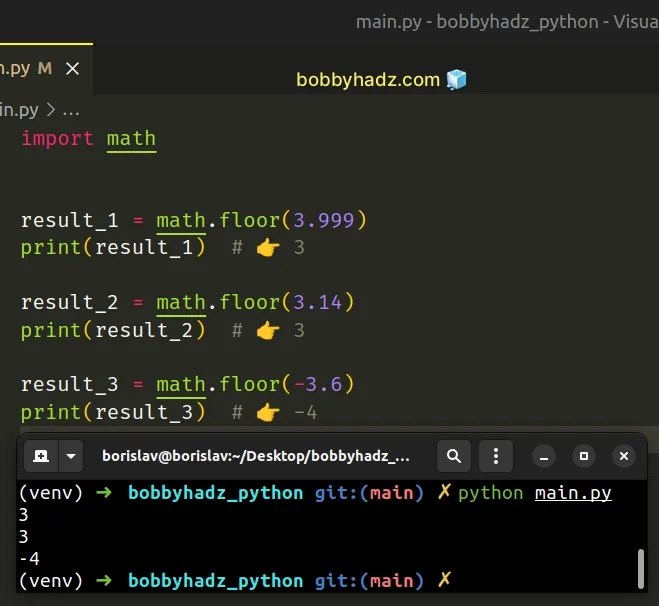
The most direct method to extract the decimal part of a float is through subtraction: subtract the integer part from the original number. For a positive float `x`, this is `x - (int)x`. However, this approach fails for negative numbers because casting to `(int)` truncates toward zero, not toward negative infinity. For example, `(int)-3.7` yields `-3`, so `x - (int)x` would incorrectly return `0.3` instead of `-0.7`. To fix this, you can use `floor()` or `ceil()` depending on the sign of `x`, or leverage `fmod()` for a one-size-fits-all solution.Modular arithmetic, via `fmod()`, is another robust approach. The function returns the fractional part with the same sign as the original number, making it ideal for general-purpose use. However, `fmod()` operates on doubles by default, which can introduce unnecessary precision for single-precision floats. In such cases, casting to `float` before and after the operation ensures efficiency without sacrificing accuracy.
Key Benefits and Crucial Impact
Understanding how to get the decimal part of a float in C is more than a technical exercise—it’s a gateway to writing precise, efficient, and reliable code. In financial applications, even a tiny error in decimal extraction can lead to incorrect transaction processing, while in scientific computing, it might corrupt simulation results. The ability to isolate the fractional component also enables advanced operations like rounding, scaling, and normalization, which are critical in data processing pipelines.The impact extends beyond correctness to performance. A poorly chosen method can introduce unnecessary overhead, especially in performance-critical loops. For instance, repeatedly calling `fmod()` in a tight loop may slow down an application compared to a simple arithmetic operation, even if the latter requires additional conditional checks. Balancing these trade-offs is key to optimizing code without sacrificing accuracy.
"Precision in floating-point arithmetic isn’t just about getting the right answer—it’s about ensuring that answer remains consistent across platforms and over time." — Brian Kernighan, Co-creator of C
Major Advantages
- Precision Control: Methods like `fmod()` adhere strictly to IEEE 754 standards, ensuring consistent results across systems.
- Edge-Case Handling: Arithmetic approaches with `floor()`/`ceil()` correctly handle negative numbers, avoiding common pitfalls.
- Performance Optimization: Simple subtraction or type-casting can outperform library calls in non-critical sections of code.
- Portability: Standard library functions ensure compatibility across compilers and architectures.
- Extensibility: Custom precision handling (e.g., for fixed-point arithmetic) can be built atop these foundational techniques.
Comparative Analysis
| Method | Pros and Cons |
|---|---|
| `x - (int)x` | Fast, simple; fails for negative numbers without adjustments. |
| `fmod(x, 1.0)` | Handles negatives correctly; may introduce double-precision overhead for floats. |
| `floor(x) - x` (for negatives) | Accurate for negatives; requires conditional logic. |
| Type-casting to `uint32_t` (hacky) | Ultra-fast for single-precision; non-portable and error-prone. |

Future Trends and Innovations
As hardware evolves, so too will the tools for floating-point manipulation. Modern GPUs and SIMD instructions now allow for parallelized decimal extraction, reducing latency in large-scale computations. Additionally, languages like Rust and Zig are introducing safer abstractions over raw floating-point operations, potentially obviating many of the manual techniques used in C. However, C’s low-level control will remain relevant in domains where performance is non-negotiable, such as embedded systems or high-frequency trading.The rise of arbitrary-precision libraries (e.g., GMP) also suggests a future where developers can trade off some performance for exact decimal arithmetic, further blurring the line between floating-point and fixed-point operations. For now, though, mastering the classic methods of how to get the decimal part of a float in C remains a cornerstone of numerical programming.
Conclusion
Extracting the decimal part of a float in C is a deceptively simple task with profound implications for code correctness and performance. Whether you opt for arithmetic subtraction, modular arithmetic, or library functions, each approach carries distinct trade-offs that must align with your application’s needs. The key takeaway is to understand not just the syntax but the underlying mathematics and hardware behavior, ensuring your solution is both efficient and robust.As you refine your skills in this area, remember that floating-point operations are rarely one-size-fits-all. Experiment with different methods, benchmark their performance, and validate their accuracy against edge cases. The ability to isolate the fractional component is just the beginning—what truly sets apart expert developers is their ability to wield this knowledge in service of larger computational goals.
Comprehensive FAQs
Q: Why does `x - (int)x` fail for negative numbers?
A: Casting a negative float to `(int)` truncates toward zero, not toward negative infinity. For example, `(int)-3.7` is `-3`, so `-3.7 - (-3) = 0.3`, which is incorrect. Use `floor(x) - x` for negatives or `fmod()` for a universal solution.
Q: Is `fmod()` slower than arithmetic subtraction?
A: Generally, yes. `fmod()` involves a function call and may promote the float to double precision, adding overhead. For performance-critical code, arithmetic methods (with proper sign handling) are often preferable.
Q: Can I use bit manipulation to extract the decimal part?
A: Bit manipulation can be used for single-precision floats by interpreting the bits as an integer, but this is non-portable and error-prone due to platform-specific endianness and IEEE 754 quirks. Avoid unless absolutely necessary.
Q: What’s the most precise way to handle very large floats?
A: For extreme values, use `fmod()` or arbitrary-precision libraries like GMP. Simple arithmetic may suffer from rounding errors, especially when the integer part is much larger than the fractional part.
Q: How do I ensure consistency across compilers?
A: Stick to standard library functions (`fmod()`, `floor()`, etc.) and avoid compiler-specific extensions. Test on multiple platforms to catch edge cases early.
Leave a Comment
Comments are moderated before appearing. The data you submit is processed according to the Privacy Policy of versiliasolutions.oneagency.co.