How to Calculate Age by Birth Date: Precision Methods for Every Scenario
Table of Contents
- The Complete Overview of Calculating Age by Birth Date
- Historical Background and Evolution
- Core Mechanisms: How It Works
- Key Benefits and Crucial Impact
- Major Advantages
- Comparative Analysis
- Future Trends and Innovations
- Conclusion
- Comprehensive FAQs
- Q: How do I calculate age by birth date manually?
- Q: Why does February 29 complicate age calculations?
- Q: Can time zones affect age calculation?
- Q: How do different cultures count age?
- Q: What’s the most accurate digital tool for age calculation?
- Q: How do legal systems handle age verification?
- Q: Can AI replace manual age calculation?
Age is more than a number—it’s a biological, legal, and cultural milestone. Yet, the simplest act of calculating age by birth date reveals hidden complexities: time zones, leap years, and regional calendar systems. A child born at midnight in New York is technically a year older by the time the clock strikes noon in London, even if the date hasn’t changed. This precision matters in everything from passport renewals to retirement benefits.
The process of determining age from a birth date isn’t uniform. In some cultures, age is counted inclusively (a baby is 1 year old at birth), while others use exclusive counting. Even the Gregorian calendar—dominant today—wasn’t always the standard. Before its adoption in 1582, Europe used the Julian calendar, which misaligned with astronomical seasons by 10 days. For someone born in 1500, calculating their age in 1600 would require adjusting for both calendar shifts and leap years.
Digital tools now automate age calculation by birth date, but understanding the underlying mechanics ensures accuracy in edge cases. A miscalculation could cost a student their graduation eligibility or a voter their right to participate. Whether you’re verifying a document, planning a milestone, or writing software, mastering this skill is indispensable.
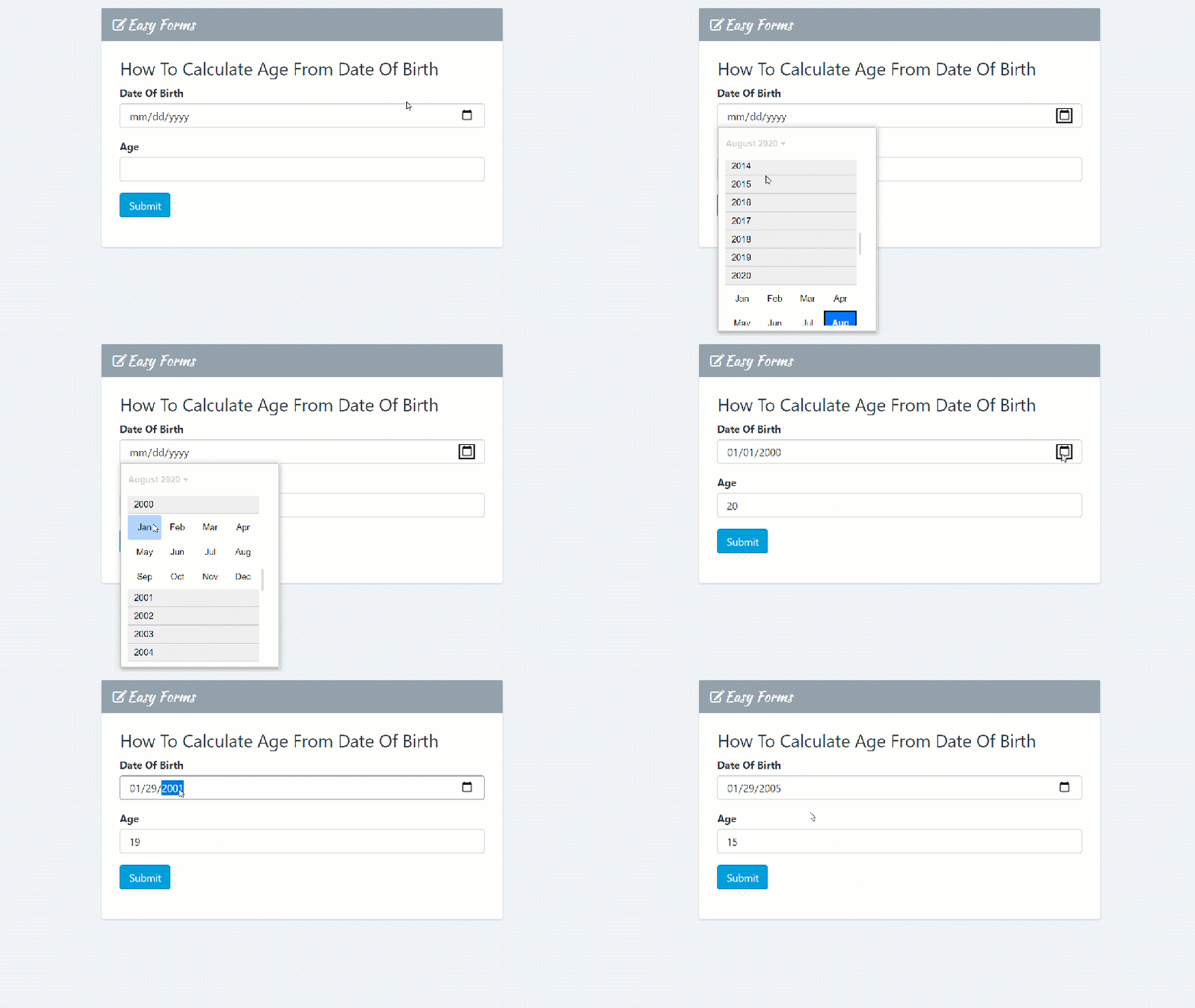
The Complete Overview of Calculating Age by Birth Date
The foundation of calculating age by birth date lies in three pillars: the date itself, the calendar system in use, and the rules governing age increments. The Gregorian calendar, adopted globally, defines age as the number of years between a birth date and the current date, adjusted for leap years. However, the method varies by context—legal systems often use the "age on the last birthday" rule, while astronomical calculations might consider exact days.
For example, someone born on February 29, 1992, faces a unique challenge: leap years occur every 4 years (with exceptions for century years not divisible by 400). In non-leap years, their "birthday" is typically treated as February 28. This quirk isn’t just academic; it affects everything from insurance policies to sports eligibility. Even simple subtraction of years can fail if the birth date hasn’t yet occurred in the current year.
Historical Background and Evolution
The concept of age as a measurable metric evolved alongside human civilization. Ancient Egyptians used a 365-day solar calendar, but their method of calculating age by birth date was rudimentary, relying on lunar cycles and seasonal observations. The Romans, however, introduced structured age milestones, with the lex Aelia Sentia (4 CE) defining legal adulthood at 25 for men and 20 for women—calculated from birth records.
The Gregorian calendar’s 1582 reform standardized age calculation by aligning with solar cycles, but adoption was slow. Britain didn’t switch until 1752, creating a 10-day gap for those born in the interim. This historical inconsistency explains why some older documents list ages with fractional years (e.g., "3 years and 8 months"). Even today, countries like Thailand use a Buddhist-era calendar, where 2024 corresponds to 2567 BE (Buddhist Era), necessitating dual calculations.
Core Mechanisms: How It Works
The most precise method to calculate age by birth date involves comparing the current date to the birth date while accounting for leap years and time zones. Algorithms typically follow these steps: subtract the birth year from the current year, then adjust by subtracting 1 if the birth date hasn’t yet occurred in the current year. For example, if today is June 1, 2024, and the birth date is December 31, 1990, the age is 33 (2024 - 1990 - 1).
Leap years add another layer. A birth date of February 29 in a non-leap year is treated as February 28 for age calculation, but some systems (like Microsoft Excel) default to March 1. Time zones further complicate matters: a person born at 11:59 PM UTC on December 31, 2023, is technically 1 year older in New York (UTC-5) by 6:59 PM on the same date. This explains why some online calculators prompt for time zone inputs.
Key Benefits and Crucial Impact
Accurate age calculation is the backbone of societal and legal systems. From determining voting rights to administering medical treatments, the margin for error is zero. A miscalculation could lead to a minor being denied access to adult services or an elderly person losing pension benefits. Even in personal contexts, knowing how to calculate age by birth date ensures correct celebration of milestones like birthdays or anniversaries.
Beyond practicality, this skill intersects with cultural identity. Many traditions, such as the Japanese seireki (Western-style age counting) vs. kazoedoshi (age counting at New Year), reflect how societies define age increments. Understanding these nuances is critical for global communication, whether negotiating contracts or interpreting historical records.
"Age is a matter of mind; if you don’t want to acknowledge your age, no one can prove to you that you are one year older." — George Burns
Yet, mathematically, age is undeniable—and the precision of calculating age by birth date ensures that legal and administrative systems operate without ambiguity.
Major Advantages
- Legal Compliance: Ensures age-related rights (e.g., driving licenses, marriage age) are correctly applied, avoiding penalties or denials.
- Medical Accuracy: Dose calculations for children or elderly patients rely on precise age data to prevent overdosing or underdosing.
- Financial Precision: Retirement benefits, inheritance distributions, and insurance premiums depend on verified age.
- Cultural Respect: Adheres to regional age-counting traditions, such as East Asian inclusive counting (where a newborn is 1 year old).
- Technological Integration: Enables seamless data processing in software, from HR systems to dating apps, where age verification is mandatory.
Comparative Analysis
| Method | Accuracy and Use Cases |
|---|---|
| Manual Calculation (Year Subtraction) | Simple but prone to errors in leap years or partial years. Suitable for quick estimates but unreliable for legal documents. |
| Programmatic Calculation (Algorithmic) | Handles leap years, time zones, and partial years with precision. Used in databases and enterprise software (e.g., Excel’s `DATEDIF` function). |
| Online Calculators | User-friendly with built-in adjustments for time zones and calendar systems. Ideal for personal use but may lack transparency in methods. |
| Legal/Administrative Rules | Standardized for specific jurisdictions (e.g., "age on last birthday" in the U.S.). Ensures consistency in court and government applications. |

Future Trends and Innovations
The rise of AI and blockchain is poised to revolutionize age calculation by birth date. Smart contracts could automatically verify ages for transactions, while decentralized identity systems (like Microsoft’s ION) might store birth dates immutably on ledgers. These innovations could eliminate fraud in age-sensitive services, such as alcohol sales or age-restricted content.
Biometric age estimation—using facial recognition or DNA analysis—is another frontier. While not yet precise enough to replace birth date records, these methods could complement traditional calculations in scenarios where documentation is unavailable (e.g., refugees or disaster victims). However, ethical concerns about privacy and accuracy remain hurdles.
Conclusion
The act of calculating age by birth date is deceptively simple on the surface but reveals layers of historical, cultural, and technical complexity. Whether you’re a developer writing an age-verification API or a parent planning a child’s birthday party, understanding the nuances ensures correctness. From the Julian calendar’s inaccuracies to the digital tools of today, the evolution of age calculation reflects humanity’s quest for precision.
As technology advances, the methods may change, but the core principle remains: age is a bridge between past and present, and its calculation must be exact. By grasping the mechanics—whether through manual subtraction or algorithmic automation—you equip yourself with a skill that spans personal, professional, and global contexts.
Comprehensive FAQs
Q: How do I calculate age by birth date manually?
A: Subtract the birth year from the current year. If the birth date hasn’t occurred yet in the current year, subtract an additional 1. For example, born on December 31, 1990, today’s date June 1, 2024: 2024 - 1990 - 1 = 33 years old.
Q: Why does February 29 complicate age calculations?
A: Leap years occur every 4 years, but non-leap years treat February 29 as February 28. Some systems default to March 1, creating inconsistencies. Always verify the system’s leap-year handling rules.
Q: Can time zones affect age calculation?
A: Yes. A person born at 11:59 PM UTC on December 31 is technically 1 year older in time zones ahead of UTC (e.g., +2 hours) by 1:59 AM on the same date. Online calculators often prompt for time zone inputs to adjust accordingly.
Q: How do different cultures count age?
A: East Asian cultures (e.g., Japan, Korea) use inclusive counting, where a newborn is 1 year old. Western systems use exclusive counting (0 at birth). Some traditions, like the Hindu calendar, base age on lunar cycles.
Q: What’s the most accurate digital tool for age calculation?
A: Programmatic methods (e.g., Python’s `datetime` module or Excel’s `DATEDIF`) are the most reliable, as they account for leap years, time zones, and partial years. Avoid generic online calculators without transparency in their algorithms.
Q: How do legal systems handle age verification?
A: Most legal systems use the "age on the last birthday" rule, where you’re considered the age you last celebrated. For example, turning 18 on June 10 means you’re 18 from June 10 onward. Some jurisdictions (e.g., UK) use "age at midnight" on the birthday.
Q: Can AI replace manual age calculation?
A: AI can automate calculations, but it’s not a replacement for understanding the underlying rules. For instance, an AI might misclassify a February 29 birth date if trained on insufficient data. Human oversight remains critical for edge cases.
Leave a Comment
Comments are moderated before appearing. The data you submit is processed according to the Privacy Policy of versiliasolutions.oneagency.co.