How to Calculate Mass Percentage: Precision Methods for Chemistry, Industry, and Everyday Use
Table of Contents
- The Complete Overview of Calculating Mass Percentage
- Historical Background and Evolution
- Core Mechanisms: How It Works
- Key Benefits and Crucial Impact
- Major Advantages
- Comparative Analysis
- Future Trends and Innovations
- Conclusion
- Comprehensive FAQs
- Q: What’s the difference between mass percentage and mole percentage?
- Q: Can I calculate mass percentage without knowing the total mass?
- Q: How do significant figures affect mass percentage calculations?
- Q: What’s the most common mistake when calculating mass percentage?
- Q: How is mass percentage used in real-world quality control?
- Q: Are there alternative methods to calculating mass percentage besides gravimetric analysis?
The concept of calculating mass percentage is the bedrock of quantitative analysis in chemistry, a critical tool in pharmaceuticals, materials science, and even culinary arts. Whether you're determining the purity of a drug compound or adjusting a recipe's ingredient ratios, mass percentage provides the numerical foundation for consistency and accuracy. Its applications extend beyond laboratories—engineers rely on it to optimize alloy compositions, nutritionists use it to label food products, and environmental scientists apply it to measure pollutant concentrations in water or air.
Yet, despite its ubiquity, the process of determining mass percentage is often misunderstood. Many assume it’s a simple division problem, but precision demands attention to units, significant figures, and contextual variables. A miscalculation here can lead to costly errors in manufacturing, flawed experimental results, or even safety hazards. For instance, a 1% deviation in the mass percentage of a catalyst in a chemical reaction can drastically alter yield or reaction kinetics.
The evolution of mass percentage calculations mirrors the progression of analytical chemistry itself—from early alchemical approximations to today’s high-precision instrumentation. What was once a theoretical exercise confined to academic texts now underpins industries where margins of error are measured in parts per million. Understanding its mechanics isn’t just about crunching numbers; it’s about grasping the language of compositional science.
The Complete Overview of Calculating Mass Percentage
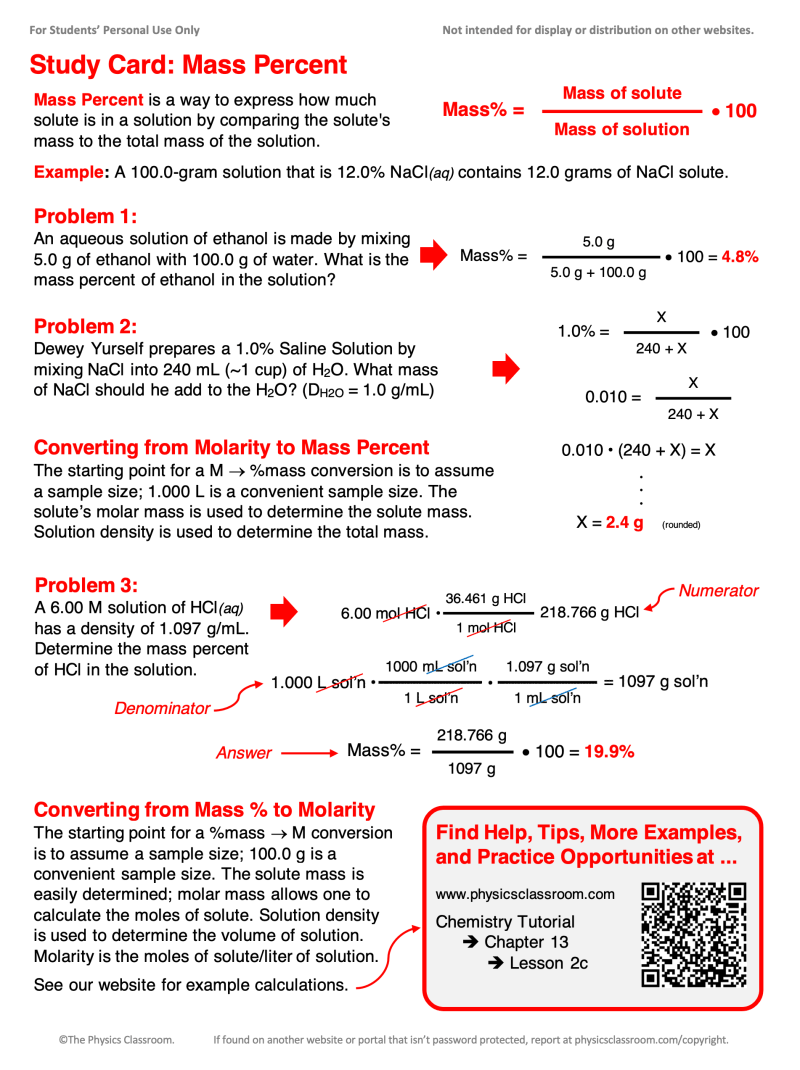
Calculating mass percentage refers to the quantitative expression of how much of a given component exists within a total mixture, expressed as a percentage of the whole. The formula—mass of the component divided by the total mass of the sample, multiplied by 100—seems straightforward, but its practical implementation varies widely depending on the context. In a laboratory setting, this might involve gravimetric analysis, where a sample is heated to remove volatile components, and the remaining mass is weighed. In industrial applications, it could mean analyzing the carbon content in steel or the moisture content in grain using calibrated sensors.
The reliability of mass percentage calculations hinges on three pillars: accuracy of measurements, proper unit conversion, and adherence to stoichiometric principles. For example, calculating the mass percentage of sodium chloride (NaCl) in a solution requires knowing the exact masses of Na⁺ and Cl⁻ ions, which are derived from their molar masses. Even a slight miscalculation in molar mass—say, using outdated atomic weights—can skew results. This precision is why determining mass percentage is non-negotiable in fields like pharmacology, where a 0.5% error in active ingredient concentration could render a medication ineffective or toxic.
Historical Background and Evolution
The origins of calculating mass percentage trace back to the 18th century, when Antoine Lavoisier’s work on the law of conservation of mass laid the groundwork for quantitative chemistry. His experiments demonstrated that the mass of reactants equals the mass of products, a principle that directly informs mass percentage calculations. By the early 19th century, chemists like Joseph Louis Proust formalized the law of definite proportions, which states that a compound always contains exactly the same proportion of elements by mass. This law became the theoretical backbone for determining mass percentage in chemical compounds.
The 20th century saw the refinement of mass percentage calculations through technological advancements. The advent of analytical balances capable of measuring to the nearest microgram, coupled with spectroscopic techniques like X-ray fluorescence, revolutionized accuracy. Today, automated systems and software algorithms handle routine mass percentage calculations in quality control labs, reducing human error. However, the fundamental principles remain unchanged: whether you’re using a balance from 1850 or a modern digital scale, the core formula—(mass of component / total mass) × 100—governs the process.
Core Mechanisms: How It Works
The mechanics of calculating mass percentage begin with identifying the component of interest and the total sample mass. For a compound like glucose (C₆H₁₂O₆), the mass percentage of carbon can be calculated by summing the atomic masses of all carbon atoms (6 × 12.01 g/mol) and dividing by the molar mass of glucose (180.16 g/mol). Multiply by 100 to convert to a percentage. This method, known as percentage composition by mass, is essential for verifying empirical formulas or predicting reaction outcomes.
In real-world scenarios, determining mass percentage often involves experimental data. For instance, to find the mass percentage of water in a hydrated salt like CuSO₄·5H₂O, you’d heat the sample to drive off the water, weigh the anhydrous residue, and subtract from the original mass. The difference represents the water’s mass, which is then expressed as a percentage of the initial sample. This gravimetric approach is a cornerstone of mass percentage calculations in both educational and industrial contexts.
Key Benefits and Crucial Impact
The ability to calculate mass percentage accurately is a linchpin in fields where composition directly impacts performance, safety, or cost. In pharmaceutical manufacturing, for example, the mass percentage of an active pharmaceutical ingredient (API) must meet strict regulatory thresholds. A deviation of even 1% can lead to batch rejection or, worse, adverse patient reactions. Similarly, in metallurgy, the mass percentage of alloying elements like nickel or chromium determines the properties of stainless steel—too little, and the material becomes susceptible to corrosion; too much, and it loses ductility.
Beyond technical applications, mass percentage calculations play a role in everyday decision-making. Nutrition labels, for instance, express fat, protein, and carbohydrate content as mass percentages, helping consumers make informed dietary choices. Even in cooking, understanding the mass percentage of ingredients (e.g., salt in a brine solution) ensures consistent flavor and texture. The versatility of this concept underscores its importance as a universal tool for quantification.
"Precision in calculating mass percentage is not just about numbers—it’s about ensuring that every gram counts, whether in a life-saving drug or a high-performance alloy."
— Dr. Elena Voss, Analytical Chemistry Professor, MIT
Major Advantages
- Quality Assurance: Ensures products meet specified standards, reducing waste and rework in manufacturing.
- Regulatory Compliance: Critical for industries like pharmaceuticals and food processing, where mass percentage thresholds are legally mandated.
- Process Optimization: Helps engineers and chemists fine-tune reactions or formulations for maximum efficiency.
- Safety Enhancement: Prevents hazardous deviations in composition, such as excess volatile solvents in chemical mixtures.
- Cost Efficiency: Minimizes material waste by ensuring raw materials are used at optimal concentrations.
Comparative Analysis
| Aspect | Laboratory Setting | Industrial Application |
|---|---|---|
| Precision Requirement | ±0.1% (high accuracy for research) | ±1–5% (practical tolerances for bulk production) |
| Tools Used | Analytical balances, spectrophotometers | Automated titrators, near-infrared sensors |
| Common Challenges | Human error in manual calculations | Sample heterogeneity in large batches |
| Output Use | Scientific publications, experimental validation | Quality control reports, process adjustments |

Future Trends and Innovations
The future of calculating mass percentage lies in integration with emerging technologies. Artificial intelligence and machine learning are already being used to predict mass percentages from spectral data, reducing the need for time-consuming wet chemistry methods. For example, AI models trained on thousands of mass spectrometry datasets can now estimate the composition of complex mixtures with accuracy rivaling traditional gravimetric analysis. Additionally, portable, handheld devices equipped with sensors are making mass percentage calculations more accessible in field settings, such as environmental monitoring or on-site industrial inspections.
Another horizon is the development of self-calibrating instruments that automatically adjust for drift or environmental variables, ensuring consistent determining mass percentage results over time. These innovations will likely democratize precision analysis, allowing smaller labs and even hobbyists to achieve results previously reserved for large-scale facilities. As data science and chemistry converge, the line between theoretical mass percentage calculations and real-time, actionable insights will continue to blur.
Conclusion
Calculating mass percentage is more than a mathematical exercise—it’s a fundamental skill that bridges theory and practice across disciplines. From the precise stoichiometry of a chemical reaction to the practical adjustments in a kitchen recipe, the principles remain constant. The key to mastery lies in understanding not just the formula, but the context in which it’s applied: whether it’s verifying the purity of a sample, optimizing a manufacturing process, or ensuring consumer safety.
As technology advances, the methods for determining mass percentage will evolve, but the core objective will stay the same: to quantify composition with uncompromising accuracy. For professionals and enthusiasts alike, investing time in refining this skill is an investment in precision—a currency that pays dividends in reliability, efficiency, and innovation.
Comprehensive FAQs
Q: What’s the difference between mass percentage and mole percentage?
A: Mass percentage expresses the ratio of a component’s mass to the total mass of the mixture (e.g., 20% salt in water), while mole percentage (or mole fraction) represents the ratio of moles of a component to the total moles in the mixture. For example, in a solution of ethanol and water, mass percentage focuses on grams, whereas mole percentage considers molecules.
Q: Can I calculate mass percentage without knowing the total mass?
A: No. The formula for calculating mass percentage requires both the mass of the component and the total mass of the sample. If only the component mass is known, additional information (e.g., density or volume for liquids) is needed to derive the total mass.
Q: How do significant figures affect mass percentage calculations?
A: Significant figures in determining mass percentage must align with the least precise measurement in the calculation. For instance, if the mass of a component is measured as 5.23 g (3 sig figs) and the total mass is 25.0 g (3 sig figs), the result should be reported as 20.9% (3 sig figs), not 20.92%. Rounding errors compound with successive operations, so precision is critical.
Q: What’s the most common mistake when calculating mass percentage?
A: The most frequent error is misidentifying the component or total mass. For example, in hydrated compounds, forgetting to account for water molecules in the total mass can lead to inflated percentages. Always double-check which part of the sample is being analyzed.
Q: How is mass percentage used in real-world quality control?
A: In quality control, mass percentage calculations are used to verify that products meet specifications. For instance, a chocolate manufacturer might test the cocoa butter mass percentage to ensure it falls within 28–32% (industry standard). Deviations trigger corrective actions, such as adjusting mixing ratios or rejecting non-compliant batches.
Q: Are there alternative methods to calculating mass percentage besides gravimetric analysis?
A: Yes. Spectroscopic methods (e.g., FTIR, NMR) and titration techniques can also determine mass percentages indirectly by measuring properties like absorbance or reaction stoichiometry. These methods are often faster but may require calibration against known standards for accuracy.
Leave a Comment
Comments are moderated before appearing. The data you submit is processed according to the Privacy Policy of versiliasolutions.oneagency.co.