How to Calculate the Radius of a Circle: Precision in Geometry
Table of Contents
- The Complete Overview of Calculating the Radius of a Circle
- Historical Background and Evolution
- Core Mechanisms: How It Works
- Key Benefits and Crucial Impact
- Major Advantages
- Comparative Analysis
- Future Trends and Innovations
- Conclusion
- Comprehensive FAQs
- Q: What is the simplest way to calculate the radius of a circle if the diameter is known?
- Q: How can I find the radius if only the circumference is provided?
- Q: Is it possible to calculate the radius of a circle if only the area is known?
- Q: What if the circle is not perfect, and I only have a chord length and sagitta (height of the chord)?
- Q: Why is π (pi) important in calculating the radius of a circle?
- Q: Can I use these methods to calculate the radius of an ellipse or other curved shapes?
- Q: What are common mistakes to avoid when calculating the radius of a circle?
- Q: How does technology, like CAD software, assist in calculating the radius of a circle?
The radius of a circle is more than just a numerical value—it is the foundational measurement that defines symmetry, scale, and structural integrity in countless fields. Whether designing a bridge, optimizing a mechanical part, or crafting a piece of art, the ability to accurately determine the radius of a circle is indispensable. Yet, for many, this seemingly simple task becomes a puzzle when confronted with imperfect shapes, missing dimensions, or the need for high-precision calculations. The process isn’t just about memorizing a formula; it’s about understanding the geometric relationships that govern circles and how to apply them in diverse scenarios.
Consider the challenge faced by an architect reviewing blueprints for a dome. The blueprint provides the diameter but omits the radius, yet the structural calculations depend on it. Or imagine a scientist analyzing a microscopic cross-section where only the circumference is measurable. In both cases, the solution hinges on mastering the techniques for calculating the radius of a circle—whether through direct measurement, derived formulas, or indirect methods. The radius isn’t just a static number; it’s a dynamic variable that adapts to the context, from theoretical proofs to practical engineering.
Even in everyday life, the radius of a circle plays a subtle yet critical role. A chef adjusting the size of a pizza crust, a gardener planning a circular flower bed, or a programmer writing an algorithm for collision detection all rely on this fundamental concept. The precision with which one can calculate the radius of a circle determines the success of these tasks. Without it, errors creep in—structures fail, designs falter, and efficiency is lost. This is why the process demands more than rote application of a formula; it requires a deep appreciation for geometry’s role in shaping the world.

The Complete Overview of Calculating the Radius of a Circle
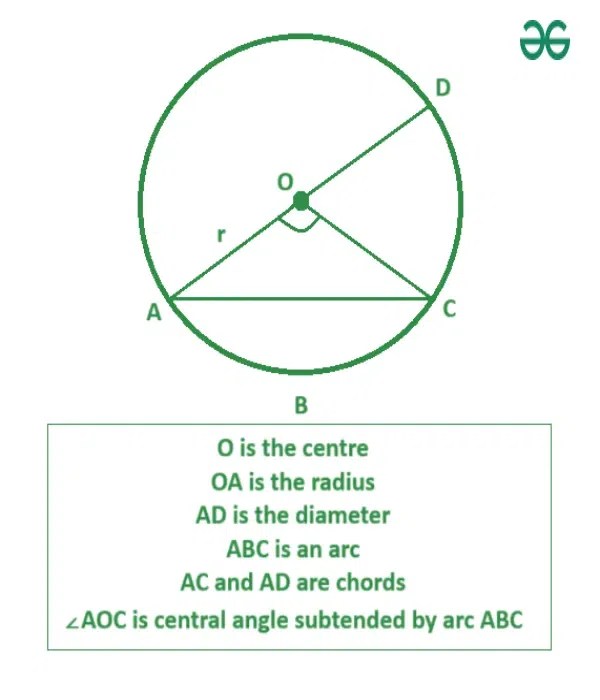
The calculation of the radius of a circle is rooted in geometry’s most fundamental principles, where the radius serves as the linchpin connecting a circle’s defining attributes: diameter, circumference, and area. At its core, the radius is the distance from the center of the circle to any point on its perimeter, and its determination often begins with one of these three known quantities. The most straightforward method involves measuring the diameter—the longest distance across the circle—and halving it, since the radius is precisely half the diameter. However, real-world scenarios rarely present such simplicity. More often, engineers, designers, and scientists must work with partial or indirect measurements, such as the circumference or area, where the radius must be derived through algebraic manipulation.
Beyond basic geometry, the calculation of the radius of a circle extends into specialized fields where precision is non-negotiable. In computer graphics, for instance, algorithms frequently require the radius to render smooth curves or detect intersections between objects. In physics, the radius dictates the behavior of waves, orbits, and even the stability of atomic structures. The versatility of the radius calculation lies in its adaptability—whether solving for an unknown in a quadratic equation or interpreting data from a medical imaging scan. Each method, from the direct to the derived, offers a unique pathway to uncovering this essential measurement, ensuring accuracy across disciplines.
Historical Background and Evolution
The concept of the radius of a circle traces back to ancient civilizations, where early mathematicians like the Babylonians and Egyptians recognized the geometric properties of circles long before formal proofs were established. The Egyptians, in particular, used circles in the construction of pyramids and temples, where precise measurements were critical for alignment and structural integrity. Their empirical approach to calculating the radius of a circle—often through practical observation rather than abstract theory—laid the groundwork for later advancements. Meanwhile, Greek mathematicians such as Euclid and Archimedes refined these ideas, introducing rigorous definitions and theorems that would shape geometry for centuries.
The evolution of calculating the radius of a circle took a decisive turn with the advent of calculus in the 17th century. Isaac Newton and Gottfried Wilhelm Leibniz provided the mathematical tools to describe curves and surfaces with unprecedented accuracy, allowing for the derivation of the radius from more complex geometric forms. Today, the process is underpinned by a blend of classical geometry and modern computational techniques, from trigonometric functions to iterative algorithms. Historical milestones, such as the development of π (pi) as an irrational constant, further enriched the precision of these calculations, demonstrating how the pursuit of mathematical truth has continually refined our ability to measure and manipulate circles.
Core Mechanisms: How It Works
The mechanics of calculating the radius of a circle hinge on three primary formulas, each serving as a bridge between known quantities and the unknown radius. The first and most direct formula, r = d/2, where r is the radius and d is the diameter, is the simplest case. Here, the radius is derived by dividing the diameter by two, a method that assumes the diameter is already known or can be measured directly. This approach is foundational but limited to scenarios where the diameter is accessible, such as in manufacturing or architectural drafting.
When the diameter is unavailable, alternative methods come into play. The circumference (C) of a circle, defined as C = 2πr, can be rearranged to solve for the radius: r = C/(2π). This formula is particularly useful in fields like astronomy, where the circumference of an orbit or a planetary path might be measured, but the radius itself is the target. Similarly, if the area (A) of the circle is known, the radius can be found using the formula A = πr², rearranged to r = √(A/π). These derived methods highlight the flexibility of geometry, allowing for the calculation of the radius of a circle even when only indirect measurements are available. Each formula, while distinct, shares a common thread: the interplay between π, a constant that embodies the circle’s inherent properties, and the geometric relationships that define its shape.
Key Benefits and Crucial Impact
The ability to calculate the radius of a circle transcends mere academic exercise; it is a practical necessity with far-reaching implications. In engineering, for example, the radius dictates the stress distribution in cylindrical structures, influencing everything from pipeline design to the aerodynamics of aircraft fuselages. A miscalculation here could lead to catastrophic failures, underscoring the importance of precision. Similarly, in the realm of computer-aided design (CAD), accurate radius calculations ensure that components fit together seamlessly, reducing material waste and improving efficiency. The ripple effects of mastering this skill extend to fields as diverse as robotics, where circular motion must be controlled with millimeter-level accuracy, and medicine, where imaging techniques rely on precise geometric interpretations.
Beyond technical applications, the calculation of the radius of a circle fosters a deeper understanding of spatial relationships and problem-solving. It teaches practitioners to think critically about measurements, encouraging them to question assumptions and explore alternative approaches. Whether working with a perfect circle or an approximation in real-world scenarios, the process sharpens analytical skills that are transferable across disciplines. The impact of this knowledge is not confined to professionals; it also empowers hobbyists, from DIY enthusiasts building circular furniture to artists creating intricate designs, to achieve results that are both functional and aesthetically pleasing.
"Geometry will draw the soul toward truth and create the spirit of philosophy." — Plato
Major Advantages
- Precision in Design: Accurate radius calculations ensure that mechanical parts, architectural elements, and digital models conform to exact specifications, minimizing errors and rework.
- Efficiency in Manufacturing: Knowing the radius of a circle allows for optimized material usage, reduced waste, and streamlined production processes in industries ranging from automotive to aerospace.
- Enhanced Problem-Solving: The ability to derive the radius from various known quantities—circumference, area, or diameter—develops adaptability in mathematical and technical challenges.
- Broad Applicability: From engineering and physics to art and technology, the principles of calculating the radius of a circle are universally applicable, making it a versatile skill.
- Foundation for Advanced Mathematics: Mastery of basic radius calculations paves the way for understanding more complex geometric and trigonometric concepts, including those used in calculus and differential equations.
Comparative Analysis
| Method | Formula |
|---|---|
| Diameter to Radius | r = d/2 |
| Circumference to Radius | r = C/(2π) |
| Area to Radius | r = √(A/π) |
| Chord Length to Radius | r = √((L/2)² + h²) (where L is chord length, h is sagitta) |
Future Trends and Innovations
The future of calculating the radius of a circle is likely to be shaped by advancements in computational geometry and artificial intelligence. Machine learning algorithms, for instance, are increasingly being used to analyze complex shapes and derive geometric properties with minimal human intervention. These systems can process vast datasets—such as 3D scans or satellite imagery—to extract precise measurements, including the radius of a circle, even in noisy or incomplete data. Such innovations will revolutionize fields like autonomous navigation, where real-time geometric calculations are essential for obstacle avoidance and path planning.
Additionally, the integration of augmented reality (AR) and virtual reality (VR) technologies is poised to transform how practitioners visualize and interact with geometric calculations. Imagine an architect using AR to overlay precise radius measurements onto a physical site in real time, or a student manipulating virtual circles to explore the relationships between diameter, circumference, and radius interactively. These tools will not only enhance accuracy but also democratize access to advanced geometric concepts, making them more intuitive and engaging. As technology continues to evolve, the calculation of the radius of a circle will become faster, more precise, and more accessible, reinforcing its role as a cornerstone of both theoretical and applied mathematics.
Conclusion
The calculation of the radius of a circle is a testament to the enduring power of geometry—a discipline that bridges abstract theory and practical application. From ancient civilizations to modern engineering, the radius has remained a constant, its measurement evolving alongside human ingenuity. What begins as a simple division or rearrangement of a formula often reveals deeper insights into the structure of the universe, whether in the orbit of a planet or the curvature of a microscopic particle. The skills acquired through this process—precision, adaptability, and critical thinking—are as valuable in a laboratory as they are in a workshop or a classroom.
As fields continue to converge and technology reshapes how we interact with the world, the ability to calculate the radius of a circle will remain indispensable. It is more than a mathematical exercise; it is a gateway to innovation, a tool for problem-solving, and a reminder of the elegance inherent in geometry. Whether you are designing a bridge, programming a robot, or simply measuring a pie crust, the radius is the invisible force that brings order to the circular world around us.
Comprehensive FAQs
Q: What is the simplest way to calculate the radius of a circle if the diameter is known?
A: The simplest method is to divide the diameter by two. The formula is r = d/2, where r is the radius and d is the diameter. This direct approach is the most straightforward and requires only basic arithmetic.
Q: How can I find the radius if only the circumference is provided?
A: Use the formula r = C/(2π), where C is the circumference. This formula rearranges the standard circumference equation C = 2πr to solve for the radius. For example, if the circumference is 31.4 units, the radius would be 31.4/(2π) ≈ 5 units.
Q: Is it possible to calculate the radius of a circle if only the area is known?
A: Yes, you can derive the radius from the area using the formula r = √(A/π), where A is the area. This involves taking the square root of the area divided by π. For instance, if the area is 78.5 square units, the radius would be √(78.5/π) ≈ 5 units.
Q: What if the circle is not perfect, and I only have a chord length and sagitta (height of the chord)?
A: In such cases, use the formula r = √((L/2)² + h²), where L is the chord length and h is the sagitta. This formula accounts for the imperfections in the circle by treating the chord and sagitta as components of a right triangle within the circle.
Q: Why is π (pi) important in calculating the radius of a circle?
A: π is a fundamental constant in geometry that represents the ratio of a circle’s circumference to its diameter. It appears in all formulas involving the radius because it defines the proportional relationship between these key measurements. Without π, the formulas for circumference (C = 2πr) and area (A = πr²) would not hold true, making accurate radius calculations impossible.
Q: Can I use these methods to calculate the radius of an ellipse or other curved shapes?
A: The basic formulas for calculating the radius of a circle do not directly apply to ellipses or other curved shapes, as these require additional parameters (such as major and minor axes for ellipses). However, the principles of geometric measurement remain relevant, and specialized formulas or numerical methods (like iterative algorithms) are used to derive equivalent measurements for non-circular shapes.
Q: What are common mistakes to avoid when calculating the radius of a circle?
A: Common pitfalls include misidentifying the diameter (e.g., confusing it with the radius or chord length), incorrect use of π (such as forgetting to multiply or divide by it), and arithmetic errors when solving for the radius. Always double-check units and ensure the correct formula is applied based on the given information.
Q: How does technology, like CAD software, assist in calculating the radius of a circle?
A: CAD software automates many geometric calculations, including the radius of a circle, by allowing users to input dimensions and derive measurements instantly. These tools also visualize shapes, reducing human error and enabling complex designs. For example, a designer can input a circumference, and the software will automatically compute the radius, applying the formula r = C/(2π) seamlessly.
Leave a Comment
Comments are moderated before appearing. The data you submit is processed according to the Privacy Policy of versiliasolutions.oneagency.co.