The Precision Behind the Circle: Mastering the Calculation for Radius of a Circle
Table of Contents
- The Complete Overview of the Calculation for Radius of a Circle
- Historical Background and Evolution
- Core Mechanisms: How It Works
- Key Benefits and Crucial Impact
- Major Advantages
- Comparative Analysis
- Future Trends and Innovations
- Conclusion
- Comprehensive FAQs
- Q: What is the simplest way to calculate the radius if I only know the diameter?
- Q: How does the calculation for radius of a circle change if the shape is not perfectly round?
- Q: Can I calculate the radius without knowing π?
- Q: What role does the radius play in trigonometry?
- Q: How is the radius calculation used in real-world engineering projects?
- Q: Are there any common mistakes to avoid when calculating the radius?
The radius of a circle is more than a simple measurement—it is the foundational element that defines symmetry, area, and circumference. Whether you’re designing a skyscraper’s floor plan, programming a 3D rendering, or solving a physics problem, the calculation for radius of a circle is the first step toward precision. Without it, structures would collapse, simulations would fail, and artistic compositions would lack harmony. The radius isn’t just a number; it’s the silent architect of circular perfection.
Yet, for all its ubiquity, the process of determining the radius—whether from a diameter, circumference, or even an irregular arc—remains a critical skill across disciplines. Engineers rely on it to ensure structural integrity, astronomers use it to model planetary orbits, and graphic designers depend on it to create seamless logos. The calculation for radius of a circle bridges abstract theory and tangible outcomes, making it indispensable in both academic and professional spheres.
Missteps here ripple outward: A miscalculated radius in a pipeline design could lead to catastrophic leaks; in animation, it might distort character movements. The stakes are high, which is why understanding the nuances—from basic formulas to advanced geometric principles—is non-negotiable. This exploration dives into the mechanics, historical evolution, and real-world impact of the calculation for radius of a circle, ensuring you grasp not just how to compute it, but why it matters.
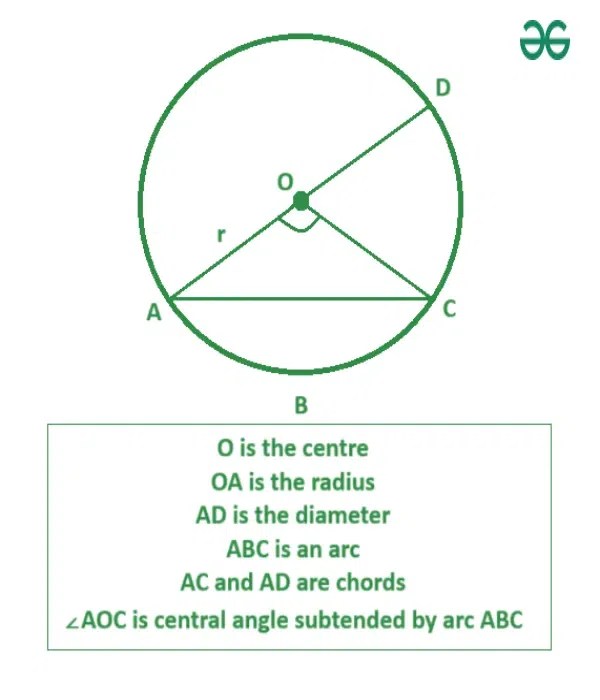
The Complete Overview of the Calculation for Radius of a Circle
The calculation for radius of a circle is rooted in Euclidean geometry, where the radius (denoted as r) is the distance from the center of the circle to any point on its perimeter. This seemingly straightforward definition belies its versatility: the radius can be derived from multiple known quantities—diameter (d), circumference (C), or even area (A)—each requiring a distinct formula. For instance, if you know the diameter, the radius is simply half of it (r = d/2). If you’re given the circumference, you’d rearrange the formula C = 2πr to solve for r, yielding r = C/(2π). These relationships form the backbone of circular measurements, but their application extends far beyond textbook problems.
In practical scenarios, the calculation for radius of a circle often involves approximations or additional constraints. For example, in manufacturing, a circle might be approximated as an ellipse or polygon, requiring adjustments to the radius formula. Similarly, in computer graphics, pixels don’t form perfect circles, necessitating algorithms like Bresenham’s circle algorithm to simulate smooth curves. The radius, therefore, isn’t always a static value but a dynamic variable influenced by context. Understanding these variations ensures accuracy in fields where even minor deviations have significant consequences.
Historical Background and Evolution
The study of circles dates back to ancient civilizations, with the Babylonians and Egyptians using empirical methods to approximate circular measurements as early as 2000 BCE. However, it was the Greeks who formalized the calculation for radius of a circle through rigorous geometry. Archimedes, in the 3rd century BCE, famously calculated the value of π (pi) by inscribing and circumscribing polygons around a circle, indirectly refining the relationship between radius, circumference, and area. His work laid the groundwork for later mathematicians, including Aryabhata in India and Al-Khwarizmi in the Islamic Golden Age, who expanded on these principles.
By the Renaissance, the calculation for radius of a circle became a cornerstone of scientific inquiry. Johannes Kepler’s laws of planetary motion, for example, relied on precise circular (and elliptical) orbits, where the radius determined gravitational interactions. The 17th century saw further advancements with the invention of calculus, allowing for more complex analyses of curves and surfaces. Today, the formula remains a fundamental tool in engineering, physics, and computer science, evolving from chalkboard proofs to high-performance computational algorithms.
Core Mechanisms: How It Works
The calculation for radius of a circle hinges on three primary formulas, each derived from the circle’s defining properties:
- From Diameter: r = d/2
- From Circumference: r = C/(2π)
- From Area: r = √(A/π)
Beyond basic formulas, advanced scenarios introduce variables like chord length or arc measurements. For example, given a chord (c) and its perpendicular distance (h) from the center, the radius can be found using r = (c²/4h) + (h/2). Such derivations underscore the radius’s role as a unifying metric in geometry, where seemingly disparate elements—angles, arcs, and areas—converge into a single value. Mastery of these mechanisms ensures precision in both theoretical and applied contexts.
Key Benefits and Crucial Impact
The calculation for radius of a circle is the linchpin of circular design and analysis, offering unparalleled precision in fields where symmetry and proportion are critical. In architecture, it dictates the curvature of domes and arches; in robotics, it governs the path of automated arms. The ability to derive the radius from any given parameter eliminates guesswork, replacing it with data-driven accuracy. This reliability is why the formula is taught universally, from elementary schools to graduate engineering programs.
Yet, its impact transcends technical applications. The radius is a universal language, enabling collaboration across disciplines. A biologist measuring cell structures, a cartographer plotting latitude-longitude circles, and a musician tuning a circular drum all rely on the same geometric principles. This cross-disciplinary utility makes the calculation for radius of a circle a testament to mathematics’ power to unify diverse fields under a single framework.
"Geometry will draw the soul toward truth and create the spirit of philosophy." — Plato
The radius, as a fundamental geometric element, embodies this philosophy. It is the bridge between abstract thought and tangible reality, a constant in a world of variables.
Major Advantages
- Universal Applicability: The formulas for radius calculation apply across physics, engineering, astronomy, and art, making them a versatile tool in any scientific or creative endeavor.
- Precision in Design: Accurate radius measurements ensure structural integrity in buildings, mechanical parts, and digital models, reducing errors and waste.
- Simplification of Complex Problems: By reducing circular elements to a single variable (r), complex systems—like planetary orbits or fluid dynamics—become more manageable.
- Educational Foundation: Understanding the calculation for radius of a circle builds foundational skills in algebra, trigonometry, and calculus, preparing students for advanced STEM fields.
- Cross-Disciplinary Collaboration: The standardized nature of radius calculations facilitates communication between engineers, scientists, and designers, ensuring consistency in collaborative projects.
Comparative Analysis
| Parameter Given | Formula for Radius (r) |
|---|---|
| Diameter (d) | r = d/2 |
| Circumference (C) | r = C/(2π) |
| Area (A) | r = √(A/π) |
| Chord Length (c) and Perpendicular Distance (h) | r = (c²/4h) + (h/2) |

Future Trends and Innovations
As technology advances, the calculation for radius of a circle is evolving beyond traditional methods. Machine learning algorithms now analyze circular patterns in medical imaging to detect anomalies, while AI-driven design tools automatically adjust radii in real-time to optimize structures. In quantum computing, circular geometries influence qubit arrangements, pushing the boundaries of computational power. These innovations highlight the radius’s enduring relevance, even as the tools to compute it grow more sophisticated.
Additionally, sustainability is reshaping how we apply circular measurements. In renewable energy, turbine blades and solar panel arrays rely on precise radius calculations to maximize efficiency. As industries prioritize eco-friendly designs, the calculation for radius of a circle will play a pivotal role in creating systems that are both functional and environmentally responsible. The future of this fundamental concept lies in its adaptability to emerging challenges.
Conclusion
The calculation for radius of a circle is a testament to the enduring power of geometry—a discipline that has shaped civilizations, powered scientific revolutions, and continues to drive innovation. Its simplicity belies its depth, offering solutions to problems as vast as the universe and as minute as a microscopic cell. Whether you’re a student grappling with algebra or an engineer designing the next generation of infrastructure, mastering this calculation is a gateway to precision and creativity.
As we look ahead, the radius remains a constant in a world of change, a reminder that some truths are timeless. By understanding its mechanics, historical significance, and real-world applications, we honor the legacy of mathematicians past and present—and equip ourselves to solve the challenges of tomorrow.
Comprehensive FAQs
Q: What is the simplest way to calculate the radius if I only know the diameter?
A: The simplest method is to divide the diameter by 2. Mathematically, this is expressed as r = d/2. For example, if a circle has a diameter of 10 units, its radius would be 5 units.
Q: How does the calculation for radius of a circle change if the shape is not perfectly round?
A: If the shape is an approximation (e.g., a polygon or ellipse), you may need to use iterative methods or averaging techniques. For instance, in a regular polygon, the radius (circumradius) can be calculated using r = s/(2 sin(π/n)), where s is the side length and n is the number of sides.
Q: Can I calculate the radius without knowing π?
A: No, π is an intrinsic part of the formulas involving circumference or area. However, you can use an approximation (e.g., 3.1416) for practical purposes. For exact calculations in theoretical contexts, π remains essential.
Q: What role does the radius play in trigonometry?
A: In trigonometry, the radius (r) of a circle is used in the unit circle definition, where any angle θ corresponds to a point (x, y) on the circle’s circumference, with x = r cos(θ) and y = r sin(θ). The radius also appears in parametric equations and polar coordinates.
Q: How is the radius calculation used in real-world engineering projects?
A: Engineers use the calculation for radius of a circle in various ways: determining the curvature of roads, designing gears and pulleys, and optimizing pipe diameters for fluid dynamics. For example, in civil engineering, the radius of a curve on a highway is calculated to ensure safe vehicle navigation.
Q: Are there any common mistakes to avoid when calculating the radius?
A: Yes. Common errors include:
- Confusing diameter with radius (forgetting to divide by 2).
- Using incorrect units (e.g., mixing meters and centimeters).
- Rounding π too early in calculations, leading to cumulative errors.
- Assuming all circles are perfect, which may require adjustments for real-world approximations.
Leave a Comment
Comments are moderated before appearing. The data you submit is processed according to the Privacy Policy of versiliasolutions.oneagency.co.