The Art of Precision: How to Properly Cite a Quote From a Book
Table of Contents
- The Complete Overview of Citing a Quote From a Book
- Historical Background and Evolution
- Core Mechanisms: How It Works
- Key Benefits and Crucial Impact
- Major Advantages
- Comparative Analysis
- Future Trends and Innovations
- Conclusion
- Comprehensive FAQs
- Q: Do I need to cite a quote from a book if I paraphrase it?
- Q: What if the book doesn’t have page numbers (e.g., e-books or PDFs)?
- Q: How do I cite a quote from a book that’s part of an anthology?
- Q: Can I use a quote from a book without permission?
- Q: What’s the difference between a block quote and a regular quote?
- Q: How do I cite a quote from a book that’s been translated?
- Q: What if I can’t find the exact page number for a quote?
- Q: Are there any exceptions to citing a quote from a book?
The first time you attempt to cite a quote from a book in an essay, presentation, or research paper, you’re not just inserting text—you’re engaging in a precise act of intellectual attribution. The way you frame that quote, attribute its source, and integrate it into your argument determines whether your work reads as authoritative or careless. A poorly cited passage doesn’t just weaken your credibility; it risks misrepresenting the original author’s intent, undermining the very foundation of scholarly discourse.
What separates a citation that enhances your argument from one that obscures it? The answer lies in the balance between textual evidence and structural integrity. A quote pulled from a book must be contextualized—its meaning preserved, its origin unmistakable, and its relevance to your discussion undeniable. This isn’t just about following a set of rules; it’s about respecting the dialogue between ideas. When done correctly, citing a quote from a book transforms passive reading into active engagement, turning static text into a dynamic exchange of thought.
The stakes are higher than ever in an era where misinformation spreads as easily as well-researched arguments. Whether you’re writing a term paper, a literary critique, or a professional report, the ability to accurately cite a quote from a book is non-negotiable. The methods you employ—whether MLA, APA, Chicago, or another style—aren’t arbitrary; they’re the result of centuries of refining how knowledge is shared and validated.

The Complete Overview of Citing a Quote From a Book
At its core, citing a quote from a book is an exercise in transparency. It signals to your reader that you’ve engaged with an external source, that its ideas are worth considering, and that you’re accountable for how you’ve interpreted them. But the process extends beyond mere attribution—it involves selecting the right passage, formatting it correctly, and embedding it within your own prose in a way that feels organic rather than forced.The challenge lies in the details. A quote can be direct or indirect, short or lengthy, and its placement in your text must align with its purpose. Is it a pivotal example? A counterargument? A foundational definition? Each scenario demands a different approach to integration, punctuation, and source documentation. Mastering these nuances ensures your citation doesn’t become a distraction but rather a seamless part of your narrative.
Historical Background and Evolution
The practice of citing sources has evolved alongside the development of written scholarship. In the medieval era, scribes and monks meticulously copied texts, often without explicit attribution, as the concept of original authorship was less rigid. By the Renaissance, however, humanists like Erasmus began emphasizing the importance of acknowledging sources—a shift that reflected growing intellectual rigor. The 19th century saw the formalization of citation styles, with early academic journals adopting standardized formats to combat plagiarism and ensure reproducibility.Today, the rules governing how to cite a quote from a book are governed by style guides like MLA (Modern Language Association), APA (American Psychological Association), and the Chicago Manual of Style. Each was designed for specific disciplines: MLA for humanities, APA for social sciences, and Chicago for history and the arts. These frameworks weren’t created in isolation; they emerged from real-world needs, such as the rise of peer-reviewed journals in the 17th century and the digital revolution of the 20th, which necessitated new ways to handle electronic sources.
Core Mechanisms: How It Works
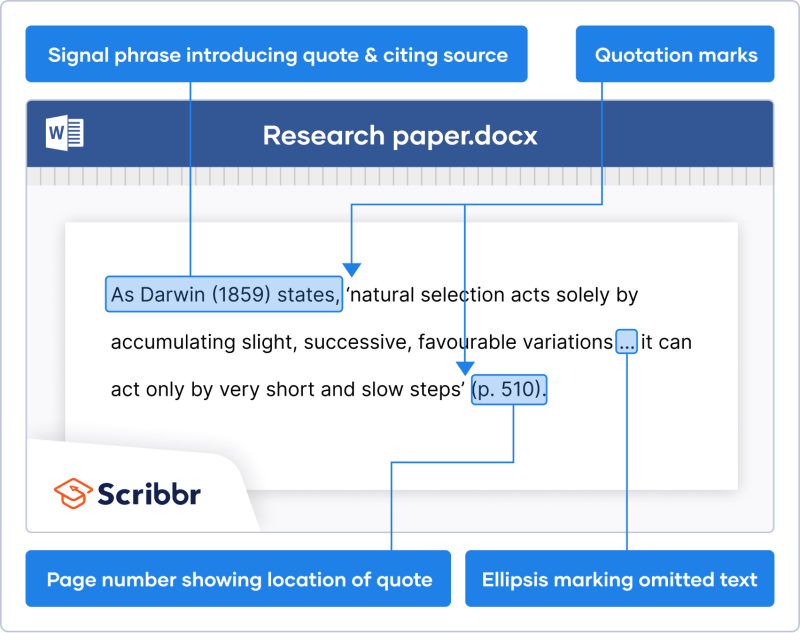
The mechanics of citing a quote from a book begin with selection. Not every passage warrants direct quotation—some ideas are better summarized or paraphrased to avoid overloading your text with block quotes. When you do choose to quote, the next step is formatting. Direct quotes are enclosed in quotation marks, while block quotes (typically over four lines) are indented and formatted without quotation marks. The key is consistency: whatever style you adopt, you must apply it uniformly throughout your work.Integration is where many writers stumble. A quote should never stand alone; it must be introduced with a signal phrase (e.g., "As Smith argues...") and followed by analysis. This context prevents the reader from asking, "Why does this matter?" The citation itself—whether parenthetical or in a footnote—must include the author’s name, the page number (for print books), and, if necessary, the edition or publisher details. For digital sources, the URL or DOI may replace the page number, but the principle remains: every claim must be traceable.
Key Benefits and Crucial Impact
Citing a quote from a book isn’t just a technical exercise; it’s a strategic tool. When done well, it bolsters your argument by lending authority to your claims. A well-placed quote can serve as a bridge between your ideas and those of established scholars, demonstrating that you’re contributing to an ongoing conversation rather than operating in a vacuum. This is particularly vital in academic and professional settings, where credibility hinges on the ability to support assertions with evidence.The impact extends beyond individual projects. Proper citation practices foster a culture of intellectual honesty, discouraging the kind of unchecked borrowing that plagues modern discourse. In fields like law, medicine, and policy, where decisions are based on precedent and research, accurate sourcing can mean the difference between a well-founded conclusion and a flawed one. Even in creative writing, citing a quote from a book—whether through allusion or direct reference—can enrich your work by weaving in layers of meaning.
"The greatest enemy of clear language is insincerity. When there is a gap between one’s real and one’s declared aims, one turns, as it were, instinctively to long words and exhausted idioms, like a cuttlefish squirting out ink." —George Orwell, Politics and the English LanguageOrwell’s observation underscores why precision in citation matters. A vague or misattributed quote can cloud your message just as effectively as poor word choice. The best citations are transparent, concise, and purposeful—qualities that reflect the care you’ve taken in both selecting and presenting the material.
Major Advantages
- Enhanced Credibility: Directly citing a quote from a book signals that your work is grounded in established research, making your arguments more persuasive.
- Legal and Ethical Compliance: Proper attribution avoids plagiarism, which can have severe academic and professional consequences, including revoked degrees or retracted publications.
- Improved Clarity: Quotes can distill complex ideas into digestible examples, helping readers grasp nuanced concepts more easily.
- Disciplinary Alignment: Adhering to field-specific citation styles (e.g., APA for psychology, MLA for literature) ensures your work meets the expectations of your audience.
- Stronger Analytical Framework: Citing sources forces you to engage critically with the material, leading to deeper insights and more rigorous analysis.
Comparative Analysis
| Citation Style | Key Features |
|---|---|
| MLA (Modern Language Association) | Used in humanities; author-page format in-text (e.g., Smith 45); works cited page with full bibliographic details. |
| APA (American Psychological Association) | Preferred in social sciences; author-date format (e.g., Smith, 2020, p. 45); reference list with publication year emphasized. |
| Chicago/Turabian | Common in history and arts; footnotes/endnotes for detailed citations; bibliography for sources. |
| APA 7th Edition (for Digital Sources) | Includes DOI or URL; no page numbers for web content unless specified; emphasizes retrievability. |
Future Trends and Innovations
As scholarship becomes increasingly digital, the methods for citing a quote from a book are adapting. Tools like Zotero and EndNote now automate citation generation, reducing human error, while AI-assisted writing platforms offer real-time style checks. However, these advancements raise new questions: How do we cite interactive media, such as podcasts or video essays? Will blockchain-based verification systems (like those proposed for academic integrity) change how we track sources?The rise of open-access publishing may also democratize citation practices, making it easier for researchers in developing regions to contribute to global discourse. Yet, the core principles—accuracy, transparency, and respect for intellectual property—will likely remain unchanged. The future of citation isn’t about abandoning tradition but refining it to meet the challenges of a rapidly evolving informational landscape.
Conclusion
Citing a quote from a book is more than a mechanical task; it’s a testament to your engagement with the ideas that shape your work. Whether you’re a student, a researcher, or a professional writer, the ability to do this accurately is a cornerstone of effective communication. The next time you reach for a passage to support your argument, remember: the way you present it reflects not just your understanding of the source, but your commitment to the principles of honest inquiry.Start with the right tools—consult the latest style guide, use citation managers, and double-check your work. But don’t stop there. The best citations aren’t just correct; they’re thoughtful. They invite the reader to see the connection between your ideas and those of others, turning a simple reference into a stepping stone for deeper discussion.
Comprehensive FAQs
Q: Do I need to cite a quote from a book if I paraphrase it?
A: Yes. Paraphrasing is not the same as summarizing or using your own ideas. If you rephrase someone else’s work—even with different wording—you must attribute it. The key is to transform the original enough that it’s unrecognizable without the context of your citation.
Q: What if the book doesn’t have page numbers (e.g., e-books or PDFs)?
A: For digital sources without page numbers, use alternative locators like paragraph numbers, section headings, or chapter percentages (e.g., "Chapter 3, 25%"). Some styles, like APA, allow omitting page numbers entirely for web content if no specific location is given.
Q: How do I cite a quote from a book that’s part of an anthology?
A: Include the original author’s name, the title of the specific essay or chapter, the editor(s) of the anthology, and the page range. For example, in MLA: Smith, Jane. "The Evolution of Thought." Critical Essays on Modernism, edited by John Doe, vol. 2, Penguin, 2018, pp. 45-67.
Q: Can I use a quote from a book without permission?
A: For academic and most professional purposes, you don’t need permission to cite a published book—only proper attribution is required. However, if you’re quoting extensively (e.g., for commercial use or in a way that could harm the original author’s reputation), consult copyright law or the publisher.
Q: What’s the difference between a block quote and a regular quote?
A: A regular quote is integrated into your text with quotation marks and typically under four lines. A block quote is used for longer passages (usually over four lines in MLA or APA) and is formatted as a standalone paragraph, indented 0.5 inches from the left margin, without quotation marks. Block quotes are often used for complex or pivotal ideas.
Q: How do I cite a quote from a book that’s been translated?
A: Include the original author’s name, the translator’s name (if different), the title of the book in both the original and translated languages, and the publisher details. Example in MLA: Dostoevsky, Fyodor. Crime and Punishment, translated by Constance Garnett, Penguin Classics, 2002.
Q: What if I can’t find the exact page number for a quote?
A: If you’re using an e-book or a source without pagination, note the closest possible reference (e.g., "Chapter 5, Section 2"). In some cases, you may omit the page number entirely and rely on the title and author for identification, but always prioritize clarity over omission.
Q: Are there any exceptions to citing a quote from a book?
A: Generally, no. Even common knowledge or widely accepted facts should be cited if they originate from a specific source. However, if the idea is so universally recognized (e.g., "The Earth orbits the Sun") that its source is irrelevant, you may omit the citation—but this is rare and context-dependent.
Leave a Comment
Comments are moderated before appearing. The data you submit is processed according to the Privacy Policy of versiliasolutions.oneagency.co.