How College Football Programs by Revenue Reshape the Game
Table of Contents
- The Complete Overview of College Football Programs by Revenue
- Historical Background and Evolution
- Core Mechanisms: How It Works
- Key Benefits and Crucial Impact
- Major Advantages
- Comparative Analysis
- Future Trends and Innovations
- Conclusion
- Comprehensive FAQs
- Q: How do NIL deals affect college football programs by revenue?
- Q: Which college football program has the highest revenue?
- Q: How do smaller programs compete with Power Five schools?
- Q: What’s the biggest revenue stream for college football?
- Q: How does revenue sharing work in college football?
- Q: Can college football programs by revenue sustain current trends?
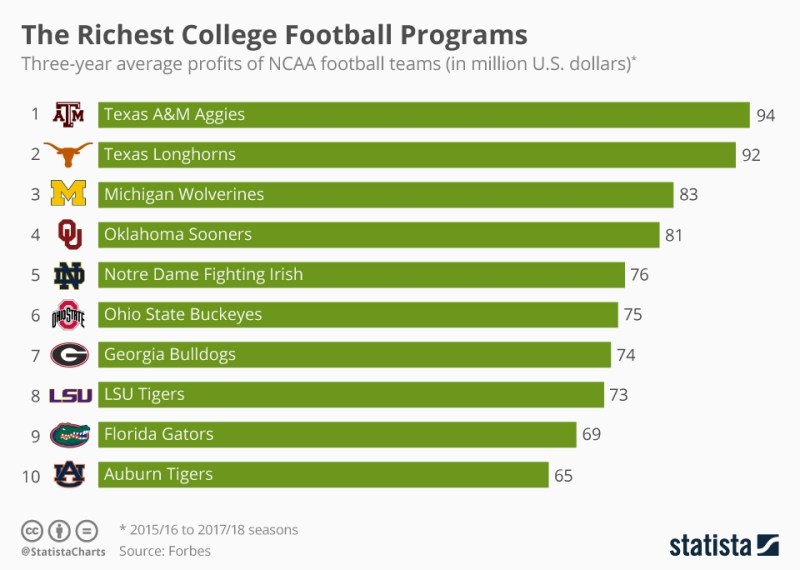
The numbers tell a story far beyond touchdowns and tailgates. When examining college football programs by revenue, the gap between elite institutions and mid-major contenders isn’t just about wins—it’s about infrastructure, recruitment, and the very fabric of campus life. In 2023, the top 10 programs generated over $2.5 billion combined, with Texas alone surpassing $200 million in annual revenue. These figures don’t just reflect athletic success; they dictate facility upgrades, coaching salaries, and even academic support programs. The disparity is stark: while Alabama’s Crimson Tide operates with a $150 million budget, Division II schools often scrape by on $5 million. This financial chasm isn’t accidental—it’s engineered by conference realignment, media rights deals, and the relentless pursuit of commercialization.
Yet the narrative isn’t solely about the haves and have-nots. Behind the ledger sheets lies a paradox: smaller programs thrive on culture and tradition, while powerhouses drown in their own success. Consider Boise State’s $50 million revenue—modest by SEC standards, but enough to sustain a national title run with limited resources. Meanwhile, Ohio State’s $180 million war chest funds a medical center, a football academy, and a staff that rivals NFL front offices. The question isn’t whether college football programs by revenue create inequality—it’s how that inequality reshapes the sport’s future.
The revenue model of college football has evolved from a sideline operation to a cornerstone of university budgets. What began as a pastime for student athletes has morphed into a $14 billion industry, where the NCAA’s 2024 media rights deal alone nets $7.5 billion over 12 years. This financial revolution didn’t happen overnight; it’s the result of decades of strategic maneuvers, legal battles, and the unchecked growth of college sports entertainment. But as the money flows, so do the ethical dilemmas: Are players compensated fairly? Does revenue sharing truly benefit all schools? And how long can the current system sustain itself before collapsing under its own weight?
The Complete Overview of College Football Programs by Revenue
The financial landscape of college football is a two-tiered ecosystem. At the apex sit the Power Five conferences—SEC, Big Ten, ACC, Pac-12, and Big 12—where programs generate between $50 million and $200 million annually. These conferences control 90% of the sport’s revenue, thanks to lucrative TV contracts, sponsorships, and ticket sales. Below them, the Group of Five (AAC, C-USA, MAC, MW, Sun Belt) operate on a fraction of those resources, often relying on creative funding like naming rights and alumni donations. The divide isn’t just monetary; it’s structural. Power Five schools leverage their revenue to poach talent from smaller conferences, creating a feedback loop where financial dominance begets athletic dominance.
What’s often overlooked is the college football programs by revenue hierarchy within conferences. Texas and Ohio State dwarf their conference peers, but even mid-tier programs like Florida State or Oregon State generate enough to sustain competitive teams. The revenue streams themselves are diverse: ticket sales (30% of total), licensing (25%), donations (20%), and media rights (15%). The latter has become the wild card—NCAA’s 2024 deal with ESPN and Fox, for instance, allocates $3.2 billion to conferences, with the SEC alone securing $1.2 billion. This windfall allows schools to invest in facilities, but it also exacerbates the wealth gap when smaller programs receive crumbs from the distribution.
Historical Background and Evolution
The modern era of college football programs by revenue traces back to the 1980s, when the NCAA’s Bowl Championship Series (BCS) revolutionized postseason payouts. Before the BCS, bowl games paid modest sums—often under $1 million per team. By 2014, the College Football Playoff (CFP) and its $75 million annual payout changed everything. The CFP’s revenue-sharing model, where even non-playoff teams earn millions, became a blueprint for equity. Yet, the system still favors the wealthy: Texas and Alabama, perennial title contenders, receive disproportionate payouts due to their national appeal. Historically, revenue growth has mirrored the commercialization of the sport—from the rise of ESPN in the 1990s to the explosion of NIL (Name, Image, Likeness) deals in 2021, which injected an additional $1 billion into college sports.
The legal battles over player compensation have further complicated the revenue equation. The 2021 Supreme Court ruling in NCAA v. Alston dismantled restrictions on education-related benefits, leading to a flood of NIL agreements. Players at top programs now earn six-figure deals, but the distribution is lopsided: SEC schools dominate NIL revenue, while Group of Five athletes struggle to secure even modest contracts. This disparity raises critical questions about whether college football programs by revenue are truly sustainable when the financial playing field is tilted. The answer lies in the data—where the top 25 programs generate 80% of all NIL revenue, leaving the rest to compete for scraps.
Core Mechanisms: How It Works
The revenue engine of college football operates on three pillars: direct income, indirect benefits, and secondary markets. Direct income comes from ticket sales, sponsorships, and media rights, while indirect benefits include facility revenue (e.g., Ohio State’s $100 million football stadium generates $20 million annually in concessions). Secondary markets—merchandise, licensing, and digital content—add another layer. For example, Alabama’s apparel sales exceed $50 million yearly, and its digital content (streaming, highlights) contributes $15 million. The interplay between these streams creates a compounding effect: more revenue allows for better facilities, which attract more fans, which drives up sponsorships. This cycle is why Texas and Notre Dame, despite being in different conferences, both clear $150 million annually.
Conference realignment is the wild card in this system. When schools like USC and UCLA jumped from the Pac-12 to the Big Ten in 2024, they didn’t just gain access to a larger TV deal—they disrupted the entire revenue ecosystem. The Big Ten’s new media rights pact, worth $11 billion over 20 years, was partly fueled by the influx of Southern California schools. Smaller conferences, like the MAC, respond by forming alliances (e.g., the 2022 MAC-AAC merger) to negotiate better deals. The result? A constant state of flux where college football programs by revenue are perpetually recalibrated by power dynamics. The SEC’s dominance, for instance, stems from its ability to retain top talent and negotiate favorable terms, while the Pac-12’s instability has led to financial hemorrhaging.
Key Benefits and Crucial Impact
The financial success of top college football programs by revenue isn’t just about balance sheets—it’s about transforming universities. Schools like Texas and Ohio State use their athletic revenue to fund academic programs, scholarships, and infrastructure. The University of Texas System, for example, allocates 20% of its athletic revenue to academic initiatives, including STEM research and student housing. Meanwhile, smaller programs like Appalachian State leverage modest budgets to build niche reputations, attracting students who value tradition over big-money sports. The impact extends beyond campuses: local economies thrive on game days, with tailgating alone generating $1.5 billion annually in the SEC region.
Yet the benefits come with trade-offs. The pursuit of revenue has led to commercialization concerns—stadiums resemble arenas, fan experiences prioritize luxury suites over student access, and academic integrity is sometimes compromised by the pressure to win. The NCAA’s 2023 report revealed that 60% of athletic directors cite revenue growth as their primary challenge, even as they admit it strains resources for non-revenue sports. The paradox is clear: college football programs by revenue fuel university missions, but they also risk overshadowing the educational purpose of higher education.
—Mark Emmert, NCAA President (2023)
"Revenue in college sports is a double-edged sword. It allows us to invest in student-athletes and facilities, but it also creates inequities that threaten the integrity of amateurism."
Major Advantages
- Facility Upgrades: Top programs use revenue to build state-of-the-art stadiums (e.g., Michigan’s $450 million renovation) and training complexes, giving them a competitive edge in recruitment.
- Coaching Salaries: The average Power Five head coach earns $5 million annually, while Group of Five coaches average $1.2 million—creating a talent drain from smaller schools.
- Academic Support: Revenue-sharing models (e.g., SEC’s $1.2 billion payout) fund scholarships, tutoring programs, and research initiatives, benefiting all students.
- Economic Boost: A single home game can inject $50 million into a local economy, supporting hospitality, retail, and transportation sectors.
- Global Expansion: Programs like Alabama and Texas use revenue to fund international recruiting trips and global branding, increasing their global fanbase.
Comparative Analysis
| Power Five Programs | Group of Five Programs |
|---|---|
|
|

Future Trends and Innovations
The next decade of college football programs by revenue will be defined by three forces: technology, governance, and globalization. Artificial intelligence is already optimizing ticket pricing and fan engagement, while blockchain is being tested for NIL payments to ensure transparency. The NCAA’s 2025 revenue model may incorporate dynamic pricing, where ticket costs fluctuate based on demand—potentially increasing revenue by 15%. Governance-wise, the push for player compensation will intensify, with states like California and Texas considering legislation to mandate full-cost-of-attendance benefits. Globally, programs like Texas and Alabama are expanding into international markets, with plans to host games in London and Mexico City to tap into untapped revenue streams.
However, the biggest wild card remains conference realignment. The Pac-12’s collapse and the Big Ten’s expansion into the South signal a new era where geography no longer dictates power. Smaller conferences may band together to form a "Group of Seven" to negotiate better terms, while Power Five schools could fragment into super-conferences with their own media deals. The result? A more fragmented revenue landscape where college football programs by revenue are no longer dictated by tradition but by financial pragmatism. The question is whether this fragmentation will lead to innovation or further inequality.
Conclusion
The financial ecosystem of college football is a study in contrasts: where Texas and Ohio State operate like Fortune 500 entities, schools like Montana and South Dakota State rely on scrappy ingenuity. The revenue disparities aren’t just numbers—they’re a reflection of the sport’s priorities. As NIL deals reshape player economics and AI transforms fan experiences, the core tension remains: Can college football programs by revenue grow without losing sight of their educational roots? The answer will determine whether the sport remains a unifying force or becomes a victim of its own success.
One thing is certain: the revenue model will continue evolving. Whether through technological disruption, legislative changes, or global expansion, the financial underpinnings of college football will shape its future. For now, the data speaks for itself—those who adapt will thrive, while those who don’t risk being left in the end zone.
Comprehensive FAQs
Q: How do NIL deals affect college football programs by revenue?
A: NIL deals inject billions into the sport but create a revenue divide. Top programs like Alabama and Texas generate $50M+ annually in NIL revenue, while Group of Five schools average under $500K. This disparity widens the talent gap, as players at elite schools earn six-figure endorsements, making it harder for smaller programs to recruit.
Q: Which college football program has the highest revenue?
A: Texas leads with over $200 million annually, followed by Ohio State ($180M) and Alabama ($160M). These figures include ticket sales, media rights, sponsorships, and NIL deals. The SEC’s Texas and Alabama are consistently the top two, thanks to their national fanbases and lucrative partnerships.
Q: How do smaller programs compete with Power Five schools?
A: Smaller programs leverage culture, tradition, and cost efficiency. Schools like Boise State and Appalachian State maximize limited revenue by focusing on high-impact recruiting, alumni engagement, and creative sponsorships (e.g., naming rights for facilities). They also benefit from lower operational costs, allowing them to punch above their weight.
Q: What’s the biggest revenue stream for college football?
A: Media rights dominate, accounting for 30–40% of total revenue. The NCAA’s 2024 deal with ESPN/Fox nets $7.5 billion over 12 years, with the SEC securing $1.2 billion alone. Ticket sales (25%) and sponsorships (20%) follow, but media rights are the most volatile and fastest-growing stream.
Q: How does revenue sharing work in college football?
A: Revenue sharing varies by conference. The SEC, for example, allocates 30% of its media revenue to all 14 schools, while the Big Ten uses a tiered system where playoff participants earn more. However, the distribution is often criticized as inequitable, as top programs like Texas and Ohio State receive disproportionate shares due to their market size.
Q: Can college football programs by revenue sustain current trends?
A: Sustainability depends on adaptation. While Power Five schools can weather financial storms, Group of Five programs face existential threats if revenue growth stagnates. Innovations like NIL, international expansion, and conference realignment may help, but the system’s long-term viability hinges on addressing player compensation and commercialization concerns.
Leave a Comment
Comments are moderated before appearing. The data you submit is processed according to the Privacy Policy of versiliasolutions.oneagency.co.