How a Compliance Risk Assessment Questionnaire Transforms Risk Management
Table of Contents
- The Complete Overview of the Compliance Risk Assessment Questionnaire
- Historical Background and Evolution
- Core Mechanisms: How It Works
- Key Benefits and Crucial Impact
- Major Advantages
- Comparative Analysis
- Future Trends and Innovations
- Conclusion
- Comprehensive FAQs
- Q: How often should a compliance risk assessment questionnaire be updated?
- Q: Can a compliance risk assessment questionnaire replace internal audits?
- Q: What industries benefit most from a compliance risk assessment questionnaire?
- Q: How do we ensure employees take the questionnaire seriously?
- Q: What’s the biggest mistake organizations make with compliance questionnaires?
- Q: Can third-party vendors be included in the questionnaire?
Regulatory landscapes shift faster than ever, yet compliance gaps remain the Achilles’ heel of organizations—costing billions in fines, reputational damage, and operational disruptions. The solution? A compliance risk assessment questionnaire isn’t just a checkbox exercise; it’s a dynamic tool that maps vulnerabilities before they escalate. Without it, even the most robust compliance programs stumble into blind spots, leaving critical risks unaddressed until it’s too late.
The stakes are higher now. A single misstep—whether in data privacy, financial reporting, or industry-specific regulations—can trigger cascading consequences. Yet, many organizations treat compliance assessments as static documents, revisited annually with little adaptation. The reality? A compliance risk assessment questionnaire must evolve with regulatory changes, emerging threats, and internal transformations. Static tools fail; proactive, iterative assessments thrive.
The difference between compliance as a cost center and compliance as a strategic asset lies in execution. A well-structured compliance risk assessment questionnaire doesn’t just identify risks—it quantifies them, prioritizes them, and integrates findings into risk mitigation strategies. The question isn’t if your organization needs one, but how it’s being used to future-proof operations.
The Complete Overview of the Compliance Risk Assessment Questionnaire
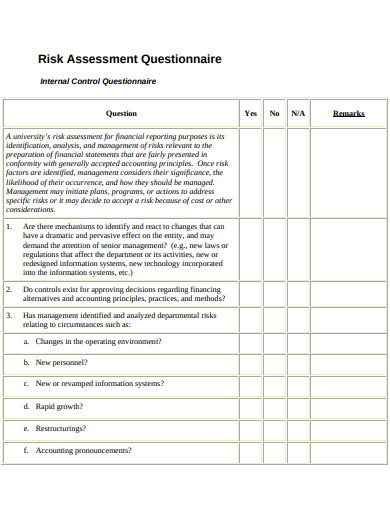
A compliance risk assessment questionnaire is the backbone of any effective compliance program, serving as a structured inventory of regulatory obligations, internal controls, and potential exposures. Unlike broad risk assessments, this tool zeroes in on compliance-specific threats—whether derived from laws like GDPR, SOX, or industry standards such as HIPAA. Its purpose is twofold: to ensure adherence to legal requirements and to uncover systemic weaknesses that could lead to non-compliance.The questionnaire’s design varies by sector, but its core function remains consistent: to systematically evaluate an organization’s alignment with regulatory expectations. It typically includes targeted questions about policies, procedures, training, monitoring, and incident response—all framed to expose gaps where non-compliance could occur. Without this level of granularity, organizations risk operating under false assumptions of compliance, only to face penalties or audits that reveal hidden vulnerabilities.
Historical Background and Evolution
The origins of the compliance risk assessment questionnaire trace back to the early 2000s, when regulatory scrutiny intensified following high-profile corporate scandals like Enron and WorldCom. These cases exposed the dangers of weak internal controls and prompted frameworks such as the Sarbanes-Oxley Act (SOX), which mandated rigorous financial reporting oversight. Organizations quickly realized that ad-hoc compliance checks were insufficient; a standardized, repeatable process was needed.Over time, the questionnaire evolved from a reactive tool—used primarily during audits—to a proactive instrument embedded in continuous monitoring programs. The rise of digital transformation further accelerated this shift, as data privacy laws (e.g., GDPR, CCPA) introduced new compliance layers. Today, a compliance risk assessment questionnaire is no longer optional; it’s a critical component of enterprise risk management (ERM) strategies, especially for industries like healthcare, finance, and technology where regulatory demands are most stringent.
Core Mechanisms: How It Works
At its core, a compliance risk assessment questionnaire operates on a modular framework. It begins with a scope definition, identifying which regulations, departments, or processes are in focus. For example, a financial services firm might assess anti-money laundering (AML) controls, while a healthcare provider would prioritize HIPAA compliance. The questionnaire then deploys a series of risk-specific questions, often categorized by:The responses are scored or prioritized based on severity, with high-risk areas flagged for immediate remediation. Advanced versions integrate automation, pulling data from IT systems or third-party audits to reduce manual effort. The key innovation? Moving from a static snapshot to a dynamic, data-driven assessment that adapts to real-time changes.
Key Benefits and Crucial Impact
Organizations that deploy a compliance risk assessment questionnaire consistently outperform peers in two critical areas: risk mitigation and regulatory resilience. The tool doesn’t just tick boxes—it provides actionable intelligence, allowing leadership to allocate resources where they matter most. For instance, a questionnaire might reveal that 60% of compliance failures stem from outdated vendor contracts, prompting a company-wide review of third-party agreements.The financial and operational dividends are substantial. According to the Ponemon Institute, companies with mature compliance programs experience 30% fewer regulatory fines and 25% faster incident response times. Beyond cost savings, the questionnaire enhances stakeholder trust—whether with investors, customers, or regulators—by demonstrating a proactive stance on governance.
"Compliance isn’t just about avoiding penalties; it’s about embedding a culture where risk awareness is second nature. A well-designed questionnaire is the first step in turning compliance from a burden into a competitive advantage." — Michael Rasmussen, GRC Strategist & Author of The Compliance and Ethics Blog
Major Advantages
- Regulatory Alignment: Ensures policies and procedures meet current legal standards, reducing exposure to enforcement actions.
- Risk Prioritization: Uses scoring systems to identify high-impact risks (e.g., data breaches, fraud) before they materialize.
- Audit Readiness: Provides documented evidence of due diligence, streamlining external audits and reducing scrutiny time.
- Cost Efficiency: Automates data collection and analysis, cutting manual review costs by up to 40% in large enterprises.
- Strategic Insight: Highlights systemic issues (e.g., training gaps, IT vulnerabilities) that generic risk assessments might overlook.
Comparative Analysis
| Traditional Risk Assessment | Compliance Risk Assessment Questionnaire |
|---|---|
| Broad focus on operational, financial, and strategic risks. | Narrowly targets regulatory, legal, and industry-specific compliance risks. |
| Often qualitative, relying on expert judgment. | Structured with quantifiable metrics (e.g., "How many employees failed the last compliance test?"). |
| Static; conducted annually or biennially. | Dynamic; updated with regulatory changes or triggered by events (e.g., new laws, mergers). |
| Limited integration with other risk functions. | Seamlessly connects to ERM, IT security, and third-party risk programs. |

Future Trends and Innovations
The next generation of compliance risk assessment questionnaires will be defined by AI-driven analytics and predictive modeling. Machine learning algorithms will analyze response patterns to forecast emerging risks—for example, flagging anomalies in employee behavior that suggest potential fraud before an incident occurs. Additionally, blockchain technology is poised to enhance transparency in questionnaire responses, creating an immutable audit trail for regulators.Another trend is regulatory technology (RegTech) integration, where questionnaires feed directly into compliance management systems (CMS) like MetricStream or RSA Archer. This eliminates silos, ensuring that risk assessments inform real-time decision-making. As global regulations become more interconnected (e.g., cross-border data flows under GDPR and CPRA), questionnaires will need to adopt modular, jurisdiction-specific modules to keep pace with evolving legal landscapes.
Conclusion
A compliance risk assessment questionnaire is more than a regulatory checkbox—it’s a strategic lever that can mean the difference between a fine and a first-mover advantage. Organizations that treat it as a living document, not a static form, will navigate compliance challenges with confidence. The future belongs to those who move beyond passive assessments and embed these tools into their DNA, turning risk into resilience.The question for leaders isn’t whether to implement one, but how to make it work harder: by integrating data, automating follow-ups, and using insights to drive broader risk culture. The organizations that succeed will be those that see compliance not as a cost, but as an investment in longevity.
Comprehensive FAQs
Q: How often should a compliance risk assessment questionnaire be updated?
A: At a minimum, it should be reviewed annually or whenever major regulatory changes occur (e.g., new laws, industry standards). Dynamic programs update quarterly or trigger updates based on events like mergers, system upgrades, or audit findings.
Q: Can a compliance risk assessment questionnaire replace internal audits?
A: No. The questionnaire identifies risks and gaps, but internal audits provide independent verification of controls. Together, they form a robust compliance ecosystem—the questionnaire flags issues, while audits validate fixes.
Q: What industries benefit most from a compliance risk assessment questionnaire?
A: Highly regulated sectors like finance (SOX, AML), healthcare (HIPAA), technology (GDPR, CCPA), and energy (environmental laws) see the most value. However, any organization with complex regulatory obligations—including nonprofits or global enterprises—can leverage it effectively.
Q: How do we ensure employees take the questionnaire seriously?
A: Leadership buy-in is critical. Tie responses to performance metrics, offer incentives for high participation, and use the data to address systemic issues (e.g., retraining programs). Transparency about how results influence decisions also boosts engagement.
Q: What’s the biggest mistake organizations make with compliance questionnaires?
A: Treating it as a one-time exercise. Static questionnaires become outdated quickly. The biggest pitfall is failing to act on findings—collecting data without remediation turns the tool into a paperweight rather than a risk management asset.
Q: Can third-party vendors be included in the questionnaire?
A: Absolutely. A compliance risk assessment questionnaire should extend to vendors, contractors, and partners whose actions could impact your organization’s regulatory standing. This is often called a third-party risk assessment, and it’s a critical component of modern compliance programs.
Leave a Comment
Comments are moderated before appearing. The data you submit is processed according to the Privacy Policy of versiliasolutions.oneagency.co.