How Customer Behaviour Shapes Modern Business Strategy
Table of Contents
- The Complete Overview of Customer Behaviour
- Historical Background and Evolution
- Core Mechanisms: How It Works
- Key Benefits and Crucial Impact
- Major Advantages
- Comparative Analysis
- Future Trends and Innovations
- Conclusion
- Comprehensive FAQs
- Q: How does customer behaviour differ from traditional market research?
- Q: Can small businesses leverage customer behaviour insights?
- Q: What role does culture play in customer behaviour?
- Q: How do economic downturns affect customer behaviour?
- Q: Is customer behaviour the same as consumer psychology?
- Q: How can brands measure the success of behavioural strategies?
Customer behaviour isn’t just about transactions—it’s the silent language of markets, where preferences shift like tides and loyalty is earned through nuanced interactions. The most resilient brands don’t chase trends; they decode the unspoken signals in how people research, hesitate, and ultimately choose. From the impulse-driven scrolls of Gen Z to the deliberate research cycles of millennials, the patterns reveal more than sales data: they expose the emotional and cognitive triggers that turn browsers into buyers.
What separates thriving businesses from those left behind isn’t better products, but a deeper grasp of why customers act the way they do. A single misstep—like ignoring the rise of voice commerce or underestimating the power of social proof—can cost millions. The difference between a one-time sale and a lifelong advocate often hinges on understanding the psychology behind hesitation, the impact of peer influence, and how digital friction can derail even the most promising leads.
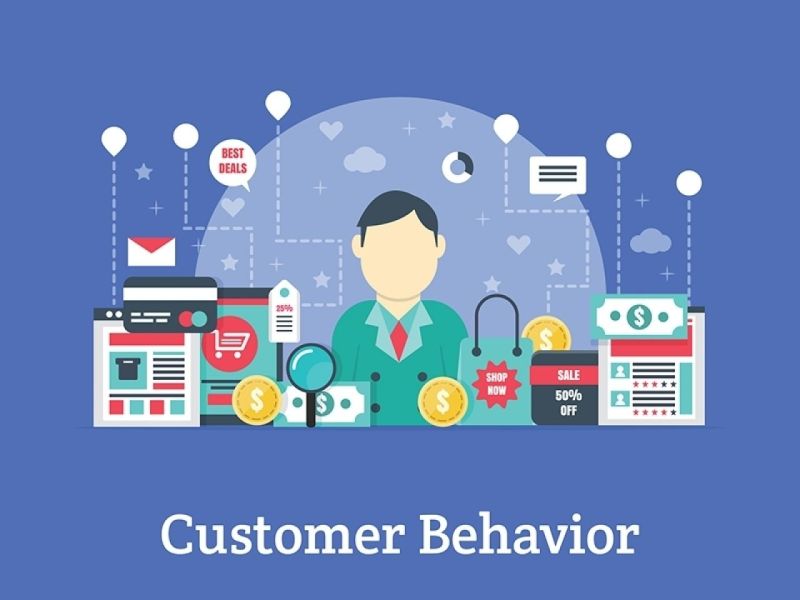
The Complete Overview of Customer Behaviour
Customer behaviour is the study of how individuals and groups make decisions about acquiring, using, and disposing of products or services. It blends psychology, economics, and sociology to explain why consumers prioritize convenience over price in some cases, or why brand loyalty can withstand price hikes in others. The field has evolved from basic transactional analysis to a dynamic discipline that accounts for cultural shifts, technological disruptions, and the growing influence of algorithmic recommendations.At its core, customer behaviour isn’t static—it’s a living system shaped by external forces like economic instability, climate concerns, and the 24/7 accessibility of information. A 2023 McKinsey report found that 60% of purchasing decisions now involve at least three touchpoints before conversion, up from just one in pre-digital eras. This fragmentation demands a shift from broad demographic targeting to hyper-personalized engagement, where brands must anticipate needs before they’re articulated.
Historical Background and Evolution
The study of customer behaviour traces back to the early 20th century, when pioneers like John Watson’s behavioural psychology began mapping human responses to stimuli. However, it was the post-WWII consumer boom that formalized the field, as marketers realized that mass advertising alone couldn’t predict demand. The 1960s saw the rise of consumerism, where psychologists like Abraham Maslow’s hierarchy of needs provided a framework for understanding motivations—from basic survival to self-actualization through purchases.The digital revolution of the 1990s and 2000s transformed customer behaviour into a data-driven science. Tools like cookies, A/B testing, and predictive analytics allowed brands to track not just what customers bought, but how they navigated decisions. The advent of social media in the 2010s added another layer: peer validation became a primary driver, with reviews and influencer endorsements often outweighing traditional advertising. Today, the fusion of AI and behavioural science has created a feedback loop where customer actions continuously refine marketing strategies in real time.
Core Mechanisms: How It Works
Customer behaviour operates through three interconnected layers: cognitive (rational decision-making), affective (emotional responses), and behavioural (observable actions). The cognitive layer involves weighing options based on perceived value, while the affective layer triggers impulse purchases through nostalgia, fear of missing out (FOMO), or aspirational messaging. The behavioural layer is where data comes into play—tracking scroll depth, cart abandonment rates, and repeat purchase intervals to identify patterns.A critical mechanism is cognitive dissonance, where consumers justify choices post-purchase to reduce mental discomfort. This explains why unboxing experiences or post-sale follow-ups (like thank-you videos) can turn buyers into advocates. Another key driver is social proof, where individuals rely on the actions of others to validate decisions—explaining why limited-edition drops or user-generated content campaigns thrive. Brands that align their messaging with these psychological triggers see conversion rates climb by 20–40%, according to Harvard Business Review studies.
Key Benefits and Crucial Impact
The ability to influence customer behaviour isn’t just a competitive edge—it’s a survival skill in an era where attention spans are shrinking and alternatives are a click away. Companies that master this discipline don’t just sell products; they architect experiences that feel inevitable to the consumer. The impact extends beyond revenue: it shapes product development, customer service strategies, and even corporate social responsibility initiatives, as brands increasingly tie purchases to ethical or environmental values.Data from Gartner shows that businesses investing in behavioural analytics see a 15% lift in customer lifetime value within 18 months. The reason? They’re no longer guessing at motivations but engineering them through personalized journeys. For example, a luxury watch brand might use behavioural triggers like scarcity (limited editions) and exclusivity (VIP previews) to tap into the affective layer, while a subscription service relies on convenience and habit formation to dominate the cognitive space.
"Customers don’t buy products; they buy the transformation those products promise." — Seth Godin, Marketing Strategist
Major Advantages
- Precision Targeting: Leveraging behavioural data to tailor messaging reduces ad waste by up to 30%, ensuring resources go to high-intent audiences.
- Higher Conversion Rates: Personalized recommendations (e.g., Netflix’s algorithm) increase sales by 25% by aligning with individual preferences.
- Reduced Churn: Proactive engagement—like sending a discount after cart abandonment—can recover 10–30% of lost sales.
- Brand Loyalty: Customers who feel understood (e.g., through personalized emails) are 67% more likely to repurchase (Segment, 2023).
- Innovation Insights: Analyzing behavioural trends (e.g., the rise of "quiet luxury") helps brands anticipate demand before competitors.
Comparative Analysis
| Traditional Marketing | Behavioural Marketing |
|---|---|
| Relies on broad demographics (age, gender, location). | Uses real-time data (browsing history, past purchases, engagement). |
| One-size-fits-all messaging; lower personalization. | Hyper-personalized content; dynamic pricing and offers. |
| Measures success via impressions and clicks. | Tracks micro-interactions (hover time, video pauses, repeat visits). |
| Higher customer acquisition costs (CAC) due to inefficiency. | Lower CAC through predictive targeting and retargeting. |

Future Trends and Innovations
The next frontier in customer behaviour lies at the intersection of AI and neuroscience. Predictive analytics will evolve to anticipate needs before they’re conscious—imagine a retail app suggesting a product based on your mood (detected via voice tone or facial recognition) rather than just purchase history. Meanwhile, behavioural biometrics—analyzing typing speed, mouse movements, or even breathing patterns—could enable frictionless authentication and ultra-personalized experiences.Ethical concerns will also reshape the field. As consumers grow wary of data exploitation, transparency in behavioural tracking will become a differentiator. Brands that adopt "privacy-by-design" models—where data collection is opt-in and purpose-driven—will build trust, while those relying on intrusive tracking risk backlash. The shift toward purpose-driven consumption (e.g., buying from brands aligned with personal values) will further complicate strategies, demanding that customer behaviour analysis incorporate ESG (Environmental, Social, Governance) factors into decision-making models.
Conclusion
Customer behaviour is the invisible architecture of modern commerce, dictating which brands thrive and which fade into obscurity. The most successful companies aren’t those with the best products, but those that understand the why behind every click, scroll, and purchase. As technology blurs the lines between physical and digital interactions, the ability to decode behavioural signals will separate leaders from followers.The key takeaway? Customer behaviour isn’t a static puzzle to solve—it’s a dynamic conversation to engage in. Brands that listen, adapt, and innovate within this dialogue will not only survive but dominate the next era of consumerism.
Comprehensive FAQs
Q: How does customer behaviour differ from traditional market research?
A: Traditional market research often relies on surveys or focus groups to gather opinions, while customer behaviour analysis studies actual actions—what people do, not what they say they’ll do. Behavioural data includes clicks, dwell time, and purchase patterns, providing a more accurate picture of motivations.
Q: Can small businesses leverage customer behaviour insights?
A: Absolutely. Tools like Google Analytics, heatmaps (Hotjar), and CRM systems (HubSpot) offer affordable ways to track behavioural trends. Even low-cost strategies—such as A/B testing email subject lines—can yield significant returns by aligning with customer psychology.
Q: What role does culture play in customer behaviour?
A: Culture shapes values, norms, and even decision-making speed. For example, collectivist cultures (e.g., Japan) may prioritize group approval in purchases, while individualistic ones (e.g., U.S.) focus on personal benefit. Brands must localize messaging to resonate with cultural nuances, from color symbolism to gift-giving traditions.
Q: How do economic downturns affect customer behaviour?
A: During recessions, consumers shift from "experience" spending (travel, dining) to "value" purchases (essentials, discounts). Brands must pivot to affordability, subscription models, or premium-perceived-value strategies (e.g., "luxury" basics) to maintain relevance.
Q: Is customer behaviour the same as consumer psychology?
A: While related, they’re distinct. Consumer psychology focuses on why people think and feel about products, while customer behaviour examines what they do—actions like browsing, buying, or sharing. The former is theoretical; the latter is observational and data-driven.
Q: How can brands measure the success of behavioural strategies?
A: Key metrics include conversion rates, repeat purchase frequency, customer lifetime value (CLV), and net promoter score (NPS). Tools like multivariate testing, cohort analysis, and predictive modeling help attribute outcomes to specific behavioural triggers.
Leave a Comment
Comments are moderated before appearing. The data you submit is processed according to the Privacy Policy of versiliasolutions.oneagency.co.