How Customer Segmentation Analysis Transforms Business Strategy
Table of Contents
- The Complete Overview of Customer Segmentation Analysis
- Historical Background and Evolution
- Core Mechanisms: How It Works
- Key Benefits and Crucial Impact
- Major Advantages
- Comparative Analysis
- Future Trends and Innovations
- Conclusion
- Comprehensive FAQs
- Q: How do I choose the right segmentation model for my business?
- Q: Can small businesses benefit from advanced segmentation?
- Q: How often should I update my customer segments?
- Q: What’s the biggest mistake companies make in segmentation?
- Q: How does AI enhance customer segmentation analysis?
- Q: Is segmentation ethical if it relies on personal data?
Customer segmentation analysis isn’t a static exercise—it’s a dynamic process that separates high-value opportunities from wasted resources. The most successful brands don’t treat all customers equally; they dissect behaviors, demographics, and psychographics to craft hyper-personalized experiences. Without this precision, even the most polished campaigns risk missing the mark, leaving potential revenue on the table.
The difference between a brand that thrives and one that merely survives often hinges on how well it executes customer segmentation analysis. Companies like Amazon and Netflix didn’t dominate by guessing—they refined their segmentation models to predict needs before customers articulated them. The data doesn’t lie: businesses using advanced segmentation see 40% higher conversion rates and 30% greater customer lifetime value, according to McKinsey.
Yet, many organizations still rely on outdated, one-size-fits-all approaches. The truth is, segmentation isn’t about categorizing customers into broad buckets—it’s about uncovering the hidden patterns that dictate purchasing decisions. When done right, it transforms marketing from a cost center into a revenue driver.
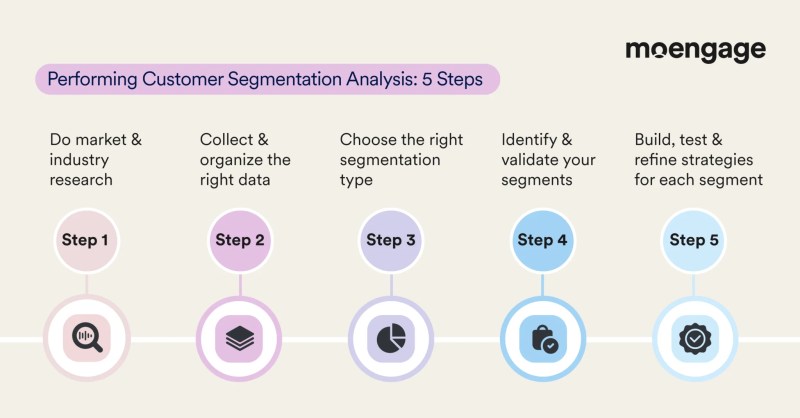
The Complete Overview of Customer Segmentation Analysis
Customer segmentation analysis is the art and science of dividing a heterogeneous customer base into distinct, homogeneous groups based on shared characteristics. These groups—whether defined by spending habits, engagement levels, or pain points—become the foundation for targeted messaging, product development, and resource allocation. The goal isn’t just to segment for the sake of it; it’s to identify which segments are most profitable, which are at risk of churning, and how to allocate budgets for maximum ROI.What sets advanced segmentation apart is its adaptability. Static demographics (age, gender) are table stakes; modern analysis layers in behavioral data, transactional history, and even sentiment analysis from social media. Tools like RFM (Recency, Frequency, Monetary) modeling or clustering algorithms (k-means, hierarchical) allow businesses to move beyond assumptions and into predictive territory. The result? Campaigns that resonate at an individual level, not just a segment level.
Historical Background and Evolution
The origins of customer segmentation analysis trace back to the early 20th century, when companies like Procter & Gamble began using demographic data to tailor product lines. However, the real inflection point came in the 1980s with the rise of database marketing, where firms like Harrah’s used loyalty programs to track individual behaviors. This shift marked the transition from broad strokes to granular insights—a move that would later define digital-era segmentation.Today, segmentation analysis has evolved into a data-science-driven discipline. Machine learning models now process terabytes of data to uncover micro-segments that traditional methods would miss. For example, a luxury retailer might segment customers not just by income but by their response to exclusive previews, discount sensitivity, or even the time of day they browse. The evolution from gut instinct to algorithmic precision has turned segmentation from an art into a science—and a competitive necessity.
Core Mechanisms: How It Works
At its core, customer segmentation analysis relies on three pillars: data collection, modeling, and actionable insights. The first step involves gathering structured data (purchase history, CRM records) and unstructured data (social media interactions, reviews). Advanced tools then apply statistical techniques—such as cluster analysis or decision trees—to group customers based on similarities. The output isn’t just labels; it’s a roadmap for how to engage each segment differently.The mechanics extend beyond basic segmentation. For instance, predictive segmentation uses historical data to forecast which customers are likely to churn, while behavioral segmentation tracks real-time actions (e.g., cart abandonment, repeat purchases). The key is ensuring the segmentation isn’t static; it should evolve as customer behavior shifts. A retail giant might re-segment its audience quarterly to reflect seasonal trends or economic changes, ensuring strategies stay relevant.
Key Benefits and Crucial Impact
The impact of effective customer segmentation analysis extends far beyond marketing departments. It reshapes product development, pricing strategies, and even customer service protocols. Businesses that invest in segmentation don’t just improve efficiency—they create experiences that feel tailor-made, fostering loyalty in an era where personalization is expected, not optional.The ripple effects are measurable. Segmentation reduces customer acquisition costs by 30% by focusing spend on high-intent audiences, while personalized campaigns driven by segmentation boost open rates by 29% (Campaign Monitor). The most forward-thinking companies use segmentation to identify untapped markets—like Netflix’s pivot to documentaries for niche audiences—or to preemptively address churn risks before they materialize.
"The best marketers don’t sell products; they sell solutions to specific problems for specific people. Segmentation is the lens that sharpens that focus." — Seth Godin, Marketing Strategist
Major Advantages
- Precision Targeting: Eliminates wasted ad spend by directing resources to segments with proven ROI. For example, a SaaS company might find that mid-market firms convert 4x better than enterprises, allowing for targeted outreach.
- Enhanced Customer Experience: Segments like "high-touch" or "self-service" enable tailored onboarding, reducing friction. A bank might offer 24/7 chat support to its "stress-sensitive" segment while providing financial planning to its "wealth-building" group.
- Product Innovation Insights: Segmentation reveals unmet needs. A fitness app might discover that its "busy professionals" segment craves 10-minute workouts, leading to a new product line.
- Churn Reduction: Predictive segmentation identifies at-risk customers before they leave. Airlines use this to offer loyalty upgrades to segments with declining engagement.
- Competitive Differentiation: Brands that segment effectively can carve out niches competitors ignore. A DTC brand might target "sustainability-conscious" millennials with eco-friendly packaging, creating a moat.
Comparative Analysis
| Traditional Segmentation | Advanced (Data-Driven) Segmentation |
|---|---|
| Relies on static demographics (age, gender, location). | Uses dynamic behavioral, transactional, and predictive data. |
| One-size-fits-all campaigns. | Hyper-personalized messaging at scale (e.g., dynamic email content). |
| Manual, time-consuming processes. | Automated with AI/ML for real-time adjustments. |
| Limited to broad audience buckets. | Identifies micro-segments (e.g., "late-night shoppers" vs. "weekend browsers"). |

Future Trends and Innovations
The next frontier in customer segmentation analysis lies in real-time, contextual segmentation. As IoT devices and wearables generate continuous data streams, brands will segment customers not just by past behavior but by current context—such as mood (via voice tone analysis) or location (geofenced triggers). Companies like Starbucks already use this to offer "morning vs. afternoon" promotions based on time of day.Another trend is ethical segmentation, where businesses balance personalization with privacy concerns. Regulations like GDPR and CCPA are pushing segmentation toward anonymized, aggregated insights while still delivering relevance. The future may also see segmentation-as-a-service, where third-party platforms provide pre-built models for industries, democratizing advanced analytics for SMEs.
Conclusion
Customer segmentation analysis is no longer a nice-to-have—it’s the difference between reacting to market shifts and shaping them. The brands that win in the next decade won’t be those with the biggest budgets but those with the most granular, actionable insights into their customers. The tools exist; the challenge is execution.The data is clear: segmentation isn’t about dividing customers—it’s about connecting with them in ways that feel intuitive, even if the logic behind it is complex. The question isn’t whether to segment but how deeply and how often to refine the process. Those who treat segmentation as a static exercise will fall behind. The leaders will treat it as an ongoing dialogue with their audience.
Comprehensive FAQs
Q: How do I choose the right segmentation model for my business?
A: The choice depends on your data maturity and goals. Start with RFM (Recency, Frequency, Monetary) for e-commerce or demographic segmentation for broad audiences. For deeper insights, use cluster analysis (unsupervised) or decision trees (supervised). Test models with A/B campaigns to validate effectiveness before scaling.
Q: Can small businesses benefit from advanced segmentation?
A: Absolutely. Tools like HubSpot or Google Analytics offer free/low-cost segmentation templates. Start with behavioral triggers (e.g., abandoned cart emails) or value-based segments (high spenders vs. trial users). Even basic segmentation can improve retention by 20-30% with minimal effort.
Q: How often should I update my customer segments?
A: Dynamic industries (tech, fashion) may require quarterly updates, while stable sectors (B2B services) might suffice with annual reviews. Monitor churn rates and campaign performance—if engagement drops, it’s time to re-segment. Automated tools can refresh segments in real-time based on new data.
Q: What’s the biggest mistake companies make in segmentation?
A: Over-segmenting into niche groups that lack statistical significance, or ignoring actionability. A segment like "customers who click ads but don’t convert" is insightful only if you know how to re-engage them. Always ask: What will we do differently for this group?
Q: How does AI enhance customer segmentation analysis?
A: AI automates pattern recognition in unstructured data (e.g., NLP for sentiment analysis) and predicts future behaviors using predictive modeling. For example, AI can segment customers by lifetime value potential or churn risk with 90%+ accuracy, far beyond manual methods. Platforms like Salesforce Einstein or IBM Watson now offer pre-built segmentation models.
Q: Is segmentation ethical if it relies on personal data?
A: Ethical segmentation requires transparency (disclosing data use) and anonymization where possible. Avoid discriminatory traits (e.g., race) and ensure segments serve customer needs, not just profit. Compliance with GDPR/CCPA is non-negotiable—always obtain consent and allow opt-outs.
Leave a Comment
Comments are moderated before appearing. The data you submit is processed according to the Privacy Policy of versiliasolutions.oneagency.co.