How Customer Segmentation Research Transforms Marketing Strategy
Table of Contents
- The Complete Overview of Customer Segmentation Research
- Historical Background and Evolution
- Core Mechanisms: How It Works
- Key Benefits and Crucial Impact
- Major Advantages
- Comparative Analysis
- Future Trends and Innovations
- Conclusion
- Comprehensive FAQs
- Q: What’s the difference between market segmentation and customer segmentation research?
- Q: How do I know if my segmentation research is effective?
- Q: Can small businesses benefit from advanced customer segmentation research?
- Q: What role does AI play in modern customer segmentation research?
- Q: How often should I update my customer segments?
- Q: What’s the biggest mistake companies make in customer segmentation research?
Customer segmentation research isn’t just a marketing tactic—it’s the backbone of precision-driven decision-making. Businesses that master this discipline don’t guess at customer needs; they dissect them. The difference between a campaign that converts and one that fizzles often hinges on whether segmentation was executed with rigor or treated as an afterthought. The most sophisticated brands treat segmentation as an ongoing science, not a static exercise, refining their approach as consumer behavior shifts and data matures.
Yet, for all its power, customer segmentation research remains misunderstood. Many organizations stop at basic demographics, missing the layers where true differentiation lies—psychographics, behavioral triggers, and even predictive signals. The gap between superficial segmentation and strategic customer segmentation research widens every year, as competitors leverage deeper insights to personalize at scale. The question isn’t whether to segment; it’s how far to go—and how to operationalize those segments into actionable strategies.
The stakes are higher than ever. In an era where 73% of consumers expect personalized experiences, segmentation research isn’t optional; it’s a survival skill. But the real opportunity lies in turning raw data into segmented narratives that resonate. The brands that win aren’t just those with the best data—they’re the ones that translate segmentation research into emotional connections, operational efficiency, and measurable ROI.
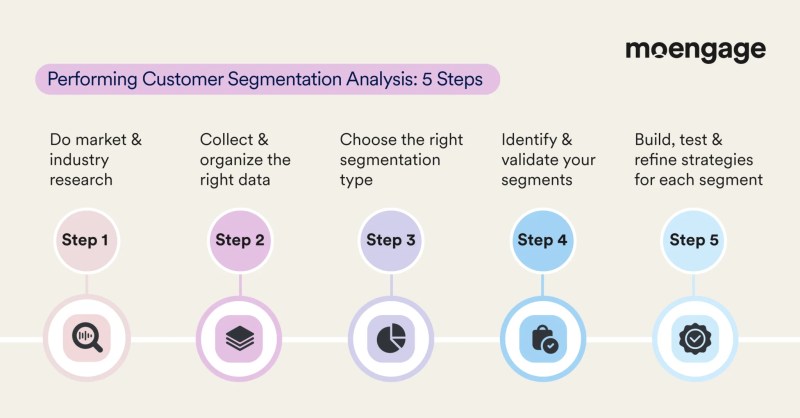
The Complete Overview of Customer Segmentation Research
Customer segmentation research is the systematic process of dividing a customer base into distinct groups based on shared characteristics, behaviors, or needs—then leveraging those insights to tailor messaging, products, and experiences. Unlike traditional market segmentation, which often relies on broad strokes (e.g., age, income), modern customer segmentation research integrates machine learning, predictive analytics, and real-time behavioral tracking to create dynamic, actionable profiles.The evolution of this field has mirrored technological advancements. What began as manual demographic clustering in the 1950s has transformed into AI-driven, real-time segmentation models. Today, the most effective customer segmentation research blends qualitative insights (e.g., customer interviews, sentiment analysis) with quantitative data (e.g., purchase history, engagement metrics). The goal isn’t just to categorize customers but to predict their next move—and influence it.
Historical Background and Evolution
The origins of customer segmentation research trace back to the mid-20th century, when marketers first recognized that not all consumers could be treated equally. Early frameworks, like the VALS (Values, Attitudes, and Lifestyles) model developed in the 1970s, introduced psychographic segmentation, moving beyond demographics to capture lifestyle and personality traits. This shift marked the first wave of sophisticated customer segmentation research, proving that behavior mattered more than basic attributes.By the 1990s, the rise of CRM systems and data warehousing enabled businesses to segment customers based on transactional data—paving the way for RFM (Recency, Frequency, Monetary) analysis. However, it wasn’t until the 2010s that customer segmentation research became truly dynamic. The explosion of digital touchpoints (social media, mobile apps, IoT devices) flooded marketers with real-time behavioral data. Today, segmentation research is no longer a quarterly exercise but a continuous loop of testing, learning, and adapting—powered by AI and automation.
Core Mechanisms: How It Works
At its core, customer segmentation research operates on three pillars: data collection, analysis, and application. The process begins with gathering structured (e.g., CRM data) and unstructured (e.g., social media comments) inputs. Advanced segmentation research now incorporates alternative data sources—such as geolocation, browsing behavior, and even biometric signals—to paint a 360-degree view of each segment.The analysis phase is where segmentation research transforms from art to science. Traditional methods like cluster analysis or decision trees have given way to predictive modeling and neural networks. These tools don’t just group customers—they forecast which segments are most likely to churn, upsell, or respond to specific campaigns. The final step is operationalization: turning insights into personalized journeys, dynamic pricing, or targeted product recommendations.
Key Benefits and Crucial Impact
Customer segmentation research isn’t just a tool—it’s a competitive multiplier. Businesses that invest in it achieve higher conversion rates, stronger customer loyalty, and optimized resource allocation. The ROI isn’t theoretical; it’s measurable. For example, a 2023 McKinsey study found that organizations using advanced segmentation research saw a 15–20% increase in marketing efficiency and a 30% lift in customer lifetime value.The impact extends beyond marketing. Sales teams use segmentation research to prioritize high-value prospects, while product teams design features tailored to specific pain points. Even HR leverages these insights to craft better employee segmentation for training and engagement programs. The unifying thread? Segmentation research turns assumptions into evidence, reducing guesswork across the entire organization.
"The most valuable customers aren’t always the ones who spend the most—they’re the ones who align with your brand’s long-term vision. Segmentation research reveals who they are before they even realize it themselves." — Karen Nelson-Field, Behavioral Science Expert
Major Advantages
- Precision Targeting: Segmentation research eliminates wasted spend by focusing resources on high-potential groups, improving campaign ROI by up to 40%.
- Enhanced Personalization: Dynamic segmentation enables real-time adjustments (e.g., personalized emails, product recommendations) that drive engagement and retention.
- Risk Mitigation: Identifying at-risk segments early allows proactive interventions, reducing churn by 25–40% in high-touch industries.
- Product Innovation: Segmentation research uncovers unmet needs, guiding R&D to develop features that resonate with specific cohorts.
- Competitive Differentiation: Brands that master segmentation research create moats by offering experiences competitors can’t replicate.
Comparative Analysis
| Traditional Segmentation | Advanced Customer Segmentation Research |
|---|---|
| Static (updated annually/quarterly) | Dynamic (real-time updates via AI) |
| Demographic/psychographic focus | Behavioral, predictive, and contextual triggers |
| Manual analysis (spreadsheets, basic tools) | Automated (machine learning, NLP, predictive analytics) |
| One-size-fits-most messaging | Hyper-personalized journeys at scale |

Future Trends and Innovations
The next frontier of customer segmentation research lies in predictive personalization and contextual intelligence. AI models are now capable of simulating customer journeys in real time, adjusting segmentation criteria based on external factors like economic trends or cultural shifts. Additionally, zero-party data—information customers willingly share—is becoming the gold standard, as privacy regulations (e.g., GDPR, CCPA) restrict third-party tracking.Emerging technologies like generative AI will further blur the line between segmentation and creativity, enabling brands to generate tailored content on the fly. Meanwhile, behavioral biometrics (e.g., typing speed, mouse movements) promise to refine segmentation research by capturing subconscious preferences. The future isn’t just about segmenting customers—it’s about anticipating their needs before they articulate them.
Conclusion
Customer segmentation research has evolved from a niche marketing technique into a strategic imperative. The businesses that thrive in the coming decade won’t be those with the most data—they’ll be those that turn data into segmented stories, stories into action, and action into loyalty. The key lies in balancing rigor with agility: using advanced analytics to uncover insights while remaining flexible enough to adapt as behaviors evolve.For leaders, the message is clear: segmentation research isn’t a project—it’s a discipline. Those who treat it as such will build brands that don’t just attract customers but create communities around shared values and experiences.
Comprehensive FAQs
Q: What’s the difference between market segmentation and customer segmentation research?
A: Market segmentation often focuses on broad groups (e.g., "millennials" or "luxury buyers") using limited data. Customer segmentation research dives deeper—integrating behavioral, predictive, and real-time data to create actionable, dynamic profiles. The latter is iterative and data-driven, while the former can be static and assumption-based.
Q: How do I know if my segmentation research is effective?
A: Effective customer segmentation research delivers measurable outcomes: higher conversion rates in targeted campaigns, reduced churn in high-risk segments, and increased customer lifetime value. Track KPIs like segment-specific ROI, engagement metrics, and predictive accuracy (e.g., how well your model forecasts churn). If segments aren’t driving better decisions, refine your criteria or invest in better data.
Q: Can small businesses benefit from advanced customer segmentation research?
A: Absolutely. While large enterprises have more resources, small businesses can leverage affordable tools like HubSpot, Google Analytics, or even Excel-based RFM analysis to start. The key is focusing on high-impact segments—such as your most profitable or engaged customers—and using segmentation research to personalize at a human scale. Prioritize quality over complexity.
Q: What role does AI play in modern customer segmentation research?
A: AI automates the heavy lifting—identifying patterns in vast datasets, predicting behaviors, and even suggesting segmentation criteria. Machine learning models can cluster customers without predefined labels, while NLP analyzes unstructured data (e.g., reviews, support tickets) for sentiment trends. The result? Faster, more accurate, and scalable segmentation research that adapts in real time.
Q: How often should I update my customer segments?
A: Static segments become obsolete quickly. Best practices recommend updating segmentation models at least quarterly, or in real time for high-velocity industries (e.g., e-commerce, SaaS). Use triggers like behavioral changes, market shifts, or new data sources to refresh segments dynamically. The goal is to ensure your segmentation research reflects current customer realities, not past assumptions.
Q: What’s the biggest mistake companies make in customer segmentation research?
A: Over-reliance on demographics and underinvesting in behavioral or predictive signals. Many businesses stop at age, gender, or income, missing the deeper drivers of loyalty and purchase intent. Another common pitfall is treating segments as fixed—when in reality, customer behavior is fluid. The fix? Combine quantitative data with qualitative insights (e.g., interviews, ethnographic research) and treat segmentation as an ongoing process.
Leave a Comment
Comments are moderated before appearing. The data you submit is processed according to the Privacy Policy of versiliasolutions.oneagency.co.