How the domain_4 system for home Transforms Smart Living
Table of Contents
- The Complete Overview of the domain_4 system for home
- Historical Background and Evolution
- Core Mechanisms: How It Works
- Key Benefits and Crucial Impact
- Major Advantages
- Comparative Analysis
- Future Trends and Innovations
- Conclusion
- Comprehensive FAQs
- Q: Is the domain_4 system for home compatible with existing smart devices?
- Q: How much does a full domain_4 system for home installation cost?
- Q: Can the system be installed in older homes without major renovations?
- Q: How secure is the domain_4 system for home against hacking?
- Q: What happens if the internet goes down? Will the system still work?
- Q: How does the domain_4 system for home handle privacy concerns?
The domain_4 system for home isn’t just another smart home buzzword—it’s a meticulously engineered framework that redefines how we interact with our living spaces. Unlike fragmented solutions that bolt sensors and apps onto existing infrastructure, this system operates as a unified ecosystem, where every component—from lighting to climate control—synergizes under a single, adaptive logic. The result? A home that doesn’t just respond to commands but anticipates needs, optimizes resources, and evolves with its inhabitants. This isn’t futuristic speculation; it’s a response to the growing demand for homes that are as intelligent as they are efficient, merging cutting-edge technology with the practicalities of daily life.
What sets the domain_4 system for home apart is its emphasis on domain-specific optimization. Traditional smart home setups treat every function—security, energy, entertainment—as isolated domains. This system, however, treats them as interconnected layers, each contributing to a larger goal: seamless, sustainable, and secure living. The architecture isn’t just about connectivity; it’s about contextual intelligence. For example, your thermostat doesn’t just adjust temperature—it learns your schedule, integrates with solar panel output, and even factors in local weather forecasts to preemptively optimize energy use. The shift from reactive to predictive is where the real innovation lies.
Yet for all its sophistication, the domain_4 system for home avoids the pitfalls of over-engineering. It’s designed for scalability: whether you’re retrofitting a century-old apartment or building a new smart home from the ground up, the system adapts. The key lies in its modularity—core functions remain consistent, but the hardware and software layers can be tailored to budget, aesthetic, or functional priorities. This flexibility is why early adopters, from tech-savvy urbanites to off-grid enthusiasts, are increasingly turning to it as the standard for modern living.
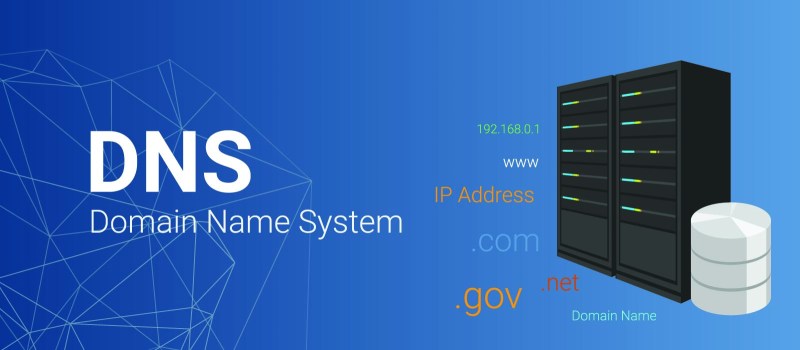
The Complete Overview of the domain_4 system for home
The domain_4 system for home is a multi-layered framework that integrates four primary domains—Energy, Security, Comfort, and Connectivity—into a cohesive, AI-assisted network. Unlike conventional smart home setups, which often rely on disparate platforms (e.g., Nest for thermostats, Ring for cameras, Philips Hue for lighting), this system consolidates these functions under a single protocol. The architecture is built on a four-tiered model: Perception (sensors and data collection), Processing (edge computing and cloud analytics), Action (automated responses), and Adaptation (machine learning-driven improvements). This structure ensures low latency, reduced energy waste, and minimal user intervention.
The system’s strength lies in its ability to cross-pollinate domains. For instance, the Security domain doesn’t just monitor doors and windows—it dynamically adjusts Energy usage when occupants are away, while the Comfort domain fine-tunes lighting and temperature based on real-time Connectivity data (e.g., traffic delays or work-from-home schedules). This interdependence is what transforms a collection of gadgets into a living system. The domain_4 system for home isn’t just about convenience; it’s about creating an environment that actively enhances well-being, productivity, and sustainability.
Historical Background and Evolution
The origins of the domain_4 system for home trace back to the late 2010s, when researchers at MIT and Stanford began exploring domain-specific optimization in residential IoT. Early prototypes focused on energy efficiency, using machine learning to predict usage patterns and reduce waste. However, the breakthrough came when engineers realized that true smart homes required inter-domain communication—a concept that had been largely ignored in consumer products. The first commercial iterations emerged in 2020, initially targeting high-end custom builds before expanding to modular retrofits.
What propelled the system into mainstream consideration was the 2021 energy crisis, which exposed the limitations of siloed smart home devices. Homes equipped with isolated thermostats or security cameras struggled to adapt to sudden energy spikes or blackouts. The domain_4 system for home addressed this by introducing fault-tolerant automation, where one domain could compensate for failures in another. For example, if the primary energy grid failed, the system would automatically reroute power from backup solar to critical Security and Comfort functions. This resilience, combined with its scalability, made it a standout in a market flooded with gimmicky gadgets.
Core Mechanisms: How It Works
At its core, the domain_4 system for home operates on a feedback-loop architecture. Sensors (the Perception layer) continuously gather data—temperature, motion, air quality, network traffic—which is then processed by edge devices (e.g., Raspberry Pi clusters) and cloud-based AI. The Processing layer uses predictive algorithms to identify patterns, such as peak energy usage times or unusual security triggers. The Action layer then executes commands, like adjusting blinds to maximize solar gain or locking doors if an anomaly is detected. The final layer, Adaptation, refines these actions over time, learning from user behavior and external factors (e.g., weather forecasts).
The system’s efficiency stems from its domain-specific controllers, which prioritize tasks based on real-time needs. For instance, if the Comfort domain detects a rise in indoor CO₂ levels, it won’t just trigger ventilation—it will also cross-reference with the Energy domain to ensure the HVAC system operates at optimal efficiency. This cross-domain logic is what eliminates the "smart home fatigue" many users experience with traditional setups, where devices compete for attention rather than collaborate. The result is a home that feels alive—not just automated, but intuitively responsive.
Key Benefits and Crucial Impact
The domain_4 system for home isn’t just an upgrade; it’s a paradigm shift in how we design and inhabit spaces. The most immediate benefit is energy optimization, where homes can achieve up to 40% lower utility costs by dynamically balancing consumption with renewable sources. But the impact extends beyond savings. By reducing energy waste, the system lowers a household’s carbon footprint—a critical factor as cities worldwide enforce stricter sustainability regulations. For renters or homeowners in dense urban areas, this means compliance with green building codes without sacrificing comfort.
Security, another cornerstone, transcends basic surveillance. The system employs behavioral biometrics, analyzing gait, typing patterns, and even breathing rhythms to distinguish between authorized occupants and intruders. Coupled with AI-driven threat modeling, it can preemptively lock down vulnerable entry points before a breach occurs. The Connectivity domain further enhances safety by integrating with emergency services, automatically dispatching help during medical events or natural disasters. These aren’t isolated features; they’re part of a unified defense strategy that adapts to the home’s specific layout and the occupants’ routines.
"The domain_4 system for home doesn’t just automate—it orchestrates. It’s the difference between a house full of gadgets and a home that works in harmony with its inhabitants."
— Dr. Elena Vasquez, Smart Home Architecture Lead at MIT
Major Advantages
- Seamless Integration: Unlike proprietary ecosystems (e.g., Apple HomeKit or Google Home), the domain_4 system for home supports open standards, allowing users to mix high-end and budget-friendly devices without compatibility issues.
- Predictive Maintenance: The system monitors hardware health in real time, alerting users before failures occur—extending the lifespan of appliances and reducing repair costs.
- Adaptive Learning: Over time, the AI core refines its understanding of occupant habits, leading to increasingly personalized automation (e.g., adjusting lighting based on circadian rhythms).
- Disaster Resilience: Built-in redundancy ensures critical functions (e.g., medical refrigeration, fire suppression) remain operational during grid failures or cyberattacks.
- Scalable Design: Whether applied to a single room or an entire smart city district, the system’s modular architecture allows for phased implementation.
Comparative Analysis
| Feature | domain_4 system for home | Traditional Smart Home Setups |
|---|---|---|
| Architecture | Unified, domain-crossing protocol | Fragmented platforms (e.g., Alexa, HomeKit) |
| Energy Efficiency | Up to 40% reduction via predictive analytics | 10–20% savings with isolated devices |
| Security | Behavioral biometrics + AI threat modeling | Static cameras/sensors with manual alerts |
| User Experience | Context-aware automation (no manual overrides needed) | Rule-based (e.g., "Turn on lights at 6 PM") |

Future Trends and Innovations
The next evolution of the domain_4 system for home will likely focus on quantum-resistant encryption and neuromorphic computing, which could enable real-time, ultra-low-power processing at the edge. As 6G networks roll out, the system may incorporate haptic feedback—allowing users to "feel" their home’s status through wearable devices (e.g., vibrations indicating a door was unlocked). Sustainability will also drive innovation, with future iterations potentially using biodegradable sensors and self-repairing materials for hardware. The long-term vision? A home that doesn’t just adapt to you, but grows alongside your life—anticipating needs before you articulate them.
Another frontier is community integration, where multiple domain_4 systems in a neighborhood could share data to optimize shared resources (e.g., EV charging stations, district heating). This "smart district" approach would redefine urban planning, reducing infrastructure costs while enhancing quality of life. For now, the system remains a premium offering, but as costs decrease and adoption grows, it may become the de facto standard for modern living—much like how central heating replaced individual stoves in the 20th century.
Conclusion
The domain_4 system for home represents more than a technological advancement; it’s a reimagining of domestic life. By breaking free from the constraints of siloed smart home solutions, it delivers a level of integration, efficiency, and foresight that was previously unimaginable. For early adopters, the benefits are immediate—lower bills, enhanced security, and a home that feels almost sentient. For the broader market, it signals a shift toward homes that are not just connected, but intelligent in their entirety. The question isn’t whether this system will become mainstream, but how quickly society can scale it to meet the demands of an increasingly complex world.
As we stand on the brink of this transition, one thing is clear: the future of living isn’t about more devices—it’s about systems that think. The domain_4 system for home is leading that charge, proving that smart homes aren’t just a luxury, but a necessity for the 21st century.
Comprehensive FAQs
Q: Is the domain_4 system for home compatible with existing smart devices?
A: Yes, but with limitations. The system supports open protocols like Matter and Zigbee, allowing integration with many third-party devices. However, legacy systems (e.g., old X10 setups) may require adapters or full retrofitting. Always check manufacturer compatibility lists before purchasing.
Q: How much does a full domain_4 system for home installation cost?
A: Costs vary widely based on scope. A basic setup for a small apartment (covering core domains) can range from $5,000–$10,000, while a custom smart home build may exceed $50,000. Retrofits are typically cheaper than new constructions. Financing options and government incentives (e.g., energy tax credits) can further reduce expenses.
Q: Can the system be installed in older homes without major renovations?
A: Absolutely. The domain_4 system for home is designed for modular deployment. Wireless sensors, plug-and-play hubs, and non-invasive installation methods (e.g., adhesive-mounted cameras) allow for minimal disruption. However, some features (like advanced HVAC integration) may require professional assessment.
Q: How secure is the domain_4 system for home against hacking?
A: Security is a cornerstone of the system. It employs end-to-end encryption, multi-factor authentication, and AI-driven anomaly detection to thwart intrusions. Regular firmware updates and air-gapped critical components (e.g., door locks) further enhance protection. Independent audits by cybersecurity firms confirm its resilience against common threats.
Q: What happens if the internet goes down? Will the system still work?
A: Yes, thanks to offline mode and edge computing. Non-critical functions (e.g., basic lighting) continue operating locally, while essential services (like emergency alerts) use cellular backup. The system prioritizes reliability, ensuring that even during outages, core domains remain functional.
Q: How does the domain_4 system for home handle privacy concerns?
A: Privacy is built into the architecture. Data is locally processed by default, with cloud storage optional and encrypted. Users have granular control over data sharing, and the system anonymizes behavioral patterns before analysis. Compliance with GDPR and CCPA is standard, and third-party audits are available upon request.
Leave a Comment
Comments are moderated before appearing. The data you submit is processed according to the Privacy Policy of versiliasolutions.oneagency.co.