Europe Crypto Regulation: The Legal Framework Shaping Digital Finance
Table of Contents
- The Complete Overview of Europe Crypto Regulation
- Historical Background and Evolution
- Core Mechanisms: How It Works
- Key Benefits and Crucial Impact
- Major Advantages
- Comparative Analysis
- Future Trends and Innovations
- Conclusion
- Comprehensive FAQs
- Q: What is MiCA, and how does it differ from other EU financial regulations?
- Q: Do crypto businesses outside the EU need to comply with MiCA?
- Q: How are stablecoins regulated under MiCA?
- Q: What happens if a crypto firm violates MiCA rules?
- Q: Are NFTs covered under MiCA?
- Q: How does the EU’s crypto regulation affect DeFi?
- Q: What’s the timeline for MiCA’s full implementation?
- Q: Can a crypto exchange operate in the EU without a MiCA license?
- Q: How does MiCA impact crypto taxation in the EU?
The European Union’s approach to Europe crypto regulation is no longer a speculative experiment—it’s a fully formed legal architecture. Since 2018, Brussels has systematically dismantled the Wild West era of decentralized finance, replacing it with a patchwork of directives, AML rules, and the landmark Markets in Crypto-Assets (MiCA) framework. Unlike the U.S. patchwork of state-level laws or the Asian regulatory sprints, Europe’s method is deliberate: a single rulebook for the world’s largest single market. This isn’t just about compliance; it’s about defining what counts as a financial instrument, how stablecoins interact with the euro, and where the line between innovation and systemic risk lies.
Yet the transition hasn’t been seamless. While MiCA’s entry into force in June 2024 marked a historic moment—finally giving crypto businesses legal certainty—it also exposed gaps. The EU’s Europe crypto regulation system now forces exchanges to segregate client funds, bans proof-of-work mining (a direct shot at Bitcoin’s energy model), and treats DeFi protocols as unregulated entities unless they opt into licensing. Meanwhile, national supervisors like BaFin in Germany and the AMF in France are interpreting MiCA with local nuances, creating a hybrid model that’s both progressive and bureaucratic.
The stakes are higher than ever. With $2.5 trillion in crypto assets under management globally, Europe’s rules will ripple beyond its borders. The U.S. SEC is watching how MiCA handles security tokens, while Asian regulators are recalibrating their own stances. For businesses, the message is clear: ignorance of Europe crypto regulation is no longer an option. But navigating it requires more than a checklist—it demands an understanding of how these rules interact with tax laws, cross-border data flows, and even environmental sustainability mandates.
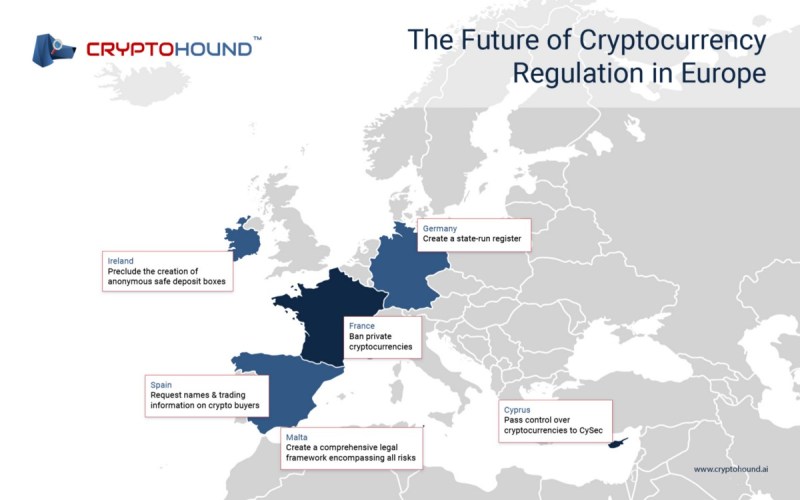
The Complete Overview of Europe Crypto Regulation
The European Union’s regulatory framework for digital assets is the most ambitious in the world—not because it’s the strictest, but because it’s the most comprehensive. Unlike the U.S., where crypto oversight is fragmented between the SEC, CFTC, and FinCEN, or the UK’s post-Brexit hybrid model, the EU has consolidated its approach under a single legal umbrella. At its core, Europe crypto regulation is built on three pillars: MiCA (the flagship legislation), existing financial services rules (like MiFID II), and anti-money laundering (AML) directives. Together, they create a system where crypto assets are treated as either financial instruments (subject to investor protection), e-money (for stablecoins), or utility tokens (with lighter oversight).
What sets Europe apart is its risk-based tiering. Under MiCA, assets are classified by risk profile: high-risk (e.g., unbacked crypto), lower-risk (e.g., asset-referenced tokens), and exempt categories (like certain CBDCs). This isn’t just theoretical—it dictates licensing requirements, disclosure obligations, and even marketing restrictions. For example, a stablecoin pegged to the euro must now comply with capital adequacy rules and reserve transparency, while a decentralized exchange (DEX) operating in the EU must either register as a VASP (Virtual Asset Service Provider) or face enforcement actions. The result? A system that balances innovation with consumer safeguards, but one that demands meticulous compliance from every player.
Historical Background and Evolution
The EU’s journey toward Europe crypto regulation began in 2015, when the European Central Bank (ECB) first flagged crypto-assets as a potential threat to financial stability. By 2018, the Fifth Anti-Money Laundering Directive (5AMLD) forced exchanges to implement KYC/AML checks, a move that caught many operators off guard. But the real turning point came in 2020, when the European Commission proposed MiCA—a dedicated regulatory framework for crypto. After years of lobbying from industry groups (like the European Digital Finance Association) and pushback from traditional banks, MiCA was finalized in 2022 and entered into force in 2024. Its passage was a victory for regulatory clarity, but also a concession: the EU explicitly excluded CBDCs and NFTs from MiCA’s scope, deferring those debates to future legislation.
The evolution hasn’t been linear. Early drafts of MiCA faced criticism for being too prescriptive, particularly around stablecoin capital requirements. The final version, however, struck a balance: it allows for innovation (e.g., by permitting "white-listed" DeFi protocols to operate under lighter rules) while imposing strict licensing for centralized services. The EU also introduced a "sandbox" mechanism, letting firms test compliance in controlled environments—a nod to the UK’s FCA model. Yet the biggest shift may be cultural. Where once crypto was dismissed as a speculative fad, today’s Europe crypto regulation reflects a recognition that blockchain technology is here to stay. The challenge now is ensuring it doesn’t outpace the rules designed to govern it.
Core Mechanisms: How It Works
MiCA’s architecture is built on three operational layers. First, the licensing regime: Any entity offering crypto services in the EU—whether an exchange, custody provider, or advisory firm—must obtain a license from a national competent authority (NCA), such as Germany’s BaFin or France’s AMF. Licensing isn’t one-size-fits-all; it varies by service type. For instance, a stablecoin issuer must hold reserves equivalent to 100% of its circulating supply, while a crypto exchange dealing with retail clients faces stricter capital requirements than one serving only professional investors. The second layer is transparency: MiCA mandates real-time reporting of large transactions (above €10,000) and annual audits of reserves for stablecoins. Third, the enforcement framework gives NCAs the power to impose fines, revoke licenses, or even ban non-compliant platforms from operating in the EU.
What’s often overlooked is how MiCA interacts with existing EU laws. For example, the Markets in Financial Instruments Directive (MiFID II) applies to crypto firms offering investment advice, while the Payment Services Directive (PSD2) governs stablecoin transactions. This layering means a single crypto business may need to comply with up to five different regulatory regimes simultaneously. The EU has also introduced a passporting system, allowing licensed firms to operate across all 27 member states without additional approvals—a critical feature for pan-European platforms. However, this system assumes harmonized supervision, which isn’t yet reality. Disparities in how NCAs interpret MiCA’s rules (e.g., Germany’s stricter stance on DeFi vs. Malta’s more permissive approach) create a fragmented compliance landscape.
Key Benefits and Crucial Impact
The EU’s Europe crypto regulation isn’t just about cracking down—it’s about creating a functional ecosystem. By providing legal clarity, MiCA has already attracted billions in institutional capital to European crypto firms. For the first time, hedge funds, asset managers, and even traditional banks can offer crypto services without fear of regulatory ambiguity. The impact on market stability is equally significant: stablecoin issuers must now hold reserves in regulated banks, reducing the risk of runs. Even for retail investors, MiCA introduces protections like mandatory disclosure of fees and risks—a stark contrast to the opaque practices of many unregulated exchanges. Yet the benefits extend beyond finance. The EU’s approach has set a global benchmark, influencing regulators in Singapore, Switzerland, and even the U.S. as they grapple with how to classify digital assets.
Critics argue that Europe crypto regulation stifles innovation, pointing to the ban on proof-of-work mining and the strict capital requirements for stablecoins. But the EU’s response is pragmatic: it’s willing to experiment within boundaries. The sandbox program, for instance, allows firms to test DeFi protocols under supervised conditions, while the exclusion of NFTs from MiCA’s scope leaves room for future clarification. The real test will be whether the EU can adapt as quickly as the technology evolves. With DeFi’s total value locked (TVL) surpassing $50 billion and CBDCs like the digital euro on the horizon, the pressure to stay ahead is relentless.
— Paolo Ardoino, CEO of Bitfinex: "MiCA is the first global-scale crypto regulation that treats digital assets as a legitimate asset class. The challenge now is ensuring it doesn’t become a bureaucratic straitjacket as the industry evolves."
Major Advantages
- Legal Certainty: MiCA provides the first comprehensive EU-wide framework, eliminating the legal gray areas that previously forced businesses to operate in jurisdictions like Malta or Switzerland.
- Investor Protection: Mandatory disclosures, reserve requirements for stablecoins, and licensing standards reduce the risk of fraud and market manipulation.
- Cross-Border Passporting: Licensed firms can operate across all EU member states without additional approvals, fostering a unified market.
- Institutional Adoption: The clarity of Europe crypto regulation has encouraged traditional financial institutions to integrate crypto services, bridging the gap between legacy finance and digital assets.
- Global Influence: MiCA’s risk-based approach is being studied by regulators worldwide, positioning the EU as a leader in digital asset governance.
Comparative Analysis
| EU (MiCA) | U.S. (SEC/CFTC) |
|---|---|
| Single, harmonized rulebook across 27 member states. | Fragmented oversight with state-level variations (e.g., Wyoming vs. New York). |
| Licensing required for all crypto services; passporting system for EU-wide operations. | Case-by-case enforcement with no unified licensing framework. |
| Stablecoins must hold 100% reserves in regulated banks. | No federal reserve requirements; state-level rules vary (e.g., New York’s BitLicense). |
| Explicit ban on proof-of-work mining (targeting Bitcoin/Ethereum). | No federal ban; SEC focuses on securities classification rather than mining. |

Future Trends and Innovations
The next phase of Europe crypto regulation will be shaped by three forces: technological advancement, geopolitical shifts, and institutional demand. First, the rise of CBDCs—particularly the digital euro—will force the EU to clarify how central bank digital currencies interact with private stablecoins. While MiCA excludes CBDCs, the ECB’s experiments with the digital euro could lead to new rules on interoperability or competition. Second, DeFi’s growth will test the limits of MiCA’s exemption for decentralized protocols. As DeFi’s TVL expands, regulators may push for voluntary compliance or even new licensing categories. Finally, ESG (Environmental, Social, Governance) mandates are already influencing crypto regulation. The EU’s ban on proof-of-work mining reflects broader sustainability goals, and future rules may tie crypto licensing to carbon footprint reporting.
Looking ahead, the EU’s approach will likely evolve in two directions. First, sandbox expansion: More firms will use the regulatory sandbox to test innovative models, particularly in areas like tokenization of real-world assets (RWAs) or hybrid DeFi-tradFi platforms. Second, global alignment: As the U.S. and Asia refine their own crypto frameworks, the EU may seek to harmonize rules with key partners, especially in areas like cross-border stablecoin transactions. The biggest wild card remains political will. If crypto adoption accelerates, the EU may fast-track additional legislation. But if market volatility persists, regulators could tighten restrictions—leaving businesses in a perpetual state of compliance uncertainty.
Conclusion
The EU’s Europe crypto regulation is more than a legal framework—it’s a blueprint for how advanced economies can integrate digital assets without sacrificing stability. MiCA’s success hinges on two factors: enforcement consistency across member states and the ability to adapt as the industry matures. So far, the results are promising. Since MiCA’s implementation, European crypto firms have raised record funding, and institutional players like BlackRock and Fidelity have expanded their crypto offerings in the region. Yet challenges remain, particularly in balancing innovation with risk management. The EU’s approach isn’t perfect—some argue it’s too prescriptive, others that it’s not strict enough—but it’s the most coherent system in the world. For businesses, the message is clear: compliance isn’t optional. For regulators, the work is just beginning.
As the crypto winter gives way to a new cycle of growth, the EU’s Europe crypto regulation will continue to shape the global narrative. Whether it becomes a model for other regions or a cautionary tale depends on how well it evolves. One thing is certain: the days of crypto operating in a regulatory vacuum are over. The question now is whether Europe can lead—or if others will surpass it.
Comprehensive FAQs
Q: What is MiCA, and how does it differ from other EU financial regulations?
A: MiCA (Markets in Crypto-Assets) is the EU’s dedicated regulatory framework for crypto assets, covering everything from exchanges to stablecoins. Unlike broader financial laws like MiFID II (which applies to traditional securities), MiCA is specifically designed for digital assets. It introduces licensing requirements, reserve rules for stablecoins, and a risk-based classification system that doesn’t apply to other asset classes.
Q: Do crypto businesses outside the EU need to comply with MiCA?
A: No, but they must comply if they offer services to EU residents. MiCA’s jurisdiction extends to any entity providing crypto services to customers in the EU, regardless of where the business is based. This has led to a surge in "EU-compliant" licensing for global firms.
Q: How are stablecoins regulated under MiCA?
A: Stablecoins pegged to fiat currencies (like the euro) must hold 100% reserves in regulated banks, undergo annual audits, and obtain a license from a national competent authority. Asset-referenced tokens (e.g., gold-backed stablecoins) face similar but slightly relaxed requirements. Unbacked stablecoins are treated as high-risk assets with stricter capital rules.
Q: What happens if a crypto firm violates MiCA rules?
A: Violations can result in fines, license revocation, or even bans from operating in the EU. National competent authorities (NCAs) like BaFin or the AMF have the power to enforce penalties, and cross-border cooperation ensures consistent action across member states.
Q: Are NFTs covered under MiCA?
A: No, NFTs are explicitly excluded from MiCA’s scope. The EU is still debating how to regulate them, with discussions focusing on whether they should be treated as financial instruments, digital property, or something entirely new.
Q: How does the EU’s crypto regulation affect DeFi?
A: MiCA doesn’t directly regulate DeFi, but it introduces a "light-touch" licensing option for decentralized protocols that meet certain transparency criteria. Most DeFi projects operate in a gray area, relying on voluntary compliance or opting for EU-based entities to access the market.
Q: What’s the timeline for MiCA’s full implementation?
A: MiCA entered into force in June 2024, with most rules fully applicable by December 2024. However, some provisions (like stablecoin licensing) have phased rollouts, and NCAs are still finalizing guidance documents.
Q: Can a crypto exchange operate in the EU without a MiCA license?
A: Technically, yes—but only if it doesn’t serve EU residents. Any exchange offering services to customers in the EU must obtain a MiCA license or risk enforcement actions from national regulators.
Q: How does MiCA impact crypto taxation in the EU?
A: MiCA itself doesn’t address taxation, but it creates a regulatory environment that influences how member states tax crypto assets. For example, capital gains rules may vary by country, but MiCA’s licensing requirements ensure exchanges report transactions to tax authorities.
Leave a Comment
Comments are moderated before appearing. The data you submit is processed according to the Privacy Policy of versiliasolutions.oneagency.co.