How to Navigate Florida’s Fictitious Name Search: A Definitive Breakdown
Table of Contents
- The Complete Overview of Florida’s Fictitious Name Search
- Historical Background and Evolution
- Core Mechanisms: How It Works
- Key Benefits and Crucial Impact
- Major Advantages
- Comparative Analysis
- Future Trends and Innovations
- Conclusion
- Comprehensive FAQs
- Q: How long does a Florida fictitious name reservation last?
- Q: Can I use a fictitious name without registering it in Florida?
- Q: What if my desired name is already taken but I want to use a similar variation?
- Q: Do I need to renew my Florida fictitious name registration?
- Q: Can I file a fictitious name for a business based outside Florida?
- Q: What happens if someone files a trademark conflict after I register my DBA?
- Q: Are there any industries where Florida has stricter fictitious name rules?
Florida’s business landscape thrives on flexibility, and one of its most powerful tools for entrepreneurs is the Florida fictitious name search. Whether you’re a freelancer rebranding under a creative alias or a startup testing a market-ready moniker, this process ensures your chosen name stands out—legally and competitively. The system isn’t just bureaucratic; it’s a safeguard against trademark conflicts and a gateway to professional credibility. But navigating it requires precision, especially when deadlines and hidden fees lurk in the fine print.
The stakes are higher than most realize. A misstep in your Florida fictitious name search could mean wasted filing fees, delayed operations, or worse—legal entanglements with an existing entity. Take the case of a Miami-based boutique that accidentally mirrored a registered DBA name; their rebranding costs ballooned into six figures. The solution? A thorough search before submission, paired with an understanding of Florida’s unique naming conventions. This isn’t just paperwork; it’s a strategic move to protect your brand’s future.
Florida’s approach to fictitious names—commonly called "Doing Business As" (DBA) names—differs from other states in critical ways. While some jurisdictions require physical office addresses or notarized signatures, Florida’s system prioritizes accessibility. Yet, the devil lies in the details: from the 15-character limit on DBAs to the 60-day reservation window, every step demands attention. Below, we dissect the mechanics, benefits, and pitfalls of Florida’s fictitious name search process, ensuring you’re equipped to make informed decisions.
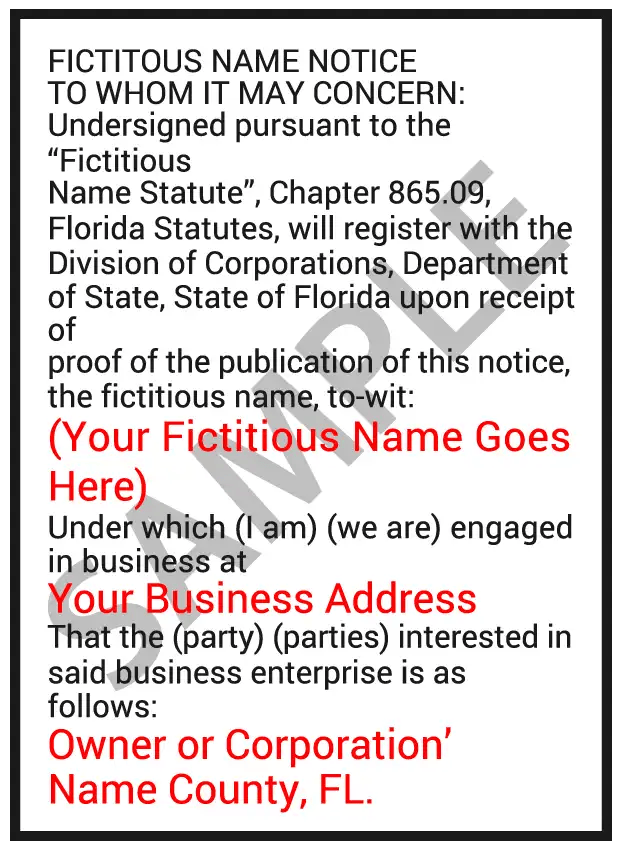
The Complete Overview of Florida’s Fictitious Name Search
Florida’s Florida fictitious name search system is designed to balance ease of use with legal protection, catering to sole proprietors, LLCs, and corporations alike. At its core, the process involves verifying name availability through the Florida Division of Corporations’ online database, followed by formal registration if the name is clear. Unlike some states that bundle fictitious name filings with business licenses, Florida treats it as a standalone transaction—streamlining the workflow for entrepreneurs who prioritize speed. However, the simplicity belies potential pitfalls: names must not conflict with existing trademarks, federal registrations, or other state-approved DBAs, even if they’re inactive.The system’s efficiency is its greatest asset, but its lack of real-time conflict alerts means users must manually cross-reference names against the Secretary of State’s records and the USPTO’s trademark database. This dual-check process is non-negotiable; a name that passes Florida’s search but violates federal trademark law could still lead to costly disputes. For instance, a Tampa-based consultant chose a name identical to a pending USPTO trademark—only to face a cease-and-desist letter weeks later. The lesson? Florida’s fictitious name search is just the first layer; due diligence extends beyond state borders.
Historical Background and Evolution
Florida’s approach to fictitious names evolved alongside its economic growth, particularly during the 1980s real estate boom, when sole proprietors and small businesses flooded the market. The state’s early adoption of digital filing systems in the 1990s further democratized access, reducing barriers for entrepreneurs who previously relied on paper filings or local county clerks. This shift mirrored broader trends in business registration, where states sought to minimize red tape while maintaining compliance. Today, Florida’s system reflects a hybrid model: user-friendly for routine filings but rigorous enough to deter fraudulent activity.The legal framework underpinning Florida’s Florida fictitious name search stems from Chapter 607 of the Florida Statutes, which governs fictitious names for individuals and entities. Key amendments in the 2000s introduced the 60-day name reservation system, allowing businesses to "hold" a name while finalizing paperwork—a critical feature for startups with phased rollouts. Meanwhile, the rise of online marketplaces in the 2010s forced Florida to tighten name uniqueness rules, as domain squatting and trademark infringement cases surged. The result? A system that’s both adaptive and transparent, though its complexity can overwhelm first-time filers.
Core Mechanisms: How It Works
The Florida fictitious name search begins with a query of the Division of Corporations’ online database, accessible via the Florida Sunbiz portal. Users input their desired name (or variations) to check for exact matches or "deceptively similar" names—Florida’s legal term for names that could confuse consumers. The search also flags names reserved by other applicants within the 60-day window. If the name is available, the next step is filing Form DBA-1 (for individuals) or Form DBA-2 (for entities), along with a $35 fee. Processing typically takes 10–15 business days, though expedited options exist for an additional cost.Behind the scenes, Florida’s system cross-references submitted names against a master list of active DBAs, trademarks, and corporate names. The state’s algorithm prioritizes phonetic and visual similarities, not just exact matches—meaning a name like "BlueSky Bakery" could conflict with "Bluesky Bakeshop," even if spelled differently. This proactive approach reduces disputes, but it also means filers must anticipate how consumers might perceive their brand. For example, a name like "Florida’s Best" might conflict with "Florida’s Best Roofing," even if the businesses operate in unrelated industries. The takeaway? Creativity must coexist with caution.
Key Benefits and Crucial Impact
The strategic value of a Florida fictitious name search extends beyond legal compliance. For sole proprietors, a DBA name serves as a professional identity, separating personal and business finances—a critical distinction for tax purposes and liability protection. Meanwhile, LLCs and corporations use fictitious names to align branding with market positioning, such as a tech startup operating under "InnovateX Labs" while its legal name remains "TechSolutions LLC." This duality isn’t just aesthetic; it’s a tactical move to control narrative and perception in competitive industries.The process also acts as a market entry barrier, ensuring only serious players can claim distinctive names. In Florida’s booming tourism and hospitality sectors, where brand recognition drives revenue, securing a unique DBA can mean the difference between obscurity and visibility. Consider a Key West bed-and-breakfast that chose "Sunset Palms Inn" after verifying its availability—only to later discover a nearby competitor had trademarked a similar name. The near-miss underscores why Florida’s fictitious name search is both a shield and a sword: used correctly, it protects your brand; ignored, it exposes vulnerabilities.
"A fictitious name isn’t just a label—it’s the first impression of your business’s credibility. In Florida’s competitive markets, that impression can make or break customer trust." — Florida Bar Association Business Law Section
Major Advantages
- Legal Protection: Registering a fictitious name establishes a public record, deterring others from using a similar name in Florida. This is particularly valuable for trademarks, as Florida’s system integrates with federal databases to reduce infringement risks.
- Brand Flexibility: Businesses can test multiple names under one legal entity without forming new LLCs or corporations, saving on formation fees and administrative overhead.
- Tax and Banking Clarity: A DBA name simplifies opening business bank accounts and filing taxes, as it provides a clear distinction between personal and professional activities.
- Market Differentiation: In saturated industries (e.g., real estate, retail), a unique fictitious name can help a business stand out in local searches and advertising campaigns.
- Scalability: As a business grows, adding or changing fictitious names is straightforward, unlike restructuring an entire legal entity.
Comparative Analysis
| Florida | Texas |
|---|---|
|
|
| California | New York |
|
|

Future Trends and Innovations
Florida’s Florida fictitious name search system is poised for digital transformation, with plans to integrate AI-driven conflict detection to flag potential trademark issues in real time. Pilot programs in select counties are already testing blockchain-based name registries, which could reduce fraud and streamline verification. Meanwhile, the rise of remote work has prompted discussions about expanding name reservation periods to 180 days, accommodating businesses with global operations. These innovations reflect a broader trend: states are modernizing registration processes to align with the speed and scale of modern entrepreneurship.Another emerging trend is the convergence of fictitious name searches with domain name registrations. Florida’s Secretary of State is exploring partnerships with ICANN to auto-check domain availability during the DBA filing process, eliminating a critical step for startups. For businesses in creative fields (e.g., film, music), this could mean instant validation of both brand and digital assets. However, challenges remain, particularly around international trademarks and the growing complexity of global IP law. As Florida continues to refine its system, the focus will likely shift from accessibility to predictive analytics—using data to anticipate naming conflicts before they arise.
Conclusion
Florida’s Florida fictitious name search is more than a procedural hurdle; it’s a cornerstone of the state’s business ecosystem. Whether you’re a freelancer, a small business owner, or a corporate entity, the process offers a balance of flexibility and protection that few states match. The key to success lies in treating it as a strategic tool—not an afterthought. Start with a thorough search, anticipate potential conflicts, and leverage Florida’s reservation system to secure your name before competitors do.For those still hesitant, remember: the cost of a $35 filing is negligible compared to the potential fallout of a naming dispute. In Florida’s dynamic markets, where first impressions drive customer acquisition, a well-chosen fictitious name can be your most valuable asset. The system is designed to empower you—use it wisely.
Comprehensive FAQs
Q: How long does a Florida fictitious name reservation last?
A: Florida offers a 60-day name reservation period. During this time, the name is held exclusively for your use, preventing others from registering it. If you don’t file the DBA within 60 days, the reservation expires, and the name becomes available again.
Q: Can I use a fictitious name without registering it in Florida?
A: Technically, yes—but it’s not recommended. While Florida doesn’t prohibit unregistered use, operating under an unregistered fictitious name can lead to legal issues, including liability for debts or lawsuits under your personal name. Registered DBAs also provide better protection against trademark infringement claims.
Q: What if my desired name is already taken but I want to use a similar variation?
A: Florida’s system considers "deceptively similar" names as conflicts. If your variation could confuse consumers (e.g., "BestRoofingCo" vs. "BestRoofingCo Inc."), it may still be rejected. Use the Sunbiz database’s advanced search to test variations, or consult a business attorney to assess risks.
Q: Do I need to renew my Florida fictitious name registration?
A: No. Once registered, a fictitious name in Florida is permanent unless you voluntarily cancel it or fail to comply with renewal requirements for your underlying business entity (e.g., LLC annual reports). However, if your business dissolves, you must file a cancellation to avoid ongoing fees.
Q: Can I file a fictitious name for a business based outside Florida?
A: Yes, but only if you’re conducting business in Florida. For example, a Georgia-based consultant offering services in Miami would need a Florida DBA. The registration doesn’t grant you a physical presence, but it satisfies legal requirements for operating under a name other than your legal entity’s.
Q: What happens if someone files a trademark conflict after I register my DBA?
A: Florida’s fictitious name system doesn’t override federal trademark law. If a third party successfully registers a conflicting trademark with the USPTO after your DBA filing, you may face a cease-and-desist letter. To mitigate risks, always search the USPTO database alongside Florida’s Sunbiz portal before registering.
Q: Are there any industries where Florida has stricter fictitious name rules?
A: Yes. Industries like healthcare, finance, and legal services face additional scrutiny due to consumer protection laws. For example, a "Florida Medical Group" DBA would require verification that the business is licensed to operate in healthcare. Always check industry-specific regulations before filing.
Leave a Comment
Comments are moderated before appearing. The data you submit is processed according to the Privacy Policy of versiliasolutions.oneagency.co.