The Formula for Circle Circumference and Area: Precision in Geometry’s Core
Table of Contents
- The Complete Overview of the Formula for Circle Circumference and Area
- Historical Background and Evolution
- Core Mechanisms: How It Works
- Key Benefits and Crucial Impact
- Major Advantages
- Comparative Analysis
- Future Trends and Innovations
- Conclusion
- Comprehensive FAQs
- Q: Why is π irrational, and how does this affect the formula for circle circumference and area?
- Q: Can the formula for circle circumference and area be applied to non-Euclidean geometries?
- Q: How do architects use the formula for circle circumference and area in modern designs?
- Q: What are common mistakes when calculating the formula for circle circumference and area?
- Q: Are there alternative ways to derive the formula for circle circumference and area without using π?
The circle’s defining measurements—its circumference and area—are more than abstract concepts. They are the silent architects of engineering marvels, from the curvature of domes to the precision of satellite orbits. The formula for circle circumference and area, though simple in expression, carries centuries of intellectual refinement, bridging the gap between theoretical purity and tangible utility. Archimedes’ legendary pursuit of π (pi) wasn’t mere academic curiosity; it was the foundation for calculating the distance around a wheel or the surface of a lens. Today, these formulas underpin everything from medical imaging to climate modeling, proving that geometry’s most basic tools remain indispensable.
Yet for all their ubiquity, the derivations behind the formula for circle circumference and area often feel like black-box magic—until you dissect the mechanics. The circumference, after all, is a linear measurement of a curve, while the area represents a two-dimensional expanse. How can a single constant (π) govern both? The answer lies in the circle’s self-similar properties, where scaling the radius alters both dimensions predictably. This predictability isn’t accidental; it’s a testament to the universe’s inherent order, encoded in Euclidean geometry’s most enduring equations.
Missteps here ripple across disciplines. A miscalculated circumference in aerospace could mean fuel inefficiency; an off-area measurement in agriculture might waste resources. The stakes underscore why these formulas aren’t just mathematical curiosities but critical tools. What follows is a rigorous exploration of their origins, mechanics, and real-world dominance—along with the nuances that separate novice confusion from expert mastery.
The Complete Overview of the Formula for Circle Circumference and Area
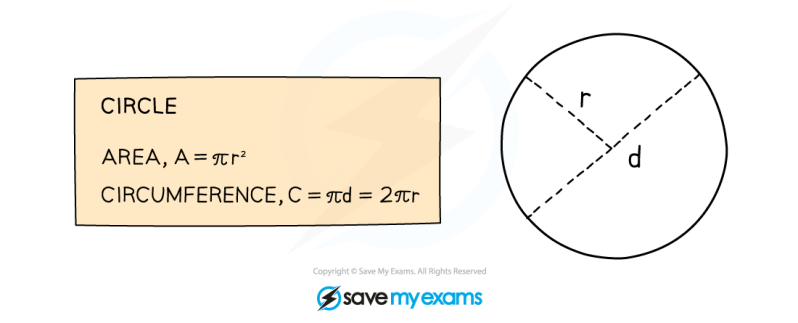
The formula for circle circumference and area distills two fundamental geometric truths into concise mathematical expressions. For circumference—the perimeter of a circle—the equation is C = 2πr, where r is the radius. This relationship emerged from the observation that any circle’s perimeter, when divided by its diameter, consistently yields π (approximately 3.14159), a universal constant. The area, by contrast, is given by A = πr², reflecting how the circle’s two-dimensional space scales with the square of its radius. Together, these formulas form the bedrock of circular measurement, applicable from the microscopic (atomic structures) to the cosmic (planetary orbits). Their simplicity belies the depth of their implications: a misstep in either calculation can distort everything from architectural stability to scientific experiments.
What makes these formulas particularly powerful is their adaptability. Whether you’re designing a circular garden, optimizing a pipeline’s flow, or analyzing a cell’s membrane, the same principles apply. The key lies in understanding why these formulas work—not just memorizing them. For instance, the circumference formula originates from the circle’s definition as a set of points equidistant from a center, while the area formula can be derived by decomposing the circle into infinitesimally thin sectors and summing their contributions. This duality—between linear and areal measurement—highlights geometry’s elegance: a single shape yields two distinct yet interrelated properties, each governed by π’s immutable presence.
Historical Background and Evolution
The pursuit of the formula for circle circumference and area traces back to ancient civilizations, where practical needs drove mathematical innovation. The Babylonians, around 1800 BCE, approximated π as 3, using it to calculate areas of circular fields for taxation. Their method, though crude, laid the groundwork for later refinements. By the 3rd century BCE, Archimedes of Syracuse had elevated the discipline through rigorous proof. Using polygons inscribed within and circumscribed around a circle, he demonstrated that π must lie between 3+1/7 and 3+10/71, a range that still frames our modern understanding. His work wasn’t just theoretical; it had immediate applications in calculating the volume of spheres for engineering projects like water clocks and catapults.
The evolution of these formulas accelerated with the Renaissance, as European mathematicians like Fibonacci and later Descartes formalized geometric principles. The introduction of calculus in the 17th century by Newton and Leibniz provided the tools to derive the area formula through integration, proving that the circle’s expanse could be quantified by summing infinitesimal triangles. Meanwhile, π’s transcendental nature—proven by Euler in the 18th century—cemented its status as a cornerstone of mathematics. Today, the formula for circle circumference and area is taught globally, yet its historical layers reveal how empirical observation and abstract reasoning converged to create tools that define modern precision.
Core Mechanisms: How It Works
The circumference formula, C = 2πr, emerges from the circle’s definition: the ratio of any circle’s circumference to its diameter is constant (π). This ratio holds regardless of size, a property Archimedes exploited by comparing polygons with increasing sides to a circle. As the number of sides grows, the polygon’s perimeter approaches the circle’s circumference, revealing π as the limiting factor. The area formula, A = πr², follows from decomposing the circle into sectors. Each sector’s area is (1/2) × r × arc length; summing all sectors (via integration) yields πr2. The shared reliance on π underscores a deeper truth: linear and areal measurements in circles are intrinsically linked through the radius.
Practical applications hinge on these mechanisms. For example, in manufacturing, the formula for circle circumference and area ensures precise cutting of circular components, where even a 0.1% error in radius can lead to assembly failures. In physics, calculating a planet’s orbital circumference requires C = 2πr, while determining the surface area of a spherical tank uses A = 4πr2. The formulas’ universality stems from their reliance on a single variable (r) and π’s constancy, making them adaptable across scales. However, real-world measurements often introduce complications—such as approximating π to 16 decimal places for high-precision work—highlighting the balance between theoretical purity and applied pragmatism.
Key Benefits and Crucial Impact
The formula for circle circumference and area transcends academia, embedding itself in industries where precision is non-negotiable. In architecture, these formulas dictate the curvature of arches and domes, ensuring structural integrity under load. Civil engineers use them to design circular bridges and tunnels, optimizing material use and reducing costs. Even in everyday technology, from the circular lenses of cameras to the rotating plates of turntables, the formulas’ influence is pervasive. Their impact isn’t limited to physical structures; they underpin data visualization, where pie charts rely on proportional areas to convey information intuitively. The ubiquity of these formulas reflects a fundamental truth: circles are the most efficient shape for enclosing area with minimal perimeter, a principle exploited by nature and humanity alike.
Beyond utility, the formulas foster cognitive skills. Mastering the formula for circle circumference and area requires understanding dimensional analysis, unit conversion, and the interplay between linear and quadratic relationships. Students who grapple with these concepts develop problem-solving frameworks applicable to algebra, calculus, and even computer graphics. The formulas also serve as a gateway to advanced topics, such as parametric equations and polar coordinates, where circles become the building blocks of more complex geometries. In essence, they are not just tools but gateways to deeper mathematical fluency.
"Geometry will draw the soul toward truth and create the spirit of philosophy." — Plato
Plato’s observation resonates with the formula for circle circumference and area, which distills abstract truth into actionable precision. The circle’s perfect symmetry and the formulas’ universal applicability embody the harmony between intellect and reality.
Major Advantages
- Universal Applicability: The formulas work across all scales—from atomic particles to galaxies—making them indispensable in physics, astronomy, and engineering.
- Precision in Design: Architects and engineers rely on these formulas to minimize material waste and maximize structural efficiency, reducing costs by up to 20% in large-scale projects.
- Educational Foundation: Teaching the formula for circle circumference and area introduces students to core mathematical principles, including ratios, constants, and dimensional relationships.
- Technological Integration: Modern fields like computer-aided design (CAD) and medical imaging use these formulas to render circular objects with sub-millimeter accuracy.
- Cross-Disciplinary Relevance: From calculating the circumference of a pizza to determining the surface area of a spherical tank, the formulas bridge everyday tasks and high-stakes applications.
Comparative Analysis
| Formula for Circle Circumference and Area | Key Differences and Use Cases |
|---|---|
| Circumference (C = 2πr) | Measures the linear distance around the circle’s edge. Critical for calculating perimeters, arc lengths, and rotational motion (e.g., wheel revolutions). |
| Area (A = πr²) | Quantifies the two-dimensional space enclosed by the circle. Essential for surface area calculations (e.g., spherical objects) and probability distributions in statistics. |
| Derivation Methods | Circumference relies on the ratio of circumference to diameter (π); area is derived via integration of infinitesimal sectors or by comparing to a square’s area. |
| Real-World Precision Requirements | Circumference calculations often prioritize linear accuracy (e.g., pipefitting), while area measurements emphasize areal precision (e.g., land surveys). |

Future Trends and Innovations
The formula for circle circumference and area will continue evolving alongside computational advancements. As machine learning refines π’s approximation beyond current limits, applications in quantum physics and cosmology could benefit from unprecedented precision. For instance, calculating the circumference of a black hole’s event horizon—where general relativity and quantum mechanics intersect—demands π values with trillion-digit accuracy, pushing the boundaries of numerical analysis. Meanwhile, in sustainable design, algorithms optimized for circular geometry are reducing material waste in construction by dynamically adjusting radii to meet structural demands.
Emerging fields like bioengineering are also redefining the formulas’ role. Researchers use circular area calculations to model cell membranes and viral structures, where deviations from ideal geometry can indicate disease states. Similarly, the rise of 3D printing has increased demand for precise circular cross-sections in custom prosthetics and implants. As these technologies mature, the formula for circle circumference and area will remain a linchpin, adapting to new challenges while retaining its timeless elegance. The future lies not in replacing these formulas but in harnessing their potential through innovation.
Conclusion
The formula for circle circumference and area is more than a pair of equations; it is a testament to humanity’s ability to distill complex reality into elegant simplicity. From Archimedes’ polygons to today’s supercomputers, the journey of these formulas reflects our enduring quest to quantify the world. Their power lies not in their complexity but in their universality—a single constant (π) and a variable (r) encapsulating the essence of circularity across all scales. Whether you’re an engineer designing a bridge or a student solving a textbook problem, these formulas serve as a reminder that mathematics is not just about numbers but about uncovering the patterns that govern existence.
As technology advances, the formula for circle circumference and area will continue to adapt, but its core principles will endure. The circle remains a symbol of perfection and infinity, and its measurements will forever be the bridge between abstract theory and tangible innovation. To master these formulas is to grasp a fundamental truth: in a universe of infinite shapes, the circle’s simplicity is its greatest strength.
Comprehensive FAQs
Q: Why is π irrational, and how does this affect the formula for circle circumference and area?
A: π’s irrationality means it cannot be expressed as a fraction of integers, and its decimal expansion is infinite and non-repeating. While this doesn’t prevent practical calculations (where π is approximated to 16 digits, e.g., 3.141592653589793), it ensures that exact values for circumference or area can never be fully precise in finite terms. For most applications, sufficient decimal places suffice, but high-precision fields like astronomy require advanced algorithms to handle π’s complexity.
Q: Can the formula for circle circumference and area be applied to non-Euclidean geometries?
A: In non-Euclidean spaces (e.g., spherical or hyperbolic geometry), the formulas diverge. On a sphere, for example, the circumference of a "circle" (great circle) is C = 2πR, but the area of a spherical cap differs from πr2. These variations arise because the parallel postulate fails, altering how distances and angles behave. The formula for circle circumference and area in Euclidean geometry remains foundational, but its adaptations are critical in fields like general relativity.
Q: How do architects use the formula for circle circumference and area in modern designs?
A: Architects leverage these formulas to optimize structural efficiency. For instance, a dome’s surface area (A = 2πrh for a spherical cap) determines material requirements, while the circumference guides the spacing of support ribs. Parametric design software now automates these calculations, allowing for dynamic adjustments—such as varying radii to reduce wind loads—while maintaining aesthetic harmony. The formulas also inform lighting designs, where circular reflectors use area calculations to distribute illumination evenly.
Q: What are common mistakes when calculating the formula for circle circumference and area?
A: The most frequent errors include:
- Confusing radius (r) with diameter (d), leading to incorrect circumference (C = πd instead of 2πr).
- Forgetting to square the radius in the area formula, resulting in linear rather than areal measurements.
- Using an insufficient approximation of π (e.g., 3.14) for high-precision work, introducing cumulative errors.
- Miscounting units (e.g., mixing meters and centimeters), which can skew real-world applications like land surveys.
Q: Are there alternative ways to derive the formula for circle circumference and area without using π?
A: While π is intrinsic to Euclidean geometry, alternative derivations exist in specific contexts. For example, the circumference can be approximated using polygons: as the number of sides increases, the perimeter of a regular n-gon inscribed in a circle approaches 2πr. The area can also be derived via calculus, integrating the function y = √(r² − x²) over the interval [−r, r]. However, these methods ultimately rely on π’s definition as the limit of these processes, making it unavoidable in exact calculations.
Leave a Comment
Comments are moderated before appearing. The data you submit is processed according to the Privacy Policy of versiliasolutions.oneagency.co.