How the Framingham Risk Calculator Reshapes Heart Health Decisions
Table of Contents
- The Complete Overview of the Framingham Risk Calculator
- Historical Background and Evolution
- Core Mechanisms: How It Works
- Key Benefits and Crucial Impact
- Major Advantages
- Comparative Analysis
- Future Trends and Innovations
- Conclusion
- Comprehensive FAQs
- Q: Can the Framingham Risk Calculator predict heart attack risk accurately?
- Q: How often should I use the Framingham Risk Calculator?
- Q: Does the calculator account for family history of heart disease?
- Q: Is a high score on the Framingham Risk Calculator a reason to panic?
- Q: Can I use the Framingham Risk Calculator if I’m not in the U.S.?
- Q: How does the Framingham Risk Calculator differ from a stress test?
- Q: Are there alternatives to the Framingham Risk Calculator for people with diabetes?
For decades, the Framingham Risk Calculator has stood as the gold standard in predicting an individual’s 10-year probability of developing cardiovascular disease. Unlike speculative health trends or fleeting medical fads, this tool is rooted in rigorous, long-term data—collected from the landmark Framingham Heart Study, which began in 1948. Its influence extends beyond clinical settings, shaping public health policies, insurance underwriting, and even personal wellness strategies. Yet, despite its ubiquity, many misunderstand how it works or its limitations. The calculator doesn’t just crunch numbers; it translates decades of epidemiological research into actionable insights, helping millions reassess their lifestyle choices before irreversible damage occurs.
What makes the Framingham risk assessment uniquely powerful is its simplicity. At its core, it distills complex biological interactions—cholesterol levels, blood pressure, smoking habits, age, and family history—into a single, digestible risk score. This isn’t mere correlation; it’s a statistically validated framework that has been refined over generations. The tool’s ability to quantify risk has made it indispensable for physicians, researchers, and patients alike, bridging the gap between raw data and real-world health interventions. But as medical science advances, questions arise: Is the Framingham Heart Study calculator still the best tool for modern risk assessment? How do newer algorithms compare? And what does a high-risk score actually mean for an individual’s daily life?
The Framingham Risk Calculator isn’t just a relic of mid-20th-century medicine—it’s a living, evolving instrument. Originally designed to identify risk factors in a predominantly white, middle-class population, its equations have been recalibrated to account for ethnic diversity, diabetes, and other emerging health concerns. Yet, its foundational principles remain unchanged: precision in measurement, transparency in methodology, and a commitment to preventive care. For those who rely on it—whether for clinical decisions or personal health tracking—understanding its origins, mechanics, and limitations is essential. Below, we dissect how it functions, its transformative impact, and what the future holds for cardiovascular risk prediction.

The Complete Overview of the Framingham Risk Calculator
The Framingham Risk Calculator is more than a statistical model; it’s a product of one of the most comprehensive longitudinal studies in medical history. Developed by researchers at Boston University’s Framingham Heart Study, the tool was born from a simple yet radical idea: that heart disease could be predicted—and potentially prevented—by tracking specific risk factors in a population over time. Unlike reactive treatments that address symptoms after they arise, the calculator embodies a proactive approach, allowing individuals and healthcare providers to intervene before coronary artery disease or stroke becomes a reality. Its creation marked a paradigm shift in cardiology, moving the field from reactive to predictive medicine.Today, the Framingham risk assessment is used globally, adapted for different demographics and integrated into electronic health records. It remains the most widely recognized tool for estimating cardiovascular risk, though newer models—such as the Pooled Cohort Equations or QRISK3—have emerged to address its original limitations. Despite these advancements, the Framingham Heart Study calculator retains its relevance due to its robustness, ease of use, and the sheer volume of data that underpins it. For patients, it serves as a wake-up call; for insurers, a risk stratification tool; and for researchers, a benchmark against which all other models are measured.
Historical Background and Evolution
The origins of the Framingham Risk Calculator trace back to 1948, when the National Heart Institute (now the National Heart, Lung, and Blood Institute) launched the Framingham Heart Study. The study’s primary goal was to identify the common factors or characteristics that contribute to cardiovascular disease by observing a large group of residents in Framingham, Massachusetts, over their lifetimes. What began as a modest investigation into heart health evolved into one of the most influential epidemiological studies in history, yielding groundbreaking insights into hypertension, cholesterol, smoking, and obesity as key risk factors.By the 1980s, researchers had compiled enough data to develop the first Framingham risk equations, which quantified the likelihood of coronary heart disease (CHD) and stroke over a 10-year period. These equations were initially based on a cohort of white men and women, reflecting the demographic makeup of the original study. Over time, the model was expanded to include other ethnic groups, and additional risk factors—such as diabetes and high-sensitivity C-reactive protein (hs-CRP)—were incorporated. The Framingham Risk Calculator you see today is a refined version of these early equations, now available in multiple iterations, including separate calculators for total cardiovascular risk, CHD risk, and stroke risk.
Core Mechanisms: How It Works
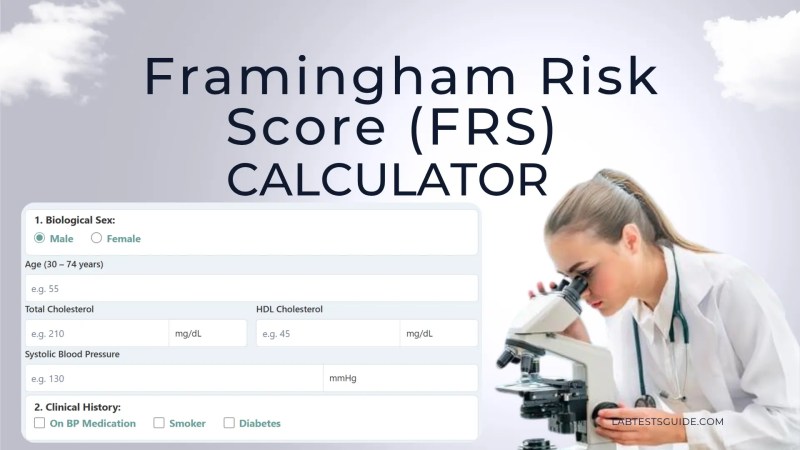
At its core, the Framingham risk assessment operates on a straightforward premise: it combines an individual’s age, sex, total cholesterol, HDL cholesterol, systolic blood pressure, treatment status for hypertension, diabetes status, and smoking habits into a mathematical algorithm. These variables are weighted according to their relative contribution to cardiovascular risk, derived from statistical analyses of the Framingham cohort. The result is a percentage that represents the probability of developing CHD or a stroke within the next decade.The calculator’s strength lies in its ability to integrate these factors into a single, actionable metric. For example, a 55-year-old man with high LDL cholesterol, untreated hypertension, and a smoking habit might receive a 20% risk score, indicating a significant likelihood of a cardiovascular event. This score isn’t arbitrary; it’s derived from decades of data showing that individuals with similar profiles have historically experienced such events at that rate. The Framingham Risk Calculator doesn’t diagnose disease—it flags those who may benefit most from lifestyle changes, medication, or further medical evaluation.
Key Benefits and Crucial Impact
The Framingham Risk Calculator has revolutionized how cardiovascular risk is perceived and managed. Before its development, heart disease was often treated as an inevitable consequence of aging or genetics. Today, it’s understood as a condition with identifiable risk factors that can be mitigated through early intervention. This shift has saved countless lives by encouraging preventive measures—such as statin therapy, blood pressure management, and smoking cessation—long before symptoms appear. For healthcare systems, the calculator has become a cost-effective tool for prioritizing high-risk patients, reducing hospitalizations, and improving long-term outcomes.Its impact extends beyond clinical settings. Insurance companies use modified versions of the Framingham risk assessment to determine premiums, reflecting the financial burden of cardiovascular disease. Employers incorporate it into workplace wellness programs, and individuals use it to make informed decisions about their health. The calculator’s simplicity also makes it accessible to the public, demystifying complex medical data and empowering people to take control of their cardiovascular future.
"The Framingham Heart Study has been the cornerstone of cardiovascular epidemiology for over seven decades. Its risk calculator isn’t just a tool—it’s a testament to how data-driven medicine can transform public health." — Dr. Daniel Levy, Former Director of the Framingham Heart Study
Major Advantages
- Data-Driven Precision: The calculator is based on over 70 years of longitudinal data from thousands of participants, ensuring its predictions are statistically robust.
- Clinical Integration: Widely adopted in healthcare systems, it standardizes risk assessment and guides treatment decisions.
- Preventive Focus: By identifying high-risk individuals early, it enables lifestyle modifications and medications that can delay or prevent cardiovascular events.
- Accessibility: Available online and in medical software, it democratizes risk assessment for patients and providers alike.
- Adaptability: Updated versions account for new risk factors, such as diabetes and ethnic differences, improving accuracy across diverse populations.
Comparative Analysis
While the Framingham Risk Calculator remains a benchmark, newer models have emerged to address its limitations. Below is a comparison of key tools used in cardiovascular risk assessment:| Feature | Framingham Risk Calculator | Pooled Cohort Equations (PCE) | QRISK3 |
|---|---|---|---|
| Primary Use | CHD and stroke risk (10-year) | ASCVD risk (atherosclerotic cardiovascular disease) | Total cardiovascular risk (including non-fatal events) |
| Key Strengths | Proven long-term data; simple to use | Includes non-CHD events (e.g., peripheral artery disease) | Accounts for socioeconomic factors, ethnicity, and family history |
| Limitations | Underestimates risk in women and minorities; excludes diabetes in some versions | Less granular for stroke risk | More complex; requires additional data collection |
| Best For | General population screening, clinical guidelines | U.S. patients, especially those with multiple risk factors | UK populations, high-risk individuals needing detailed assessment |
Future Trends and Innovations
As medical technology advances, the Framingham Risk Calculator faces both challenges and opportunities. One key trend is the integration of genomic data into risk models. Emerging research suggests that genetic markers—such as those identified in studies like the UK Biobank—could refine risk predictions beyond traditional factors. Imagine a future where a Framingham risk assessment incorporates polygenic risk scores, offering even greater precision in identifying those at high risk of heart disease.Another innovation lies in machine learning and AI. While the current calculator relies on linear equations, AI-driven models could analyze vast datasets—including wearables, biomarkers, and lifestyle patterns—to dynamically adjust risk scores. However, these advancements raise ethical questions about data privacy and algorithmic bias. For now, the Framingham Heart Study calculator remains the gold standard, but its evolution will likely involve hybrid models that combine its proven methodology with cutting-edge technology.
Conclusion
The Framingham Risk Calculator is more than a tool—it’s a legacy of preventive medicine that has saved lives for generations. Its ability to distill complex health data into actionable insights has made it indispensable in both clinical and personal settings. While newer models like the Pooled Cohort Equations or QRISK3 offer refinements, none have replaced the Framingham risk assessment entirely. Its enduring relevance lies in its balance of simplicity, accuracy, and adaptability.For individuals, the calculator serves as a mirror, reflecting their current cardiovascular risk and highlighting areas for improvement. For healthcare providers, it’s a compass, guiding treatment plans and resource allocation. As science progresses, the Framingham Risk Calculator will continue to evolve, but its core mission—preventing heart disease before it strikes—will remain unchanged.
Comprehensive FAQs
Q: Can the Framingham Risk Calculator predict heart attack risk accurately?
A: The calculator estimates your 10-year probability of developing coronary heart disease (CHD) or stroke, not the exact timing or type of event. It’s highly accurate for population-level predictions but may underestimate risk in certain groups, such as women or minorities, due to its original cohort limitations.
Q: How often should I use the Framingham Risk Calculator?
A: Most guidelines recommend reassessing every 4–6 years or sooner if major risk factors (e.g., blood pressure, cholesterol) change. Regular check-ups with your doctor can help track trends over time.
Q: Does the calculator account for family history of heart disease?
A: Some versions include family history as a factor, but the original Framingham Risk Calculator primarily relies on individual risk factors. Newer tools like QRISK3 incorporate genetic and familial data for a more comprehensive assessment.
Q: Is a high score on the Framingham Risk Calculator a reason to panic?
A: Not necessarily. A high score indicates increased risk but doesn’t mean a cardiovascular event is inevitable. It’s an opportunity to adopt preventive measures—such as medication, diet changes, or exercise—that can significantly reduce your risk.
Q: Can I use the Framingham Risk Calculator if I’m not in the U.S.?
A: Yes, but some versions may not account for local risk factors (e.g., diet, pollution). For non-U.S. populations, tools like QRISK3 (UK) or region-specific calculators may be more appropriate.
Q: How does the Framingham Risk Calculator differ from a stress test?
A: The calculator is a predictive tool based on risk factors, while a stress test is a diagnostic procedure that evaluates current heart function. They serve different purposes: one assesses future risk, the other checks for existing issues.
Q: Are there alternatives to the Framingham Risk Calculator for people with diabetes?
A: Yes. The UKPDS Risk Engine or ASCVD Risk Estimator (which includes diabetes as a major factor) are better suited for individuals with diabetes, as the original Framingham Risk Calculator may underestimate their risk.
Leave a Comment
Comments are moderated before appearing. The data you submit is processed according to the Privacy Policy of versiliasolutions.oneagency.co.