The Best Free Online Solitaire Games to Play Anytime
Table of Contents
- The Complete Overview of Free Online Solitaire Games
- Historical Background and Evolution
- Core Mechanisms: How It Works
- Key Benefits and Crucial Impact
- Major Advantages
- Comparative Analysis
- Future Trends and Innovations
- Conclusion
- Comprehensive FAQs
- Q: Are free online solitaire games truly free, or do they hide costs?
- Q: Can playing solitaire improve my brain function?
- Q: What’s the hardest variant of solitaire to master?
- Q: Do mobile solitaire apps sync across devices?
- Q: Are there solitaire games with multiplayer features?
- Q: How can I avoid ads in free solitaire games?
- Q: What’s the best solitaire game for beginners?
- Q: Can I create my own solitaire variant?
- Q: Are there solitaire games with educational themes?
- Q: How do I track my solitaire progress over time?
Solitaire has endured as a timeless pastime, evolving from paper decks to seamless digital experiences. The shift to free online solitaire games transformed it from a solitary parlor game into an accessible, global phenomenon—available on smartphones, tablets, and desktops. Unlike traditional card sets, these digital versions eliminate setup hassles, offering instant gameplay with customizable rules, themes, and difficulty levels. The appeal lies in their simplicity: no downloads, no costs, and no interruptions, making them ideal for stress relief during commutes or breaks.
Yet the landscape of free online solitaire games is vast, with platforms ranging from minimalist designs to visually rich simulations. Some prioritize classic fidelity, while others experiment with mechanics like cascading cards or multiplayer modes. The choice often hinges on user preferences—whether they seek nostalgia, challenge, or sheer convenience. What remains constant is solitaire’s universal language: a solitary pursuit that transcends age and culture, now amplified by technology.
The digital revolution hasn’t just preserved solitaire; it’s redefined it. Modern iterations include variants like Spider Solitaire, FreeCell, and Pyramid, each with unique rules that cater to different skill levels. Developers leverage algorithms to track streaks, offer hints, or even generate "suggested moves," blending tradition with interactive feedback. This fusion of nostalgia and innovation has cemented free online solitaire games as a staple of casual gaming, proving that even the simplest pastimes can thrive in the digital age.
The Complete Overview of Free Online Solitaire Games
The term "free online solitaire games" encompasses a broad spectrum of digital card games, from faithful recreations of the 19th-century classic to inventive spin-offs. At its core, solitaire is a single-player game of patience, relying on strategy, memory, and luck to clear the board. Online versions eliminate physical constraints—no shuffling, no lost cards—while adding features like undo buttons, speed adjustments, and thematic decks (e.g., Harry Potter, Marvel). These enhancements cater to both beginners and veterans, ensuring accessibility without sacrificing depth.Platforms like Microsoft’s built-in Windows Solitaire, Yahoo Games, and dedicated apps (e.g., Solitaire Cube) dominate the space, each offering distinct variations. Some prioritize minimalist interfaces to reduce distractions, while others integrate social elements, such as leaderboards or daily challenges. The rise of mobile gaming has further democratized access, with free online solitaire games now just a tap away. However, not all platforms are equal: ad-supported free versions may include in-app purchases or limited features, whereas premium apps offer ad-free experiences and additional variants.
Historical Background and Evolution
Solitaire’s origins trace back to 18th-century Europe, where it was known as patience—a term reflecting its meditative nature. The game gained popularity among French aristocrats before spreading to England and America. By the 20th century, it became a staple of office breaks and travel, often played with physical decks. The digital transition began in the 1980s with early computer adaptations, but it was Microsoft’s inclusion of Solitaire in Windows 95 that cemented its place in digital culture.The internet era transformed solitaire into a global pastime. Websites like Yahoo Games and Pogo.com offered free online solitaire games with multiplayer options and customizable layouts. Meanwhile, the rise of smartphones in the 2010s led to apps like Solitaire Cube, which combined classic variants with modern twists like "Solitairity" (a hybrid of solitaire and bingo). Today, the genre thrives on hybrid platforms, blending traditional rules with digital conveniences—such as cloud saves, AI opponents, and cross-device syncing.
Core Mechanisms: How It Works
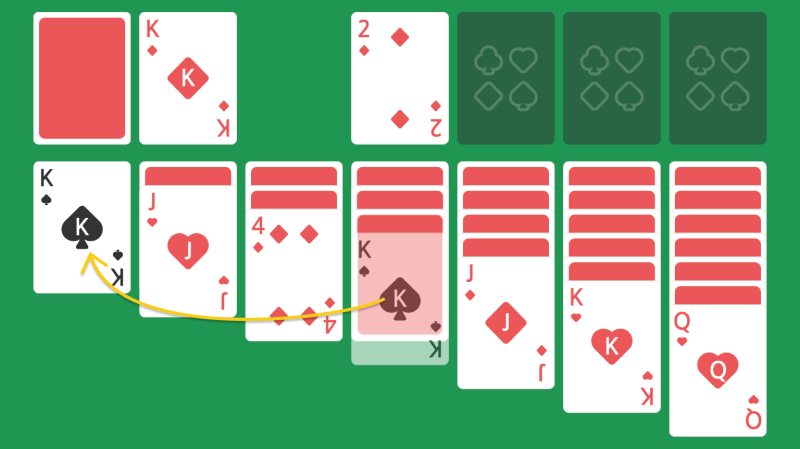
At its foundation, solitaire relies on a 52-card deck (or variants) arranged in specific layouts. The most common, Klondike, starts with seven tableau piles and four face-down stock cards. Players aim to build four foundation piles in ascending order (Ace to King) by suit. The mechanics hinge on alternating red/black card moves, drawing from the stock, and cascading cards when spaces open. Digital versions replicate this with drag-and-drop functionality, often adding visual cues like color-coded cards or animations for valid moves.Beyond Klondike, other variants introduce unique rules. FreeCell, for instance, uses four empty cells to create temporary stacks, requiring perfect memory and planning. Spider Solitaire expands the deck to two or more, while Pyramid Solitaire uses a diamond-shaped layout. Free online solitaire games often include tutorials or "hint" systems to guide players, but the core challenge remains: balancing strategy with the unpredictability of card draws. The digital medium also enables statistical tracking, such as win/loss ratios or move efficiency, adding a layer of analytical depth.
Key Benefits and Crucial Impact
The enduring appeal of free online solitaire games lies in their multifaceted benefits. Beyond entertainment, they serve as cognitive training tools, sharpening focus, pattern recognition, and problem-solving skills. Studies suggest that solitaire can improve working memory and reduce stress by providing a structured yet flexible challenge. Its solitary nature also makes it a low-pressure alternative to competitive games, appealing to introverts or those seeking mental breaks.For developers, free online solitaire games offer a low-barrier entry point into gaming, with minimal resource requirements compared to graphics-heavy titles. The genre’s simplicity allows for rapid iteration—new variants, themes, or mechanics can be tested without significant overhead. Monetization strategies, such as ads or premium upgrades, further incentivize innovation, ensuring the genre remains dynamic. Yet the primary draw remains its universal accessibility: no complex controls, no steep learning curve, just instant gratification.
"Solitaire is the game of patience, but it’s also the game of patience with oneself—allowing time to think, to strategize, and to accept the occasional misstep." — David Parlett, author of The Penguin Book of Patience Games
Major Advantages
- Accessibility: Playable on any device with an internet connection, requiring no prior experience or setup.
- Cognitive Benefits: Enhances memory, concentration, and logical reasoning through strategic play.
- Stress Relief: The game’s meditative flow provides a mental escape, reducing anxiety without social pressure.
- Customization: Options for rule adjustments, deck themes, and difficulty levels cater to all skill levels.
- Cost-Effective: High-quality free online solitaire games eliminate the need for physical cards or paid subscriptions.
Comparative Analysis
| Platform | Key Features |
|---|---|
| Windows Solitaire (Microsoft) | Classic Klondike with customizable layouts; built into Windows OS; minimalist design. |
| Yahoo Games | Multiple variants (Spider, FreeCell); ad-supported; social leaderboards; mobile-friendly. |
| Solitaire Cube | Hybrid modes (e.g., Solitairity); offline play; premium ad-free version; cross-platform sync. |
| Pogo.com | Themed decks (e.g., Disney, Pokémon); multiplayer challenges; frequent updates and events. |

Future Trends and Innovations
The future of free online solitaire games will likely focus on hybridization with other genres. Expect more crossovers, such as solitaire-meets-mahjong or puzzle hybrids, leveraging touchscreen controls for tactile feedback. Artificial intelligence may play a larger role, with adaptive difficulty or AI opponents that learn player habits. Augmented reality could introduce physical-digital hybrids, where real cards interact with a screen via camera input.Monetization will also evolve, with subscription models offering exclusive variants or cloud-based progress tracking. Sustainability concerns may drive developers to explore eco-friendly themes or carbon-neutral hosting. As gaming becomes more social, even solitary games may incorporate light multiplayer elements—think asynchronous challenges or collaborative deck-building. The core appeal, however, will remain unchanged: a simple, engaging escape that adapts to modern lifestyles.
Conclusion
Free online solitaire games have transcended their humble origins to become a cornerstone of digital leisure. Their success stems from a perfect storm of simplicity, accessibility, and cognitive engagement. Whether played for relaxation, skill improvement, or sheer habit, these games offer something for everyone—from the occasional player to the competitive strategist. The digital medium has not diluted solitaire’s essence but amplified it, ensuring its relevance in an era dominated by complex, high-stakes gaming.As technology advances, the genre will continue to innovate, blending tradition with cutting-edge features. Yet at its heart, solitaire remains a testament to the power of patience—a quiet rebellion against the fast-paced digital world, one card at a time.
Comprehensive FAQs
Q: Are free online solitaire games truly free, or do they hide costs?
Most free online solitaire games are supported by ads, but some may offer in-app purchases for premium features like additional variants or ad removal. Always check the platform’s terms—some "free" apps include optional subscriptions. Reputable sources like Microsoft or Yahoo Games typically provide genuinely free experiences.
Q: Can playing solitaire improve my brain function?
Research suggests solitaire can enhance memory, focus, and problem-solving skills by requiring strategic planning and pattern recognition. However, results vary by individual; consistent play is more beneficial than occasional sessions. For serious cognitive training, combine solitaire with other mental exercises.
Q: What’s the hardest variant of solitaire to master?
FreeCell is often considered the most challenging due to its reliance on perfect memory and foresight. Unlike Klondike, there are no redos—every move must be calculated. Spider Solitaire (with two decks) and Pyramid Solitaire also demand advanced strategy but offer more room for error.
Q: Do mobile solitaire apps sync across devices?
Some apps, like Solitaire Cube, offer cross-device syncing via cloud services, allowing you to resume games on a phone or tablet. Others, such as Windows Solitaire, are device-specific. Always verify an app’s syncing capabilities before committing to a platform.
Q: Are there solitaire games with multiplayer features?
Traditional solitaire is single-player, but some free online solitaire games include asynchronous multiplayer modes, like turn-based challenges or shared leaderboards. Platforms like Pogo.com occasionally host events where players compete for high scores. True real-time multiplayer is rare, as solitaire’s core appeal lies in solitude.
Q: How can I avoid ads in free solitaire games?
Use ad-blockers like uBlock Origin or play on platforms with built-in ad-free modes (e.g., premium versions of Solitaire Cube). Some apps offer one-time purchases to remove ads entirely. If ads are intrusive, consider switching to a less aggressive platform or a paid alternative.
Q: What’s the best solitaire game for beginners?
Klondike is ideal for beginners due to its straightforward rules and forgiving structure. FreeCell is more advanced but offers a satisfying challenge once the basics are mastered. Avoid Spider Solitaire initially—its complexity can be overwhelming for new players.
Q: Can I create my own solitaire variant?
Yes! Many free online solitaire games platforms allow custom rule sets or deck modifications. For a deeper dive, tools like Solitaire Lab (a programming framework) enable users to design entirely new variants. Even simple tweaks, like changing the draw rules, can create a unique experience.
Q: Are there solitaire games with educational themes?
Some platforms incorporate educational elements, such as math-based solitaire (where card values solve equations) or language-learning decks (e.g., vocabulary-themed cards). Apps like DragonBox Solitaire blend gameplay with STEM concepts, making them suitable for kids and adults alike.
Q: How do I track my solitaire progress over time?
Most modern free online solitaire games include built-in stats like win/loss ratios, average moves per game, or streaks. Apps like Solitaire Cube sync data across devices, while third-party tools (e.g., Excel templates) can manually log performance. For competitive players, leaderboards on platforms like Yahoo Games provide external benchmarks.
Leave a Comment
Comments are moderated before appearing. The data you submit is processed according to the Privacy Policy of versiliasolutions.oneagency.co.