The Exact Answer to How Long Does It Take to Cook Rice (And Why Timing Matters)
Table of Contents
- The Complete Overview of How Long Does It Take to Cook Rice
- Historical Background and Evolution
- Core Mechanisms: How It Works
- Key Benefits and Crucial Impact
- Major Advantages
- Comparative Analysis
- Future Trends and Innovations
- Conclusion
- Comprehensive FAQs
- Q: Why does my rice turn out mushy even if I follow the cooking time?
- Q: Can I cook rice without a rice cooker or stovetop?
- Q: Does altitude affect how long it takes to cook rice?
- Q: Why does my rice cooker take longer than the stovetop?
- Q: Can I cook different types of rice together in the same pot?
- Q: How do I know when rice is done without tasting it?
- Q: Does soaking rice before cooking reduce the time needed?
- Q: What’s the fastest way to cook rice without losing quality?
Rice is the world’s most consumed staple, yet its preparation remains an art form where precision—particularly timing—dictates success. The question "how long does it take to cook rice" isn’t just about minutes on a clock; it’s about moisture absorption, starch gelatinization, and the delicate balance between al dente and mush. A single miscalculation can turn fluffy grains into a gluey mess or leave them stubbornly undercooked. Professional chefs and home cooks alike know that rice cooking time varies wildly depending on the method, grain type, and even altitude. What takes 15 minutes on a stovetop in Denver might require 20 in Bangkok, where humidity alters evaporation rates. The variables are endless, but the principles are universal: understanding them transforms rice from a side dish into a culinary cornerstone.
The paradox of rice lies in its simplicity and its complexity. On one hand, the process—water, heat, time—is deceptively straightforward. On the other, factors like grain length, water ratio, and heat source conspire to turn a basic task into a science experiment. Basmati, jasmine, and short-grain rice each demand distinct approaches, yet most recipes oversimplify by offering a one-size-fits-all answer to "how long does it take to cook rice." The truth is that timing is only part of the equation; texture, aroma, and even nutritional retention depend on how that time is managed. Ignore these nuances, and you risk sacrificing flavor for convenience—or worse, ending up with a pot of sad, overcooked grains that clump like wet sand.
The stakes are higher than most realize. In cultures where rice is sacred—whether as a symbol of prosperity in Chinese cuisine or a daily staple in Southeast Asia—proper cooking isn’t just about taste; it’s about respect. A misjudged minute can mean the difference between a fragrant, separate-grain pilaf and a gummy disaster. Even in Western kitchens, where rice often plays a supporting role, the right cooking time ensures it complements dishes without stealing the spotlight. The goal isn’t just to answer "how long does it take to cook rice" but to equip you with the knowledge to adapt that time to any kitchen, any grain, and any condition.

The Complete Overview of How Long Does It Take to Cook Rice
The answer to "how long does it take to cook rice" depends entirely on the method and the type of rice. Stovetop cooking, the most traditional approach, typically ranges from 12 to 25 minutes for white rice, with basmati and jasmine falling on the shorter end (12–15 minutes) and short-grain varieties like sushi rice requiring 15–20 minutes. Rice cookers, meanwhile, streamline the process with automatic timers that usually complete cooking in 20–40 minutes, including preheating and resting phases. Instant rice—like the microwaveable packets—cuts this down to 3–5 minutes, but at the cost of texture and nutritional integrity. The discrepancy arises from how each method controls heat and moisture: stovetop cooking demands constant attention to prevent burning, while rice cookers maintain even temperatures and humidity. Even within these broad ranges, variables like grain age, water quality, and pot material (stainless steel vs. nonstick) can shift cooking times by 2–5 minutes.What’s often overlooked is the "resting time"—the period after cooking when rice continues to absorb moisture and steam. Skipping this step (typically 5–10 minutes) leads to grains that release starch prematurely, resulting in a sticky, pasty texture. Professional kitchens account for this by calculating total time from start to finish, not just active cooking. For example, a 15-minute stovetop cook might require 20–25 minutes total when including resting. This is why many recipes underestimate "how long does it take to cook rice" by focusing only on the simmering phase. The key to consistency lies in treating rice cooking as a three-act process: boiling, simmering, and resting. Each act has its own time constraints, and mastering them ensures the perfect grain every time.
Historical Background and Evolution
The question "how long does it take to cook rice" has evolved alongside humanity’s relationship with the crop itself. Archaeological evidence traces rice cultivation back 10,000 years in Asia, where early farmers discovered that soaking grains before cooking reduced bitterness and improved digestibility—a precursor to modern soaking techniques. Traditional methods relied on clay pots over open fires, where cooking times were dictated by fuel availability and pot size. A pot of rice might simmer for 45 minutes or longer, with cooks gauging doneness by taste rather than time. The invention of wok cooking in China during the Tang Dynasty (618–907 AD) introduced faster, higher-heat methods, cutting cooking times to 15–20 minutes while enhancing aroma through wok hei (breath of the wok). These early techniques laid the foundation for today’s stovetop methods, where heat control remains critical.The rice cooker, patented in Japan in 1955, revolutionized "how long does it take to cook rice" by automating the process. Early models took 30–50 minutes to complete a cycle, but modern versions now finish in 20–30 minutes, thanks to improved insulation and temperature sensors. The rise of microwaveable instant rice in the 1970s further compressed cooking times to under 5 minutes, catering to fast-paced lifestyles but sacrificing texture. Meanwhile, pressure cookers (like the Instant Pot) have reintroduced efficiency, reducing white rice cooking time to 8–12 minutes while retaining traditional qualities. Each innovation reflects a trade-off: speed vs. authenticity, convenience vs. control. Understanding this history contextualizes why "how long does it take to cook rice" isn’t a fixed answer but a dynamic one, shaped by technology and cultural preferences.
Core Mechanisms: How It Works
At its core, rice cooking is a physical and chemical transformation driven by water absorption and starch gelatinization. When rice is submerged in water, the endosperm cells (the starchy interior) begin to hydrate, swelling as they absorb moisture. This process, called imbibition, takes 10–30 minutes depending on the grain type. For long-grain rice like basmati, the elongated shape allows water to penetrate more quickly, explaining why it cooks faster (12–15 minutes) than short-grain varieties, where grains are stacked more tightly. Heat accelerates this process, but too much too soon causes the outer layer to harden before the center softens, leading to raw cores—a common mistake when rushing "how long does it take to cook rice."The second phase involves gelatinization, where the starch inside the rice granules breaks down into a paste, giving rice its characteristic creaminess. This occurs at 70–80°C (158–176°F), a range maintained during simmering. Overheating (boiling vigorously) disrupts this process, causing the starch to release prematurely, resulting in mushy rice. The resting phase is where retrogradation occurs: as rice cools, some starches realign, firming the grains and improving texture. Skipping this step leaves rice overly soft and prone to clumping. The science behind "how long does it take to cook rice" thus hinges on three critical variables:
1. Water-to-rice ratio (typically 1:1.5 to 1:2 for white rice, adjusted for altitude).
2. Heat consistency (gentle simmering vs. boiling).
3. Post-cooking resting time (5–10 minutes).
Key Benefits and Crucial Impact
The mastery of rice cooking time isn’t just about avoiding gummy grains; it’s about unlocking nutritional, culinary, and cultural value. Properly cooked rice retains more B vitamins and minerals, which leach into water when overcooked. From a sensory standpoint, precise timing enhances aroma, mouthfeel, and visual appeal—traits that elevate rice from a filler to a star ingredient. In professional kitchens, even a 2-minute discrepancy can ruin a dish, making timing a non-negotiable skill. For home cooks, the impact is equally significant: well-cooked rice pairs better with sauces, absorbs flavors without turning soggy, and holds its shape in salads or fried rice.The cultural weight of rice cooking time is perhaps most evident in traditions like Japanese washoku or Indian biryani, where technique is tied to identity. A misjudged minute in biryani can mean the difference between fragrant, separate grains and a sticky, flavorless mass. Even in Western cuisine, where rice often plays a supporting role, the right cooking time ensures it complements rather than competes with the main dish. The ripple effects of perfect rice extend beyond the plate: restaurants with impeccable rice service often command higher reviews, and home cooks who nail "how long does it take to cook rice" gain confidence in their culinary skills.
"Rice is the heart of the meal, but the soul lies in the time you spend with it." — Massimo Bottura, Three Michelin-Starred Chef
Major Advantages
Understanding the nuances of "how long does it take to cook rice" offers five key advantages:- Texture Control: Precise timing ensures grains remain separate and fluffy (ideal for pilafs) or slightly sticky (perfect for sushi). Overcooking collapses the structure, while undercooking leaves grains chalky.
- Flavor Retention: Proper cooking preserves aromatic compounds (e.g., jasmine’s floral notes or basmati’s nutty profile). Boiling too hard or overcooking strips these flavors away.
- Nutritional Integrity: White rice loses up to 40% of its B vitamins when overcooked. Gentle simmering and minimal water use retain more nutrients.
- Efficiency: Knowing the exact cooking window for your method (stovetop, rice cooker, pressure cooker) saves energy and reduces waste. For example, a rice cooker’s timer eliminates guesswork.
- Versatility: Different grains require distinct times—jasmine (12–15 min), arborio (16–18 min), wild rice (45–60 min). Mastering these variations lets you adapt to any recipe.
Comparative Analysis
The table below compares four common rice cooking methods, highlighting how "how long does it take to cook rice" varies by approach:| Method | Cooking Time (White Rice) | Key Notes |
|---|---|
| Stovetop (Pot) | 12–25 min | Requires constant attention; resting time crucial. Best for small batches. |
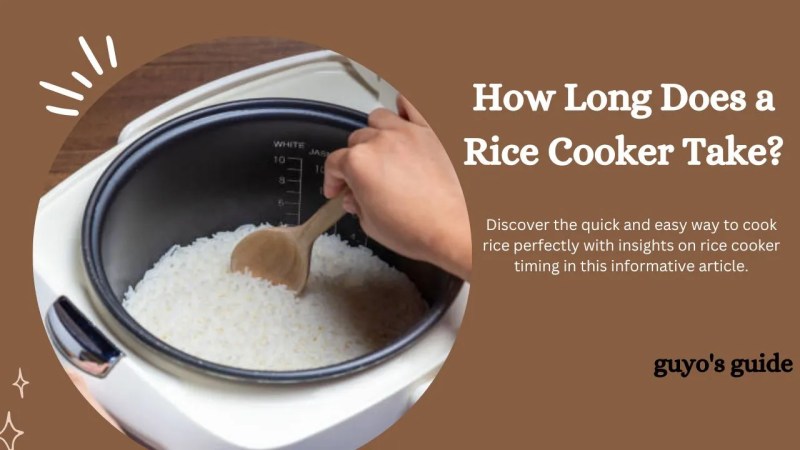
| Rice Cooker | 20–40 min (includes preheat) | Hands-off; maintains even heat. Ideal for large quantities. |
| Pressure Cooker (Instant Pot) | 8–12 min | Fastest method; uses steam pressure. Risk of overcooking if left too long. |
| Microwave (Instant Rice) | 3–5 min | Convenient but sacrifices texture and nutrition. Best for emergencies. |
Future Trends and Innovations
The future of rice cooking hinges on technology and sustainability. Smart rice cookers, equipped with Wi-Fi connectivity and app controls, are emerging, allowing users to adjust cooking times based on real-time humidity or grain type. Companies like Zojirushi and Cuisinart are integrating AI-driven sensors that detect doneness via moisture levels, eliminating the guesswork in "how long does it take to cook rice." Meanwhile, lab-grown rice and hydroponic cultivation may reduce cooking times by altering grain density, though these innovations remain niche. On the sustainability front, energy-efficient cookers and multi-grain programs are gaining traction, catering to health-conscious consumers who prioritize both time and nutrition.Cultural shifts are also redefining expectations. In urban centers, pre-cooked rice pouches (like those used in Japanese convenience stores) are gaining popularity for their 5-minute reheating times, though purists argue they lack authenticity. Conversely, slow-cook rice methods (inspired by traditional techniques) are being revived for their enhanced flavor development, taking 30–60 minutes but yielding restaurant-quality results. The tension between speed and tradition will likely shape the next decade of rice cooking, with consumers demanding both efficiency and authenticity. For now, the answer to "how long does it take to cook rice" remains a blend of science, tradition, and personal preference—but the tools to perfect it are evolving rapidly.
Conclusion
The question "how long does it take to cook rice" is deceptively simple, yet its answer is a microcosm of culinary science. Whether you’re simmering basmati on a stovetop, relying on a rice cooker’s timer, or pressing a microwave button, the principles remain the same: heat, moisture, and time must align. The margin for error is narrow, but the rewards—flavor, texture, and cultural resonance—are profound. For home cooks, mastering these variables transforms rice from a mundane side dish into a versatile, flavorful centerpiece. For professionals, precision is non-negotiable, as even a single misjudged minute can compromise a dish.Ultimately, the key to perfect rice lies in adaptation. No single answer fits all scenarios, but understanding the science, history, and methods behind "how long does it take to cook rice" empowers you to adjust for any condition. Whether you’re cooking at high altitude, experimenting with ancient grains, or using modern appliances, the goal is the same: harmony between time and technique. With this knowledge, every pot of rice becomes an opportunity—not just to feed, but to elevate.
Comprehensive FAQs
Q: Why does my rice turn out mushy even if I follow the cooking time?
A: Mushy rice usually stems from overcooking, insufficient resting time, or improper water absorption. Common causes include:
Q: Can I cook rice without a rice cooker or stovetop?
A: Yes, but with limitations. Alternatives include:
Q: Does altitude affect how long it takes to cook rice?
A: Absolutely. At higher elevations (above 3,000 ft/900 m), water boils at lower temperatures, reducing cooking efficiency. Adjustments needed:
Q: Why does my rice cooker take longer than the stovetop?
A: Rice cookers include preheating and safety delays in their total time, which stovetop methods don’t. Here’s why the discrepancy:
Q: Can I cook different types of rice together in the same pot?
A: Not recommended, as rice types have varying water absorption rates and cooking times. Mixing them risks:
Q: How do I know when rice is done without tasting it?
A: Visual and tactile cues can replace taste tests:
Q: Does soaking rice before cooking reduce the time needed?
A: No, soaking does not shorten cooking time, but it improves texture and reduces bitterness. Here’s how it works:
Q: What’s the fastest way to cook rice without losing quality?
A: For speed without sacrificing texture, use:
1. Pressure Cooker (Instant Pot): 8–12 minutes (including natural release).
Trade-off: Instant rice (microwave packets) is faster (3–5 minutes) but lacks texture and nutrition. For the best balance, pressure cooking is the gold standard.
Leave a Comment
Comments are moderated before appearing. The data you submit is processed according to the Privacy Policy of versiliasolutions.oneagency.co.