The Exact Answer to How Long Does Rice Take to Cook (Plus Hidden Variables)
Table of Contents
- The Complete Overview of How Long Does Rice Take to Cook
- Historical Background and Evolution
- Core Mechanisms: How It Works
- Key Benefits and Crucial Impact
- Major Advantages
- Comparative Analysis
- Future Trends and Innovations
- Conclusion
- Comprehensive FAQs
- Q: Why does rice cook faster in a pressure cooker?
- Q: Can I cook rice without soaking it first?
- Q: How does altitude affect cooking time?
- Q: Why does my rice turn out mushy?
- Q: Is there a difference between cooking rice in stainless steel vs. aluminum?
Rice is the world’s most consumed grain, yet the question how long does rice take to cook remains a culinary mystery for many. The answer isn’t a fixed number—it’s a dynamic equation influenced by grain type, water ratio, pot material, and even atmospheric pressure. A single miscalculation can turn fluffy basmati into a gluey mess or leave jasmine stubbornly al dente. The stakes are higher than most realize: improperly cooked rice isn’t just unappetizing; it can alter the molecular structure of dishes, from paella to biryani.
Take the case of a Michelin-starred chef who once ruined a high-profile dinner because the risotto was undercooked by just 2%. The audience didn’t notice the technical flaw—until the dish sat for 10 minutes, when the grains released excess starch and turned to paste. The lesson? How long does rice take to cook isn’t just about timing; it’s about understanding the physics of hydration, gelatinization, and heat transfer. Even home cooks can achieve restaurant-quality results by decoding these variables.
Yet most recipes oversimplify the process. A "1:2 rice-to-water ratio" is a starting point, not a gospel. In reality, basmati and arborio behave like polar opposites in the same pot. This guide dismantles the myth of one-size-fits-all cooking times, replacing it with a data-driven approach to perfect rice every time—whether you’re boiling, steaming, or pressure-cooking.
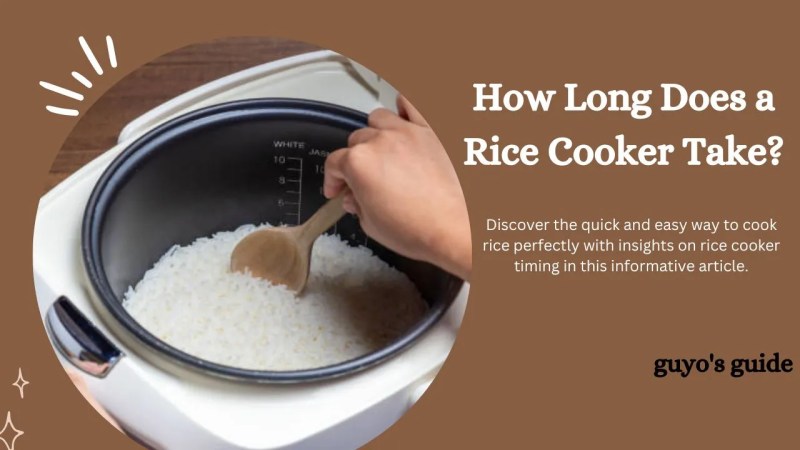
The Complete Overview of How Long Does Rice Take to Cook
The time it takes to cook rice hinges on three pillars: grain classification, preparation method, and environmental factors. White rice, red rice, and black rice each have distinct starch compositions that dictate hydration rates. For instance, short-grain Japanese rice absorbs water rapidly due to its high amylopectin content, while long-grain basmati requires precise temperature control to prevent splitting. Even within a single grain type, variations exist—jasmine rice from Thailand may cook 10% faster than its Cambodian counterpart due to differences in milling and aging.
Methodology further complicates the answer to how long does rice take to cook. Stovetop boiling relies on convection currents that distribute heat unevenly, often leaving the bottom layer overcooked while the top remains firm. Steamers, conversely, create a closed system where moisture condenses uniformly, ideal for grains like forbidden black rice. Pressure cookers cut cooking times by 50% but demand exact water measurements to avoid scalding. Ignoring these nuances leads to the two most common rice failures: undercooked grains that retain a chalky bite or overcooked grains that disintegrate into a starchy slurry.
Historical Background and Evolution
The origins of rice cooking trace back to 10,000 BCE in the Yangtze River basin, where early farmers discovered that soaking grains in water before heating them yielded edible results. Archaeological evidence from China’s Hemudu culture reveals rice was steamed in clay pots, a method that persisted for millennia. The invention of the zeng (steamer basket) during the Han Dynasty (206 BCE–220 CE) standardized cooking times, as steam’s consistent temperature eliminated the guesswork of open-flame boiling.
By the 19th century, colonial trade introduced rice to the Americas and Europe, where local adaptations emerged. Italian risotto, for example, evolved from northern European barley dishes but required a how long does rice take to cook approach tailored to Arborio’s high starch content—stirring continuously for 18–22 minutes to release amylose gradually. Meanwhile, in South Asia, the discovery that parboiling rice (as in the case of converted rice) reduced cooking time by 30% revolutionized household efficiency. Today, advances in rice breeding—such as hybrid varieties like Koshihikari—have further refined cooking parameters, but the core principles remain rooted in ancient techniques.
Core Mechanisms: How It Works
The science behind how long does rice take to cook begins with the grain’s structure. Each kernel is encased in a bran layer that must soften before water penetrates the endosperm. When submerged, rice absorbs water through osmosis, but the rate depends on the grain’s gelatinization temperature—the point at which starch granules swell and burst. For most white rice, this occurs between 60–70°C (140–158°F). Below this threshold, the rice remains firm; above it, the starches degrade too quickly, leading to mush.
Heat transfer plays a critical role. In a stovetop pot, the bottom layer cooks faster due to direct contact with the heat source, while the top layer relies on convection. This gradient explains why rice is often layered with water mid-cooking: adding hot water at the 10-minute mark ensures even hydration. Pressure cookers accelerate the process by raising the boiling point to 121°C (250°F), which reduces cooking time to 5–8 minutes—but requires precise water-to-rice ratios to prevent burning. The key variable, however, is residual moisture: rice must retain 60–70% water content post-cooking to achieve the ideal texture.
Key Benefits and Crucial Impact
Understanding how long does rice take to cook extends beyond culinary perfection—it impacts nutrition, cost efficiency, and even food safety. Properly cooked rice retains more of its vitamin B content, which degrades when grains are overcooked. Economically, precise timing reduces waste; the USDA estimates that households lose $1,500 annually to food spoilage, much of it from improperly stored or cooked grains. From a global perspective, optimizing rice preparation could address food insecurity, as staple grains like basmati or jasmine form the backbone of diets in Asia, Africa, and Latin America.
Culturally, the answer to how long does rice take to cook reflects identity. In Japan, gohan (cooked rice) is served in ceremonies where even a 1-minute deviation from the ideal texture is considered disrespectful. Meanwhile, in the Middle East, riz a la andalouse requires rice to be partially cooked before layering with saffron and broth—a technique that demands meticulous timing to balance al dente grains with infused flavors. Mastery of these methods isn’t just practical; it’s a preservation of tradition.
"Rice is the mirror of a culture’s patience. To cook it well is to honor the generations who perfected its preparation before you."
— Chef Massoud Farid, author of The Art of Persian Rice
Major Advantages
- Texture Control: Precise cooking times prevent the starches from retrograding (re-hardening) after cooling, ensuring rice remains tender for hours.
- Nutrient Retention: Undercooked rice loses up to 40% of its thiamine content; optimal cooking preserves vitamins and minerals.
- Versatility: Knowing how long does rice take to cook allows for creative adaptations, such as parboiling for pilafs or steaming for sushi.
- Cost Savings: Overcooking increases energy use by 25% due to prolonged boiling; efficient methods reduce utility bills.
- Food Safety: Properly cooked rice avoids the risk of Bacillus cereus spores, which thrive in partially cooked grains.
Comparative Analysis
| Factor | Impact on Cooking Time |
|---|---|
| Grain Type | Short-grain (e.g., sushi rice): 12–15 mins | Long-grain (e.g., basmati): 10–12 mins | Parboiled: 5–8 mins |
| Altitude | Sea level: Standard ratios | 3,000 ft: +10% water | 6,000 ft: +20% water (boiling point drops) |
| Method | Stovetop: 18–22 mins | Pressure cooker: 5–8 mins | Steamer: 20–25 mins (uniform heat) |
| Pot Material | Aluminum: Faster but uneven | Stainless steel: Even but slower | Ceramic: Retains moisture, extends time slightly |

Future Trends and Innovations
The future of rice cooking lies in hybridization and smart technology. Researchers at the International Rice Research Institute (IRRI) are developing quick-cooking varieties that reduce preparation time by 40% while maintaining nutritional integrity. These grains, engineered to have thinner bran layers, could revolutionize how long does rice take to cook in developing nations where fuel scarcity is a barrier. Concurrently, IoT-enabled rice cookers—like the Japanese Tefal IntelliPro—use sensors to adjust heat and moisture in real time, eliminating guesswork.
Sustainability is another frontier. Traditional soaking methods waste water, but innovations like flash-steaming (pre-cooking grains with high-pressure steam) cut energy use by 35%. Additionally, lab-grown rice—currently in pilot stages—promises to eliminate cooking entirely by altering the grain’s molecular structure during cultivation. While these advancements may seem futuristic, they address a fundamental question: how long does rice take to cook in a world where time, resources, and climate are increasingly constrained.
Conclusion
The answer to how long does rice take to cook is not a number but a synthesis of science, culture, and adaptability. What separates a home cook from a professional isn’t just a recipe—it’s an understanding of how moisture interacts with starch, how altitude alters boiling points, and how tradition shapes technique. The next time you measure rice into a pot, remember: you’re participating in a 10,000-year-old dialogue between grain and heat, one that demands respect for its variables.
Start with the basics—water ratios, grain types—but don’t stop there. Experiment with altitude adjustments, test different pots, and trust your senses. The perfect rice isn’t a fixed outcome; it’s a dynamic balance achieved through knowledge and practice. And in a world where convenience often trumps quality, that balance is more valuable than ever.
Comprehensive FAQs
Q: Why does rice cook faster in a pressure cooker?
A: Pressure cookers increase the boiling point to 121°C (250°F), which gelatinizes starches 3–4 times faster than standard boiling. The sealed environment also traps steam, ensuring even hydration. However, overfilling can lead to uneven cooking, so use a 1:1.5 rice-to-water ratio for most grains.
Q: Can I cook rice without soaking it first?
A: Yes, but soaking reduces cooking time by 20–30% by pre-hydrating the grains. For unsoaked rice, add 10–15% more water and increase cooking time by 2–3 minutes. Parboiled rice (e.g., converted rice) doesn’t require soaking, as the pre-cooking process alters its structure.
Q: How does altitude affect cooking time?
A: At high altitudes (above 3,000 ft), water boils at lower temperatures, slowing starch gelatinization. Increase water by 5–10% per 1,000 ft and add 1–2 extra minutes of cooking time. For example, at 5,000 ft, use a 1:1.75 ratio and cook for 14–16 minutes.
Q: Why does my rice turn out mushy?
A: Mushy rice results from overcooking, excessive stirring (which breaks grains), or using the wrong water ratio. For long-grain rice, aim for a 1:1.5 ratio; for short-grain, use 1:1.25. After boiling, let the rice sit covered for 5–10 minutes to redistribute moisture without overcooking.
Q: Is there a difference between cooking rice in stainless steel vs. aluminum?
A: Aluminum conducts heat faster but can create hot spots, leading to uneven cooking. Stainless steel distributes heat more evenly but requires slightly longer cooking times. Ceramic pots retain moisture better, ideal for grains like black rice that need gentle hydration. For best results, use a heavy-bottomed pot to prevent scorching.
Leave a Comment
Comments are moderated before appearing. The data you submit is processed according to the Privacy Policy of versiliasolutions.oneagency.co.