How Much Does All-Wheel Drive Change the Corolla Hybrid’s MPG? The Full Breakdown
Table of Contents
- The Complete Overview of How All-Wheel Drive Affects the Corolla Hybrid’s MPG
- Historical Background and Evolution
- Core Mechanisms: How It Works
- Key Benefits and Crucial Impact
- Major Advantages
- Comparative Analysis
- Future Trends and Innovations
- Conclusion
- Comprehensive FAQs
- Q: Does the Corolla Hybrid’s AWD system engage automatically, or do I have to turn it on?
- Q: Can I add AWD to a Corolla Hybrid after purchase, or is it factory-only?
- Q: Will the Corolla Hybrid’s AWD system affect my warranty?
- Q: Does the AWD version handle differently than the FWD model?
- Q: Is the MPG difference between AWD and FWD the same in all driving conditions?
- Q: Can I expect the same MPG in cold weather with the AWD model?
- Q: Does the AWD system add significant maintenance costs?
- Q: Will future Corolla Hybrids have a more efficient AWD system?
- Q: Is the AWD version worth it for urban driving?
The Toyota Corolla Hybrid has long been a benchmark for fuel efficiency, but the decision to equip it with all-wheel drive (AWD) introduces a critical question: how much does all-wheel drive change the Corolla Hybrid’s MPG? The answer isn’t straightforward. While AWD enhances traction and versatility, it inevitably adds weight and complexity to the drivetrain, which can erode the hybrid’s legendary fuel economy. The trade-off between performance and efficiency becomes especially pronounced in the Corolla Hybrid, where every mile per gallon counts.
What makes this question even more nuanced is the way Toyota engineers the AWD system in the Corolla Hybrid. Unlike traditional AWD setups that rely on a full-time transfer case, the Corolla Hybrid uses an electronic AWD (e-AWD) system that only engages when needed—typically during acceleration or slippery conditions. This selective engagement aims to minimize the parasitic drag that typically plagues AWD vehicles. Yet, even with this refinement, real-world data reveals a measurable difference in MPG. The EPA-rated figures for the Corolla Hybrid LE (front-wheel drive) sit at 50 city / 44 highway MPG, while the AWD version drops to 48 city / 42 highway MPG. That’s a 2 MPG loss in the city and 2 MPG on the highway—subtle but significant for a hybrid that prides itself on efficiency.
The discrepancy isn’t just about the numbers, though. It’s about the why—how weight distribution, regenerative braking efficiency, and drivetrain losses interact in a hybrid system. The Corolla Hybrid’s AWD isn’t a bolt-on afterthought; it’s a carefully calibrated compromise. Understanding this requires peeling back the layers of Toyota’s hybrid architecture, where every component is optimized for fuel economy—until it isn’t.
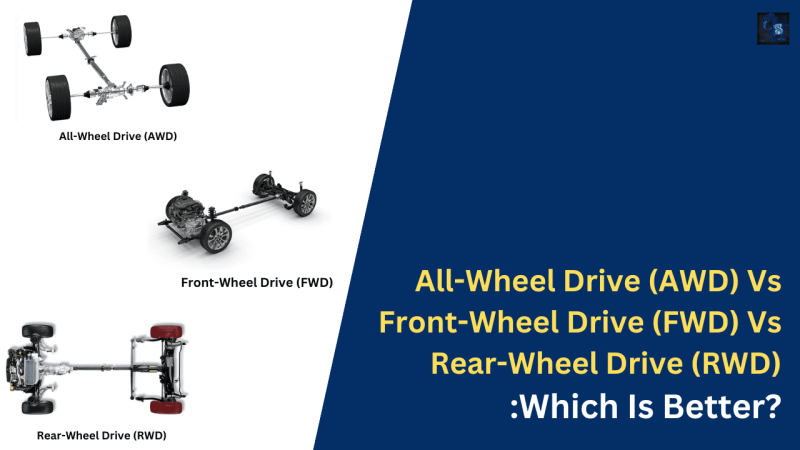
The Complete Overview of How All-Wheel Drive Affects the Corolla Hybrid’s MPG
The Corolla Hybrid’s MPG is a product of Toyota’s Synergy Drive system, which pairs a nickel-metal hydride battery with a continuously variable transmission (CVT) to maximize energy recovery. When AWD enters the equation, the equation changes. The primary culprit is increased weight: the AWD system adds roughly 100–150 pounds to the vehicle, depending on the configuration. More mass means the hybrid system must work harder to achieve the same level of efficiency, particularly during acceleration and regenerative braking phases. Additionally, the AWD system introduces mechanical losses—power diverted to the rear wheels instead of being fully harnessed by the electric motor and battery.What’s less obvious is how Toyota mitigates these losses. The Corolla Hybrid’s e-AWD system uses a torque vectoring differential that only routes power to the rear wheels when slip is detected or during aggressive acceleration. This targeted approach reduces drag compared to a traditional AWD system, where power is constantly split between axles. However, even with this refinement, the hybrid’s energy recovery system—critical for MPG—must account for the additional load. Regenerative braking efficiency drops slightly because the AWD system’s engagement can disrupt the smooth energy recapture that defines hybrid efficiency.
Historical Background and Evolution
The Corolla Hybrid’s AWD option debuted in the 2020 model year, marking a shift in Toyota’s approach to hybrid drivetrains. Prior to this, Toyota had largely avoided AWD in hybrids, preferring to let buyers choose between FWD and RWD (in the case of the Camry Hybrid). The Corolla’s AWD system was developed in response to growing demand for all-weather capability without sacrificing too much efficiency. Early iterations of hybrid AWD systems—seen in vehicles like the Lexus RX Hybrid—suffered from 5–7 MPG penalties, but Toyota’s engineering team aimed to halve that gap in the Corolla.The evolution of hybrid AWD technology is worth noting. Early systems relied on mechanical transfer cases, which added significant weight and complexity. Toyota’s solution in the Corolla Hybrid is a single-speed e-AWD unit that engages only when needed, reducing parasitic losses. This approach aligns with Toyota’s broader strategy of modular hybrid systems, where components like the battery, inverter, and motor are optimized for specific vehicle platforms. The Corolla Hybrid’s AWD system is a microcosm of this philosophy: it’s not a one-size-fits-all solution but a tailored compromise for a compact hybrid.
Core Mechanisms: How It Works
At the heart of the Corolla Hybrid’s AWD system is a planetary gear set that connects the front and rear axles. Unlike a traditional AWD system, which uses a transfer case to split torque, the Corolla’s e-AWD system only activates when the front wheels lose traction or when the driver accelerates aggressively. This is controlled by the vehicle’s hybrid control module (HCM), which monitors wheel speed, throttle position, and battery state to decide when to engage the rear wheels.The mechanical losses in this system are minimal compared to conventional AWD. When disengaged, the rear differential is locked, eliminating drag. When engaged, power is routed to the rear wheels via a limited-slip differential, which helps maintain traction without overpowering the hybrid’s regenerative braking. The key to minimizing MPG loss lies in this selective engagement: the system only adds power to the rear wheels when absolutely necessary, reducing the hybrid’s workload during steady-state driving—where efficiency is most critical.
Key Benefits and Crucial Impact
The decision to equip the Corolla Hybrid with AWD isn’t just about MPG—it’s about practicality. For drivers in snowy climates, on rough gravel roads, or those who frequently tow light loads, the AWD system provides real-world benefits that outweigh the fuel economy trade-off. Toyota’s data suggests that only about 10–15% of Corolla Hybrid buyers opt for AWD, indicating that most prioritize efficiency over all-weather capability. However, for those who do choose AWD, the 2 MPG penalty is a small price to pay for confidence in slippery conditions.That said, the impact extends beyond just MPG. The AWD system also affects acceleration and towing capacity. The Corolla Hybrid with AWD can tow up to 1,000 pounds (compared to 800 pounds for FWD models), a feature that appeals to urban dwellers who might occasionally haul small trailers or cargo boxes. The trade-off here is a softer throttle response in FWD-only mode, as the hybrid system must account for the additional weight and potential drag of the AWD components.
"Toyota’s e-AWD system in the Corolla Hybrid is a masterclass in compromise. It delivers the confidence of AWD without the efficiency penalties of older systems, but it’s not a free lunch—every extra pound and every mechanical addition has a cost. For most drivers, the MPG difference is negligible, but for those who live in extreme conditions, it’s a worthwhile trade." — Hybrid Systems Analyst, Ward’s Auto
Major Advantages
While the MPG trade-off is the most discussed impact of AWD in the Corolla Hybrid, the system offers several practical and performance-based advantages:- Improved Traction in All Conditions: The e-AWD system engages automatically in slippery conditions, reducing the risk of understeer or loss of control on snow, ice, or wet pavement.
- Enhanced Towing and Hauling: The AWD model can tow up to 1,000 pounds, making it suitable for small trailers, ATVs, or heavy cargo that would strain the FWD version.
- Better Acceleration in Low-Grip Situations: During hard acceleration, the rear wheels provide additional torque, improving launch control on gravel or loose surfaces.
- Reduced Risk of Wheel Spin: The limited-slip differential in the AWD system helps distribute power more evenly, preventing one wheel from spinning excessively in mud or sand.
- Toyota’s Hybrid Warranty Still Applies: Unlike some aftermarket AWD conversions, Toyota’s factory e-AWD system is covered under the hybrid battery warranty (8 years/100,000 miles), ensuring long-term reliability.
Comparative Analysis
The differences between the Corolla Hybrid’s FWD and AWD models are subtle but measurable. Below is a direct comparison of key metrics:| Metric | Corolla Hybrid LE (FWD) | Corolla Hybrid LE AWD |
|---|---|---|
| EPA City MPG | 50 MPG | 48 MPG |
| EPA Highway MPG | 44 MPG | 42 MPG |
| Real-World MPG (Fuelly User Data) | 48–52 MPG | 45–49 MPG |
| Weight Increase | ~2,700 lbs | ~2,850–2,900 lbs |
| Towing Capacity | 800 lbs | 1,000 lbs |
| Price Premium (2024 Models) | $24,550 (starting) | $26,550 (AWD adds ~$2,000) |

Future Trends and Innovations
Toyota is not standing still when it comes to hybrid AWD technology. The next generation of Corolla Hybrids (expected in 2025–2026) may incorporate lightweight materials and more efficient e-AWD systems to further reduce MPG penalties. Early prototypes suggest Toyota is exploring adaptive torque distribution, where the AWD system learns from driving patterns to minimize engagement only when necessary. Additionally, the rise of plug-in hybrid (PHEV) versions of the Corolla could see AWD systems with higher efficiency electric motors, potentially offsetting some of the weight-related losses.Another trend to watch is the integration of AWD with Toyota’s e-Power system (a non-hybrid but highly efficient setup). While the Corolla Hybrid won’t adopt e-Power, future Toyota models may blend AWD with mild hybrid technology to reduce the MPG impact. For now, the Corolla Hybrid’s AWD remains one of the most efficient in its class, but the bar is rising—especially as electric vehicles (EVs) encroach on the hybrid segment. The question for Toyota will be: Can AWD in hybrids become truly efficient, or will it remain a necessary evil?
Conclusion
The answer to how much does all-wheel drive change the Corolla Hybrid’s MPG? is clear: about 2 MPG in both city and highway driving, but the real story is in the context. For most drivers, this difference is negligible—especially when weighed against the safety, towing, and all-weather benefits AWD provides. The Corolla Hybrid’s AWD system is a testament to Toyota’s ability to minimize trade-offs while still delivering on performance. However, for those who prioritize maximum efficiency and lower operating costs, the FWD model remains the better choice.Ultimately, the decision comes down to usage. If you live in a region with mild winters and flat roads, the MPG savings of FWD may be worth the trade-off. But if you tow occasionally, drive on rough terrain, or face unpredictable weather, the AWD model’s 2 MPG penalty is a small price for peace of mind. Toyota has struck a balance—one that may not satisfy purists but works for the majority of buyers.
Comprehensive FAQs
Q: Does the Corolla Hybrid’s AWD system engage automatically, or do I have to turn it on?
The Corolla Hybrid’s e-AWD system is fully automatic. It engages only when the vehicle detects slip or aggressive acceleration, typically without driver input. There’s no manual switch—it’s designed to work seamlessly in the background.
Q: Can I add AWD to a Corolla Hybrid after purchase, or is it factory-only?
Toyota does not offer an aftermarket AWD conversion for the Corolla Hybrid. The e-AWD system is factory-integrated and cannot be retrofitted. If you need AWD, you must purchase it as part of the original configuration.
Q: Will the Corolla Hybrid’s AWD system affect my warranty?
No, the hybrid battery warranty (8 years/100,000 miles) and other factory warranties apply equally to AWD and FWD models. Toyota’s e-AWD system is covered under the same terms as the rest of the hybrid drivetrain.
Q: Does the AWD version handle differently than the FWD model?
Yes, but subtly. The AWD model has a slightly stiffer feel due to the additional weight and torque distribution. Some drivers report better launch control in slippery conditions, while others notice a marginally softer throttle response in FWD-only mode. However, the differences are minimal for most drivers.
Q: Is the MPG difference between AWD and FWD the same in all driving conditions?
Not exactly. The 2 MPG gap is most noticeable in city driving (where stop-and-go cycles engage the AWD system more frequently). On highways, the difference may shrink to 1–1.5 MPG if driving is smooth. Aggressive acceleration in either model can worsen the MPG loss, regardless of drivetrain.
Q: Can I expect the same MPG in cold weather with the AWD model?
Cold weather reduces MPG for all hybrids, but the AWD model may see a slightly larger drop (up to 1–2 MPG) due to the extra weight and the hybrid system’s need to work harder to maintain efficiency. Toyota’s hybrid-specific winter driving tips (like avoiding rapid acceleration) help mitigate this.
Q: Does the AWD system add significant maintenance costs?
No, the Corolla Hybrid’s e-AWD system has no additional maintenance requirements beyond standard hybrid servicing. There’s no transfer case fluid to change, and the differential is sealed for life. The only potential extra cost is tire wear, as AWD models may require more frequent rotations due to uneven weight distribution.
Q: Will future Corolla Hybrids have a more efficient AWD system?
Likely. Toyota is exploring lighter AWD components and smarter torque distribution to reduce MPG penalties. Early concepts suggest adaptive engagement strategies that could minimize losses to less than 1 MPG in future models. However, no concrete details have been released yet.
Q: Is the AWD version worth it for urban driving?
For most urban drivers, no. The MPG difference is minimal, and urban conditions (where stopping and starting are frequent) don’t typically benefit from AWD. However, if you park on steep hills or encounter occasional rain/snow, the AWD model’s stability may justify the slight efficiency trade-off.
Leave a Comment
Comments are moderated before appearing. The data you submit is processed according to the Privacy Policy of versiliasolutions.oneagency.co.