The Art of Addressing a Postcard: Precision, Etiquette, and Modern Nuances
Table of Contents
- The Complete Overview of How to Address a Postcard
- Historical Background and Evolution
- Core Mechanisms: How It Works
- Key Benefits and Crucial Impact
- Major Advantages
- Comparative Analysis
- Future Trends and Innovations
- Conclusion
- Comprehensive FAQs
- Q: Can I write the address in cursive on a postcard?
- Q: Where should the return address go on a postcard?
- Q: Do I need to include a stamp if the postcard is prepaid?
- Q: What’s the best pen to use for addressing a postcard?
- Q: Are there cultural differences in how to address a postcard?
- Q: Can I fold a postcard to save space?
- Q: What if I make a mistake while addressing a postcard?
- Q: Do postcards have weight restrictions?
- Q: Can I use a postcard for business correspondence?
- Q: How do I address a postcard to a company?
- Q: Are there eco-friendly ways to address a postcards?
There’s an unspoken ritual in the act of sending a postcard—one that blends precision with personal touch. Whether you’re dispatching a vacation snapshot to a friend or a formal notice to a client, the way you address it can elevate the message from mere communication to a curated experience. The rules governing how to address a postcard have evolved alongside postal systems, yet their core principles remain timeless: clarity, legibility, and respect for the recipient’s time. Overlooking these details risks delays, lost mail, or even unintended humor (imagine a misplaced comma turning "Dear Sir" into "Dear Sire").
The postcard’s unique format—its open-back design—demands a different approach than traditional envelopes. Unlike letters, which can be folded and sealed, postcards require the address to be both visible to postal workers and aesthetically integrated with the message. This duality creates a tension between function and form, where a single misplaced line can disrupt the balance. Yet, when executed correctly, addressing a postcard becomes an exercise in minimalism: a microcosm of communication where every character counts.
Modern postal services have streamlined the process with standardized guidelines, but the artistry lies in adapting these rules to context. A postcard sent to a colleague in Tokyo follows different conventions than one mailed to a relative in rural Maine. The key? Understanding the invisible contract between sender and recipient—one that hinges on the first impression made by the address block.
The Complete Overview of How to Address a Postcard
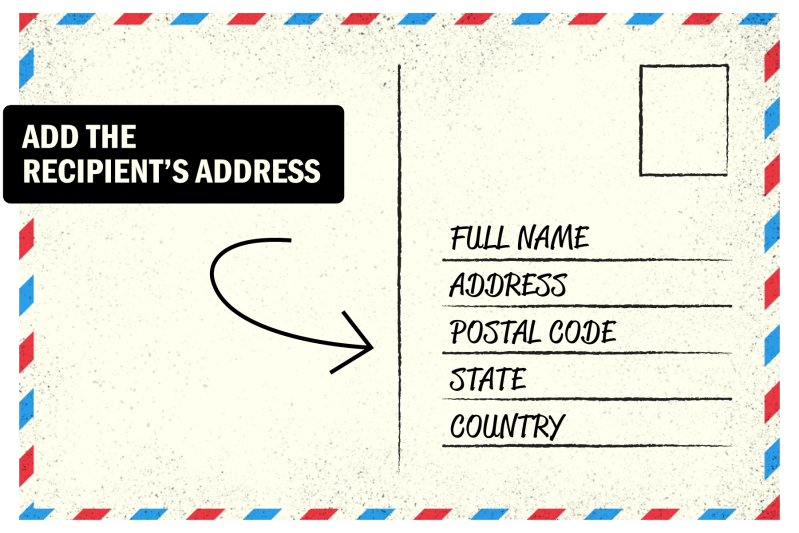
Addressing a postcard is not merely a logistical step but a reflection of intentionality. The process marries practicality with personal expression, where the postal worker’s efficiency meets the sender’s desire to convey warmth, urgency, or formality. Unlike envelopes, which offer privacy, postcards demand transparency: the recipient’s details must be legible to sorting machines and human hands alike, while the sender’s message remains exposed—a vulnerability that invites trust.The modern postcard exists at the intersection of nostalgia and utility. While digital communication dominates, the tactile pleasure of receiving a physical postcard persists, particularly for travelers, artists, and those who value slow correspondence. This duality shapes how to address a postcard: the address must serve as both a functional directive and a visual complement to the message. Ignore this balance, and the postcard risks becoming a cluttered relic; honor it, and it transforms into a small, deliberate work of correspondence.
Historical Background and Evolution
The origins of the postcard trace back to 19th-century Europe, where preprinted cards with adhesive strips revolutionized personal communication. Before standardized formats, senders relied on handwritten addresses—often in elaborate scripts—to ensure delivery. The first official postcards, introduced by Austria in 1869, featured a prepaid stamp and a designated space for the recipient’s address, separating it from the message. This innovation addressed a critical flaw in earlier systems: the ambiguity of where to place the address on an open card.By the early 20th century, postal authorities worldwide adopted uniform guidelines for how to address a postcard, standardizing font size, placement, and even the use of capital letters. The rise of tourism in the mid-1900s further cemented the postcard’s role as a visual diary, where the address became part of the aesthetic—think of a sun-bleached card from Santorini, its Greek script address blending seamlessly with the seascape. Today, while digital tools offer templates, the handwritten touch persists, particularly among enthusiasts who view addressing a postcard as a quiet rebellion against algorithmic communication.
Core Mechanisms: How It Works
The mechanics of addressing a postcard hinge on three pillars: visibility, structure, and postal compliance. Visibility ensures the address is scannable by both machines and humans; structure dictates the hierarchy of information (recipient first, then sender); and compliance aligns with national postal regulations, which vary by country. For instance, the U.S. Postal Service (USPS) recommends uppercase block letters for clarity, while German post offices prefer a more formal, centered layout.The address block on a postcard typically occupies the top third of the card, leaving space for the message below. This division prevents the address from overwhelming the visual field, which is especially important for postcards sent as keepsakes. The sender’s return address, if included, is usually placed in the top-left corner—though some cultures, like Japan, may position it vertically along the left edge. The choice of pen matters too: a fine-tip marker ensures legibility, while a calligraphic brush pen might suit a travel postcard’s artistic flair.
Key Benefits and Crucial Impact
The act of addressing a postcard is deceptively simple, yet its implications ripple through the lifecycle of the mail. A well-addressed postcard arrives on time, sparing the recipient frustration; a poorly addressed one risks becoming lost in the postal limbo. Beyond logistics, the address sets the tone for the entire piece—whether it’s the casual scribble of a postcard from a beach trip or the precise script of a business update. This dual role as both functional directive and aesthetic element underscores why mastering how to address a postcard is a skill worth refining.The psychological impact is equally significant. A beautifully addressed postcard feels intentional, a gesture that acknowledges the recipient’s presence. In an era of disposable digital messages, the effort invested in addressing a postcard signals respect—a quiet declaration that the message is worth the time it takes to handle.
"The address on a postcard is the handshake of the mail world—brief, firm, and unmistakable. Get it wrong, and the connection fails before it begins." —Postal historian Dr. Eleanor Voss, The Art of Correspondence
Major Advantages
- Global Compatibility: Postcards adhere to international postal standards, making them ideal for cross-border communication. Proper addressing ensures they navigate customs and sorting systems seamlessly.
- Cost-Effectiveness: Weighing less than letters, postcards benefit from lower postage rates, making them a budget-friendly option for frequent senders.
- Visual Storytelling: The address can complement the message—e.g., a postcard from Paris might use French script, enhancing the cultural experience.
- Faster Processing: Open-back designs allow postal workers to scan addresses without opening envelopes, expediting delivery.
- Durability: Unlike envelopes, postcards resist wear from repeated handling, preserving the message’s integrity during transit.
Comparative Analysis
| Postcard Addressing | Envelope Addressing |
|---|---|
|
|
| Best for: Travel memories, quick notes, promotional mail. | Best for: Confidential letters, legal documents, formal correspondence. |
| Postal Rules: USPS recommends uppercase block letters; EU favors centered alignment. | Postal Rules: Return address in top-left corner; recipient’s address in center-right. |

Future Trends and Innovations
As digital communication dominates, the postcard’s survival hinges on its adaptability. Emerging trends suggest a resurgence of hybrid postcards—digital designs printed on demand, or QR codes linking to online content—while traditionalists cling to handwritten addresses for their authenticity. Postal services are also exploring smart postcards with embedded sensors to track delivery, blending nostalgia with technology.The rise of minimalist stationery brands and eco-conscious consumers may further refine how to address a postcard, prioritizing sustainability (e.g., recycled paper) and speed (e.g., pre-printed international formats). Meanwhile, calligraphy workshops are teaching new generations the art of legible, aesthetically pleasing addresses, proving that even in a digital age, the postcard’s charm lies in its human touch.
Conclusion
Mastering how to address a postcard is a microcosm of effective communication: it demands clarity, respect for conventions, and an eye for detail. Whether you’re a seasoned correspondent or a casual sender, the principles remain constant—adapt to the recipient’s expectations, prioritize legibility, and let the address serve as a bridge between sender and receiver.In a world where messages are often ephemeral, the postcard endures as a tangible artifact of connection. The next time you address one, remember: the pen in your hand is not just writing an address; it’s crafting the first impression of your message.
Comprehensive FAQs
Q: Can I write the address in cursive on a postcard?
A: While cursive adds a personal touch, many postal services recommend uppercase block letters for maximum legibility, especially for automated sorting. If using cursive, ensure it’s clear and avoid overly decorative scripts that might confuse postal workers.
Q: Where should the return address go on a postcard?
A: The return address (your address) is typically placed in the top-left corner of the postcard, aligned with the recipient’s address block. Some cultures, like Japan, may place it vertically along the left edge. Always check local postal guidelines for specific formatting.
Q: Do I need to include a stamp if the postcard is prepaid?
A: Prepaid postcards (those with adhesive stamps) usually require no additional postage. However, verify the stamp’s validity—some countries issue temporary or limited-edition stamps that may not be accepted. For international postcards, ensure the stamp meets the destination country’s postage requirements.
Q: What’s the best pen to use for addressing a postcard?
A: A fine-tip black or dark blue ink pen is ideal for legibility. Avoid gel pens (they can smudge) or overly thick markers (they may bleed through). For a polished look, a fountain pen with a steady hand can elevate the address’s aesthetic, especially on high-quality postcard paper.
Q: Are there cultural differences in how to address a postcard?
A: Yes. For example, in Japan, addresses are often written vertically, while in the U.S., block uppercase letters are standard. German postcards may use a centered layout with formal titles (e.g., "Herr" or "Frau"). Always research the recipient’s country for specific conventions, such as whether to include honorifics or house numbers.
Q: Can I fold a postcard to save space?
A: Folding a postcard is discouraged, as it can damage the message and confuse postal workers. Postcards are designed to be flat and lightweight for efficient sorting. If space is limited, consider a smaller postcard or a traditional envelope instead.
Q: What if I make a mistake while addressing a postcard?
A: If the error is minor (e.g., a typo in the street name), you can cross it out neatly with a single line and rewrite the correction. For major mistakes (e.g., wrong recipient), it’s safer to start over. Avoid using correction tape, as some postal services may reject mail with altered addresses.
Q: Do postcards have weight restrictions?
A: Most postal services limit postcards to a maximum weight of 30–50 grams (about the weight of a standard postcard). Exceeding this may require first-class letter postage. For international postcards, check the destination country’s weight limits, as some impose stricter rules.
Q: Can I use a postcard for business correspondence?
A: While unconventional, postcards can work for business if the message is brief and non-confidential. Use a professional tone, avoid overly casual designs, and ensure the address is clear. For sensitive matters, a sealed envelope is always preferable.
Q: How do I address a postcard to a company?
A: Address the postcard to the company’s name (e.g., "ABC Corp"), followed by the recipient’s name (if known), then the full address. Include the department or attention line if necessary (e.g., "Attn: Marketing Team"). Avoid abbreviations unless standard (e.g., "Inc." instead of "Incorporated").
Q: Are there eco-friendly ways to address a postcards?
A: Yes. Use recycled postcards and refillable ink pens to minimize waste. Some brands offer seed-embedded paper postcards that can be planted after use. For the address itself, opt for a permanent marker over disposable pens to reduce plastic consumption.
Leave a Comment
Comments are moderated before appearing. The data you submit is processed according to the Privacy Policy of versiliasolutions.oneagency.co.