How to Check Auto Insurance Score: The Hidden Metric Shaping Your Premiums
Table of Contents
- The Complete Overview of How to Check Auto Insurance Score
- Historical Background and Evolution
- Core Mechanisms: How It Works
- Key Benefits and Crucial Impact
- Major Advantages
- Comparative Analysis
- Future Trends and Innovations
- Conclusion
- Comprehensive FAQs
- Q: Can I check my auto insurance score for free?
- Q: How often should I check my auto insurance score?
- Q: Does checking my auto insurance score hurt my credit?
- Q: What’s the difference between an auto insurance score and a credit score?
- Q: Can I improve my auto insurance score quickly?
- Q: What if my insurer won’t disclose my auto insurance score?
- Q: Are there legal protections if my auto insurance score is inaccurate?
- Q: How do insurers use auto insurance scores beyond premiums?
Auto insurance premiums aren’t just about your driving record anymore. Behind the scenes, insurers use a specialized metric—your auto insurance score—to assess risk with surgical precision. This three-digit number, often derived from credit-based models or proprietary algorithms, dictates whether you’ll pay $150 or $300 monthly for identical coverage. The catch? Most drivers never see it, let alone understand how to check auto insurance score or influence it.
Insurance companies have quietly weaponized this scoring system for decades, yet consumers remain in the dark. A single misstep—like a late utility payment or a gap in coverage—can trigger a 20% premium spike without explanation. The irony? Unlike credit scores, there’s no universal standard for how to check auto insurance score, leaving policyholders to navigate a maze of insurer-specific tools, third-party reports, and legal loopholes.
This guide dismantles the opacity. We’ll cover the exact methods to retrieve your auto insurance score, the mechanics of how insurers calculate it, and the often-overlooked strategies to improve it. Whether you’re facing a sudden rate hike or shopping for a new policy, knowing how to check auto insurance score is the first step to reclaiming control over your premiums.

The Complete Overview of How to Check Auto Insurance Score
The auto insurance score is a proprietary risk assessment tool used by insurers to predict claim likelihood. Unlike credit scores, which follow a standardized FICO or VantageScore model, auto insurance scores vary by provider—some leverage credit history (a practice banned in California and Hawaii), while others use telematics, driving behavior data, or even social media activity. The lack of uniformity makes it critical to know how to check auto insurance score through the right channels.
Most drivers assume their insurer will disclose this score during policy renewal, but that’s rarely the case. Insurers treat these metrics as competitive advantages, often burying them in dense policy documents or behind paywalls. The first step in checking your auto insurance score is recognizing that it’s not a single number but a composite of factors: payment history, coverage gaps, claims frequency, and even your vehicle’s mileage. Some states mandate disclosure, but in others, you’ll need to request it directly—or use third-party services that aggregate insurer data.
Historical Background and Evolution
The roots of auto insurance scoring trace back to the 1990s, when insurers began correlating creditworthiness with claim risk. Early models, like those pioneered by LexisNexis and FICO, assumed that individuals with lower credit scores were more likely to file claims—a flawed but profitable assumption. By 2007, nearly 94% of insurers used credit-based scoring, despite no direct link between credit and driving ability. The practice faced backlash, leading to state-level bans and the development of alternative scoring methods.
Today, the landscape is fragmented. Progressive introduced its "Snapshot" program in 2014, using telematics to score drivers based on real-time behavior. State Farm’s "Drive Safe & Save" and Allstate’s "Drivewise" followed suit, shifting focus to hard braking, speeding, and phone use. Meanwhile, companies like Insurify and The Zebra now offer "insurance score" reports, blending traditional credit data with modern behavioral analytics. Understanding this evolution is key to knowing how to check auto insurance score in 2024.
Core Mechanisms: How It Works
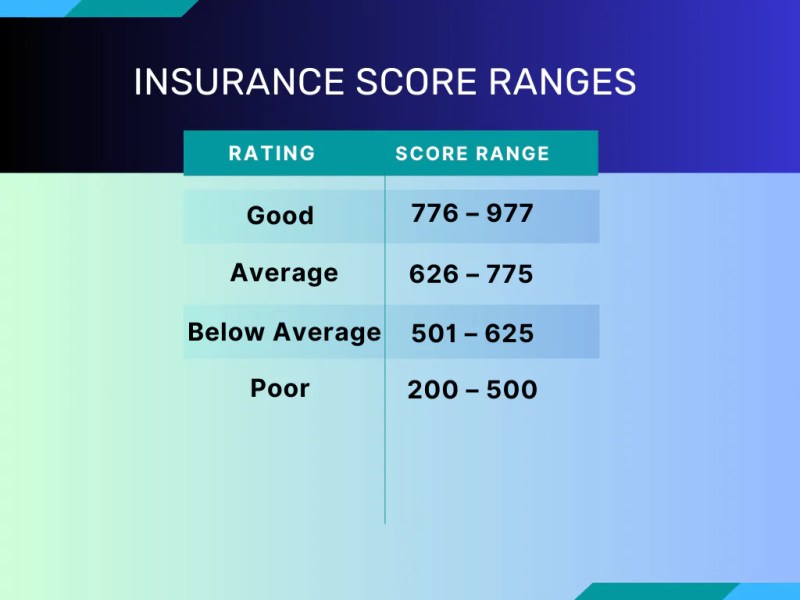
At its core, an auto insurance score is a predictive model trained on historical claim data. Insurers feed millions of policyholder records into algorithms to identify patterns—such as drivers with three speeding tickets filing 40% more collisions. The score then assigns a risk tier (e.g., "Preferred," "Standard," or "High Risk"), which directly impacts premiums. For example, a driver with a score in the 800–850 range might pay 30% less than someone in the 600–650 bracket.
Not all scores are created equal. Some insurers weight factors differently: a DUI might devastate your score at Geico but have minimal impact at USAA, which prioritizes military service history. Others, like Lemonade, use AI to analyze your social media presence for red flags (e.g., frequent nightlife posts). The opacity extends to scoring thresholds—what one insurer considers "excellent" (900+) might be "average" (750+) at another. This variability is why knowing how to check auto insurance score across multiple providers is non-negotiable.
Key Benefits and Crucial Impact
Auto insurance scores aren’t just about saving money—they’re a window into your risk profile. A high score can unlock discounts (e.g., Progressive’s "Snapshot" rewards safe drivers with up to 30% off), while a low score may force you into high-risk pools with exorbitant rates. The impact ripples beyond premiums: lenders may deny auto loans if your insurance score flags you as a liability, and rental car companies could charge deposits based on your driving risk tier.
For policyholders, the ability to check auto insurance score empowers negotiation. Armed with your score, you can challenge unfair rate hikes, switch to insurers offering better scoring models, or enroll in corrective programs (e.g., defensive driving courses). The data also exposes systemic biases—studies show minority drivers often receive harsher scores due to ZIP code or employment history factors. Transparency in scoring is the first step toward fairness.
"An auto insurance score is the modern equivalent of a credit score—except it’s not regulated, not standardized, and often not explainable. Consumers deserve to know how to check auto insurance score before they’re penalized for factors they can’t control."
— Robert Hunter, Director of Insurance for Consumer Federation of America
Major Advantages
- Premium Savings: Drivers with scores in the top 20% pay 25–40% less than average. Checking your score before renewal can reveal hidden discounts.
- Claim Approval Leverage: A strong score improves your odds of claim approval during accidents, as insurers view you as a lower-risk policyholder.
- Negotiation Power: If your insurer denies a rate adjustment, your score report serves as objective evidence to dispute the decision.
- Fraud Detection: Sudden score drops may indicate identity theft or unauthorized policy changes, prompting you to act swiftly.
- State Compliance: In states like California, knowing how to check auto insurance score helps you verify insurers aren’t using banned credit-based models.
Comparative Analysis
| Insurer | Scoring Method & How to Check Auto Insurance Score |
|---|---|
| Progressive | Telematics ("Snapshot") + credit (where legal). Check via my account or request a "Snapshot" report. |
| State Farm | DriveSafe & Save (behavioral) + proprietary risk model. Accessible through the app or agent. |
| Allstate | Drivewise (telematics) + credit history. Viewable in the policy dashboard. |
| Geico | Credit-based (where permitted) + driving record. Request via customer service or third-party reports. |
Future Trends and Innovations
The next frontier in auto insurance scoring lies in AI and real-time data. Insurers are testing dynamic scoring models that adjust weekly based on GPS location, phone usage, and even weather conditions during your commute. Companies like Root Insurance already use smartphone data to recalculate scores hourly, promising "pay-as-you-drive" precision. Meanwhile, blockchain is being explored to create immutable insurance score ledgers, reducing fraud and improving portability across providers.
Regulatory shifts will also reshape how to check auto insurance score. The California Insurance Code’s ban on credit-based scoring has pushed insurers to innovate with alternative data (e.g., education level, employment stability). Expect more states to follow, forcing insurers to disclose scoring methodologies publicly. Consumers may soon have access to a universal "insurance score report," similar to credit reports, though privacy concerns will likely limit full transparency.
Conclusion
Understanding how to check auto insurance score is no longer optional—it’s a financial safeguard. The days of blindly accepting premium hikes are over. By leveraging insurer tools, third-party reports, and state resources, you can decode the factors influencing your score and take corrective action. The key is proactivity: monitor your score annually, dispute inaccuracies, and shop around for insurers that align with your risk profile.
Remember, your auto insurance score is a reflection of more than just your driving. It’s a snapshot of your lifestyle, financial responsibility, and even the algorithms that shape your access to coverage. The power to check—and improve—it lies in your hands.
Comprehensive FAQs
Q: Can I check my auto insurance score for free?
A: Most insurers won’t provide your score for free, but you can access a credit-based insurance score via free annual reports from AnnualCreditReport.com or third-party services like Credit Karma (which offers a "VantageScore" tied to insurance risk). For telematics-based scores (e.g., Progressive Snapshot), you’ll need to enroll in the program or request a report from your insurer.
Q: How often should I check my auto insurance score?
A: At minimum, check annually before renewal. If you’ve had major life changes (marriage, moving, new job), check every 6 months. Scores can fluctuate due to payment history, claims, or even changes in your vehicle’s value. Set calendar reminders to avoid surprises at renewal.
Q: Does checking my auto insurance score hurt my credit?
A: No—requesting your score (whether from an insurer or credit bureau) is a soft inquiry, which doesn’t impact your credit. However, if an insurer pulls your full credit report (for underwriting), that’s a hard inquiry, which may cause a temporary dip. Always ask for a "score-only" check to avoid hard pulls.
Q: What’s the difference between an auto insurance score and a credit score?
A: While both use similar data (payment history, debt levels), an auto insurance score is insurer-specific and prioritizes factors like claims frequency, coverage gaps, and driving behavior. A credit score (FICO/VantageScore) focuses on loan repayment. For example, a 720 credit score might translate to an "800" auto insurance score at one company but a "650" at another due to different weighting.
Q: Can I improve my auto insurance score quickly?
A: Yes, but it depends on the scoring model. For credit-based scores, paying down debt or correcting errors on your credit report can help within 30–60 days. For behavioral scores (telematics), safe driving habits (e.g., avoiding hard brakes, limiting night driving) show improvement in 1–3 months. Enroll in defensive driving courses—some insurers offer instant score boosts upon completion.
Q: What if my insurer won’t disclose my auto insurance score?
A: In states where insurers must disclose scoring factors (e.g., California, Massachusetts), file a complaint with your state’s Department of Insurance. For other states, use third-party tools like Insurify or The Zebra, which provide estimated scores based on your profile. If all else fails, switch insurers—competitors may offer better transparency.
Q: Are there legal protections if my auto insurance score is inaccurate?
A: Yes. Under the Fair Credit Reporting Act (FCRA), you can dispute errors in credit-based insurance scores. For proprietary scores (e.g., Progressive Snapshot), contact your insurer directly with evidence (e.g., proof of safe driving). If the insurer refuses to correct the score, escalate to your state’s insurance regulator or consider legal action for discriminatory practices.
Q: How do insurers use auto insurance scores beyond premiums?
A: Beyond setting rates, insurers use scores to:
- Determine deductible eligibility (e.g., high scores may qualify for $0 deductibles).
- Approved high-risk coverage (e.g., SR-22 filings for DUIs).
- Offer personalized discounts (e.g., anti-theft device installments).
- Assess loan approvals for gap insurance or financed vehicles.
Leave a Comment
Comments are moderated before appearing. The data you submit is processed according to the Privacy Policy of versiliasolutions.oneagency.co.