How to Cybersecurity for Healthcare Workers: Protecting Patient Data in a Digital Age
Table of Contents
- The Complete Overview of How to Cybersecurity for Healthcare Workers
- Historical Background and Evolution
- Core Mechanisms: How It Works
- Key Benefits and Crucial Impact
- Major Advantages
- Comparative Analysis
- Future Trends and Innovations
- Conclusion
- Comprehensive FAQs
- Q: What’s the first step for healthcare workers to improve cybersecurity?
- Q: How often should healthcare staff receive cybersecurity training?
- Q: Are personal devices (e.g., smartphones) a major risk in healthcare?
- Q: What should I do if I suspect a breach?
- Q: How does HIPAA specifically relate to cybersecurity for healthcare workers?
- Q: Can wearable devices (e.g., Fitbits) be secured in a hospital setting?
Cyberattacks on healthcare organizations surged 45% in 2023, with ransomware alone costing hospitals an average of $1.8 million per incident. Yet, many healthcare workers remain unprepared—unaware of how to cybersecurity for healthcare workers effectively. The stakes are higher than ever: a single breach can expose sensitive patient records, trigger legal consequences, and erode trust in medical institutions.
Unlike other industries, healthcare cybersecurity isn’t just about protecting data—it’s about safeguarding lives. A misconfigured email system or an unpatched device can lead to delayed treatments, misdiagnoses, or even patient harm. The question isn’t if a breach will happen, but when. The solution? A layered, proactive approach to how to cybersecurity for healthcare workers that balances technical safeguards with human vigilance.
This guide cuts through the noise. It’s not about theoretical frameworks or vendor pitches—it’s about actionable steps. From recognizing phishing scams in 3 seconds to securing mobile devices in emergency rooms, we’ll cover the critical tactics healthcare professionals must adopt today. The goal? To turn cybersecurity from a compliance checkbox into an instinctive, daily practice.
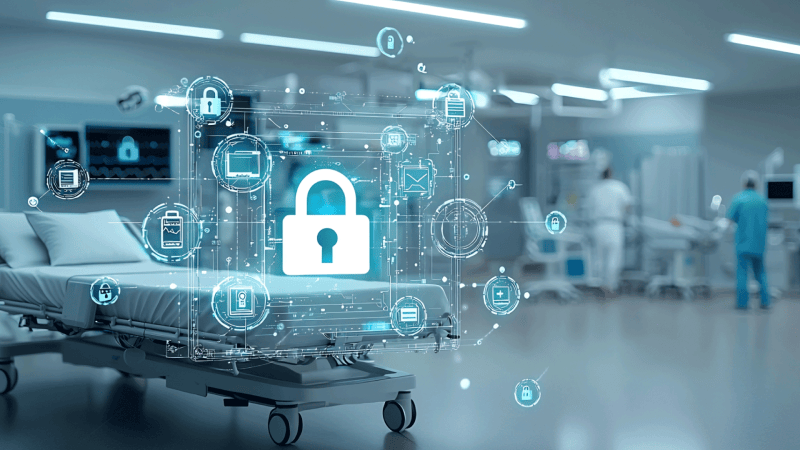
The Complete Overview of How to Cybersecurity for Healthcare Workers
Healthcare cybersecurity isn’t a single tool or policy—it’s a culture. The foundation lies in understanding that threats evolve faster than defenses. In 2024, the average hospital faces over 3,000 daily cyber threats, with attackers exploiting human error in 90% of cases. For healthcare workers, this means how to cybersecurity for healthcare workers starts with recognizing that their actions—whether clicking a suspicious link or reusing passwords—directly impact patient safety.
The challenge is compounded by the unique ecosystem of healthcare IT. Electronic Health Records (EHRs) like Epic or Cerner store decades of patient data, while IoT devices (e.g., insulin pumps, pacemakers) create new attack surfaces. Unlike finance or retail, healthcare systems often operate on legacy infrastructure, making them prime targets. The solution? A defense-in-depth strategy that combines how to cybersecurity for healthcare workers with institutional safeguards.
Historical Background and Evolution
The evolution of healthcare cybersecurity mirrors the rise of digital medicine. In the 1990s, HIPAA’s privacy rule set the first legal framework, but enforcement was lax. By the 2010s, high-profile breaches—such as the 2015 Anthem hack (78 million records exposed)—forced hospitals to invest in encryption and access controls. Today, the shift toward telemedicine and AI diagnostics has expanded attack vectors, demanding how to cybersecurity for healthcare workers adapt to zero-trust models and continuous monitoring.
Key milestones underscore the urgency: the 2016 WannaCry ransomware attack crippled UK’s NHS, while 2020’s COVID-19 pandemic saw a 600% increase in healthcare phishing. These events proved that cybersecurity isn’t optional—it’s a patient safety issue. The modern approach to how to cybersecurity for healthcare workers now integrates behavioral training, automated threat detection, and real-time incident response.
Core Mechanisms: How It Works
The most effective how to cybersecurity for healthcare workers strategies operate on three pillars: prevention, detection, and response. Prevention starts with least-privilege access—limiting employee data access to only what’s necessary for their role. Detection relies on User and Entity Behavior Analytics (UEBA), which flags anomalies like a nurse accessing 10,000 patient records in one hour. Response hinges on incident playbooks, ensuring staff know exactly how to isolate threats without disrupting care.
For frontline workers, the mechanics simplify to three daily habits: verify before you click, use multi-factor authentication (MFA) everywhere, and report suspicious activity immediately. Backend systems must enforce end-to-end encryption for data in transit and at rest, while segmented networks prevent lateral movement by attackers. The goal? To make cybersecurity invisible—embedded in workflows so seamlessly that it doesn’t impede patient care.
Key Benefits and Crucial Impact
Implementing robust how to cybersecurity for healthcare workers isn’t just about avoiding fines—it’s about preserving operational continuity. A single ransomware attack can shut down an entire hospital for days, delaying surgeries and emergency treatments. Beyond the financial cost (average breach: $10.9 million), the reputational damage can deter patients for years. The alternative? A secure environment where staff focus on healing, not hackers.
The impact extends to patient trust. When healthcare workers demonstrate competence in how to cybersecurity for healthcare workers, patients feel their data is in capable hands. This is particularly critical for marginalized communities, who often distrust institutions. A breach isn’t just a technical failure—it’s a betrayal of the doctor-patient covenant.
— Dr. Eric Topol, Cardiologist and Digital Medicine Expert
"Cybersecurity in healthcare isn’t a luxury; it’s the difference between a well-functioning system and one that collapses under digital siege. The workers on the front lines are the last line of defense."
Major Advantages
- Patient Safety First: Secure systems prevent data tampering that could lead to incorrect diagnoses or treatments.
- Regulatory Compliance: Avoid HIPAA/HITECH penalties (up to $1.5 million per violation) by adhering to strict data protection protocols.
- Operational Resilience: Minimize downtime from attacks, ensuring critical services (e.g., ICU monitoring) remain operational.
- Cost Savings: The average cost of a data breach in healthcare is $10.9 million—prevention is far cheaper than recovery.
- Competitive Edge: Hospitals with strong cybersecurity attract patients and top talent, positioning them as leaders in digital trust.
Comparative Analysis
| Traditional Cybersecurity | Modern How to Cybersecurity for Healthcare Workers Approach |
|---|---|
| Relies on firewalls and antivirus (reactive) | Zero-trust architecture + behavioral analytics (proactive) |
| Annual training (outdated quickly) | Micro-learning modules (real-time, scenario-based) |
| Silos between IT and clinical staff | Cross-functional security teams embedded in workflows |
| Focuses on perimeter defense | Prioritizes data encryption and access controls at every layer |

Future Trends and Innovations
The next frontier in how to cybersecurity for healthcare workers lies in AI-driven threat detection and quantum-resistant encryption. Machine learning will predict attacks before they occur, while blockchain could revolutionize patient data integrity. However, the biggest shift will be cultural: integrating cybersecurity into medical education from day one. Future doctors and nurses will need to understand not just anatomy, but also how to recognize a spear-phishing email.
Emerging threats—such as deepfake audio used to impersonate doctors—will force healthcare workers to adopt biometric authentication for critical systems. Meanwhile, the rise of remote patient monitoring devices will demand stricter IoT security standards. The message is clear: how to cybersecurity for healthcare workers will evolve from a checklist to an instinct, as essential as hand hygiene.
Conclusion
Cybersecurity in healthcare isn’t a technical problem—it’s a human one. The most advanced firewalls won’t stop a curious resident from plugging an unsecured USB drive into a hospital computer. The solution? A combination of how to cybersecurity for healthcare workers that empowers staff with knowledge, tools, and a culture of vigilance. Start with the basics: MFA, phishing simulations, and clear reporting channels. Then layer in automation and AI to handle the rest.
The cost of inaction is too high. Every day without robust how to cybersecurity for healthcare workers measures is a day of unnecessary risk. But the reward—a secure, resilient healthcare system—is worth the effort. The time to act is now.
Comprehensive FAQs
Q: What’s the first step for healthcare workers to improve cybersecurity?
A: Enable multi-factor authentication (MFA) on all accounts—especially email and EHR systems. Then, complete a phishing simulation test to identify vulnerabilities in your team. These two actions block 99% of common attacks.
Q: How often should healthcare staff receive cybersecurity training?
A: At least quarterly, with role-specific modules (e.g., nurses vs. IT admins). Training should include real-world scenarios, like recognizing a fake "COVID-19 vaccine update" email. Annual compliance courses aren’t enough.
Q: Are personal devices (e.g., smartphones) a major risk in healthcare?
A: Yes. Bring Your Own Device (BYOD) policies are common, but unsecured personal devices can introduce malware into hospital networks. Require mobile device management (MDM) and prohibit clinical data storage on personal phones.
Q: What should I do if I suspect a breach?
A: Isolate the affected system immediately (unplug if necessary), then report to your IT security team via the designated breach hotline. Never investigate alone—evidence must be preserved for forensic analysis.
Q: How does HIPAA specifically relate to cybersecurity for healthcare workers?
A: HIPAA’s Security Rule requires healthcare workers to protect patient data through administrative, physical, and technical safeguards. Violations can lead to fines up to $1.5 million per incident. Workers must sign Business Associate Agreements (BAAs) if handling data for third parties (e.g., billing vendors).
Q: Can wearable devices (e.g., Fitbits) be secured in a hospital setting?
A: Only if they’re enterprise-grade wearables with end-to-end encryption and regular firmware updates. Consumer wearables should be banned from clinical areas due to unpatched vulnerabilities. Always check vendor compliance with FDA cybersecurity guidelines.
Leave a Comment
Comments are moderated before appearing. The data you submit is processed according to the Privacy Policy of versiliasolutions.oneagency.co.