The Art of Spotting Outliers: How to Find Them in Data, Markets, and Life
Table of Contents
- The Complete Overview of How to Find Outliers
- Historical Background and Evolution
- Core Mechanisms: How It Works
- Key Benefits and Crucial Impact
- Major Advantages
- Comparative Analysis
- Future Trends and Innovations
- Conclusion
- Comprehensive FAQs
- Q: Can outliers be used to predict future trends?
- Q: How do I handle outliers in small datasets?
- Q: Are there ethical concerns with outlier analysis?
- Q: What’s the difference between an outlier and an anomaly?
- Q: How can I teach someone to spot outliers without formal training?
- Q: What’s the most common mistake when trying to find outliers?
Outliers don’t just happen—they’re found. The ability to spot them separates mediocrity from mastery, whether you’re analyzing financial markets, optimizing business strategies, or decoding human behavior. Most people chase averages, but the real insights lie in the deviations. A single outlier in a dataset can rewrite industry trends, while an overlooked anomaly in consumer behavior might birth the next billion-dollar brand. The problem? Most methods for how to find outliers are either too rigid for real-world complexity or too vague to act on. This isn’t just about statistics—it’s about developing a framework to recognize what others overlook.
The challenge deepens when you consider the three domains where outliers thrive: structured data (where algorithms excel but human intuition often fails), unstructured environments (like social dynamics or creative fields), and hybrid systems (where data meets human judgment). Take Warren Buffett’s early bet on Coca-Cola in 1988—a move that seemed irrational to Wall Street but was rooted in spotting an outlier in consumer loyalty data. Or consider how Netflix’s recommendation algorithm didn’t just predict trends but created them by identifying niche viewer preferences before they became mainstream. These examples share a common thread: outliers aren’t random noise; they’re signals waiting to be decoded.
Yet, most guides on how to find outliers either treat the topic as a purely technical exercise or reduce it to a checklist. The truth is messier. Outliers emerge at the intersection of data, context, and timing. A stock price spike might be an outlier in one market but a confirmation of a trend in another. A customer’s unusual purchase pattern could signal a latent need—or a fraudster’s activity. The key isn’t just the method; it’s the mindset: a blend of analytical rigor and creative skepticism. This guide cuts through the noise to provide actionable strategies, from statistical tools to behavioral heuristics, ensuring you don’t just detect outliers but leverage them.
The Complete Overview of How to Find Outliers
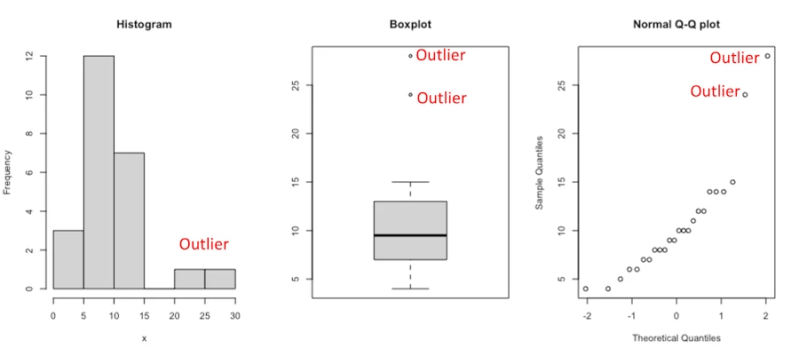
The search for outliers begins with a fundamental question: What constitutes a deviation? In statistics, outliers are typically defined as data points that fall beyond 1.5 times the interquartile range (IQR) from the first or third quartile—a rule known as the Tukey’s fence method. But this approach has critical limitations. It assumes a normal distribution, which rarely exists in real-world datasets. Financial returns, for example, often follow power-law distributions where extreme events (like the 2008 crash or the 2020 COVID-19 stock rally) are statistically expected but economically catastrophic. Here, how to find outliers shifts from a technical exercise to a risk-management problem.The broader definition of outliers extends beyond numbers. In business, an outlier might be a competitor’s unexpected pricing strategy, a customer segment with counterintuitive behavior, or a technology adoption curve that defies industry forecasts. In personal development, it’s the habit that yields disproportionate results (e.g., cold emailing generating 10x more responses than networking events). The unifying principle is that outliers represent information asymmetry—knowledge that a few possess while the majority remains blind. The goal isn’t to eliminate them (as traditional statistical methods often aim to do) but to harness them. Whether you’re a data scientist, entrepreneur, or strategist, the ability to identify and act on outliers is a competitive weapon.
Historical Background and Evolution
The concept of outliers has evolved alongside humanity’s relationship with data. Early civilizations used outliers implicitly—think of how ancient traders might have dismissed a single unusually high grain yield as a fluke, only to later recognize it as a sign of fertile land. The formal study of outliers, however, traces back to 19th-century astronomy, where scientists like John Herschel noted that some stars’ movements didn’t fit Newtonian models. These "peculiarities" became the foundation for modern physics, proving that anomalies could redefine reality.The 20th century transformed outliers from a curiosity into a tool. In the 1950s, statisticians like Frank Anscombe demonstrated that outliers could distort regression analyses, leading to robust statistical methods like least absolute deviations (LAD). Meanwhile, economists like Joseph Schumpeter argued that outliers—what he called "creative destruction"—were the engines of capitalism. His insights laid the groundwork for modern innovation theory, where outliers like Apple’s iPhone or Tesla’s vertical integration are seen not as exceptions but as inevitable disruptions. Today, the field has splintered into specialized domains: anomaly detection in cybersecurity, extreme value theory in finance, and behavioral outlier analysis in psychology. Each approaches how to find outliers with distinct tools and objectives.
Core Mechanisms: How It Works
At its core, detecting outliers relies on three pillars: statistical thresholds, contextual relevance, and domain expertise. Statistical methods like Z-scores or modified Z-scores measure how far a point deviates from the mean, but they fail when distributions are skewed. For instance, in income data, a Z-score might flag a billionaire as an outlier, but in a city like New York, that’s the norm. Here, percentile-based methods (e.g., flagging values above the 99th percentile) offer more nuance. However, the most powerful approaches combine statistics with domain knowledge. A fraud analyst might use machine learning to detect unusual transaction patterns, but they’ll also cross-reference with behavioral psychology to distinguish a legitimate traveler from a money launderer.The process often begins with exploratory data analysis (EDA), where visualization tools like box plots or scatter plots reveal clusters and deviations. But EDA alone isn’t enough. Outliers in high-dimensional data (e.g., customer behavior across 50 variables) require dimensionality reduction techniques like PCA or t-SNE to identify meaningful patterns. For unstructured data—think of social media trends or open-ended survey responses—natural language processing (NLP) can uncover semantic outliers, such as a sudden shift in customer sentiment toward a brand. The critical step is validating outliers against business hypotheses. A data point might statistically be an outlier, but if it doesn’t align with real-world constraints (e.g., a "customer" with a negative age), it’s noise, not a signal.
Key Benefits and Crucial Impact
The ability to systematically how to find outliers isn’t just a technical skill—it’s a strategic advantage. In finance, hedge funds like Renaissance Technologies generate billions by exploiting market inefficiencies, many of which are outliers in price-action data. In healthcare, detecting outliers in patient vitals can save lives by identifying sepsis before it’s clinically obvious. Even in creative fields, outliers inspire breakthroughs: Picasso’s Les Demoiselles d’Avignon was initially rejected as an outlier in early 20th-century art, only to redefine modernism. The impact isn’t limited to professionals; individuals who master this skill can optimize personal habits, investments, or social networks by recognizing where conventional wisdom fails.The paradox of outliers is that they’re often invisible until someone decides to look for them. Most organizations filter out deviations as "errors," but the most innovative ones treat them as opportunities. Consider how Airbnb’s early growth relied on identifying outliers in local housing markets—properties that were underpriced relative to demand. By targeting these anomalies, they built a platform that redefined hospitality. The same logic applies to personal development: the person who reads one extra hour a day (an outlier in most productivity studies) often achieves outcomes that dwarf the 80/20 rule’s predictions.
"Outliers are like black swans—rare, unpredictable, but when you find them, they change everything." — Nassim Nicholas Taleb, Antifragile
Major Advantages
- Competitive Differentiation: Outliers in customer data can reveal unmet needs before competitors notice them. For example, Dollar Shave Club’s viral growth stemmed from identifying an outlier in men’s grooming habits: most didn’t want expensive, high-touch services.
- Risk Mitigation: Financial institutions use outlier detection to flag fraudulent transactions in real time. In 2020, JPMorgan Chase’s anomaly detection systems prevented $1.2 billion in fraud by identifying patterns that deviated from normal customer behavior.
- Resource Optimization: Supply chain outliers—like a supplier with unexpectedly low delivery times—can be leveraged to reduce costs. Amazon’s early use of outlier analysis in logistics led to its two-day shipping model.
- Innovation Acceleration: Pharmaceutical companies screen for outliers in drug trial data to identify side effects or efficacy signals that standard analyses might miss. This has led to faster approvals for niche treatments.
- Behavioral Insights: Outliers in social interactions (e.g., a user who engages with content in an unusual pattern) can reveal hidden influencer networks or viral triggers. TikTok’s algorithm prioritizes these outliers to fuel its growth.
Comparative Analysis
| Method | Best For |
|---|---|
| Statistical Thresholds (Z-scores, IQR) | Normally distributed data (e.g., manufacturing defect rates). Limited for skewed distributions. |
| Machine Learning (Isolation Forest, DBSCAN) | High-dimensional data (e.g., cybersecurity, genomics). Requires labeled data for training. |
| Domain-Specific Heuristics | Business/financial outliers (e.g., earnings calls with unusual language patterns). Highly contextual. |
| Behavioral Analysis (NLP, Social Graphs) | Unstructured data (e.g., customer reviews, social media). Captures semantic and relational outliers. |

Future Trends and Innovations
The next frontier in how to find outliers lies at the intersection of AI and human judgment. Current machine learning models excel at detecting statistical outliers but struggle with contextual outliers—deviations that make sense only within a specific narrative. For example, a sudden spike in searches for "how to build a bunker" might be an outlier in most datasets, but during the 2022 Ukraine war, it became a critical signal. Future systems will integrate causal inference to distinguish between correlated and causally linked outliers. Tools like reinforcement learning will allow models to dynamically adjust their outlier thresholds based on real-time feedback, moving from passive detection to active exploitation.Another trend is the democratization of outlier analysis. Historically, spotting outliers required access to expensive tools or expertise. Today, no-code platforms like DataRobot or Google’s Vertex AI enable non-technical users to deploy anomaly detection models. Meanwhile, edge computing will bring outlier analysis closer to the data source—imagine IoT sensors in a factory flagging equipment failures before they happen. The challenge will be balancing automation with interpretability: ensuring that outliers aren’t just detected but explained in ways humans can act on. As data grows more complex, the most valuable skill won’t be writing code to find outliers—it’ll be asking the right questions to know which outliers matter.
Conclusion
The pursuit of outliers is a dual challenge: it demands both precision and intuition. Precision comes from mastering the tools—whether it’s Python’s `scipy.stats` for statistical tests or TensorFlow’s anomaly detection APIs. Intuition comes from understanding that outliers are rarely isolated; they’re often the first domino in a chain reaction. The stock market crash of 1987 began with a single outlier trade; the rise of Bitcoin was signaled by outliers in digital currency transactions long before it became mainstream. The key is to develop a hypothesis-driven approach: don’t just ask what the outlier is, but why it exists and what it implies.For individuals, how to find outliers is a mindset shift. It means questioning assumptions, seeking disconfirming evidence, and embracing uncertainty. For organizations, it’s a cultural imperative—one where data teams collaborate with domain experts to turn outliers into insights. The reward? A world where the exceptional isn’t ignored but amplified. Whether you’re analyzing a dataset, scouting a market, or refining a personal strategy, the outliers are already there. The question is whether you’ll see them.
Comprehensive FAQs
Q: Can outliers be used to predict future trends?
A: Yes, but with caution. Outliers often precede trends because they represent early signals of change. For example, the rise of "quiet quitting" was first detected as an outlier in employee engagement surveys before becoming a cultural phenomenon. However, not all outliers predict trends—some are noise. The key is to validate outliers against leading indicators (e.g., Google Trends data, social media chatter) and domain expertise. Companies like Netflix use outlier analysis in viewer behavior to predict which niche genres will scale.
Q: How do I handle outliers in small datasets?
A: Small datasets (n < 30) make statistical outlier detection unreliable because the IQR or Z-scores can be overly sensitive. Instead, use domain-specific rules (e.g., flagging values outside a known range) or visual inspection (e.g., plotting data points to spot clusters). For business applications, consider expert judgment: if a sales figure seems unusually high, investigate whether it’s a data error, a one-time event, or a signal. In machine learning, techniques like robust scaling (min-max normalization without outliers) can help models generalize better.
Q: Are there ethical concerns with outlier analysis?
A: Absolutely. Outliers can reinforce biases if not handled carefully. For example, an algorithm flagging "unusual" loan applicants based on past defaults might disproportionately target minorities if historical data reflects systemic discrimination. Ethical outlier analysis requires:
- Transparency: Documenting how outliers are defined and why they’re flagged.
- Bias Audits: Checking if outlier detection models amplify existing inequalities.
- Human Review: Ensuring outliers trigger investigations, not automatic actions (e.g., denying loans).
Q: What’s the difference between an outlier and an anomaly?
A: The terms are often used interchangeably, but they differ in intent:
- Outlier: A statistical deviation from a dataset’s distribution. It’s descriptive—it tells you what is different but not necessarily why. Example: A customer spending $10,000 in one transaction when the average is $100.
- Anomaly: An outlier with actionable significance. It implies a purpose—whether malicious (fraud), informative (a new market signal), or operational (a system failure). Example: The same $10,000 transaction might be an anomaly if it’s part of a money-laundering scheme.
Q: How can I teach someone to spot outliers without formal training?
A: Start with pattern recognition exercises:
- Data Visualization Drills: Use tools like Tableau or Excel to plot real-world datasets (e.g., stock prices, sports stats) and ask learners to identify deviations.
- Scenario-Based Questions: Present hypotheticals (e.g., "A factory’s machine A produces 10% more widgets than usual—is this an outlier or a signal?") to develop critical thinking.
- Reverse Engineering: Take a known outlier (e.g., the first iPhone’s sales data) and break down why it stood out and what it predicted.
- Cross-Domain Comparisons: Show how outliers appear differently in various fields (e.g., a "6 sigma" event in manufacturing vs. a "black swan" in finance).
Q: What’s the most common mistake when trying to find outliers?
A: Assuming outliers are always meaningful. The biggest pitfall is treating every statistical outlier as a signal without considering:
- Context: A 10% increase in sales might be an outlier in January but normal during Black Friday.
- Data Quality: Outliers can stem from errors (e.g., mislabeled data, sensor failures). Always validate with source checks.
- Confirmation Bias: People often seek outliers that confirm their hypotheses and ignore contradictory data.
- Overfitting: In machine learning, models trained to detect outliers in one dataset may fail in another due to distribution shifts.
Leave a Comment
Comments are moderated before appearing. The data you submit is processed according to the Privacy Policy of versiliasolutions.oneagency.co.