The Exact Method: How to Find the Side of a Triangle Given Two Sides
Table of Contents
- The Complete Overview of How to Find the Side of a Triangle Given Two Sides
- Historical Background and Evolution
- Core Mechanisms: How It Works
- Key Benefits and Crucial Impact
- Major Advantages
- Comparative Analysis
- Future Trends and Innovations
- Conclusion
- Comprehensive FAQs
- Q: Can the Pythagorean theorem be used if the triangle isn’t right-angled?
- Q: What if I don’t know any angles when trying to find the missing side?
- Q: How does the Law of Cosines differ from the Law of Sines?
- Q: Is there a way to find the missing side without using trigonometric functions?
- Q: Why do some triangles have two possible solutions when using the Law of Cosines?
- Q: How accurate do my angle measurements need to be for precise side calculations?
- Q: Can I use a calculator to solve for the missing side, or do I need to derive it manually?
Geometry isn’t just about memorizing formulas—it’s about solving problems with precision. When faced with a triangle where two sides are known but the third remains elusive, the question isn’t just how to find the side of a triangle given two sides, but which method guarantees accuracy. The answer depends on the triangle’s type: right-angled, acute, or obtuse. Each scenario demands a distinct approach, from the straightforward Pythagorean theorem to the versatile Law of Cosines. The stakes are higher in fields like architecture, engineering, and physics, where even minor miscalculations can lead to structural failures or flawed designs.
Yet, the challenge extends beyond technical proficiency. Many students and professionals overlook the nuances—assuming all triangles follow the same rules or misapplying formulas. For instance, the Pythagorean theorem only works for right triangles, while the Law of Cosines is the Swiss Army knife for any triangle. The difference between these methods can mean the gap between a correct solution and a costly error. Understanding these distinctions isn’t just academic; it’s practical.
The irony lies in how often this fundamental skill is undervalued. While calculators and software handle routine computations, the ability to reason through the problem—identifying the right formula, verifying angles, and cross-checking results—remains irreplaceable. Whether you’re restoring a historic bridge, designing a skyscraper, or simply solving a textbook problem, the principles governing how to find the side of a triangle given two sides are the bedrock of geometric integrity.
The Complete Overview of How to Find the Side of a Triangle Given Two Sides
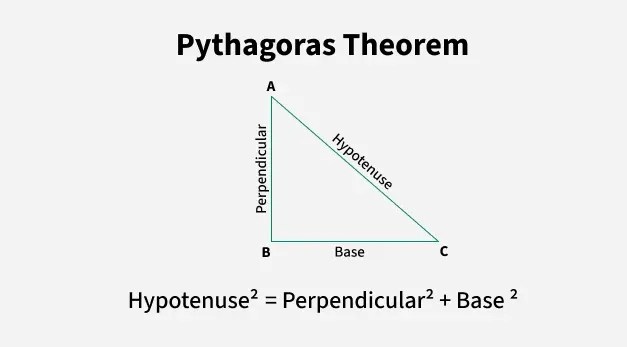
The process of determining an unknown side in a triangle when two sides are known is governed by a set of mathematical laws that have evolved over centuries. At its core, the solution hinges on two primary tools: the Pythagorean theorem for right triangles and the Law of Cosines for all others. The Pythagorean theorem, attributed to the ancient Greek mathematician Pythagoras, states that in a right-angled triangle, the square of the hypotenuse (the side opposite the right angle) is equal to the sum of the squares of the other two sides. This relationship—a² + b² = c²—is elegant in its simplicity but limited in scope. It only applies when one angle is exactly 90 degrees, leaving acute and obtuse triangles without a direct solution.
For triangles that don’t conform to the right-angle rule, the Law of Cosines steps in as the universal solver. Derived from the Pythagorean theorem but expanded to include any angle, it’s expressed as c² = a² + b² − 2ab·cos(C), where C is the included angle between sides a and b. This formula doesn’t just find the missing side; it bridges the gap between trigonometry and geometry, making it indispensable in navigation, astronomy, and computer graphics. Mastering these tools isn’t just about plugging numbers into equations—it’s about recognizing which tool fits the problem and why.
Historical Background and Evolution
The quest to solve for unknown sides in triangles traces back to the Babylonians, who used geometric principles as early as 1800 BCE to measure land and construct buildings. Their clay tablets reveal early forms of the Pythagorean theorem, though without formal proof. The Greeks later refined these ideas, with Euclid’s Elements (c. 300 BCE) systematically documenting geometric principles, including the relationship between sides and angles. However, it was the Islamic Golden Age—particularly the work of mathematicians like Al-Khwarizmi and Omar Khayyam—that expanded these concepts into algebra and trigonometry, laying the groundwork for the Law of Cosines.
The modern formulation of the Law of Cosines emerged in the 15th century, credited to Persian mathematician Jamshīd al-Kāshī, who generalized the Pythagorean theorem for non-right triangles. By the 18th century, European mathematicians like Leonhard Euler formalized trigonometric identities, cementing the Law of Cosines as a cornerstone of analytical geometry. Today, these principles are embedded in everything from GPS technology to video game physics, proving that the ancient art of triangle-solving is far from obsolete.
Core Mechanisms: How It Works
The mechanics of solving for a missing side begin with classification. A right triangle offers the simplest path: if sides a and b are known, and the right angle is between them, the hypotenuse c is found by rearranging a² + b² = c² into c = √(a² + b²). For example, if a = 3 and b = 4, then c = 5. The elegance lies in the theorem’s directness—no angles, no trigonometric functions, just arithmetic.
When the triangle isn’t right-angled, the Law of Cosines introduces a variable: the included angle. Suppose sides a = 7 and b = 10, with the angle between them C = 30°. The formula c² = 7² + 10² − 2·7·10·cos(30°) yields c ≈ 5.196. Here, the cosine of the angle adjusts the relationship between the sides, accounting for the triangle’s shape. The key insight is that the Law of Cosines doesn’t just compute a side—it reveals how angles distort the Pythagorean relationship, making it adaptable to any triangle.
Key Benefits and Crucial Impact
The ability to determine an unknown side in a triangle is more than a mathematical exercise; it’s a problem-solving framework with real-world consequences. In engineering, for instance, calculating the length of a support beam in a bridge requires precise side measurements to ensure structural stability. A miscalculation could lead to catastrophic failure. Similarly, in computer graphics, rendering 3D objects accurately depends on solving triangles for lighting and perspective, where even minor errors create visual distortions. The impact extends to navigation, where triangulation—using known distances and angles to pinpoint locations—relies on these same principles.
Beyond practical applications, understanding how to find the side of a triangle given two sides sharpens analytical thinking. It teaches precision, pattern recognition, and the importance of context—whether the triangle is right, acute, or obtuse. This skill isn’t confined to textbooks; it’s a lens through which the world’s physical structures and natural phenomena can be understood. From the parabolic arches of Gothic cathedrals to the trajectories of spacecraft, geometry is the silent architect of innovation.
"Geometry will draw the soul toward truth and create the spirit of philosophy." —Plato
Major Advantages
- Universal Applicability: The Law of Cosines works for all triangle types, eliminating the need for separate methods based on angle classification.
- Precision in Engineering: Critical for designing frameworks, bridges, and mechanical components where dimensional accuracy is non-negotiable.
- Efficiency in Navigation: Enables accurate triangulation in GPS, surveying, and aviation, reducing errors in positioning.
- Foundation for Advanced Math: Serves as a gateway to trigonometry, calculus, and physics, where side-angle relationships are fundamental.
- Problem-Solving Versatility: Applicable in fields from architecture to game development, making it a transferable skill across disciplines.
Comparative Analysis
| Method | Applicability |
|---|---|
| Pythagorean Theorem | Right triangles only; requires a 90° angle. Formula: c = √(a² + b²). |
| Law of Cosines | All triangles (acute, obtuse, right). Formula: c² = a² + b² − 2ab·cos(C). |
| Law of Sines | Requires at least one angle and its opposite side. Useful for angle-side relationships but not direct side-solving. |
| Trigonometric Identities | Advanced cases involving multiple angles; often used in conjunction with other laws. |

Future Trends and Innovations
The future of triangle-solving lies at the intersection of mathematics and technology. As computational power grows, algorithms that automate side calculations—once manual processes—are becoming more sophisticated. Machine learning models are now trained to recognize geometric patterns, potentially accelerating solutions in real-time applications like autonomous vehicle navigation or augmented reality. However, the human element remains irreplaceable; understanding why a formula works ensures that technology is used correctly, not blindly.
Another frontier is the integration of geometric principles into quantum computing. Researchers are exploring how trigonometric relationships could optimize quantum algorithms, particularly in simulating molecular structures or optimizing network paths. Meanwhile, educational technology is democratizing access to these concepts through interactive platforms that visualize triangle properties dynamically. The evolution isn’t just about faster calculations—it’s about deeper comprehension and broader accessibility, ensuring that the timeless art of triangle-solving remains relevant in an increasingly digital world.
Conclusion
The journey to solve for an unknown side in a triangle is a testament to the enduring power of geometry. Whether through the Pythagorean theorem’s simplicity or the Law of Cosines’ versatility, the methods are as reliable today as they were centuries ago. The difference now is the context—from skyscrapers to smartphones, these principles underpin modern innovation. Yet, the core remains unchanged: precision, logic, and an unshakable grasp of fundamental relationships.
For students, professionals, or curious minds, mastering how to find the side of a triangle given two sides is more than a mathematical skill—it’s a lens to see the world’s hidden structures. It’s the difference between guessing and knowing, between approximation and certainty. In a landscape where technology often overshadows foundational knowledge, these geometric truths remain the bedrock of accuracy and innovation.
Comprehensive FAQs
Q: Can the Pythagorean theorem be used if the triangle isn’t right-angled?
A: No. The Pythagorean theorem only applies to right triangles. For non-right triangles, you must use the Law of Cosines or Law of Sines, depending on the given information.
Q: What if I don’t know any angles when trying to find the missing side?
A: If no angles are provided, you cannot determine the missing side uniquely. Triangles require either two sides and the included angle (SAS) or two angles and a side (AAS/ASA) to solve for the third side definitively.
Q: How does the Law of Cosines differ from the Law of Sines?
A: The Law of Cosines relates the lengths of sides to the cosine of one angle (c² = a² + b² − 2ab·cos(C)), making it ideal for side-solving. The Law of Sines relates sides to the sines of their opposite angles (a/sin(A) = b/sin(B) = c/sin(C)), which is better for finding angles when sides are known.
Q: Is there a way to find the missing side without using trigonometric functions?
A: Only if the triangle is right-angled. For other triangles, trigonometric functions (like cosine in the Law of Cosines) are necessary to account for the angle’s effect on side lengths.
Q: Why do some triangles have two possible solutions when using the Law of Cosines?
A: This occurs in the ambiguous case of the Law of Sines (SSA), where two different triangles can satisfy the given conditions. However, the Law of Cosines itself yields a single solution for a given set of sides and included angle.
Q: How accurate do my angle measurements need to be for precise side calculations?
A: Precision depends on the application. For engineering, angles should be measured to within 0.1° for critical structures. In less demanding contexts, rounding to the nearest degree may suffice, but always verify the impact of rounding errors on the final side length.
Q: Can I use a calculator to solve for the missing side, or do I need to derive it manually?
A: Calculators (including scientific and graphing models) can compute sides using the Law of Cosines or Pythagorean theorem, but understanding the derivation ensures you recognize errors or edge cases the calculator might miss.
Leave a Comment
Comments are moderated before appearing. The data you submit is processed according to the Privacy Policy of versiliasolutions.oneagency.co.