How to Find the Third Side of a Triangle Given Two Sides and No Angles: A Geometric Breakdown
Table of Contents
- The Complete Overview of How to Find the Third Side of a Triangle Given Two Sides and No Angles
- Historical Background and Evolution
- Core Mechanisms: How It Works
- Key Benefits and Crucial Impact
- Major Advantages
- Comparative Analysis
- Future Trends and Innovations
- Conclusion
- Comprehensive FAQs
- Q: Can the third side of a triangle be determined uniquely when only two sides are given?
- Q: What happens if the third side falls outside the calculated range?
- Q: Is the triangle inequality theorem applicable to all types of triangles?
- Q: How does this method compare to using the Law of Cosines when an angle is known?
- Q: Are there real-world applications where this method is particularly useful?
- Q: Can this approach be extended to higher dimensions, such as tetrahedrons in 3D space?
The problem of how to find the third side of a triangle given two sides and no angles is a classic puzzle in Euclidean geometry, one that tests the limits of what can be determined with minimal information. Unlike scenarios involving angles or the Law of Cosines, this scenario forces a reckoning with the fundamental properties of triangles: their rigidity, their constraints, and the invisible boundaries that govern their possible configurations. Without an angle, the third side isn’t a single value but a range—a spectrum of possibilities bounded by geometric laws that have stood unchallenged for millennia.
At first glance, the absence of an angle might seem like a fatal omission. After all, most introductory geometry problems rely on angles to anchor calculations, whether through the Pythagorean theorem, trigonometric ratios, or the Law of Sines. Yet, this very limitation sharpens the focus on the triangle’s inherent structure. The two given sides, however, are not arbitrary; they impose a silent dialogue between length and shape, revealing that even without angles, the third side is not free to roam but is instead tethered to a precise mathematical range. This is where the concept of triangle inequality becomes indispensable—a principle so fundamental it often goes unnoticed until its absence creates ambiguity.
The irony lies in the fact that this problem, though seemingly straightforward, exposes a critical truth: geometry is not just about measurement but about possibility. When two sides are known, the third side must satisfy a set of conditions that ensure the three lengths can coexist as the edges of a closed, three-sided figure. These conditions are not arbitrary; they are the bedrock of Euclidean space, where distances dictate what shapes can and cannot exist. To solve this, one must step beyond the confines of traditional formulas and engage with the deeper logic of geometric constraints—a skill that separates novice problem-solvers from those who grasp the elegance of pure mathematics.
The Complete Overview of How to Find the Third Side of a Triangle Given Two Sides and No Angles
The quest to determine the third side of a triangle when only two sides are provided hinges on a single, unyielding principle: the triangle inequality theorem. This theorem, attributed to ancient Greek mathematicians but refined over centuries, states that for any triangle with sides a, b, and c, the sum of any two sides must be greater than the third. In practical terms, if sides a and b are known, the third side c cannot be arbitrarily large or small—it must lie within a calculable range. This range is derived directly from the inequalities:1. a + b > c 2. a + c > b (which simplifies to c > b – a)
3. b + c > a (which simplifies to c > a – b)
The result is a bounded interval for c: it must be greater than the absolute difference between a and b and less than the sum of a and b. No angles are needed because the triangle’s validity is determined solely by the lengths of its sides. This approach is not just a mathematical trick but a reflection of the geometric reality that sides must interact in specific ways to form a closed figure.
What makes this method particularly powerful is its universality. Whether the triangle is acute, obtuse, or right-angled, the triangle inequality provides a foolproof way to constrain the third side. The absence of angles does not render the problem unsolvable; instead, it shifts the focus from specific measurements to fundamental constraints. This is where the elegance of pure geometry shines—solutions emerge not from complex calculations but from the interplay of simple, immutable rules.
Historical Background and Evolution
The triangle inequality theorem traces its origins to the works of Euclid, whose Elements (c. 300 BCE) laid the groundwork for systematic geometric reasoning. While Euclid did not explicitly state the theorem in modern terms, his propositions—particularly those concerning the construction of triangles and the properties of their sides—implicitly rely on the principle. The formal articulation of the inequality as we know it today emerged later, as mathematicians sought to codify the conditions under which three lengths could form a triangle.By the 17th and 18th centuries, the theorem became a cornerstone of analytical geometry, particularly as scholars like René Descartes and Pierre de Fermat explored the relationships between algebraic equations and geometric figures. The triangle inequality was not merely a tool for solving problems but a fundamental property of metric spaces, influencing fields as diverse as physics, engineering, and computer science. In the 20th century, its applications expanded further with the rise of computational geometry, where determining feasible configurations of shapes became critical in fields like robotics and graphics.
The evolution of this theorem underscores a broader truth: some geometric principles are so foundational that they transcend their original contexts. The triangle inequality, though seemingly simple, is a testament to the enduring power of abstract reasoning. It reminds us that even in the absence of angles or additional measurements, geometry offers a language to describe the possible—and the impossible—with precision.
Core Mechanisms: How It Works
The mechanics of determining the third side when only two sides are known are rooted in the triangle inequality’s dual role as both a constraint and a generator of possibilities. Given two sides, a and b, the third side c must satisfy two critical conditions:1. Lower Bound: c must be greater than the difference between a and b. This ensures that the two shorter sides can "reach" each other when combined with the third side. For example, if a = 5 and b = 3, then c must be greater than 2 (since 5 – 3 = 2). If c were 2 or less, the sides could not form a closed triangle.
2. Upper Bound: c must be less than the sum of a and b. This prevents the third side from being so long that it exceeds the combined length of the other two sides, which would make a triangle impossible. Using the same values, c must be less than 8 (5 + 3).
The result is a range for c: in this case, 2 < c < 8. Any value within this interval is a valid length for the third side, meaning there are infinitely many possible triangles that can be formed with sides 5 and 3, each with a distinct third side length. This range is not arbitrary; it is a direct consequence of the geometric necessity that the sum of any two sides must exceed the third.
What this mechanism reveals is that how to find the third side of a triangle given two sides and no angles is not about finding a single answer but about defining a spectrum of possibilities. The triangle inequality does not provide a unique solution but instead maps the entire domain of feasible configurations. This distinction is crucial for applications where precision is paramount, such as in structural engineering or computer-aided design, where understanding the bounds of a problem can prevent costly errors.
Key Benefits and Crucial Impact
The ability to determine the range of the third side in a triangle without relying on angles offers several strategic advantages, particularly in fields where precision and adaptability are critical. One of the most immediate benefits is reduced dependency on additional measurements. In real-world scenarios—such as surveying, architecture, or manufacturing—angles may be difficult or impossible to measure accurately. The triangle inequality provides a robust alternative, allowing engineers and designers to work with partial information while still ensuring geometric validity.Another significant impact lies in the flexibility of problem-solving. When only two sides are known, the range-based approach does not force a premature commitment to a single solution. Instead, it acknowledges that multiple configurations may be viable, encouraging a more exploratory and iterative design process. This is particularly valuable in creative disciplines, where constraints can spark innovation rather than limit it.
The theorem’s universality also extends to educational contexts, where it serves as a gateway to deeper geometric reasoning. Students who master this concept develop a stronger intuition for spatial relationships, moving beyond rote memorization of formulas to an understanding of underlying principles. This foundational knowledge is transferable to advanced topics, from trigonometry to linear algebra.
"Geometry will draw the soul toward truth and create the spirit of philosophy." —Plato
While Plato’s words were not about the triangle inequality, they capture the essence of what this theorem embodies: a bridge between abstract thought and tangible reality. The ability to deduce possibilities from constraints is a hallmark of mathematical thinking, one that transcends the specific problem at hand.
Major Advantages
- No Angle Dependency: The method works independently of angle measurements, making it applicable in scenarios where angles are unknown or unmeasurable, such as in archaeological reconstructions or forensic analysis.
- Precision in Bounds: Instead of a single value, the solution provides a precise range, which is often more useful in engineering and design where variability must be accounted for.
- Universal Applicability: The triangle inequality applies to all types of triangles—acute, obtuse, right-angled—without requiring classification or additional data.
- Educational Clarity: Teaching this concept reinforces the importance of geometric constraints, helping students move from procedural problem-solving to conceptual understanding.
- Computational Efficiency: Algorithms in computer graphics and robotics often rely on similar range-based checks to validate geometric configurations, making this method computationally efficient.
Comparative Analysis
While the triangle inequality is the primary tool for solving how to find the third side of a triangle given two sides and no angles, other methods may be considered depending on the context. Below is a comparative analysis of the most relevant approaches:| Method | Applicability and Limitations |
|---|---|
| Triangle Inequality Theorem | Works for any triangle with two known sides. Provides a range, not a single value. No angles required. Best for general geometric problems. |
| Law of Cosines | Requires at least one angle to calculate the third side. Overkill when angles are unknown. Useful when angles are provided but computationally heavier. |
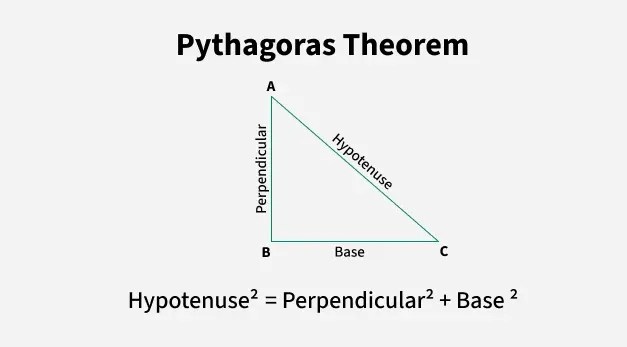
| Pythagorean Theorem | Only applicable to right-angled triangles. Cannot be used when no angles are known or when the triangle is not right-angled. |
| Coordinate Geometry | Can determine the third side by plotting points, but requires additional information (e.g., coordinates or angles) to establish a reference frame. Not ideal for pure side-length problems. |

Future Trends and Innovations
As computational geometry continues to evolve, the principles underlying how to find the third side of a triangle given two sides and no angles are likely to see new applications in fields like machine learning and spatial data analysis. For instance, algorithms that generate or validate geometric configurations—such as those used in 3D modeling or autonomous navigation—rely on similar constraint-based reasoning. Future advancements may integrate these geometric principles with probabilistic models, allowing for more dynamic and adaptive solutions in real-time systems.Another potential innovation lies in the visualization of geometric constraints. Interactive tools that graphically represent the range of possible third sides could revolutionize education and design, making abstract concepts more tangible. Imagine a software interface where users input two side lengths and instantly see the spectrum of valid triangles, complete with dynamic adjustments for different configurations. Such tools would not only demystify geometry but also empower users to explore the boundaries of what is possible.
Beyond technology, the philosophical implications of this problem may also gain traction. The idea that geometry imposes limits on possibility—even in the absence of angles—challenges our perception of creativity and constraint. As interdisciplinary fields like bio-inspired design and material science push the boundaries of form and function, the triangle inequality’s lessons about feasibility and adaptability will remain relevant.
Conclusion
The problem of determining the third side of a triangle when only two sides are known is deceptively simple yet profoundly revealing. It strips away the crutch of angles and forces a confrontation with the raw logic of geometry: that shapes are not arbitrary but governed by immutable laws. The triangle inequality is more than a theorem; it is a lens through which we can see the interplay between possibility and constraint, a reminder that even in the absence of complete information, mathematics provides a path forward.For practitioners in engineering, design, or education, mastering this concept is not just about solving a specific problem. It is about cultivating a mindset that embraces ambiguity and seeks solutions within the boundaries of what is geometrically possible. In an era where data is abundant but context is often scarce, the ability to deduce feasible configurations from minimal inputs is a skill that transcends disciplines. The next time you encounter a triangle with two known sides and no angles, remember: the answer is not a single number but a spectrum of possibilities, each one a testament to the elegance of geometric thought.
Comprehensive FAQs
Q: Can the third side of a triangle be determined uniquely when only two sides are given?
A: No, the third side cannot be determined uniquely. Instead, it must lie within a calculable range defined by the triangle inequality theorem. For example, if the sides are 5 and 3, the third side c must satisfy 2 < c < 8. This range includes infinitely many possible values.
Q: What happens if the third side falls outside the calculated range?
A: If the third side is equal to or exceeds the sum of the other two sides (e.g., c ≥ a + b), or if it is less than or equal to the absolute difference between them (e.g., c ≤ |a – b|), then the three lengths cannot form a valid triangle. This violates the triangle inequality theorem.
Q: Is the triangle inequality theorem applicable to all types of triangles?
A: Yes, the triangle inequality applies universally to all Euclidean triangles, regardless of whether they are acute, obtuse, or right-angled. It is a fundamental property that must be satisfied for any three lengths to form a closed triangle.
Q: How does this method compare to using the Law of Cosines when an angle is known?
A: The Law of Cosines provides an exact value for the third side when one angle is known, but it requires trigonometric calculations and additional data. The triangle inequality, by contrast, offers a range of possible values without needing angles, making it more versatile in scenarios with incomplete information.
Q: Are there real-world applications where this method is particularly useful?
A: Yes, this method is invaluable in fields like architecture (where exact angles may be difficult to measure), surveying (where only partial side lengths are available), and computer graphics (where geometric constraints must be validated efficiently). It is also foundational in teaching geometric reasoning and problem-solving.
Q: Can this approach be extended to higher dimensions, such as tetrahedrons in 3D space?
A: The concept can be generalized to higher dimensions using analogous inequalities. For example, in a tetrahedron (a 3D shape with four triangular faces), the sum of the lengths of any three edges must exceed the fourth. However, the calculations become more complex due to the additional constraints imposed by three-dimensional space.
Leave a Comment
Comments are moderated before appearing. The data you submit is processed according to the Privacy Policy of versiliasolutions.oneagency.co.