The Hidden Code Behind Your Money: How to Get Routing Number
Table of Contents
- The Complete Overview of How to Get Routing Number
- Historical Background and Evolution
- Core Mechanisms: How It Works
- Key Benefits and Crucial Impact
- Major Advantages
- Comparative Analysis
- Future Trends and Innovations
- Conclusion
- Comprehensive FAQs
- Q: Can I use the same routing number for all my accounts at one bank?
- Q: What if I enter the wrong routing number for a direct deposit?
- Q: Do online banks (like Ally or Capital One 360) have routing numbers?
- Q: Is there a difference between a routing number and a transit number?
- Q: How do I find my routing number if I don’t have a check?
- Q: Can I use someone else’s routing number for a transaction?
- Q: Why does my bank’s routing number change?
- Q: Are routing numbers the same for international transactions?
- Q: How long does it take to correct a routing number error?
- Q: Can I find my routing number on a mobile deposit app?
- Q: What’s the fastest way to get a routing number for a new account?
Every financial transaction—from payroll deposits to wire transfers—relies on a nine-digit sequence most people overlook until they need it. That sequence, known as a routing number, acts as a GPS coordinate for your bank account, directing funds to the right institution with precision. Yet despite its critical role, many account holders struggle with the basics: Where is it located? How do I verify it? What happens if I use the wrong one? The answers aren’t always obvious, buried as they often are in fine print, forgotten corners of mobile apps, or behind layers of customer service menus.
The irony deepens when you realize how frequently this number is required. Whether you’re setting up direct deposit for your paycheck, initiating an ACH transfer, or troubleshooting a failed payment, the ability to quickly retrieve your routing number can mean the difference between a seamless transaction and a week of bank calls. Worse, errors here don’t just delay payments—they can trigger fraud alerts or misdirected funds that take months to recover. Mastering how to get routing number isn’t just about convenience; it’s about financial control.
For businesses, freelancers, and even everyday savers, this number is the unsung hero of modern banking. It bridges the gap between your personal account and the vast network of financial institutions, ensuring that money moves correctly—every time. But the process of obtaining it isn’t standardized. Some banks make it effortless; others treat it like a treasure hunt. This guide cuts through the confusion, offering a step-by-step breakdown of where to find your routing number, how to confirm its accuracy, and what to do when systems fail you.
The Complete Overview of How to Get Routing Number
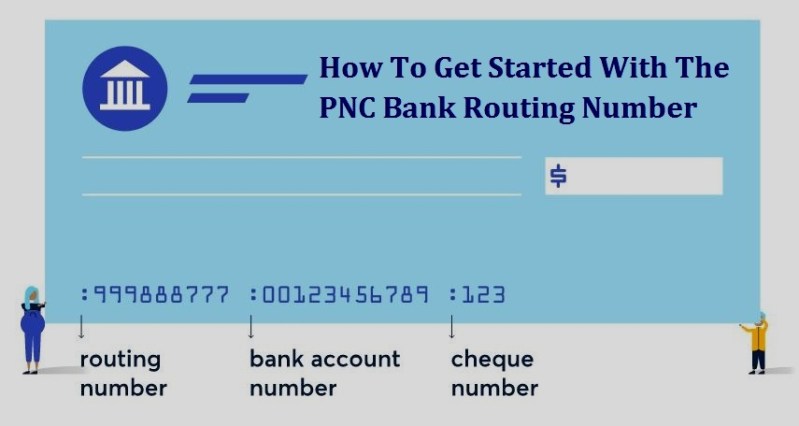
Routing numbers aren’t just random digits; they’re part of a structured system designed to route transactions between banks efficiently. The American Banking Association (ABA) assigns these nine-digit codes to financial institutions, ensuring that checks, wire transfers, and electronic payments reach the correct destination. While most consumers associate them with physical checks, routing numbers are equally vital for online banking, direct deposits, and automated clearinghouse (ACH) transactions. The challenge lies in accessibility—banks often bury this information in obscure locations, assuming users will figure it out through trial and error.The process of retrieving your routing number varies by bank and transaction type. For traditional checks, it’s printed at the bottom in magnetic ink; for digital transactions, it may reside in your online banking portal, mobile app, or even a PDF statement. Some institutions require a phone call or in-person visit to confirm it, adding friction to an otherwise straightforward task. What’s consistent across all methods is the need for accuracy: a single digit error can derail a payment, leading to costly delays or lost funds. Understanding the nuances of how to get routing number—whether for personal use or business operations—is a skill that pays dividends in financial efficiency.
Historical Background and Evolution
The concept of routing numbers dates back to the 1910s, when the U.S. banking system sought a standardized way to process checks between institutions. The original system used a manual routing process, relying on physical couriers to transport funds and checks between banks—a method that was slow and prone to errors. By the 1920s, the ABA introduced the first formal routing numbers, assigning unique identifiers to banks to streamline interbank transactions. These early codes were simple, often consisting of just a few digits, but they laid the foundation for the modern nine-digit system we use today.The real transformation came in the 1970s with the advent of electronic banking. The Federal Reserve’s implementation of the Automated Clearing House (ACH) network made routing numbers indispensable, as they became the backbone of direct deposits, bill payments, and wire transfers. The nine-digit format was standardized in 1974, incorporating geographic location (the first four digits), the bank’s identifier (the next four), and a check digit (the final digit) to prevent errors. This evolution mirrored the digital revolution in banking, turning routing numbers from a niche tool into a universal requirement for nearly every financial transaction.
Core Mechanisms: How It Works
At its core, a routing number serves as a digital address for your bank account. When you initiate a transaction—such as a direct deposit or an ACH transfer—the routing number tells the financial network where to send the money, while your account number specifies whose account it belongs to. This dual-layer system ensures that funds are directed to the correct institution and individual, even across state lines or international borders (though domestic routing numbers are typically U.S.-specific).The process begins when you provide your routing number to a payer or financial service. For example, when setting up direct deposit for a paycheck, your employer enters your routing number to ensure your payroll provider can locate your bank. Behind the scenes, the ACH network uses this number to route the transaction through the appropriate clearinghouse, which then credits your account. The same logic applies to wire transfers, though wires often require additional details like the recipient’s account number and bank’s SWIFT code for international transactions.
Key Benefits and Crucial Impact
Routing numbers are the invisible infrastructure of modern finance, enabling everything from payroll automation to cross-border payments. Without them, direct deposits would stall, wire transfers would fail, and businesses would struggle to reconcile transactions. For individuals, the ability to quickly retrieve your routing number simplifies financial management, allowing for faster access to funds and reduced reliance on cash or paper checks. The ripple effects are profound: businesses save on payroll processing fees, freelancers avoid payment delays, and consumers enjoy the convenience of automated bill payments.The impact extends beyond convenience into security. Routing numbers are tied to specific institutions, making it harder for fraudsters to redirect funds. When used correctly, they also reduce the risk of errors in transactions, which can lead to costly corrections. However, the benefits are only realized when individuals and businesses understand how to get routing number accurately—and act swiftly when discrepancies arise.
"A routing number is the digital handshake between your money and the financial system. Get it wrong, and the system spits back everything—like a misdialed phone number that never connects." — Federal Reserve Financial Services Guide, 2023
Major Advantages
- Instant Direct Deposits: Employers and government agencies use your routing number to deposit paychecks, Social Security benefits, or tax refunds directly into your account, eliminating check-cashing delays.
- Automated Bill Payments: Many utility companies and lenders accept routing numbers for automatic payments, reducing the risk of late fees and manual errors.
- Wire Transfer Efficiency: Domestic wires rely on routing numbers to ensure funds reach the correct bank within hours, whereas incorrect numbers can cause days-long delays.
- Fraud Prevention: Routing numbers are tied to verified bank accounts, making it harder for scammers to launder money or create fake transactions.
- Business Scalability: Companies use routing numbers to manage payroll for multiple employees, vendor payments, and intercompany transfers without manual intervention.
Comparative Analysis
| Method to Retrieve Routing Number | Pros and Cons |
|---|---|
| Physical Checks |
Pros: Visually verifiable, no tech required. Cons: Outdated for digital-only banks; risk of human error in reading. |
| Online Banking Portals |
Pros: Instant access, often searchable by account. Cons: Requires login; some banks hide it behind multiple clicks. |
| Mobile Banking Apps |
Pros: Convenient for on-the-go users; often highlighted in account details. Cons: App glitches or outdated info may cause confusion. |
| Customer Service Call |
Pros: Human verification reduces errors. Cons: Time-consuming; hold times can delay transactions. |

Future Trends and Innovations
The traditional routing number system is facing disruption as fintech and blockchain technologies reshape financial transactions. While routing numbers remain essential for legacy ACH and wire systems, emerging trends like ISO 20022—a global standard for payment messaging—could eventually render them obsolete in cross-border transactions. Banks are also exploring biometric authentication tied to routing numbers, where voice or fingerprint verification could replace manual entry, reducing fraud.For consumers, the future may bring real-time routing number validation within mobile apps, where a simple scan of a check or QR code instantly confirms the correct sequence. Meanwhile, decentralized finance (DeFi) platforms are experimenting with smart contracts that bypass traditional routing entirely, using blockchain addresses instead. While these innovations promise faster, more secure transactions, the routing number’s role in domestic banking will likely persist for decades—evolving rather than disappearing.
Conclusion
Understanding how to get routing number is more than a technical skill; it’s a financial safeguard. Whether you’re a freelancer setting up a new client payment system or a business owner managing payroll, the ability to retrieve and verify this number ensures smooth operations. The good news is that modern banking has made the process simpler than ever, with routing numbers just a few taps or clicks away. The challenge remains in avoiding common pitfalls—like using an outdated number or mistaking it for an account number—and knowing when to escalate issues to customer service.As financial systems grow more interconnected, the routing number’s importance won’t diminish. It remains the bridge between your money and the institutions that move it. By mastering its retrieval and application, you gain not just efficiency, but control over your financial transactions—something no digital wallet or cryptocurrency can fully replace.
Comprehensive FAQs
Q: Can I use the same routing number for all my accounts at one bank?
A: No. Each bank assigns a single routing number to its entire institution, but your account number is unique. For example, Chase Bank’s routing number may be the same for all accounts, but your checking and savings accounts will have different account numbers. Always double-check both when setting up transactions.
Q: What if I enter the wrong routing number for a direct deposit?
A: The funds may be deposited into the wrong account, or the transaction could fail entirely. If this happens, contact your bank immediately—they may be able to recover the funds if the error is caught within 24–48 hours. For payroll or government deposits, notify the payer (e.g., your employer) to correct the routing number before the next deposit.
Q: Do online banks (like Ally or Capital One 360) have routing numbers?
A: Yes, all FDIC-insured online banks have routing numbers, but they may differ from branch-based banks. You can find them in your online account details, mobile app, or by calling customer service. Some online banks also provide a list of their routing numbers by state, as they may operate under multiple ABA codes.
Q: Is there a difference between a routing number and a transit number?
A: Not anymore. The term "transit number" was historically used for routing numbers in some regions, but the ABA standardized the term "routing number" in the 1970s. Today, they refer to the same nine-digit code. Always use "routing number" when communicating with banks or financial services.
Q: How do I find my routing number if I don’t have a check?
A: Most banks display your routing number in their online banking portal under "Account Details" or "Transaction Settings." Mobile apps often show it in the account summary or when adding a new payee. If you’re still stuck, call your bank’s customer service—they’ll verify it after confirming your identity (e.g., via Social Security number or account PIN).
Q: Can I use someone else’s routing number for a transaction?
A: No, using another person’s routing number without authorization is illegal and considered fraud. Transactions require both the correct routing number and the recipient’s account number. If you’re unsure about a recipient’s details, ask them to provide a voided check or confirm the numbers through their bank.
Q: Why does my bank’s routing number change?
A: Routing numbers typically don’t change unless your bank merges with another institution, relocates its operations, or undergoes a rebranding. If you notice a change, check your bank’s website or contact them directly—they’ll provide the new number and explain the reason. Always update your records (e.g., payroll, bill payments) with the new routing number.
Q: Are routing numbers the same for international transactions?
A: No. Domestic routing numbers (ABA numbers) only work within the U.S. For international transfers, you’ll need your bank’s SWIFT/BIC code (e.g., CHASUS33 for JPMorgan Chase) and the recipient’s IBAN (International Bank Account Number). Always confirm these details with your bank before initiating a wire transfer abroad.
Q: How long does it take to correct a routing number error?
A: If the error is caught immediately (e.g., during a wire transfer initiation), the bank may reverse the transaction within hours. For direct deposits or ACH transfers, corrections can take 1–3 business days, depending on the payer’s processing time. Document the error and follow up with both your bank and the party who initiated the transaction.
Q: Can I find my routing number on a mobile deposit app?
A: Some mobile deposit apps (like Zelle or Venmo) may display a routing number when you add a bank account, but this is often for reference only. For official transactions, always use the routing number provided by your primary bank. Third-party apps may not have real-time access to updated routing information.
Q: What’s the fastest way to get a routing number for a new account?
A: The fastest method is usually your bank’s mobile app, where routing numbers are often pre-loaded in the account setup section. If you’re opening an account online, the routing number is typically provided during the onboarding process. For in-person accounts, ask the teller for the routing number before leaving—it’s usually printed on the account confirmation paperwork.
Leave a Comment
Comments are moderated before appearing. The data you submit is processed according to the Privacy Policy of versiliasolutions.oneagency.co.