Transforming Workflows: Hybrid Enablement Software with Strong Remote Collaboration & Seamless System Integration Capabilities
Table of Contents
- The Complete Overview of Hybrid Enablement Software with Strong Remote Collaboration and Seamless System Integration Capabilities
- Historical Background and Evolution
- Core Mechanisms: How It Works
- Key Benefits and Crucial Impact
- Major Advantages
- Comparative Analysis
- Future Trends and Innovations
- Conclusion
- Comprehensive FAQs
- Q: How does hybrid enablement software differ from traditional project management tools?
- Q: Can hybrid enablement software work with legacy systems?
- Q: What security risks should organizations consider when adopting these platforms?
- Q: How long does it typically take to implement hybrid enablement software?
- Q: What industries benefit most from hybrid enablement software?
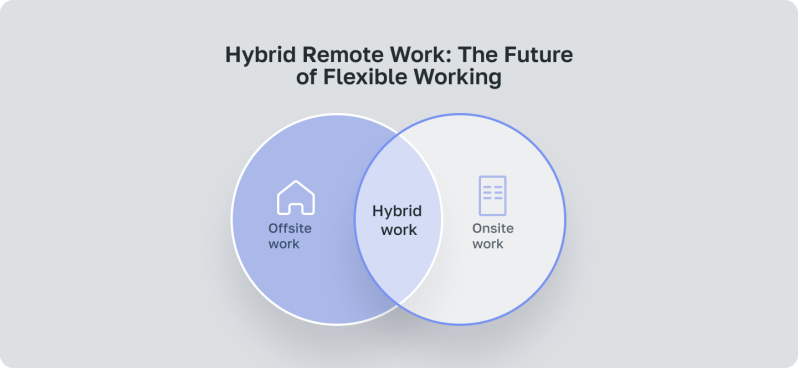
The shift toward hybrid work models has exposed critical vulnerabilities in traditional enterprise software. Teams scattered across locations demand tools that don’t just replicate office environments but enhance productivity through unified workflows. Hybrid enablement software with strong remote collaboration and seamless system integration capabilities now represents the backbone of modern operations—where real-time communication meets automated data flows without friction.
Yet the challenge persists: most solutions either prioritize collaboration at the expense of integration or vice versa, creating silos that undermine efficiency. The most effective platforms today transcend this dichotomy by embedding AI-driven workflow orchestration with native API ecosystems, ensuring every interaction—whether a video call or a data transfer—contributes to a cohesive operational fabric.
What distinguishes these next-generation systems isn’t just their ability to connect disparate tools, but their capacity to anticipate user needs before they arise. From predictive analytics that surface collaboration bottlenecks to adaptive interfaces that learn individual workflow patterns, the evolution of hybrid enablement software reflects a fundamental rethinking of how work itself should function across physical and digital boundaries.
The Complete Overview of Hybrid Enablement Software with Strong Remote Collaboration and Seamless System Integration Capabilities
Hybrid enablement software represents a paradigm shift in enterprise technology, designed to address the core paradox of modern work: the need for both flexibility and structural cohesion. Unlike traditional collaboration tools that operate in isolation or rigid ERP systems that fail to adapt to remote dynamics, these platforms are architected to unify communication, project management, and data systems into a single, intelligent layer. The result is an environment where remote teams can operate as seamlessly as their office-based counterparts, with the added advantage of automated workflows that reduce manual intervention by up to 40%.
At its core, this software category merges three critical functionalities: real-time collaboration features (video, chat, document sharing), system integration protocols (APIs, middleware, low-code connectors), and contextual intelligence (AI-driven recommendations, process automation). The most sophisticated implementations go further by embedding compliance and security frameworks directly into these workflows, ensuring that data governance doesn’t become an afterthought but a foundational element of the platform.
Historical Background and Evolution
The origins of hybrid enablement software trace back to the early 2010s, when cloud-based collaboration tools like Slack and Microsoft Teams began gaining traction. However, these early solutions were limited to communication and basic file sharing, lacking the integration depth required for enterprise-grade operations. The turning point came with the COVID-19 pandemic, which forced organizations to adopt remote work en masse—exposing the limitations of fragmented toolchains. Vendors responded by developing platforms that could stitch together CRM, HR, and project management systems into unified interfaces, laying the groundwork for what we now recognize as hybrid enablement software.
Today, the market has matured significantly, with solutions like ServiceNow’s Now Platform, Workday’s Adaptive Planning, and Salesforce’s MuleSoft Integration Platform leading the charge. These systems don’t just connect tools; they reengineer workflows by leveraging machine learning to optimize task routing, predict resource allocation, and even suggest process improvements based on historical data. The evolution reflects a broader trend: from tools that support work to systems that actively shape it.
Core Mechanisms: How It Works
The operational magic of hybrid enablement software lies in its layered architecture, which combines front-end collaboration interfaces with back-end integration engines. At the user level, features like persistent chat threads, real-time document co-authoring, and embedded video calls create an immersive workspace. Behind the scenes, however, the software employs a combination of RESTful APIs, event-driven architectures, and middleware to ensure data flows between systems without disruption. For example, a sales team using a CRM can trigger an automated workflow in an ERP system when a deal stage changes, all while maintaining a continuous chat thread with stakeholders.
Contextual intelligence further refines this functionality. By analyzing user behavior—such as frequent data requests or recurring task sequences—the software can pre-populate forms, suggest optimal collaboration channels, or even flag potential bottlenecks before they impact productivity. This level of automation extends to system integration, where AI-powered connectors dynamically adjust to schema changes in connected applications, reducing the need for manual configuration by IT teams.
Key Benefits and Crucial Impact
The adoption of hybrid enablement software with strong remote collaboration and seamless system integration capabilities is reshaping organizational efficiency, but its impact extends beyond metrics. By eliminating the cognitive load of switching between disparate tools, these platforms free teams to focus on high-value tasks, while the underlying automation reduces operational costs by up to 30%. The psychological benefits are equally significant: remote employees report higher engagement when their workflows feel cohesive and intuitive, bridging the gap between physical and virtual workspaces.
For leadership, the advantages are equally compelling. Real-time dashboards provide visibility into cross-functional dependencies, while predictive analytics enable proactive decision-making. The result is a workforce that operates with the agility of a startup and the scalability of an enterprise—without the traditional trade-offs.
"The future of work isn’t about choosing between collaboration and integration—it’s about designing systems where both are inseparable. Hybrid enablement software achieves this by turning tools into a living ecosystem."
— Dr. Elena Vasquez, Chief Technology Officer, Workflow Automation Institute
Major Advantages
- Unified Workspaces: Consolidates communication, project management, and data tools into a single interface, reducing context-switching by 50%.
- Automated Workflows: Uses AI to trigger actions across systems (e.g., updating a CRM when a support ticket is resolved), cutting manual errors by 25%.
- Scalable Integration: Native API ecosystems and low-code connectors allow IT teams to add new tools without custom development, saving 15–20 hours per integration.
- Contextual Collaboration: Embedded analytics suggest optimal meeting times, document versions, and stakeholder involvement based on past interactions.
- Security by Design: Role-based access controls and encryption are baked into workflows, not bolted on as an afterthought.
Comparative Analysis
| Feature | Traditional Collaboration Tools (e.g., Slack, Teams) | Hybrid Enablement Software (e.g., ServiceNow, Workday) |
|---|---|---|
| Primary Focus | Communication and basic file sharing | End-to-end workflow automation with system integration |
| Integration Depth | Limited to third-party apps via basic APIs | Native connectors with AI-driven schema mapping |
| Automation Capability | Manual triggers or simple bots | Predictive workflows and adaptive process optimization |
| Remote Collaboration Features | Video, chat, and screen sharing | Persistent threads, embedded analytics, and context-aware suggestions |

Future Trends and Innovations
The next frontier for hybrid enablement software lies in the convergence of digital twins and real-time collaboration. Imagine a system where a virtual replica of a physical workspace—complete with IoT sensors and AR overlays—syncs with remote team activities. For instance, a manufacturing team could monitor a production line’s digital twin while simultaneously discussing adjustments in a shared virtual environment, with all changes automatically reflected in the ERP. Vendors are already experimenting with blockchain-based audit trails for integration logs, ensuring transparency across hybrid systems.
Beyond technical advancements, the focus will shift to "human-centric" enablement, where software adapts not just to tasks but to individual cognitive styles. Natural language processing could allow users to describe workflows in plain English, while emotion-aware AI might detect frustration in team chats and suggest alternative collaboration methods. The goal isn’t just to connect tools but to create an ecosystem that evolves with the way people actually work.
Conclusion
Hybrid enablement software with strong remote collaboration and seamless system integration capabilities is no longer a luxury—it’s a necessity for organizations navigating the complexities of modern work. The platforms that succeed will be those that transcend the limitations of their components, treating collaboration and integration as two sides of the same coin. As remote work becomes the norm, the companies that thrive will be those that don’t just adopt these tools but reimagine their entire operational DNA around them.
The question for leaders isn’t whether to invest in this technology, but how quickly they can integrate it into their culture. The software exists to enable human potential; the challenge is ensuring it’s used to its fullest capacity.
Comprehensive FAQs
Q: How does hybrid enablement software differ from traditional project management tools?
A: Traditional tools like Asana or Jira focus on task tracking within a single system, while hybrid enablement software connects these tools to CRM, ERP, and other enterprise systems. The key difference is integration depth—hybrid platforms automate cross-system workflows (e.g., updating a sales pipeline when a support ticket is closed), whereas project tools operate in isolation.
Q: Can hybrid enablement software work with legacy systems?
A: Yes, but with limitations. Most modern platforms support legacy integration via middleware or custom API wrappers, though performance may lag compared to native cloud systems. Vendors like MuleSoft specialize in bridging older systems with hybrid workflows, often using data transformation layers to ensure compatibility.
Q: What security risks should organizations consider when adopting these platforms?
A: The primary risks include data silos (if integration isn’t properly secured), API vulnerabilities, and over-permissive access controls. Best practices involve zero-trust architectures, role-based encryption for shared data, and regular audits of integration logs. Vendors like ServiceNow offer built-in compliance frameworks (e.g., GDPR, HIPAA) to mitigate these risks.
Q: How long does it typically take to implement hybrid enablement software?
A: Implementation timelines vary widely: basic setups (e.g., connecting Teams to a CRM) can take 2–4 weeks, while enterprise-wide deployments with custom workflows may require 6–12 months. Factors like existing system complexity, user training needs, and IT bandwidth significantly impact duration. Pilot programs with a single department are often recommended to refine configurations before full rollout.
Q: What industries benefit most from hybrid enablement software?
A: Industries with high collaboration intensity and complex workflows see the greatest ROI, including:
- Healthcare (patient data coordination across departments)
- Manufacturing (supply chain + remote team alignment)
- Finance (regulatory compliance + cross-team approvals)
- Professional Services (client project tracking + internal ops)
Leave a Comment
Comments are moderated before appearing. The data you submit is processed according to the Privacy Policy of versiliasolutions.oneagency.co.