How *Idocket Court Records* Transforms Legal Research in 2024
Table of Contents
- The Complete Overview of Idocket Court Records
- Historical Background and Evolution
- Core Mechanisms: How It Works
- Key Benefits and Crucial Impact
- Major Advantages
- Comparative Analysis
- Future Trends and Innovations
- Conclusion
- Comprehensive FAQs
- Q: Is idocket court records free to use?
- Q: Can I find state court records on idocket ?
- Q: How does idocket compare to PACER for federal cases?
- Q: Are there privacy concerns with accessing idocket court records ?
- Q: Can journalists or researchers use idocket for investigative work?
- Q: What’s the best way to learn idocket court records for beginners?
- Q: Does idocket include historical court records?
- Q: How secure is idocket court records ?
- Q: Are there alternatives to idocket for court records?
- Q: Can I download entire case files from idocket ?
The idocket court records system has quietly revolutionized how legal professionals, journalists, and researchers navigate the labyrinth of judicial filings. Unlike traditional paper-based archives or fragmented online repositories, idocket consolidates millions of case documents—from federal appeals to state trials—into a single, searchable interface. Its precision in indexing motions, briefs, and judgments means a lawyer no longer spends hours cross-referencing dockets across jurisdictions. The shift from physical courthouses to this digital ecosystem has redefined due diligence, litigation strategy, and even public accountability.
Yet for all its utility, idocket court records remains underleveraged by those outside the legal elite. Many assume court documents are uniformly accessible or that manual searches are the only option. The reality is stark: without tools like idocket, researchers risk missing critical filings buried in PDF-heavy archives or outdated PACER interfaces. The platform’s ability to flag amendments, track case progression, and even cross-reference related matters across districts turns what was once a tedious process into an analytical advantage.
What separates idocket court records from competitors isn’t just its volume of data—it’s the way it anticipates user needs. Whether you’re parsing a complex patent dispute or tracking a high-profile criminal case, the system’s algorithmic filtering reduces noise, surfacing only the most relevant exhibits, orders, and pleadings. This isn’t just about accessing records; it’s about extracting intelligence from them.
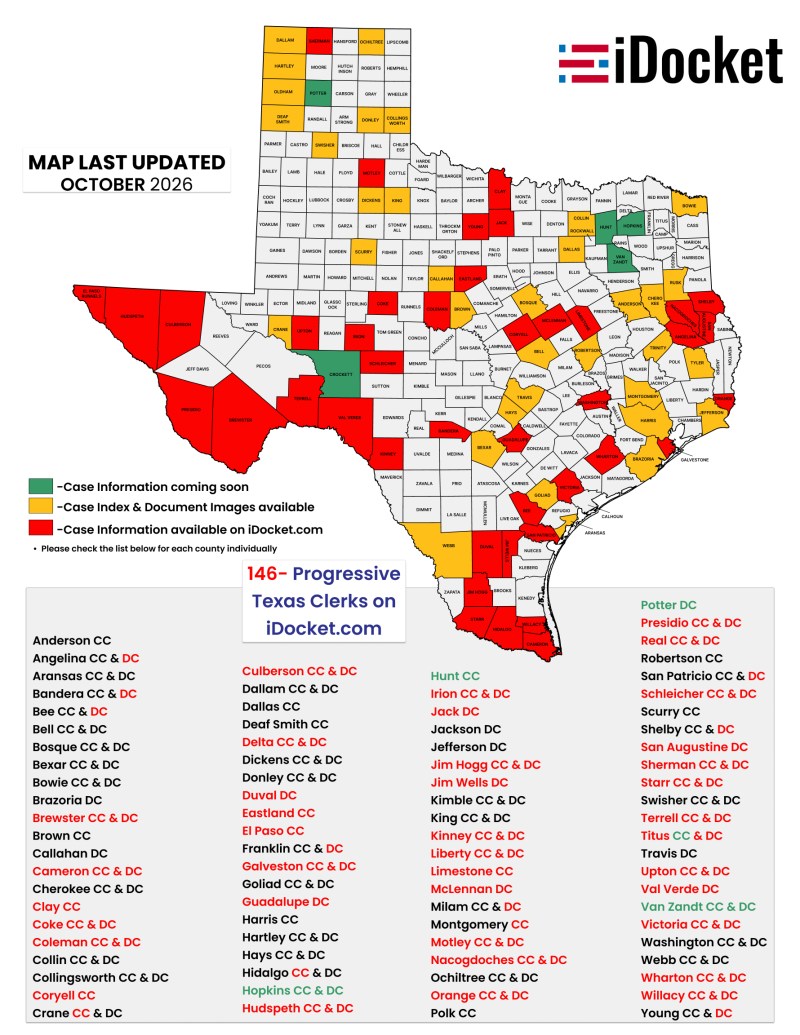
The Complete Overview of Idocket Court Records
Idocket court records is a proprietary database designed to aggregate, standardize, and streamline access to judicial filings across federal and state courts. Developed by LexisNexis, it serves as a bridge between the public’s right to know and the practical constraints of modern legal workflows. Unlike PACER (the U.S. federal court’s official system), which charges per page, idocket offers tiered subscriptions with bulk retrieval capabilities, making it indispensable for firms, academics, and journalists. Its strength lies in its granularity: users can drill down to specific case types (e.g., bankruptcy, IP, or civil rights) or filter by judge, attorney, or keyword.
The platform’s architecture is built for scalability. While PACER remains the gold standard for official filings, idocket supplements it by incorporating supplemental sources—such as state court e-filing systems and docket sheets—that PACER often omits. This hybrid approach ensures researchers aren’t limited to a single jurisdiction’s siloed data. For instance, a corporate litigator tracking a multidistrict lawsuit can pull all relevant orders from the Judicial Panel on Multidistrict Litigation (JPML) alongside state court motions, all within one dashboard.
Historical Background and Evolution
The origins of idocket court records trace back to the early 2000s, when legal tech companies recognized the inefficiencies of manual docket tracking. Before digital archives, attorneys relied on courthouse clerks, microfiche, or interlibrary loans to obtain filings—a process prone to delays and errors. The 2001 launch of PACER modernized federal access but introduced pay-per-view fees that deterred casual users. LexisNexis capitalized on this gap by launching idocket in 2008 as part of its broader legal research suite, initially targeting corporate law firms with high-volume needs.
Over a decade later, idocket evolved from a niche tool to a mainstream resource, driven by two key factors: the explosion of e-filing mandates (thanks to the 2010 E-Government Act) and the rise of predictive analytics in legal tech. Today, the platform integrates with case management software like Clio and integrates AI-driven alerts for new filings, turning passive record-keeping into an active intelligence feed. Its adoption by law schools and pro bono organizations has also democratized access, proving that court transparency isn’t just a privilege of big firms.
Core Mechanisms: How It Works
At its core, idocket court records functions as a metadata-rich repository. Each case is indexed by a unique identifier (e.g., federal case numbers like 1:20-cv-01234) and tagged with metadata such as filing date, document type (complaint, motion, etc.), and judicial officer. Users can initiate searches via Boolean operators (e.g., "bankruptcy AND 'Chapter 11' NOT 'dismissed'") or leverage pre-built filters for specific practice areas. The system then returns a ranked list of results, with options to download full texts, compare versions, or set up RSS feeds for updates.
What sets idocket apart is its "docket sheet" feature—a dynamic timeline that maps the chronological progression of a case, including deadlines, hearings, and rulings. This visual tool eliminates the need to manually piece together scattered filings, which is particularly valuable in complex litigation where motions can span years. For example, tracking a First Amendment lawsuit might reveal a pattern of emergency stays or en banc reviews that wouldn’t be obvious in static PDFs. The platform also offers batch processing for bulk downloads, a lifesaver for researchers analyzing trends across hundreds of cases.
Key Benefits and Crucial Impact
The adoption of idocket court records reflects a broader trend: the legal industry’s pivot from reactive to proactive research. Firms that once spent weeks compiling discovery materials now leverage idocket to identify opposing counsel’s strategies early, or to uncover precedent-setting rulings before they’re published in law reviews. For journalists, the platform has become a goldmine for investigative reporting, allowing them to trace the origins of legal arguments or expose inconsistencies in judicial decisions. Even academics use idocket to build datasets for empirical legal studies, reducing the time spent on data collection from months to days.
Beyond efficiency, idocket enhances transparency. Public defenders and small firms, who often lack PACER subscriptions, can now access critical filings through free trials or library partnerships. This aligns with the Supreme Court’s 2021 directive encouraging courts to "maximize public access" to electronic records. The platform’s role in holding institutions accountable is perhaps its most understated impact—whether it’s tracking police misconduct lawsuits or monitoring corporate compliance with SEC orders.
"Idocket court records doesn’t just give you access to documents; it gives you context. A motion to dismiss might seem routine until you see it’s the 12th filed in a judge’s chamber this month—then it becomes a pattern worth investigating."
— Legal Tech Strategist, Am Law 100 Firm
Major Advantages
- Unified Search Across Jurisdictions: Unlike PACER (federal-only) or state-specific portals, idocket cross-references federal, state, and even international arbitrations (where applicable), enabling holistic case analysis.
- Cost-Effective for High-Volume Users: While PACER charges $0.10/page, idocket offers flat-rate plans for firms, reducing costs for bulk retrievals (e.g., $50/month for 500 documents vs. $50/page on PACER).
- Real-Time Alerts and Notifications: Users can set up triggers for new filings, judge assignments, or keyword matches (e.g., "class action" + "defendant X"), ensuring no critical update is missed.
- Integration with Legal Tech Stacks: APIs allow idocket to sync with practice management tools, e-discovery platforms, and even CRM systems, creating a seamless workflow for litigation teams.
- Historical and Comparative Analysis: The platform’s archive spans decades, enabling users to compare how similar cases were decided under different judges or in different eras—a critical tool for appellate briefing.
Comparative Analysis
| Feature | Idocket Court Records | PACER | State Court E-Filing Portals |
|---|---|---|---|
| Coverage | Federal + state + supplemental sources (e.g., JPML, SEC filings) | Federal courts only | State-specific (varies by jurisdiction) |
| Search Flexibility | Boolean, AI filters, docket sheets, batch downloads | Basic keyword search; no advanced filters | Limited to portal’s native search (often clunky) |
| Cost Structure | Subscription-based (flat rates for high volume) | Pay-per-page ($0.10/page) | Varies (some free, others pay-per-view) |
| Integration | APIs, CRM sync, legal tech compatibility | None (standalone) | Limited to state-specific tools |

Future Trends and Innovations
The next frontier for idocket court records lies in artificial intelligence and predictive modeling. Current iterations already use NLP to categorize document types, but future updates may include "legal sentiment analysis"—scoring the tone of judicial opinions to predict outcomes. Imagine a system that flags cases with a high likelihood of reversal based on historical patterns in a given circuit court. For litigation strategists, this could mean identifying weak arguments before they’re filed. Similarly, blockchain technology may soon verify the authenticity of court filings, addressing long-standing concerns about document tampering.
Another evolution will be deeper collaboration with courts themselves. Some jurisdictions are experimenting with "smart dockets" that auto-populate deadlines and suggest procedural steps, reducing clerical errors. Idocket could become the intermediary layer that standardizes these systems across courts, ensuring consistency in how data is presented. Public access will also expand: as courts adopt open-data mandates (like New York’s 2023 rule requiring digital archives), idocket may become the default portal for non-lawyers seeking transparency.
Conclusion
Idocket court records is more than a database—it’s a redefinition of how legal information is accessed, analyzed, and acted upon. For professionals, it’s a force multiplier; for citizens, it’s a tool to hold power accountable. The platform’s growth mirrors the legal industry’s broader shift toward data-driven decision-making, where intuition is augmented by evidence. Yet its most transformative potential remains untapped: bridging the gap between the courtroom’s opaque processes and the public’s right to understand them.
As courts continue to digitize, the question isn’t whether idocket court records will dominate legal research—it’s how quickly other stakeholders (from journalists to policymakers) will adopt its methods. The future of justice isn’t just about access to records; it’s about making those records usable. Idocket is leading that charge.
Comprehensive FAQs
Q: Is idocket court records free to use?
A: No, idocket operates on a subscription model with tiered pricing. Free trials are available, but full access requires a paid plan (starting at ~$20/month for basic features). Some law libraries and universities offer institutional access, which may be available to the public.
Q: Can I find state court records on idocket?
A: Yes, idocket includes state court filings where partnerships or data-sharing agreements exist. Coverage varies by state—check LexisNexis’s official idocket page for a jurisdiction-specific list. Federal records are the most comprehensive.
Q: How does idocket compare to PACER for federal cases?
A: Idocket is faster for bulk searches, offers advanced filters, and integrates with other legal tools, while PACER remains the authoritative source for official filings. Some users combine both: PACER for final judgments and idocket for discovery materials.
Q: Are there privacy concerns with accessing idocket court records?
A: Idocket complies with court rules on public access (e.g., sealing orders are honored). However, users should avoid sharing sensitive personal data (e.g., Social Security numbers in case notes) even in public dockets. LexisNexis also adheres to data protection laws like GDPR for international users.
Q: Can journalists or researchers use idocket for investigative work?
A: Absolutely. Many investigative reporters rely on idocket to track patterns in cases (e.g., police misconduct lawsuits, corporate fraud). The platform’s alert system is particularly useful for monitoring new filings in ongoing stories. Some outlets even negotiate bulk discounts for research teams.
Q: What’s the best way to learn idocket court records for beginners?
A: LexisNexis offers free webinars and tutorial videos on their site. Start with the "Quick Start Guide" for basic searches, then explore advanced filters like "case law analysis" or "judge statistics." Law schools and bar associations often host workshops—check local CLE providers.
Q: Does idocket include historical court records?
A: Yes, the database spans decades, including archived filings from the 1990s onward. For pre-digital records, users may need to supplement with microfilm or courthouse archives, but idocket covers the majority of modern cases.
Q: How secure is idocket court records?
A: The platform uses enterprise-grade encryption (256-bit SSL) and role-based access controls. LexisNexis also undergoes annual SOC 2 audits for data security. That said, users should never rely on idocket alone for confidential matters—always cross-check with official court portals.
Q: Are there alternatives to idocket for court records?
A: Yes, but with trade-offs. Westlaw Edge and Bloomberg Law offer similar features but at higher costs. Google Scholar and FindLaw provide free access but lack depth. For federal cases, PACER remains essential, while state-specific portals (e.g., NY Courts Online) cover local filings.
Q: Can I download entire case files from idocket?
A: Yes, via batch downloads or individual PDF exports. The platform also supports API pulls for developers building custom legal research tools. Note that some courts restrict bulk downloads to prevent abuse.
Leave a Comment
Comments are moderated before appearing. The data you submit is processed according to the Privacy Policy of versiliasolutions.oneagency.co.