How Brands Turn Strategy into Action: The Science Behind Implementation of the Marketing Plan
Table of Contents
- The Complete Overview of Implementation of the Marketing Plan
- Historical Background and Evolution
- Core Mechanisms: How It Works
- Key Benefits and Crucial Impact
- Major Advantages
- Comparative Analysis
- Future Trends and Innovations
- Conclusion
- Comprehensive FAQs
- Q: How do we ensure our team is aligned on the implementation of the marketing plan?
- Q: What’s the biggest mistake brands make during the implementation of the marketing plan?
- Q: Can small businesses afford a high-level implementation of the marketing plan?
- Q: How do we measure the success of the implementation of the marketing plan?
- Q: What role does technology play in the implementation of the marketing plan?
- Q: How do we handle scope creep during the implementation of the marketing plan?
The gap between a flawless marketing strategy and its execution is where 80% of campaigns collapse. Even the most innovative plans—backed by data, creative brilliance, and executive buy-in—often falter when teams confront the messy reality of deadlines, budget constraints, and human behavior. The implementation of the marketing plan isn’t just about rolling out ads or scheduling posts; it’s a high-stakes orchestration of psychology, technology, and adaptability. Brands that master this phase don’t just launch campaigns—they engineer systems where every tactic serves a measurable outcome.
What separates the brands that dominate from those that disappear into obscurity? It’s not the strategy itself, but the how. The implementation of a marketing plan demands a level of precision usually reserved for surgical procedures: every variable must align, from the timing of influencer collaborations to the A/B testing of subject lines. Yet most teams treat execution as an afterthought, assigning it to junior staff or outsourcing it to agencies with misaligned incentives. The result? Wasted budgets, missed KPIs, and a crisis of confidence in the strategy’s validity.
The truth is, the implementation of the marketing plan is where marketing becomes real. It’s the moment where abstract concepts like "brand awareness" or "customer journey optimization" collide with spreadsheets, CRM systems, and the unpredictable whims of consumer attention. To succeed, marketers must treat execution as a discipline—one that blends rigorous planning with the agility to pivot when data reveals a flaw in the original assumption.

The Complete Overview of Implementation of the Marketing Plan
At its core, the implementation of the marketing plan is the bridge between theory and tangible results. It’s not a single event but a continuous process that begins with the first internal briefing and extends through post-campaign analysis. The most effective implementations treat the plan as a living document, not a static blueprint. This means embedding flexibility into the workflow: allowing for real-time adjustments based on engagement metrics, competitor actions, or even cultural shifts (e.g., a sudden viral trend that aligns with your brand’s values).The stakes are higher than ever. With ad spend projected to exceed $600 billion by 2025, the cost of poor execution isn’t just financial—it’s reputational. A single misaligned email sequence or a delayed social media response can unravel months of positioning work. Yet, despite these risks, many organizations still approach implementation as a checkbox exercise: "Did we launch on time?" misses the point entirely. The question should be: Did we optimize for the right outcomes at every touchpoint?
Historical Background and Evolution
The modern concept of structured marketing implementation emerged in the 1980s, as brands began treating campaigns as multi-phase projects rather than one-off events. Early adopters like Procter & Gamble pioneered "category management," where product launches were treated as strategic initiatives requiring cross-functional alignment. However, the real inflection point came with the rise of digital marketing in the 2000s. Suddenly, implementation wasn’t just about print deadlines and TV slots—it demanded real-time monitoring of click-through rates, bounce metrics, and social media sentiment.Today, the implementation of the marketing plan is a hybrid of art and science. On one hand, it relies on creative intuition (e.g., crafting a narrative that resonates emotionally). On the other, it depends on algorithmic precision (e.g., programmatic ad placements optimized by AI). The evolution hasn’t just changed how plans are executed; it’s redefined who executes them. Traditional marketing departments now collaborate with data scientists, UX designers, and even behavioral psychologists to ensure every element—from the color of a CTA button to the tone of a customer service reply—is optimized for conversion.
The shift toward agile marketing has further complicated the landscape. Where once a campaign might run for six months with minimal tweaks, today’s best practices favor iterative testing. Tools like Google Optimize and HubSpot’s Smart Content allow marketers to adjust messaging in real time based on user behavior. This agility, however, introduces new risks: over-optimization can dilute brand consistency, and rapid pivots may alienate audiences accustomed to a static brand voice.
Core Mechanisms: How It Works
The implementation of the marketing plan operates on three interconnected layers: operational, strategic, and cultural. The operational layer is the most visible—it’s the scheduling of ads, the deployment of email sequences, and the coordination of influencer partnerships. But beneath this surface lies the strategic layer, where decisions are made about resource allocation, risk tolerance, and performance thresholds. For example, a brand might allocate 60% of its budget to digital ads but reserve 20% for crisis response funds, based on historical data showing a 30% chance of negative sentiment spikes.The cultural layer is often overlooked but critical. Implementation fails when teams lack psychological safety to challenge assumptions or when silos prevent the sales team from sharing real-time customer feedback with the creative department. High-performing implementations thrive on what researchers call "execution culture"—a mindset where accountability isn’t punitive but collaborative. For instance, a direct-to-consumer brand might hold weekly "post-mortem" sessions where even junior team members can flag discrepancies between the plan’s assumptions and actual results.
Technology plays an enabling role, but it’s not a substitute for human judgment. Marketing automation platforms like Marketo or ActiveCampaign streamline workflows, but they can’t replace the ability to interpret why a campaign’s conversion rate dropped by 15% overnight. The most effective implementations combine tool-driven efficiency with manual oversight—such as a data analyst cross-referencing automation reports with qualitative insights from customer support logs.
Key Benefits and Crucial Impact
The implementation of the marketing plan isn’t just about avoiding failure; it’s about amplifying success. When executed with precision, it transforms abstract goals (e.g., "increase brand loyalty") into concrete outcomes (e.g., a 25% lift in repeat purchase rates). The impact extends beyond vanity metrics like impressions or likes—it directly influences revenue, customer lifetime value, and even a brand’s ability to attract top talent. Employees at companies with strong execution cultures report 40% higher job satisfaction, according to a 2023 Gartner study, because clarity and accountability reduce ambiguity.The psychological benefits are equally significant. Consumers today demand consistency across every interaction—from a brand’s website to its customer service. A seamless implementation ensures that messaging, visuals, and tone align across channels, reinforcing trust. For example, a luxury skincare brand that maintains identical language in its ads, packaging, and in-store consultations creates an immersive experience that drives premium pricing power.
"Execution is the multiplier that turns strategy from a theory into a competitive advantage. Without it, even the most brilliant plan is just a PowerPoint slide." — Susan Owens, former CMO of Unilever
Major Advantages
- Measurable ROI: Structured implementation allows for granular tracking of spend against outcomes, enabling data-driven adjustments. For instance, a B2B SaaS company might discover that LinkedIn ads convert 3x better than Google Ads for mid-funnel leads, leading to a 20% reallocation of budget.
- Risk Mitigation: Predefined contingency plans (e.g., backup creative assets, alternative distribution channels) prevent last-minute scrambles. During the 2020 supply chain crisis, brands with diversified implementation strategies maintained ad spend while competitors halted campaigns entirely.
- Scalability: Modular execution frameworks (e.g., microsites for product launches, automated nurture sequences) allow brands to replicate successful tactics across regions or product lines without reinventing the wheel.
- Competitive Differentiation: While competitors focus on creative ideas, execution excellence—such as faster iteration cycles or superior customer onboarding—creates defensible moats. Amazon’s obsession with "Day 1" execution (as coined by Jeff Bezos) is a case study in how operational rigor fuels market dominance.
- Stakeholder Alignment: Clear implementation roadmaps ensure that legal, finance, and creative teams are synchronized. Misalignment here can derail even the most promising campaigns—e.g., a regulatory hold on a pharma ad campaign due to unapproved claims.
Comparative Analysis
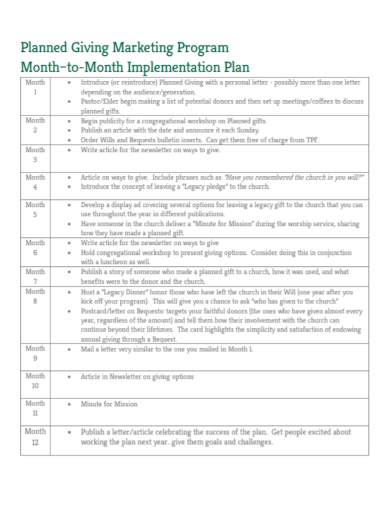
| Traditional Implementation | Agile/Iterative Implementation |
|---|---|
|
|
Future Trends and Innovations
The next decade of marketing implementation will be shaped by two opposing forces: hyper-personalization and regulatory scrutiny. On one hand, advancements in AI—such as predictive lead scoring and dynamic content generation—will enable implementations to tailor every touchpoint to an individual’s behavior. Brands like Netflix already use real-time data to adjust thumbnails and recommendations, but future applications may extend to personalized ad creatives (e.g., a shoe brand generating unique product shots based on a user’s past purchases).On the other hand, privacy laws (e.g., GDPR, CCPA) and consumer skepticism toward data collection will force marketers to adopt "privacy-by-design" implementations. This means relying less on third-party cookies and more on first-party data strategies, such as loyalty programs that incentivize customer opt-ins. The implementation of the marketing plan will increasingly involve legal and compliance teams in the initial strategy phase, not as an afterthought.
Another emerging trend is the "implementation ecosystem," where brands integrate tools like CRM systems, marketing automation, and even IoT devices (e.g., smart packaging that triggers in-store promotions). For example, a fast-food chain might use beacon technology to detect when a customer enters a store and automatically send a push notification with a limited-time offer—all while tracking foot traffic in real time. The challenge will be balancing this technological sophistication with the human element: ensuring that automation doesn’t erode the emotional connection brands rely on.
Conclusion
The implementation of the marketing plan is the unsung hero of brand success. It’s where vision meets execution, where data collides with creativity, and where small details—like a 0.5-second delay in page load speed—can make or break a campaign. The brands that thrive in the coming years won’t be the ones with the flashiest ideas, but those that treat implementation as a science: rigorous, adaptable, and relentlessly focused on outcomes.The key takeaway? Implementation isn’t a phase—it’s the entire process. From the first stakeholder alignment meeting to the final post-campaign review, every decision should be evaluated through the lens of execution. The brands that master this will dominate not because they spent more, but because they did it better.
Comprehensive FAQs
Q: How do we ensure our team is aligned on the implementation of the marketing plan?
A: Start with a "single source of truth" document (e.g., a shared Notion workspace or Asana board) that outlines roles, deadlines, and success metrics. Hold a "pre-mortem" session where teams brainstorm potential failure points before launch. Use tools like Slack or Microsoft Teams to create dedicated channels for real-time updates, and assign an "execution champion" from each department to bridge communication gaps.
Q: What’s the biggest mistake brands make during the implementation of the marketing plan?
A: Treating implementation as a linear process rather than an iterative one. Many brands launch campaigns with rigid timelines and minimal flexibility for adjustments. The reality is that consumer behavior, algorithm updates, and competitive actions can derail even the best-laid plans. Successful implementations build in "buffer periods" for testing and pivoting, such as dedicating 10–15% of the budget to experimental tactics.
Q: Can small businesses afford a high-level implementation of the marketing plan?
A: Absolutely, but with a focus on prioritization and leverage. Small businesses should start by identifying their top 2–3 KPIs (e.g., lead generation, social media growth) and build minimal viable implementations around those. Tools like HubSpot’s free CRM or Mailchimp’s automation features allow for professional-grade execution without enterprise budgets. Outsourcing non-core tasks (e.g., graphic design, ad management) to freelancers can also stretch resources further.
Q: How do we measure the success of the implementation of the marketing plan?
A: Success metrics should align with the campaign’s primary goal. For awareness-driven efforts, track impressions, share of voice, and sentiment analysis. For conversion-focused plans, monitor CTR, cost per acquisition (CPA), and customer lifetime value (CLV). Use a balanced scorecard approach: include both leading indicators (e.g., engagement rates) and lagging indicators (e.g., revenue impact). Tools like Google Data Studio or Tableau can consolidate these metrics into dashboards for real-time visibility.
Q: What role does technology play in the implementation of the marketing plan?
A: Technology enables three critical functions: automation (e.g., scheduled posts, lead nurturing), personalization (e.g., dynamic content, AI-driven recommendations), and analytics (e.g., attribution modeling, predictive analytics). However, the most effective implementations use technology as an enabler, not a replacement for human judgment. For example, while AI can suggest ad creatives, a marketer’s cultural insight ensures the messaging resonates with the target audience. The goal is to automate repetitive tasks while reserving human oversight for strategic decisions.
Q: How do we handle scope creep during the implementation of the marketing plan?
A: Scope creep—where additional requests or changes derail the original plan—is inevitable. Mitigate it by establishing a change control process: any modifications must be approved by a cross-functional committee and documented in the project management tool. Communicate early and often about the trade-offs (e.g., "Adding this feature will delay the launch by two weeks"). Use agile frameworks like Scrum to break the implementation into sprints, allowing for incremental adjustments without losing sight of the core objectives.
Leave a Comment
Comments are moderated before appearing. The data you submit is processed according to the Privacy Policy of versiliasolutions.oneagency.co.