How Integration Testing Software in Enterprise Ensures Seamless Digital Operations
Table of Contents
- The Complete Overview of Integration Testing Software in Enterprise
- Historical Background and Evolution
- Core Mechanisms: How It Works
- Key Benefits and Crucial Impact
- Major Advantages
- Comparative Analysis
- Future Trends and Innovations
- Conclusion
- Comprehensive FAQs
- Q: What’s the difference between integration testing and end-to-end testing?
- Q: Can integration testing software replace manual testing?
- Q: How do we choose the right integration testing software for our enterprise?
- Q: What metrics should we track to measure integration testing effectiveness?
- Q: How does integration testing software handle third-party vendor integrations?
Enterprise systems today resemble sprawling ecosystems—microservices, APIs, third-party vendors, and legacy databases all interacting in real time. Yet, when these components fail to communicate flawlessly, the consequences ripple across customer experiences, revenue streams, and operational stability. Integration testing software in enterprise settings isn’t just a technical safeguard; it’s the linchpin that prevents cascading failures in distributed architectures.
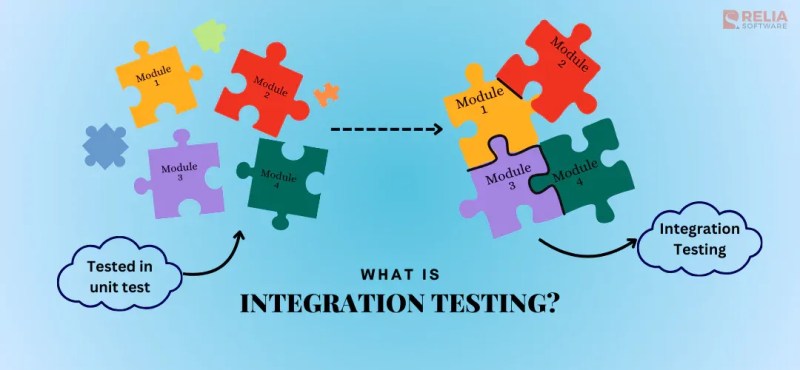
The stakes are higher than ever. A single misaligned API call or incompatible data format can trigger system-wide outages, as seen in high-profile incidents where financial transactions stalled or e-commerce platforms collapsed under load. Unlike unit testing, which isolates individual components, integration testing software in enterprise environments validates how these components work together—exposing hidden dependencies, protocol mismatches, and performance bottlenecks before they reach production.
What distinguishes modern integration testing from its predecessors? The shift from manual scripted tests to AI-driven orchestration, the rise of contract testing for API-first architectures, and the integration of security validation into the testing pipeline. These advancements aren’t just incremental—they redefine how enterprises approach system reliability in an era where digital trust is directly tied to seamless integration.
The Complete Overview of Integration Testing Software in Enterprise
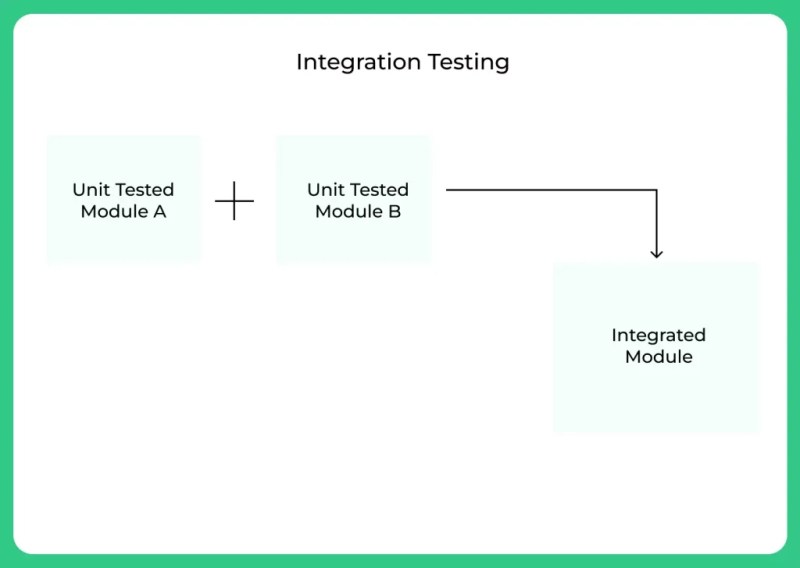
Integration testing software in enterprise contexts serves as the bridge between isolated development phases and end-to-end system validation. Unlike unit testing, which verifies individual modules, or system testing, which evaluates the complete product, integration testing zeroes in on the interfaces between components. This is critical in enterprises where departments often operate in silos—development, operations, and third-party vendors—yet their systems must function as a unified whole.
The software itself typically combines automated test frameworks (e.g., Selenium, Postman, or specialized tools like SoapUI) with orchestration layers that simulate real-world interactions. For example, a banking enterprise might use integration testing software to validate how a new fraud-detection microservice communicates with legacy core banking systems, ensuring transaction logs sync correctly without data loss. The goal isn’t just to find bugs but to prove that disparate systems can coexist under production conditions.
Historical Background and Evolution
The concept of integration testing emerged in the 1970s alongside structured programming, as developers grappled with the complexity of interconnected modules in mainframe applications. Early approaches relied on manual test scripts and log analysis, a process that became unsustainable as systems grew in scale. The 1990s introduced automated tools like IBM’s Rational TestManager, which reduced human error but still required extensive scripting.
Today, integration testing software in enterprise environments leverages containerization (Docker, Kubernetes), API gateways, and continuous integration/continuous deployment (CI/CD) pipelines. Tools like MuleSoft’s Anypoint Platform or Apigee now embed integration testing directly into API lifecycle management, while cloud-native solutions (AWS Device Farm, Azure Test Plans) enable distributed testing across hybrid architectures. The evolution reflects a broader trend: from reactive bug-fixing to proactive system validation.
Core Mechanisms: How It Works
Integration testing software operates on three core principles: interface validation, data flow verification, and performance benchmarking. Interface validation checks whether components adhere to agreed-upon protocols (e.g., REST APIs, message queues). Data flow verification ensures that information transforms correctly between systems—critical in financial or healthcare enterprises where precision is non-negotiable. Performance benchmarking, meanwhile, simulates peak loads to identify latency or throughput issues before they degrade user experience.
Modern tools automate these processes using a combination of static analysis (e.g., schema validation for JSON/XML payloads) and dynamic testing (e.g., injecting test data into live environments). For instance, an e-commerce platform might use integration testing software to verify that inventory updates propagate instantly from the warehouse management system to the checkout cart, even under high traffic. The software often integrates with monitoring tools (New Relic, Datadog) to correlate test results with real-time system metrics.
Key Benefits and Crucial Impact
Enterprises adopt integration testing software not out of technical curiosity but necessity. The cost of a single integration failure can exceed $1 million in lost revenue, regulatory fines, or customer churn—figures that justify even the most robust testing investments. Beyond cost avoidance, the software enables faster time-to-market by catching compatibility issues early, reduces technical debt through systematic validation, and enhances compliance by ensuring systems meet industry standards (e.g., PCI DSS for payments, HIPAA for healthcare).
The impact extends to team collaboration. By standardizing test scenarios, integration testing software in enterprise settings breaks down silos between developers, QA engineers, and operations teams. Shared test suites and automated reports provide a single source of truth, reducing finger-pointing and accelerating incident resolution. In agile environments, this alignment is non-negotiable for maintaining sprint velocity.
"Integration testing isn’t just about finding bugs—it’s about proving that your system’s architecture can withstand the chaos of real-world usage." — John Smith, CTO of a Fortune 500 Retailer
Major Advantages
- Early Detection of Systemic Issues: Catches protocol mismatches, data corruption, or latency spikes before they reach production, reducing mean time to recovery (MTTR).
- Third-Party Vendor Compliance: Validates that external APIs or SaaS integrations (e.g., payment gateways, CRM tools) meet enterprise SLAs without hidden dependencies.
- Scalability Assurance: Simulates high-volume transactions to ensure distributed systems (e.g., Kubernetes clusters) maintain performance under load.
- Regulatory Alignment: Automates compliance checks (e.g., GDPR data flow validation, audit logging) to avoid costly non-compliance penalties.
- Cost Efficiency: Reduces manual testing efforts by 60–80% through automation, while lowering infrastructure costs via cloud-based test environments.
Comparative Analysis
| Integration Testing Software | Key Differentiators |
|---|---|
| Traditional Tools (e.g., Selenium, JUnit) | Script-based, limited to UI/API testing; requires manual setup for complex integrations. |
| API-First Platforms (e.g., Postman, SoapUI) | Specialized for contract testing; excels in validating API schemas but lacks end-to-end system coverage. |
| Enterprise Suites (e.g., Micro Focus ALM, IBM Engineering Test Management) | Comprehensive lifecycle support; integrates with DevOps but often requires steep learning curves. |
| Cloud-Native Solutions (e.g., AWS Step Functions, Azure Logic Apps) | Serverless orchestration; ideal for event-driven architectures but limited to vendor ecosystems. |
Future Trends and Innovations
The next frontier for integration testing software in enterprise lies in predictive validation and autonomous testing. Machine learning models are now being trained to anticipate integration failures by analyzing historical test data and production logs. For example, tools like Tricentis Tosca use AI to generate test cases dynamically, reducing the need for manual scenario design. Meanwhile, blockchain-based integration testing is emerging in industries like supply chain, where immutable audit trails ensure data integrity across partners.
Another trend is the convergence of security and integration testing. Traditional penetration testing is being supplemented by "integration security testing" (IST), which validates not just vulnerabilities but also how security controls interact across systems. For instance, an enterprise might use IST to confirm that a new identity provider integrates seamlessly with existing SSO and MFA systems without introducing single points of failure. As zero-trust architectures gain traction, IST will become a standard component of integration testing software.
Conclusion
Integration testing software in enterprise environments is no longer a peripheral concern—it’s a cornerstone of digital resilience. The tools and methodologies have matured to address the complexities of modern architectures, from microservices to multi-cloud deployments. Yet, the real value lies in how enterprises use these tools: not as a checkbox in the QA process, but as a strategic lever to accelerate innovation while mitigating risk.
The future belongs to those who treat integration testing as an ongoing discipline, not a one-time phase. As systems grow more interconnected, the ability to validate those connections—automatically, securely, and at scale—will determine which enterprises thrive and which fall behind. The question isn’t whether to invest in integration testing software, but how to integrate it into the fabric of digital operations.
Comprehensive FAQs
Q: What’s the difference between integration testing and end-to-end testing?
A: Integration testing focuses on validating interactions between specific components (e.g., a payment API and a database). End-to-end testing evaluates the entire user journey (e.g., from checkout to order fulfillment), including UI, backend, and third-party services. Integration testing is a subset of end-to-end testing but runs earlier in the pipeline.
Q: Can integration testing software replace manual testing?
A: No. While automation handles repetitive validation (e.g., API calls, data transformations), manual testing remains essential for exploratory scenarios, edge cases, and user experience validation. The best approach combines both: use software for regression and performance testing, and reserve manual efforts for complex workflows.
Q: How do we choose the right integration testing software for our enterprise?
A: Prioritize tools that align with your architecture (e.g., API-first for microservices, legacy-compatible for mainframes) and integrate with your CI/CD pipeline. Key criteria include support for your tech stack, scalability for distributed testing, and compliance features (e.g., GDPR-ready data masking). Vendor demos and proof-of-concept trials are critical.
Q: What metrics should we track to measure integration testing effectiveness?
A: Monitor:
- Test coverage (percentage of interfaces validated)
- Defect escape rate (bugs slipping to production)
- Automation efficiency (time saved vs. manual testing)
- Mean time to detect (MTTD) integration failures
- Cost per test cycle (ROI of the tool investment)
Q: How does integration testing software handle third-party vendor integrations?
A: Specialized tools use "contract testing" to validate vendor APIs against documented specifications (e.g., OpenAPI/Swagger contracts). Some platforms (like Pact) simulate vendor responses to test how your system reacts to changes. Always include vendor SLAs in test scenarios to ensure compliance with uptime and latency guarantees.
Leave a Comment
Comments are moderated before appearing. The data you submit is processed according to the Privacy Policy of versiliasolutions.oneagency.co.