Is Student Loan Unsecured Debt? The Hidden Truth Behind Your Borrowed Future
Table of Contents
- The Complete Overview of Student Loan Unsecured Debt
- Historical Background and Evolution
- Core Mechanisms: How It Works
- Key Benefits and Crucial Impact
- Major Advantages
- Comparative Analysis
- Future Trends and Innovations
- Conclusion
- Comprehensive FAQs
- Q: Can student loans be discharged in bankruptcy?
- Q: How does wage garnishment work for unsecured student loans?
- Q: Do private student loans have the same protections as federal loans?
- Q: Can student loan debt ever become secured?
- Q: What happens if I never repay my student loans?
- Q: Are there alternatives to traditional repayment for unsecured student debt?
- Q: How does unsecured student debt affect my credit score?
- Q: Can student loans be inherited or passed to family members?
- Q: What’s the difference between forbearance and deferment for unsecured student loans?
- Q: Are there states where student loan collection laws are more borrower-friendly?
Student loans are the defining financial burden of a generation, yet their classification as unsecured debt remains a topic shrouded in ambiguity—even among borrowers with six-figure balances. The distinction isn’t just academic; it dictates whether lenders can seize assets, how aggressively they pursue repayment, and what legal recourse exists when borrowers default. While federal loans carry unique protections, private student loans operate under the same unsecured framework as credit cards or medical debt, leaving borrowers vulnerable to collection tactics that secured debt holders cannot deploy. The confusion stems from a fundamental misconception: most people assume "unsecured" means "risk-free," when in reality, it means lenders have no collateral to reclaim—but far more leverage to exploit.
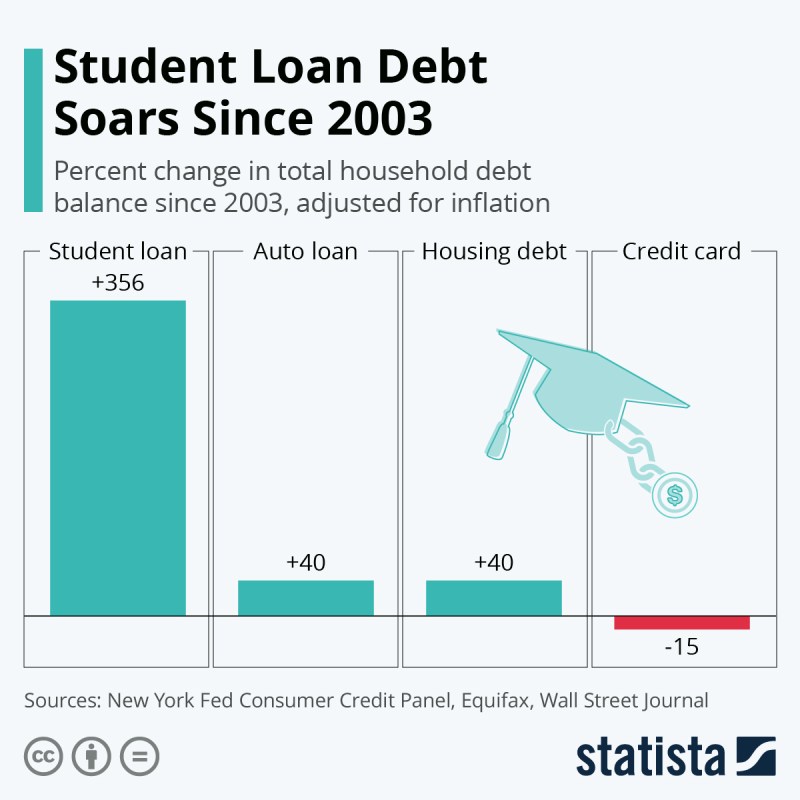
The rise of student debt as America’s most pervasive unsecured liability didn’t happen by accident. Between 2000 and 2023, outstanding student loans ballooned from $260 billion to over $1.7 trillion, surpassing credit card and auto loan debt combined. This explosion coincided with a deliberate shift in lending practices: federal programs expanded access while private lenders filled the gap with high-interest, unsecured products marketed to families who believed education was the one investment that couldn’t fail. Yet when repayment becomes impossible, the unsecured nature of these loans transforms them into financial time bombs—ones that can derail credit scores for decades, trigger wage garnishment without court approval (in some states), and even survive bankruptcy filings under current law.
What separates student loan unsecured debt from other unsecured obligations is the intersection of public policy and private finance. Federal loans are technically unsecured but benefit from congressional protections, while private loans adhere strictly to commercial debt collection laws—meaning borrowers face a fragmented legal landscape. The result? A system where the borrower’s ability to repay is secondary to the lender’s ability to extract it, regardless of whether the loan is backed by collateral or not.
The Complete Overview of Student Loan Unsecured Debt
The classification of student loans as unsecured debt is a legal and financial distinction with profound consequences, yet it’s rarely explained in terms borrowers can act on. At its core, unsecured debt is any loan issued without requiring the borrower to pledge an asset (like a home or car) as collateral. If repayment fails, lenders cannot automatically seize property—but they retain the right to sue, report delinquencies to credit bureaus, and, in extreme cases, garnish wages or intercept tax refunds. This may sound like a safety net, but the reality is far more precarious: unsecured lenders prioritize aggressive collection over asset recovery, making student loans one of the most difficult debts to discharge even in bankruptcy.The confusion deepens when comparing federal and private student loans. Federal loans, issued by the U.S. Department of Education, are unsecured but benefit from statutory protections like income-driven repayment plans and limited garnishment thresholds. Private loans, however, are governed by state and federal debt collection laws—meaning borrowers in default face the same predatory tactics as credit card holders, including lawsuits, frozen bank accounts, and relentless calls. The unsecured status of both types creates a false sense of security: no collateral means no immediate foreclosure risk, but it also means no legal recourse if lenders violate repayment terms or misapply payments.
Historical Background and Evolution
The modern student loan system emerged in the 1960s as a public-private hybrid designed to democratize higher education. The Higher Education Act of 1965 introduced federally guaranteed loans, but these were initially secured by the borrower’s future income—an early form of income-sharing agreements. By the 1980s, as tuition costs spiraled, Congress shifted to unsecured federal loans, arguing that education itself was the collateral. This move aligned with broader economic trends: the decline of employer-sponsored education benefits and the rise of neoliberal policies that treated student debt as an individual responsibility rather than a societal investment.Private student lending followed a different trajectory, accelerated by the 2008 financial crisis. When federal loan limits tightened, banks and fintech companies filled the void with unsecured private loans—often at variable interest rates exceeding 10%. These loans lacked the same consumer protections as federal programs, exposing borrowers to predatory terms like mandatory arbitration clauses and mandatory auto-debit penalties. The result? A two-tiered system where federal borrowers enjoy limited safeguards, while private borrowers operate under the same unsecured debt rules as payday loans—just with higher stakes and longer repayment periods.
Core Mechanisms: How It Works
The unsecured nature of student loans manifests in three critical areas: collection authority, credit impact, and dischargeability. First, lenders lack the right to repossess assets upon default, but they gain unrestricted access to legal remedies. Federal loans can trigger wage garnishment without court approval in some states, while private loans often escalate to lawsuits within months of delinquency. Second, missed payments are reported to credit bureaus immediately, with delinquencies staying on reports for seven years—far longer than most other unsecured debts. Third, student loans are among the hardest debts to discharge in bankruptcy, thanks to the 2005 Bankruptcy Abuse Prevention and Consumer Protection Act, which raised the bar for proving "undue hardship."What makes student loan unsecured debt uniquely dangerous is the interplay between lender incentives and borrower behavior. Since there’s no collateral to seize, lenders focus on maximizing interest and fees—often through strategies like capitalized interest or extended deferment periods that trap borrowers in cycles of partial repayment. Private lenders, in particular, leverage the unsecured status to offer "hardship forbearance" that pauses payments while accruing interest, effectively turning forbearance into a debt trap. The system is designed to ensure repayment at almost any cost, even if it means borrowers spend decades paying off loans that exceed their original principal.
Key Benefits and Crucial Impact
The unsecured classification of student loans isn’t inherently good or bad—it’s a tool with dual-edged consequences. On one hand, it allows borrowers to secure education without risking their home or car, a critical advantage in an economy where homeownership is increasingly tied to wealth accumulation. On the other, it removes the safety net of collateral, leaving borrowers exposed to systemic failures like job market shifts or policy changes (e.g., the abrupt end of COVID-19 forbearance in 2022). The impact extends beyond individuals: unsecured student debt distorts housing markets, delays family formation, and fuels political debates over wealth inequality.The psychological toll is equally significant. Borrowers with student loan unsecured debt often experience "debt shame," a phenomenon where the lack of collateral makes the debt feel more personal and inescapable. Unlike a car loan, where default means losing the vehicle, student loan default means losing control over one’s financial future with no tangible asset to reclaim. This intangible burden contributes to the rising rates of anxiety and depression among millennials and Gen Z—groups where student debt is the norm.
"Student loans are the ultimate unsecured debt because they’re secured by your future. The lender doesn’t care if you can repay—they’re betting on your ability to keep paying, even if it means selling your first home or retiring later." — Darren Hoffman, Debt Attorney & Author of The Financial Survival Guide
Major Advantages
Despite the risks, the unsecured status of student loans offers distinct advantages:- No Asset Risk: Borrowers don’t lose property (like a house or car) if they default, unlike secured loans.
- Flexible Repayment Options: Federal loans offer income-driven plans, deferment, and forbearance—tools unavailable for most unsecured debts.
- Lower Initial Barriers: Unsecured loans require minimal credit checks or collateral, making education accessible to low-income students.
- Tax Benefits: Interest on federal loans may be tax-deductible (under certain income thresholds), a perk rare in unsecured lending.
- Public Policy Safeguards: Federal loans include borrower protections like loan forgiveness programs (e.g., PSLF) and limited garnishment powers.
Comparative Analysis
The table below contrasts student loan unsecured debt with other major debt types, highlighting how its unique characteristics shape repayment dynamics.| Feature | Student Loan (Unsecured) | Credit Card (Unsecured) | Auto Loan (Secured) | Mortgage (Secured) |
|---|---|---|---|---|
| Collateral Requirement | None | None | Vehicle | Home |
| Default Consequences | Wage garnishment, tax refund offset, lawsuit | Collections, credit damage, lawsuit | Repossession, credit damage | Foreclosure, credit damage |
| Bankruptcy Discharge | Extremely difficult (undue hardship test) | Possible (Chapter 7/13) | Possible (Chapter 7/13) | Possible (Chapter 7/13) |
| Repayment Flexibility | Income-driven plans, forbearance, forgiveness | Minimum payments, balance transfers | Refinancing, voluntary surrender | Loan modification, short sale |

Future Trends and Innovations
The student debt crisis is evolving alongside shifts in higher education and financial technology. One emerging trend is the securitization of student loans, where lenders bundle loans into tradable assets—similar to mortgage-backed securities. This practice, already common with private loans, could expand to federal loans if Congress privatizes the system further. The result? More aggressive collection tactics by hedge funds and private equity firms, as investors demand higher returns on these "assets."Another innovation is income-share agreements (ISAs), a hybrid model where borrowers repay a percentage of future earnings instead of fixed monthly payments. While ISAs avoid traditional unsecured debt pitfalls, they introduce new risks: borrowers may end up paying more than the original loan amount if their careers underperform. Meanwhile, fintech companies are experimenting with AI-driven repayment advisors, offering personalized strategies—but these tools often prioritize lender interests over borrower relief.
The biggest wildcard remains political intervention. Proposals to cancel student debt, reform bankruptcy laws, or cap interest rates could redefine the unsecured debt landscape overnight. However, without systemic change, the current model will persist: unsecured loans with secured-like consequences, where borrowers bear the risk and lenders retain the leverage.
Conclusion
The question "is student loan unsecured debt?" isn’t just about classification—it’s about power. Unsecured loans lack collateral, but they don’t lack consequences. The system is designed to ensure repayment through legal pressure, credit damage, and psychological coercion, even when borrowers are financially crushed by economic forces beyond their control. Federal loans offer a veneer of protection, but private loans operate like high-stakes gambling, where the house always wins.For borrowers, the key is understanding the rules of the game. Unsecured student debt can be managed—through strategic repayment plans, refinancing (for private loans), or advocacy for policy changes. But the first step is recognizing that student loan unsecured debt isn’t a neutral financial tool; it’s a structured inequality, where the lack of collateral masks the very real threat of a lifetime of debt servitude.
Comprehensive FAQs
Q: Can student loans be discharged in bankruptcy?
A: Extremely rarely. Since 2005, federal law requires borrowers to prove "undue hardship" in court—a standard so high that fewer than 1% of cases succeed. Private student loans may be treated like other unsecured debts in bankruptcy, but lenders often fight discharge aggressively.
Q: How does wage garnishment work for unsecured student loans?
A: Federal loans can garnish wages without court approval if the borrower defaults on an income-driven repayment plan. Private loans typically require a court judgment first. Garnishment limits vary by state but can seize up to 15% of disposable income in some cases.
Q: Do private student loans have the same protections as federal loans?
A: No. Federal loans offer income-driven repayment, forbearance, and forgiveness programs. Private loans are governed by state debt collection laws, meaning borrowers lose access to federal safeguards and face harsher penalties for default.
Q: Can student loan debt ever become secured?
A: Indirectly, yes. Some borrowers use home equity loans or refinancing to consolidate student debt into a secured mortgage or home equity line of credit (HELOC). However, this risks losing the home if payments fail—a dangerous gamble given student loans’ long repayment terms.
Q: What happens if I never repay my student loans?
A: The debt persists indefinitely. Federal loans can remain in default for decades, with interest accruing and collection costs added. Private loans may eventually be sold to debt collectors, who can sue, garnish wages, or seize assets (if a court judgment is obtained). The statute of limitations on suing varies by state but typically ranges from 3–6 years.
Q: Are there alternatives to traditional repayment for unsecured student debt?
A: Yes, but options vary. Federal borrowers can explore Public Service Loan Forgiveness (PSLF), teacher loan forgiveness, or state-based repayment assistance programs. Private borrowers may qualify for refinancing (if credit scores improve) or settlement negotiations—though lenders rarely accept less than the full balance. Income-share agreements (ISAs) are another alternative, though they come with their own risks.
Q: How does unsecured student debt affect my credit score?
A: Missed payments are reported immediately, with delinquencies staying on your credit report for seven years. Defaults can drop your score by 100+ points, and the damage persists even after repayment. However, bringing loans current and maintaining on-time payments can gradually rebuild credit—though the long repayment timeline makes this challenging.
Q: Can student loans be inherited or passed to family members?
A: No, student loans cannot be transferred to heirs. Upon death, federal loans are discharged, while private lenders may seek repayment from the borrower’s estate. However, cosigners (often parents) remain fully liable, and their credit will be impacted by the default.
Q: What’s the difference between forbearance and deferment for unsecured student loans?
A: Both pause payments, but interest behaves differently. Deferment (common for federal loans) temporarily halts payments, but interest continues to accrue on unsubsidized loans. Forbearance also pauses payments but interest accrues on all loans. Private lenders may offer forbearance with penalties, while federal forbearance is more borrower-friendly—though neither option reduces the total debt.
Q: Are there states where student loan collection laws are more borrower-friendly?
A: Yes. States like California and New York have stricter limits on wage garnishment, while others (e.g., Texas) allow aggressive collection tactics. Some states also cap interest rates on private loans. Borrowers should research state-specific debt collection laws, especially if facing default.
Leave a Comment
Comments are moderated before appearing. The data you submit is processed according to the Privacy Policy of versiliasolutions.oneagency.co.