How Java Static Code Analysis Transforms Code Quality and Security
Table of Contents
- The Complete Overview of Java Static Code Analysis
- Historical Background and Evolution
- Core Mechanisms: How It Works
- Key Benefits and Crucial Impact
- Major Advantages
- Comparative Analysis
- Future Trends and Innovations
- Conclusion
- Comprehensive FAQs
- Q: Can Java static code analysis detect all types of bugs?
- Q: How do I choose between SonarQube and Checkstyle for my project?
- Q: Will static analysis slow down my CI/CD pipeline?
- Q: Can static analysis tools false-positive too often?
- Q: How does static analysis handle third-party libraries?
- Q: Is static analysis only for Java, or can it be used with other languages?
Java static code analysis isn’t just another developer tool—it’s a critical layer of defense in modern software engineering. While dynamic analysis catches runtime issues, static analysis intercepts problems at compile time, exposing security flaws, architectural violations, and inefficiencies before they reach production. The difference between a system that crashes under load and one that scales seamlessly often hinges on whether developers leverage these tools early in the SDLC.
Yet despite its proven value, many teams underutilize Java static code analysis, treating it as an afterthought rather than a foundational practice. The reality is stark: tools like SonarQube, Checkstyle, and PMD don’t just flag bugs—they enforce coding standards, reduce technical debt, and align teams with industry benchmarks. Ignoring them means accepting higher costs in debugging, security patches, and system downtime.
What separates high-performing engineering teams from those struggling with legacy code? The answer lies in their disciplined use of Java static code analysis. From detecting SQL injection risks in DAOs to identifying memory leaks in multithreaded applications, these tools provide visibility into codebases that human reviews simply cannot match. The question isn’t if you should use them, but how to integrate them without slowing down development.

The Complete Overview of Java Static Code Analysis
Java static code analysis refers to the automated examination of source code or bytecode without executing the program. Unlike dynamic analysis, which requires runtime data, static analysis relies on parsing syntax, control flow, and predefined rules to identify issues. This approach is particularly valuable in Java due to its verbose syntax, strict type system, and widespread use in enterprise applications where reliability is non-negotiable.
The core principle behind Java static code analysis is prevention. By catching vulnerabilities like hardcoded credentials, buffer overflows, or violated design patterns during the build phase, teams can eliminate entire classes of defects that would otherwise propagate through testing and into production. The trade-off? A slight increase in initial setup time is dwarfed by the long-term savings in maintenance and security incidents.
Historical Background and Evolution
The origins of static analysis trace back to the 1970s, when researchers developed early tools to verify correctness in formal languages. However, it wasn’t until the 1990s that Java’s rise as a platform for large-scale systems made static analysis indispensable. Early adopters like IBM and Sun Microsystems integrated basic linting into their IDEs, but the real breakthrough came with open-source projects like Checkstyle (2001) and PMD (2002), which democratized access to these tools.
Today, Java static code analysis has evolved into a multi-layered discipline. Modern solutions combine rule-based scanning with machine learning to detect subtle patterns, such as potential concurrency bugs or anti-patterns like God Classes. Cloud-native integrations (e.g., GitHub Actions, Jenkins plugins) have further reduced friction, embedding analysis into CI/CD pipelines. The shift from reactive debugging to proactive quality assurance marks a paradigm change in how Java applications are built.
Core Mechanisms: How It Works
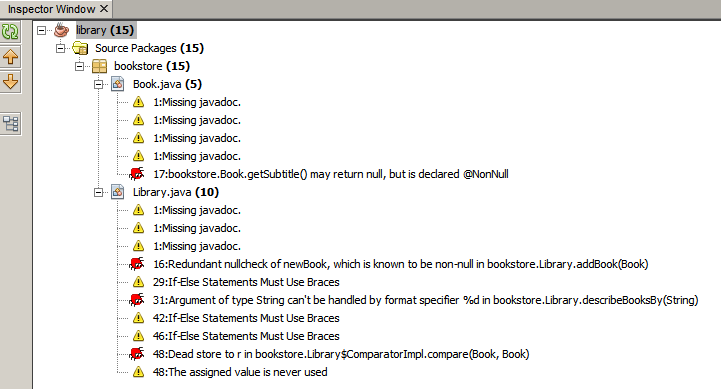
At its foundation, Java static code analysis operates through three key mechanisms: syntax parsing, control flow analysis, and rule evaluation. Tools like SonarQube use Abstract Syntax Trees (ASTs) to traverse code structure, while others leverage bytecode analysis (e.g., SpotBugs) to inspect compiled artifacts. Each mechanism serves a distinct purpose: syntax parsing ensures grammatical correctness, control flow analysis maps execution paths, and rule evaluation applies predefined checks (e.g., "Avoid empty catch blocks").
The power of these tools lies in their customizability. Teams can configure severity levels, suppress false positives, or extend rule sets to match internal standards. For example, a financial services firm might enforce stricter rules around exception handling to prevent transaction rollback failures, while a startup might prioritize performance metrics like method complexity. The ability to tailor analysis to domain-specific risks is what makes Java static code analysis a scalable solution across industries.
Key Benefits and Crucial Impact
Java static code analysis delivers measurable improvements in three critical areas: security, maintainability, and performance. Security benefits are immediate—tools like FindSecBugs can detect OWASP Top 10 vulnerabilities (e.g., cross-site scripting, insecure deserialization) before they’re exploited. Maintainability improves through automated enforcement of coding standards, reducing "knowledge silos" where only a few developers understand legacy code. Performance gains come from identifying inefficient algorithms or redundant computations early in the development cycle.
The financial impact of neglecting Java static code analysis is often underestimated. A 2022 study by SonarSource found that teams using static analysis tools reported 30% fewer production defects and 25% faster release cycles. The cost of fixing a critical bug post-deployment can exceed $10,000, whereas static analysis catches it for pennies during development. For enterprises with millions of lines of Java code, the ROI is undeniable.
— Martin Fowler
"Static analysis is the canary in the coal mine of software quality. It doesn’t replace testing, but it does replace a lot of painful debugging."
Major Advantages
- Early Defect Detection: Identifies issues like null pointer exceptions or resource leaks before they cause runtime failures, reducing mean time to resolution (MTTR).
- Security Hardening: Scans for hardcoded secrets, insecure cryptographic practices, and compliance violations (e.g., GDPR, PCI DSS).
- Standardization Enforcement: Ensures consistency across large codebases by enforcing naming conventions, cyclomatic complexity limits, and design patterns.
- Technical Debt Reduction: Flags outdated APIs, deprecated methods, or anti-patterns that accumulate over time, making refactoring more manageable.
- Performance Optimization: Highlights inefficient loops, excessive object creation, or suboptimal data structures, enabling proactive tuning.
Comparative Analysis
| Tool | Key Strengths |
|---|---|
| SonarQube | Comprehensive metrics (duplication, complexity), plugin ecosystem, enterprise-grade reporting. |
| Checkstyle | Lightweight, configurable rules for code style (e.g., brace placement, indentation), IDE integration. |
| PMD | Pattern-based detection (e.g., unused variables, God Classes), custom rule development. |
| SpotBugs | Bytecode analysis for runtime issues (e.g., memory leaks, concurrency bugs), low false-positive rate. |
Future Trends and Innovations
The next frontier for Java static code analysis lies in AI augmentation. Tools are increasingly using machine learning to predict defect-prone code regions or suggest refactorings based on historical patterns. For instance, GitHub’s CodeQL employs semantic analysis to detect vulnerabilities in complex logic that traditional rules miss. Another trend is deeper integration with DevOps, where static analysis results trigger automated rollbacks or block merges via pull request gates.
Beyond technical advancements, the industry is shifting toward "shift-left security," where static analysis becomes a non-negotiable part of the SDLC. Frameworks like Snyk now offer unified platforms combining static analysis, dependency scanning, and container security. As Java evolves with Project Valhalla (value types) and GraalVM optimizations, static analysis tools will need to adapt—whether by supporting new language features or analyzing native-compiled code paths.
Conclusion
Java static code analysis is no longer optional—it’s a competitive necessity. The tools exist, the benefits are quantifiable, and the alternatives (reactive debugging, security breaches) are far costlier. The challenge for teams isn’t adopting these tools but integrating them seamlessly into workflows without sacrificing velocity. Start with a pilot project, automate the feedback loop, and gradually expand coverage. The result? Fewer outages, fewer vulnerabilities, and code that stands the test of time.
For developers, the message is clear: static analysis isn’t about catching mistakes—it’s about writing better code from the first line. And in an era where software quality directly impacts business outcomes, that’s a mindset worth adopting.
Comprehensive FAQs
Q: Can Java static code analysis detect all types of bugs?
A: No. Static analysis excels at finding syntax errors, design flaws, and security vulnerabilities, but it cannot detect runtime issues like race conditions or heap corruption. These require dynamic analysis or formal verification. The key is using static analysis as a complementary tool alongside testing.
Q: How do I choose between SonarQube and Checkstyle for my project?
A: SonarQube is ideal for teams needing deep code quality metrics and security scanning, while Checkstyle is lighter and better suited for enforcing style guides. If your priority is maintainability and security, SonarQube is the safer choice. For pure formatting, Checkstyle suffices.
Q: Will static analysis slow down my CI/CD pipeline?
A: Not significantly if configured properly. Modern tools like SonarScanner are optimized for parallel execution and incremental analysis. A well-tuned pipeline can process static analysis in under 5 minutes, with caching further reducing overhead. The trade-off is minimal compared to the long-term benefits.
Q: Can static analysis tools false-positive too often?
A: Yes, especially with complex rules. Most tools allow suppression of false positives or rule customization. For example, you can exclude test classes or adjust severity thresholds. The goal is to strike a balance—eliminate noise while retaining actionable insights.
Q: How does static analysis handle third-party libraries?
A: Tools like Snyk and OWASP Dependency-Check integrate static analysis with dependency scanning. They flag vulnerable libraries (e.g., Log4j) and suggest updates or mitigations, bridging the gap between code and external risks.
Q: Is static analysis only for Java, or can it be used with other languages?
A: Static analysis is language-agnostic. Tools like CodeQL support Java, Python, JavaScript, and more. The principles remain the same: parse the code, apply rules, and report findings. Cross-language analysis is increasingly common in polyglot microservices architectures.
Leave a Comment
Comments are moderated before appearing. The data you submit is processed according to the Privacy Policy of versiliasolutions.oneagency.co.