How JavaScript Static Code Analysis Transforms Modern Development
Table of Contents
- The Complete Overview of JavaScript Static Code Analysis
- Historical Background and Evolution
- Core Mechanisms: How It Works
- Key Benefits and Crucial Impact
- Major Advantages
- Comparative Analysis
- Future Trends and Innovations
- Conclusion
- Comprehensive FAQs
- Q: How does JavaScript static code analysis differ from dynamic analysis?
- Q: Can static analysis replace manual code reviews?
- Q: What are the limitations of JavaScript static code analysis?
- Q: How do I choose between ESLint, TypeScript, and SonarJS?
- Q: Can static analysis detect all security vulnerabilities?
JavaScript static code analysis isn’t just another tool in a developer’s arsenal—it’s a paradigm shift in how code is evaluated, secured, and optimized. Unlike runtime inspections or manual reviews, this approach dissects source code before execution, exposing hidden flaws, enforcing consistency, and predicting behavioral risks without a single line running. The implications are profound: fewer production bugs, faster onboarding, and infrastructure that scales with intent, not guesswork.
Yet, despite its critical role in modern workflows, many teams underutilize static analysis, treating it as a checkbox rather than a collaborative process. The gap between theoretical benefits and practical implementation often stems from misconceptions—whether it’s assuming tools like ESLint are limited to linting or overlooking how TypeScript’s type system integrates with deeper analysis. The reality is far more nuanced: static code analysis in JavaScript isn’t monolithic; it’s a spectrum of techniques, from lightweight syntax checks to advanced control-flow analysis, each serving distinct purposes.
What follows is a deep dive into the mechanics, impact, and evolving landscape of JavaScript static code analysis—how it works under the hood, why it matters beyond security, and where the field is headed. The goal isn’t to prescribe a single toolchain but to equip teams with the knowledge to wield these techniques strategically.

The Complete Overview of JavaScript Static Code Analysis
JavaScript static code analysis refers to the systematic examination of source code without executing it, leveraging abstract syntax trees (ASTs), control-flow graphs, and semantic rules to identify issues, enforce patterns, and optimize logic. Unlike dynamic analysis—where code runs in a sandboxed environment—static analysis operates on the code’s structure, making it faster, scalable, and capable of catching problems that would otherwise slip through runtime checks. This includes everything from syntax errors and style violations to potential memory leaks, security vulnerabilities (e.g., prototype pollution), and performance anti-patterns.The power of this approach lies in its preemptive nature. By catching issues early, teams reduce the cost of fixes by orders of magnitude—debugging a logic error in production can cost 100x more than catching it during static review. Tools like ESLint, SonarJS, and custom AST-based analyzers have democratized this process, integrating seamlessly into CI/CD pipelines. However, the effectiveness hinges on two factors: the granularity of the analysis (e.g., whether it examines data flows or just syntax) and the context in which rules are applied (e.g., project-specific conventions vs. universal security standards).
Historical Background and Evolution
The roots of JavaScript static code analysis trace back to the early 2000s, when tools like JSLint (created by Douglas Crockford in 2002) introduced the concept of automated code scrutiny. Initially, these tools focused on enforcing coding standards—a reaction to JavaScript’s permissive nature and the rise of spaghetti code in browser-based applications. JSLint’s strict rules (e.g., banning `eval`) reflected Crockford’s philosophy that code should be "readable and maintainable," a sentiment that would later underpin modern static analysis.The turning point came with Node.js’s adoption in 2009, which shifted JavaScript from a client-side language to a full-fledged backend ecosystem. As applications grew in complexity, so did the need for deeper analysis. ESLint (2013) emerged as a configurable alternative to JSLint, allowing teams to define custom rules via plugins. Concurrently, TypeScript (2012) introduced static typing, which, when combined with tools like `tsc --noEmit`, enabled compile-time analysis—effectively treating JavaScript (or JSX) as a statically typed language. This fusion of linting and type checking laid the groundwork for modern JavaScript static code analysis, where tools now handle everything from security scanning to architectural pattern enforcement.
Core Mechanisms: How It Works
At its core, JavaScript static code analysis relies on three key components: parsing, semantic analysis, and rule evaluation. The process begins with parsing, where the source code is converted into an Abstract Syntax Tree (AST)—a hierarchical representation of the code’s structure. Tools like Babel’s parser or Acorn break down JavaScript into nodes (e.g., `VariableDeclaration`, `FunctionExpression`), enabling precise traversal. For example, an AST node for `const x = 5` would include metadata about `x`’s scope, type (if inferred), and potential side effects.Semantic analysis then enriches the AST with contextual information, such as variable scopes, function signatures, and control-flow paths. This step is where tools like ESLint’s `eslint-plugin-security` can detect vulnerabilities like prototype pollution by tracking property assignments across the AST. Advanced analyzers (e.g., Facebook’s Infer or Microsoft’s CodeQL) go further, building control-flow graphs to model execution paths and identify unreachable code or race conditions. The final stage involves rule evaluation, where predefined or custom rules (e.g., "disallow `console.log` in production") are applied to the annotated AST, generating warnings or errors.
Key Benefits and Crucial Impact
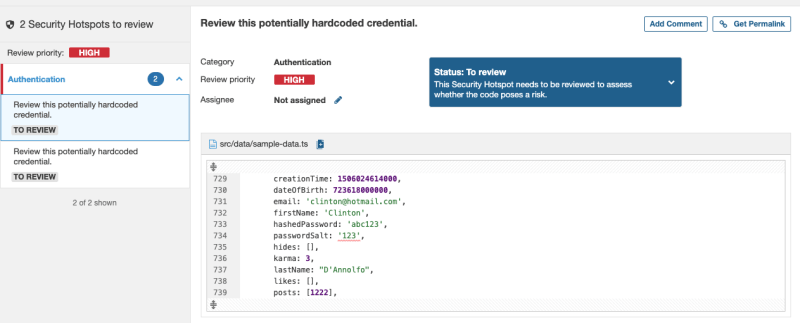
The value of JavaScript static code analysis extends beyond bug prevention—it reshapes how teams collaborate, scale, and innovate. By automating repetitive reviews, it frees developers to focus on high-level design, while simultaneously reducing the cognitive load of maintaining consistency across large codebases. The impact is measurable: companies using static analysis report 30–50% fewer production bugs and 20% faster onboarding for new developers, thanks to enforced conventions and documented patterns.Yet, the most compelling argument lies in its role as a force multiplier for security. In an era where supply-chain attacks (e.g., via `npm` dependencies) and injection flaws dominate headlines, static analysis acts as the first line of defense. Tools like Dependabot and Snyk integrate static scanning into dependency checks, while custom analyzers can flag hardcoded secrets or unsafe API calls before they reach deployment. The shift from reactive security (patching after breaches) to proactive static code analysis is one of the most significant trends in modern software engineering.
> "Static analysis isn’t about catching every possible bug—it’s about catching the ones that matter, before they matter." — Dan Luu, Software Engineer
Major Advantages
- Early Bug Detection: Identifies syntax errors, logical flaws, and anti-patterns before runtime, reducing debugging time by up to 70%.
- Enforced Consistency: Standardizes code style, naming conventions, and architecture across teams, improving readability and maintainability.
- Security Hardening: Detects vulnerabilities like SQL injection, XSS, and prototype pollution by analyzing data flows and API usage.
- Performance Optimization: Flags inefficient algorithms (e.g., nested loops) or memory leaks by profiling AST patterns.
- Scalability: Integrates into CI/CD pipelines, enabling automated reviews for thousands of lines of code without manual effort.
Comparative Analysis
| Tool/Technique | Strengths |
|---|---|
| ESLint | Highly configurable, plugin ecosystem for linting and formatting. Best for enforcing style and basic best practices. |
| TypeScript (tsc) | Static typing with compile-time checks. Catches type-related errors and enables better IDE support. |
| SonarJS | Deep code quality analysis with security and duplication detection. Integrates with SonarQube for enterprise use. |
| Custom AST Analyzers (e.g., Babel Plugins) | Unlimited flexibility for project-specific rules. Requires deeper JavaScript knowledge to implement. |
Future Trends and Innovations
The next frontier for JavaScript static code analysis lies in AI-assisted static analysis and cross-language integration. Tools like GitHub’s CodeQL are already using machine learning to infer potential vulnerabilities from code patterns, while projects like Meta’s Infer apply static analysis to both JavaScript and native codebases. Another emerging trend is real-time static analysis, where tools like WebStorm’s built-in ESLint provide instant feedback during development, blurring the line between static and dynamic analysis.Additionally, the rise of WebAssembly (WASM) and edge computing will demand static analysis techniques that span multiple languages and execution environments. JavaScript’s role as a bridge between frontend and backend means static analysis tools will need to evolve from single-language scanners to multi-language ecosystems, ensuring consistency across microservices and serverless architectures.
Conclusion
JavaScript static code analysis is no longer optional—it’s a cornerstone of efficient, secure, and scalable development. The tools and techniques available today offer a spectrum of capabilities, from lightweight linting to advanced security scanning, each serving a critical role in the software lifecycle. The key to leveraging these tools effectively lies in strategic integration: pairing them with clear conventions, automating them in CI/CD, and treating them as collaborative aids rather than gatekeepers.As the JavaScript ecosystem evolves, so too will the sophistication of static analysis. Teams that embrace these techniques today will be best positioned to navigate tomorrow’s challenges—whether it’s securing decentralized applications, optimizing edge functions, or ensuring consistency across polyglot architectures.
Comprehensive FAQs
Q: How does JavaScript static code analysis differ from dynamic analysis?
Static analysis examines code without execution, focusing on syntax, structure, and potential issues based on the AST. Dynamic analysis, by contrast, runs the code in a controlled environment (e.g., unit tests or fuzzers) to observe behavior. Static analysis is faster and scalable for large codebases but may miss runtime-specific bugs (e.g., race conditions in multithreaded apps).
Q: Can static analysis replace manual code reviews?
No, but it augments them. Static analysis handles repetitive checks (e.g., linting, security scans) efficiently, while manual reviews excel at evaluating architectural decisions, edge cases, and business logic. The ideal workflow combines both: use static tools for consistency and automation, then reserve human judgment for high-impact areas.
Q: What are the limitations of JavaScript static code analysis?
Static analysis struggles with:
- Dynamic behavior: Code that relies on runtime conditions (e.g., `eval`, dynamic imports) may produce false positives/negatives.
- False positives: Overly strict rules can generate noise, requiring tuning.
- Context awareness: Some rules (e.g., "disallow `Array.prototype.map`") may not account for project-specific needs.
Q: How do I choose between ESLint, TypeScript, and SonarJS?
Use:
- ESLint for lightweight linting/formatting.
- TypeScript for type safety and compile-time checks (especially in large projects).
- SonarJS for deep code quality and security analysis (ideal for enterprises).
Q: Can static analysis detect all security vulnerabilities?
No. Static analysis excels at finding known patterns (e.g., XSS, SQLi) but may miss:
- Zero-day exploits.
- Vulnerabilities requiring runtime context (e.g., side-channel attacks).
- Issues in third-party libraries (though tools like Dependabot help mitigate this).
Leave a Comment
Comments are moderated before appearing. The data you submit is processed according to the Privacy Policy of versiliasolutions.oneagency.co.