How Top Builders Risk Insurance Products Protect High-Stakes Construction Projects
Table of Contents
- The Complete Overview of Leading Builders Risk Insurance Products
- Historical Background and Evolution
- Core Mechanisms: How It Works
- Key Benefits and Crucial Impact
- Major Advantages
- Comparative Analysis
- Future Trends and Innovations
- Conclusion
- Comprehensive FAQs
- Q: What’s the difference between builders risk insurance and general liability insurance?
- Q: Can builders risk insurance cover delays caused by labor strikes?
- Q: How do insurers determine premiums for builders risk policies?
- Q: Are there builders risk insurance products for residential vs. commercial projects?
- Q: What happens if a project is abandoned before completion?
The collapse of a multi-million-dollar infrastructure project in Florida last year didn’t just halt construction—it triggered a domino effect of financial losses, delayed timelines, and legal disputes. Behind the scenes, the absence of robust leading builders risk insurance products left stakeholders exposed to liabilities that could have been mitigated with the right coverage. This isn’t an isolated incident. From high-rise developments in Dubai to renewable energy farms in Texas, construction projects of all scales face existential risks: fire, windstorms, equipment failure, or even cyberattacks on blueprints. The difference between a project’s survival and its downfall often hinges on whether the right insurance was in place—and how effectively it was deployed.
Builders risk insurance isn’t just another line item in a budget; it’s a strategic safeguard that determines whether a project can weather unforeseen disasters. Yet, many contractors and developers still treat it as an afterthought, assuming standard policies will suffice. The reality is far more nuanced. Leading builders risk insurance products are engineered to address the unique vulnerabilities of modern construction—from modular housing to smart infrastructure—where traditional coverage falls short. The question isn’t if a project needs this protection, but how to select the right product from an increasingly complex market.
What separates the best builders risk insurance from the rest? It’s not just about premiums or deductibles, but about the insurer’s ability to integrate with project management systems, provide real-time risk assessments, and offer tailored solutions for emerging threats like supply chain disruptions or AI-driven design errors. The following analysis breaks down how these leading builders risk insurance products function, their critical advantages, and what the future holds for an industry where stakes are higher than ever.
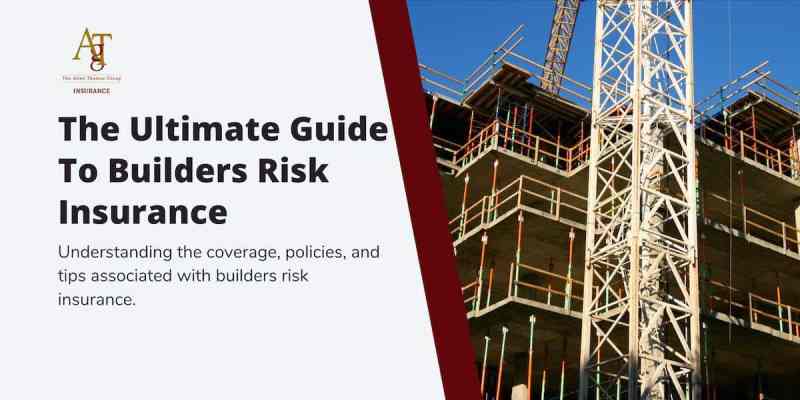
The Complete Overview of Leading Builders Risk Insurance Products
Builders risk insurance is the backbone of financial resilience in construction, but not all policies are created equal. The leading builders risk insurance products on the market today are designed to adapt to the evolving complexities of global construction—whether it’s a skyscraper in Singapore or a wind farm in the North Sea. These products go beyond basic property damage coverage to include specialized protections for delays, equipment breakdowns, and even environmental liabilities. The shift toward high-performance builders risk insurance reflects a broader industry recognition that one-size-fits-all policies no longer cut it.At the core, these top-tier builders risk insurance solutions are structured to align with the project’s lifecycle, from groundbreaking to handover. They often incorporate features like automatic coverage extensions for phased developments, embedded cyber risk protections for digital construction tools, and even parametric triggers for natural disasters (e.g., predefined payouts for hurricane-force winds). The most advanced insurers now leverage data analytics to preempt risks before they materialize, offering clients predictive insights that traditional underwriting simply can’t match. This isn’t just insurance—it’s a dynamic risk management ecosystem.
Historical Background and Evolution
The origins of builders risk insurance trace back to the early 20th century, when industrialization accelerated construction projects and the need for financial safeguards became apparent. Early policies were rudimentary, covering only physical property damage from fire or theft, with limited scope for other perils. However, the post-World War II boom in infrastructure and commercial real estate forced insurers to innovate. By the 1970s, builders risk policies began incorporating broader protections, including vandalism and equipment breakdowns, as construction methods grew more sophisticated.The real transformation came in the 1990s and 2000s, when globalization and technological advancements redefined project risks. The rise of leading builders risk insurance products during this period reflected a paradigm shift: insurers started offering modular coverage tailored to specific project types, such as high-rise buildings, bridges, or renewable energy installations. Today, the market is dominated by insurers that combine traditional underwriting with cutting-edge tools like AI-driven risk modeling and blockchain for claims transparency. The evolution from static policies to dynamic, project-specific solutions underscores how builders risk insurance has become indispensable in an era where construction projects are more interconnected—and more vulnerable—than ever.
Core Mechanisms: How It Works
The mechanics of leading builders risk insurance products revolve around three pillars: risk assessment, coverage customization, and claims efficiency. Before a policy is issued, insurers conduct a detailed evaluation of the project’s scope, location, and potential hazards. This isn’t a one-time process; top insurers continuously monitor risks using real-time data feeds, satellite imagery, and even drone surveillance to adjust coverage dynamically. For example, a policy for a coastal development might automatically increase flood coverage during hurricane season.Coverage itself is highly adaptable. Unlike standard policies that treat all construction projects equally, advanced builders risk insurance allows clients to select from a menu of add-ons, such as:
Claims processing is another area where leading builders risk insurance products excel. Many insurers now use AI to expedite claims, reducing the time from incident to payout from weeks to days. Some even offer advance payments for critical repairs, ensuring projects stay on schedule without financial strain.
Key Benefits and Crucial Impact
The financial and operational impact of leading builders risk insurance products cannot be overstated. For contractors and developers, these policies act as a force multiplier, enabling them to take on larger, more complex projects with confidence. Without them, even a single catastrophic event—such as a fire, equipment failure, or legal dispute—could wipe out years of profit and derail careers. The data speaks for itself: projects with robust builders risk coverage see a 30% reduction in financial losses from unforeseen events, according to industry reports.Beyond the balance sheet, these high-performance builders risk insurance solutions foster trust among stakeholders. Investors, lenders, and partners are far more likely to back a project when they know it’s protected by a top-tier insurer. This intangible but critical benefit often determines whether a project secures financing in the first place. In an era where construction budgets are stretched thin and margins are razor-thin, the right insurance isn’t just a safety net—it’s a competitive advantage.
"The most successful construction firms don’t just mitigate risk—they turn it into a strategic asset. Leading builders risk insurance products are the difference between a project that survives a crisis and one that becomes a liability." — James Carter, Global Head of Construction Risk at Marsh McLennan
Major Advantages
- Comprehensive Coverage: Unlike generic policies, leading builders risk insurance products include protections for soft costs (e.g., architectural fees, permits) and intangible assets (e.g., digital blueprints, proprietary designs).
- Flexible Policy Terms: Coverage can be adjusted mid-project to reflect changes in scope, location, or risk exposure, ensuring no gaps in protection.
- Risk Mitigation Tools: Insurers often provide pre-loss services, such as security audits or equipment inspections, to reduce the likelihood of claims.
- Global Reach: Top providers offer coverage across jurisdictions, including high-risk regions with specialized endorsements for political instability or regulatory changes.
- Claims Transparency: Blockchain-based policies ensure immutable records of claims, reducing fraud and accelerating payouts.
Comparative Analysis
Not all builders risk insurance products are equal. The table below compares four of the most widely recognized providers based on key criteria:| Provider | Strengths |
|---|---|
| Chubb | Industry-leading coverage for high-value projects; strong cyber liability add-ons; global underwriting expertise. |
| AXA XL | Specialized parametric triggers for natural disasters; AI-driven risk modeling; modular policy structures. |
| Travelers | Affordable premiums for mid-sized projects; robust equipment breakdown coverage; streamlined claims process. |
| Hiscox | Tailored solutions for SMEs; innovative use of telematics for equipment monitoring; flexible deductible options. |

Future Trends and Innovations
The next decade will see builders risk insurance products evolve into even more sophisticated risk management platforms. Insurers are already experimenting with predictive analytics that forecast delays before they occur, using machine learning to analyze historical project data, weather patterns, and supply chain disruptions. Another emerging trend is insurtech partnerships, where insurers collaborate with construction tech firms to embed risk assessments directly into project management software (e.g., Procore, Autodesk).Sustainability will also reshape builders risk insurance. As green construction methods gain traction, insurers are developing ESG-focused policies that reward projects for using eco-friendly materials or energy-efficient designs, often at lower premiums. Meanwhile, the rise of modular and prefabricated construction is prompting insurers to create specialized coverage for off-site manufacturing risks, such as transport damage or assembly errors. The future of builders risk insurance isn’t just about protecting assets—it’s about enabling the next generation of construction innovation.
Conclusion
The stakes in modern construction have never been higher, and the leading builders risk insurance products available today reflect that reality. These aren’t just policies; they’re strategic tools that allow contractors, developers, and investors to navigate uncertainty with confidence. The insurers leading this space are those that combine deep industry expertise with technological innovation, offering coverage that’s as dynamic as the projects it protects.For any stakeholder involved in construction—whether you’re a general contractor, a project financier, or an owner—ignoring the power of advanced builders risk insurance is a gamble. The projects that thrive in the years ahead will be those that treat risk management not as an afterthought, but as the foundation of their success.
Comprehensive FAQs
Q: What’s the difference between builders risk insurance and general liability insurance?
A: Builders risk insurance specifically covers property damage and losses during construction, while general liability insurance addresses third-party claims (e.g., bodily injury, property damage by the contractor). The former protects the project itself; the latter protects against external lawsuits.
Q: Can builders risk insurance cover delays caused by labor strikes?
A: Standard policies typically exclude labor disputes, but some leading builders risk insurance products offer optional endorsements for delay coverage, including those caused by strikes or supply chain bottlenecks. Always confirm with your insurer.
Q: How do insurers determine premiums for builders risk policies?
A: Premiums are calculated based on the project’s value, location, construction type, duration, and risk factors (e.g., proximity to flood zones). Insurers may also consider the contractor’s claims history and the use of advanced safety protocols.
Q: Are there builders risk insurance products for residential vs. commercial projects?
A: Yes. Residential builders risk policies often focus on single-family homes or small developments, while commercial builders risk insurance products are tailored for large-scale projects like office buildings, hospitals, or infrastructure. Coverage limits and exclusions vary significantly.
Q: What happens if a project is abandoned before completion?
A: Most leading builders risk insurance products include an "abandonment clause" that specifies whether coverage continues if work halts. Some policies may require proof of intent to resume, while others offer partial reimbursement for completed work.
Leave a Comment
Comments are moderated before appearing. The data you submit is processed according to the Privacy Policy of versiliasolutions.oneagency.co.