Lease vs Buy Analysis Excel: The Definitive Financial Toolkit
Table of Contents
- The Complete Overview of Lease vs Buy Analysis Excel
- Historical Background and Evolution
- Core Mechanisms: How It Works
- Key Benefits and Crucial Impact
- Major Advantages
- Comparative Analysis
- Future Trends and Innovations
- Conclusion
- Comprehensive FAQs
- Q: How do I build a basic lease vs buy analysis excel from scratch?
- Q: Can a lease vs buy analysis excel account for inflation?
- Q: What’s the best discount rate to use in a lease vs buy analysis?
- Q: How do tax laws affect lease vs buy decisions?
- Q: Is leasing ever better than buying for long-term assets?
Financial decisions aren’t just about spreadsheets—they’re about precision. Whether you’re evaluating a commercial vehicle fleet, office equipment, or real estate, the choice between leasing and buying hinges on a meticulously constructed lease vs buy analysis excel. The difference between a costly miscalculation and a strategic advantage often lies in how you structure the variables: depreciation rates, interest costs, residual values, and tax implications. Ignore these nuances, and even seasoned professionals overlook hidden expenses that erode profitability.
Take the case of a mid-sized logistics firm that leased 50 trucks over five years, only to realize mid-contract that their total cost exceeded buying—after factoring in maintenance, early termination fees, and fuel surcharges. The mistake? Relying on a generic lease vs buy calculator without customizing for their specific operational wear-and-tear. The lesson? A lease vs buy analysis excel isn’t just a template; it’s a dynamic model that adapts to your industry’s unique financial DNA.
Yet, for all its power, Excel remains the most underutilized tool in financial decision-making. Most professionals stop at surface-level comparisons—ignoring the ripple effects of lease incentives, balloon payments, or the tax advantages of Section 179 deductions. This guide dismantles those oversights, providing a step-by-step framework to build a lease vs buy analysis excel that accounts for every financial variable, from opportunity costs to inflation-adjusted projections.
The Complete Overview of Lease vs Buy Analysis Excel
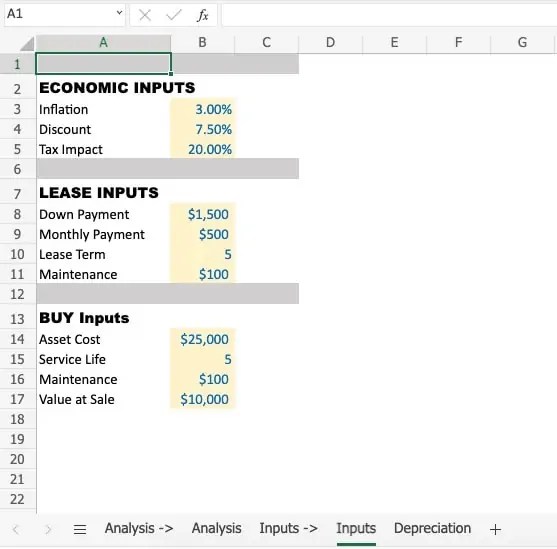
A lease vs buy analysis excel is more than a side-by-side cost comparison—it’s a strategic financial model that simulates the long-term implications of asset ownership versus leasing. At its core, the tool quantifies two primary financial pathways: the capital expenditure (CapEx) route of purchasing an asset outright, versus the operational expenditure (OpEx) model of leasing. The former locks in ownership but burdens the balance sheet with depreciation and maintenance; the latter shifts those costs into periodic payments while preserving capital flexibility.
The most effective lease vs buy analysis excel templates integrate five critical layers: initial acquisition costs, financing terms (if buying), lease terms (if leasing), operational costs (insurance, repairs, upgrades), and tax benefits (depreciation schedules, lease incentives). Without these layers, the analysis risks being a static snapshot rather than a predictive tool. For instance, a leased asset might appear cheaper upfront, but when you factor in the present value of future maintenance costs or the lost opportunity to reinvest depreciation savings, the equation flips. The key is to avoid siloed thinking—every decision in the model should trace back to your organization’s broader financial goals.
Historical Background and Evolution
The concept of leasing as a financial alternative to buying emerged in the early 20th century, driven by the need for businesses to access equipment without the burden of ownership. Early leases were often informal agreements, but the post-World War II era saw the rise of structured leasing programs, particularly in industries like aviation and manufacturing. The 1980s marked a turning point with the introduction of tax-oriented leases, such as leveraged leases, which allowed lessors to pass tax benefits to lessees—a strategy that dominated until regulatory changes in the 1990s.
Today, the lease vs buy analysis excel has evolved into a sophisticated discipline, fueled by advancements in financial software and regulatory frameworks like FASB’s ASC 842, which reclassified operating leases as liabilities on balance sheets. This shift forced companies to reassess their leasing strategies, as hidden liabilities became visible. Modern lease vs buy analysis excel models now incorporate stochastic simulations to account for volatility in interest rates, asset residual values, and inflation—tools that were unimaginable a decade ago. The result? A tool that’s as much about risk management as it is about cost analysis.
Core Mechanisms: How It Works
A lease vs buy analysis excel operates on three interconnected pillars: cash flow projections, present value calculations, and scenario testing. The cash flow component tracks every expense associated with ownership (depreciation, insurance, repairs) or leasing (monthly payments, end-of-lease fees, maintenance allowances). Present value calculations then discount these future costs to today’s dollars, using your organization’s weighted average cost of capital (WACC) as the discount rate. This step is critical—ignoring time value of money can lead to decisions that appear cost-effective but are financially unsound in the long run.
Scenario testing is where the model becomes a strategic asset. By adjusting variables like lease term length, interest rates, or asset useful life, you can simulate how external factors—such as a recession or a surge in maintenance costs—would impact the decision. For example, a 3-year lease might seem optimal at 5% interest, but if rates spike to 8%, the total lease cost could exceed buying. The lease vs buy analysis excel doesn’t just answer the question of "what’s cheaper?"—it reveals the conditions under which each option becomes preferable.
Key Benefits and Crucial Impact
The value of a lease vs buy analysis excel extends beyond mere cost comparison—it’s a catalyst for better capital allocation. For businesses, it clarifies whether leasing frees up cash for higher-return investments or if buying aligns with long-term asset utilization. For individuals, it resolves the age-old dilemma of whether to finance a car or lease it, factoring in personal tax brackets and driving habits. The tool’s impact is magnified in industries with high asset turnover, such as technology or healthcare, where obsolescence risks make leasing an attractive option.
Yet, the most significant benefit lies in risk mitigation. A well-constructed lease vs buy analysis excel exposes hidden costs—like the opportunity cost of tying up capital in an asset that could be deployed elsewhere—or the potential for lease penalties that aren’t immediately obvious. It also aligns financial decisions with broader corporate strategies, such as whether to maintain a lean balance sheet or invest in fixed assets for competitive advantage.
"A lease vs buy decision isn’t just about the numbers—it’s about the story those numbers tell. The best financial models don’t just compare costs; they reveal the narrative of your business’s future."
— David Peterson, CFO of a Fortune 500 logistics firm
Major Advantages
- Dynamic Customization: Unlike static calculators, a lease vs buy analysis excel allows you to input industry-specific variables, such as equipment downtime rates or regional tax incentives.
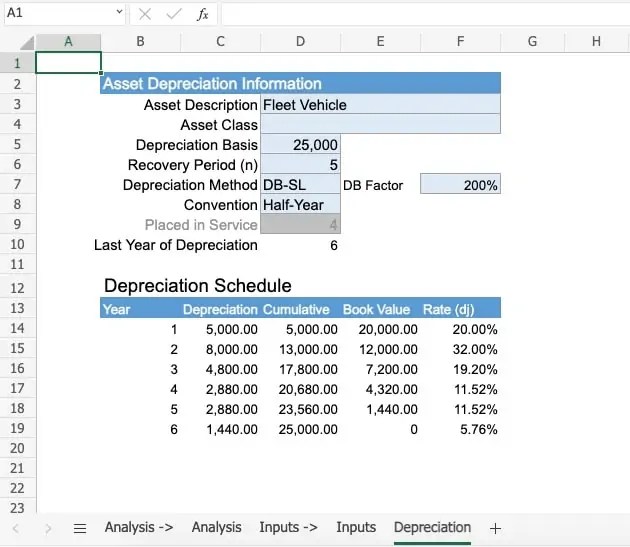
- Tax Optimization: The model can incorporate depreciation schedules (MACRS, straight-line) and lease incentives, ensuring you capture every available tax benefit.
- Scenario Flexibility: Test "what-if" scenarios, such as early lease termination or asset resale values, to anticipate financial risks.
- Integration with ERP Systems: Advanced lease vs buy analysis excel templates can feed into accounting software, automating financial reporting and compliance.
- Long-Term Forecasting: By projecting cash flows over 5, 10, or even 20 years, the model identifies whether leasing or buying aligns with your organization’s growth trajectory.
Comparative Analysis
| Factor | Buying | Leasing |
|---|---|---|
| Upfront Cost | High (purchase price + down payment) | Low (security deposit + first month’s payment) |
| Ownership | Full (equity builds over time) | None (asset returns to lessor at end of term) |
| Maintenance Responsibility | Full (operational costs borne by owner) | Partial (varies by lease agreement) |
| Tax Benefits | Depreciation deductions (Section 179, MACRS) | Lease payments may be deductible (operating lease) |
Future Trends and Innovations
The next generation of lease vs buy analysis excel will be driven by artificial intelligence and predictive analytics. Machine learning algorithms can now analyze historical lease data to forecast residual values with greater accuracy, reducing the guesswork in long-term projections. Additionally, blockchain is poised to revolutionize lease agreements by creating immutable records of terms, payments, and asset conditions—eliminating disputes and streamlining audits. For businesses, this means lease vs buy analysis excel models that aren’t just reactive but predictive, adjusting in real-time to market shifts.
Another emerging trend is the integration of environmental, social, and governance (ESG) factors into financial models. Companies are increasingly evaluating the carbon footprint of asset ownership versus leasing, as well as the social implications of supporting local manufacturers (by buying) versus global lessors. The lease vs buy analysis excel of tomorrow will likely include sustainability metrics, helping organizations align financial decisions with their ESG commitments.
Conclusion
A lease vs buy analysis excel is not a one-size-fits-all solution—it’s a bespoke financial instrument that must be tailored to your organization’s unique context. The most critical step isn’t selecting a template but understanding the variables that move the needle in your industry. Whether you’re a CFO weighing a $50 million equipment lease or a small business owner deciding between buying a delivery van, the principles remain the same: rigor in data input, transparency in assumptions, and flexibility in scenario testing.
As financial landscapes evolve—with rising interest rates, supply chain disruptions, and shifting regulatory environments—the lease vs buy analysis excel will remain indispensable. The difference between a mediocre model and a transformative one lies in its ability to adapt. Start with a robust framework, refine it with real-world data, and let it guide your asset decisions with confidence.
Comprehensive FAQs
Q: How do I build a basic lease vs buy analysis excel from scratch?
A: Begin by listing all costs associated with buying (purchase price, financing, maintenance) and leasing (monthly payments, fees, insurance). Use Excel’s NPV function to calculate present values, then compare total costs over the asset’s useful life. For a template, start with a free financial model from resources like Vertex42 or adapt a lease vs buy calculator from accounting firms.
Q: Can a lease vs buy analysis excel account for inflation?
A: Yes. Input an annual inflation rate (e.g., 2%) and adjust future costs (maintenance, lease payments) by multiplying them by (1 + inflation rate)^n. For example, a $5,000 annual maintenance cost in Year 3 with 2% inflation becomes $5,000 (1.02)^3 = $5,306.04.
Q: What’s the best discount rate to use in a lease vs buy analysis?
A: Use your organization’s weighted average cost of capital (WACC) or a hurdle rate based on the risk of the asset. For personal decisions (e.g., car leasing), a conservative rate like 7–10% is common. Higher-risk assets (e.g., tech equipment) may warrant a 12–15% discount rate.
Q: How do tax laws affect lease vs buy decisions?
A: Tax benefits can significantly tilt the scale. For example, Section 179 deductions allow businesses to expense up to $1.22 million in equipment purchases (2024 limit), reducing taxable income. Lease payments may also be deductible as operating expenses, but consult a tax advisor to ensure compliance with ASC 842 or local regulations.
Q: Is leasing ever better than buying for long-term assets?
A: Leasing can be optimal for assets with rapid obsolescence (e.g., servers, medical devices) or when capital preservation is critical. However, for assets with high residual value (e.g., commercial real estate, heavy machinery), buying often yields better long-term cost savings. Always run a 10+ year projection to account for depreciation and reinvestment opportunities.
Leave a Comment
Comments are moderated before appearing. The data you submit is processed according to the Privacy Policy of versiliasolutions.oneagency.co.