Why Legacy Data Migration Is the Silent Backbone of Digital Transformation
Table of Contents
- The Complete Overview of Legacy Data Migration
- Historical Background and Evolution
- Core Mechanisms: How It Works
- Key Benefits and Crucial Impact
- Major Advantages
- Comparative Analysis
- Future Trends and Innovations
- Conclusion
- Comprehensive FAQs
- Q: How long does a typical legacy data migration take?
- Q: What’s the most common reason for migration failures?
- Q: Can we migrate legacy data without downtime?
- Q: How do we ensure migrated data remains compliant?
- Q: What industries benefit most from legacy data migration?
- Q: What’s the cost of not migrating legacy data?
Legacy data migration isn’t a buzzword—it’s the quiet revolution behind every seamless transition from decades-old mainframes to cloud-native architectures. Organizations spend billions on digital transformation, yet the real bottleneck isn’t new technology; it’s the ability to extract, clean, and repurpose data trapped in obsolete systems. A single misstep during migration can erase years of institutional knowledge, disrupt operations, or expose vulnerabilities. The stakes are higher than ever, yet most discussions treat legacy data migration as an afterthought, not the strategic imperative it truly is.
The paradox is striking: companies invest heavily in cutting-edge analytics and AI, only to realize their predictive models are built on incomplete or corrupted datasets. A 2023 Gartner study revealed that 68% of enterprise data migration failures stem from poor legacy system integration—not technical limitations, but flawed planning. The question isn’t if you’ll need to migrate legacy data, but when, and whether you’ll do it proactively or under duress.
What separates thriving enterprises from those left scrambling? It’s not just the tools or the timeline—it’s understanding that legacy data migration is less about moving files and more about preserving institutional memory while future-proofing operations. The process demands a blend of technical precision, business acumen, and risk management. And the consequences of getting it wrong? Downtime, compliance violations, or worse—irreversible data loss.

The Complete Overview of Legacy Data Migration
Legacy data migration refers to the systematic extraction, transformation, and loading (ETL) of data from outdated systems—whether it’s COBOL-based mainframes, proprietary databases, or even paper records digitized decades ago—into modern platforms. The goal isn’t just to transfer data; it’s to recontextualize it for new use cases, from regulatory compliance to AI-driven insights. Without this migration, organizations risk becoming hostages to their own history, unable to leverage data as a strategic asset.The complexity lies in the heterogeneity of legacy systems. A 1990s ERP might store financial records in a flat-file format, while a 2000s CRM uses a relational database with custom schemas. Migrating these silos requires more than just technical expertise—it demands domain knowledge to ensure data integrity. For example, a healthcare provider migrating patient records from a legacy HIS system must validate that every field (from dosage units to billing codes) adheres to HIPAA standards in the new environment. The margin for error is razor-thin.
Historical Background and Evolution
The roots of legacy data migration trace back to the 1980s, when businesses first faced the "Y2K problem"—the fear that date formats (like "01/01/99" vs. "01/01/1999") would crash systems at midnight on January 1, 2000. While many organizations patched their systems, few anticipated the long-term implications of stranded data. As cloud computing emerged in the 2010s, the need to migrate legacy data became urgent, but the tools lagged behind the demand. Early ETL solutions were clunky, requiring manual scripting for even simple transformations.Today, the landscape has shifted dramatically. The rise of hybrid cloud architectures and data mesh principles has forced enterprises to rethink migration strategies. Instead of a one-time "big bang" transfer, modern approaches favor incremental, phased migrations that minimize disruption. For instance, a bank might first migrate transactional data to a cloud data warehouse while keeping core ledger systems on-premises until a full overhaul is feasible. This evolutionary approach reflects a deeper truth: legacy data migration isn’t a project; it’s a continuous process.
Core Mechanisms: How It Works
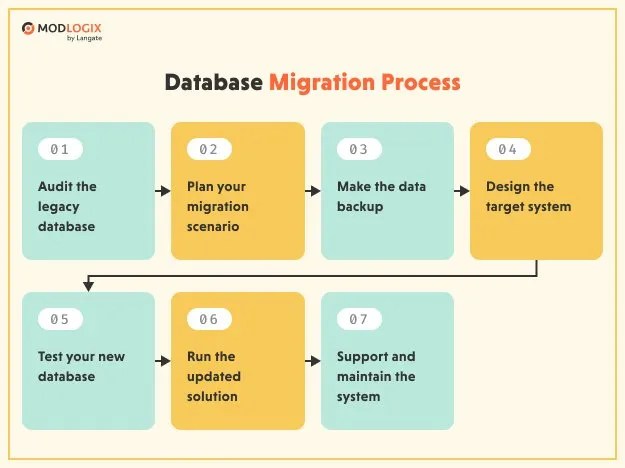
At its core, legacy data migration follows a structured workflow, though the execution varies by complexity. The first phase is discovery and assessment, where organizations catalog every data source—from active databases to archived tapes—and evaluate its business value. Not all legacy data is worth migrating; some may be redundant, while other datasets (like customer interactions from a defunct call center system) could hold untapped insights.The next step is data profiling, where tools like Talend or Informatica scan for anomalies—duplicate records, encoding mismatches, or missing metadata. This is where most migrations fail: assuming data is "clean" when it’s not. For example, a manufacturing firm might discover that 30% of its legacy inventory data is in a non-standard format, requiring custom parsing logic. The transformation phase then applies business rules—such as converting legacy currency codes to ISO standards—to ensure compatibility with modern systems. Finally, the validation phase uses checksums, sample testing, and reconciliation reports to confirm data accuracy.
Key Benefits and Crucial Impact
Legacy data migration isn’t just a technical exercise—it’s a strategic lever for unlocking value trapped in outdated systems. Organizations that approach it as a cost center miss the bigger picture: migrated data becomes the fuel for AI, real-time analytics, and compliance reporting. The impact extends beyond IT; it touches finance (reducing manual reconciliation), operations (automating workflows), and even customer experience (personalizing interactions with historical context).The business case is compelling. A 2022 McKinsey analysis found that companies migrating legacy data to modern platforms saw a 22% increase in operational efficiency within 18 months, primarily due to reduced downtime and improved data accessibility. Yet, the benefits aren’t just quantitative. Consider a retail chain that migrated its decades-old loyalty program data: by integrating it with a new CRM, they identified high-value customer segments they’d previously overlooked, boosting cross-sell revenue by 15%.
"Legacy data isn’t dead weight—it’s dormant capital. The organizations that learn to unlock it will outmaneuver competitors stuck in the past." — Dr. Elena Vasquez, Chief Data Officer, Deloitte Consulting
Major Advantages
- Cost Savings: Legacy systems often require expensive maintenance contracts and proprietary hardware. Migrating to cloud-based or open-source alternatives can cut IT costs by 40–60% over five years.
- Regulatory Compliance: Outdated systems may lack audit trails or encryption. Modern platforms support GDPR, CCPA, and industry-specific regulations (e.g., PCI DSS for payments) out of the box.
- Scalability: Legacy databases hit performance walls as data volumes grow. Cloud-native solutions like Snowflake or BigQuery scale dynamically, handling petabytes without manual intervention.
- Data Democratization: Migrated data can be accessed via self-service tools (e.g., Tableau, Power BI), empowering non-technical teams to derive insights without IT gatekeeping.
- Future-Proofing: AI and machine learning models thrive on clean, structured data. Migrating legacy datasets ensures they can be repurposed for predictive analytics, NLP, or automated decision-making.
Comparative Analysis
| Traditional Migration (Big Bang) | Modern Phased Migration |
|---|---|
|
|
|
|
| Best for: Small-scale migrations with low business impact. | Best for: Enterprise-wide transformations requiring agility. |
Future Trends and Innovations
The next frontier in legacy data migration lies in automation and AI-driven transformation. Tools like IBM’s Watson Data Platform now use natural language processing to auto-detect data relationships in unstructured legacy formats (e.g., scanned documents or email archives). Meanwhile, data fabric architectures—like those from Cloudera or Dataiku—are emerging as the next evolution, dynamically mapping legacy data to modern pipelines without manual coding.Another trend is quantum-resistant encryption, which will become critical as organizations migrate sensitive legacy data to cloud environments. With cyber threats evolving, future-proofing migration strategies must account for post-quantum cryptography standards (e.g., NIST’s CRYSTALS-Kyber). Additionally, edge computing is reducing latency for real-time migrations, particularly in industries like healthcare or manufacturing where legacy OT (Operational Technology) systems must integrate with IoT data streams.
Conclusion
Legacy data migration is no longer optional—it’s a non-negotiable step in the digital era. The organizations that treat it as a tactical exercise will find themselves playing catch-up, while those that embed it into their long-term strategy will gain a competitive edge. The key lies in balancing speed with precision: rushing migrations risk data corruption, but delays can leave businesses vulnerable to obsolescence.The good news? The tools and methodologies are more advanced than ever. From AI-assisted profiling to hybrid cloud deployment models, the path forward is clearer. The question remains: Will your organization lead the charge, or will it be left behind by data it failed to migrate?
Comprehensive FAQs
Q: How long does a typical legacy data migration take?
A typical enterprise migration spans 6–24 months, depending on data volume, system complexity, and business priorities. Phased migrations can reduce timelines to 3–12 months by focusing on high-value datasets first. The longest phase is often data profiling and cleansing, which can account for 30–40% of the total effort.
Q: What’s the most common reason for migration failures?
The top cause is underestimating data quality issues. Many organizations assume legacy data is "good enough" for migration, only to discover hidden corruption, duplicate records, or incompatible formats during testing. A 2023 Forrester report found that 55% of failures stem from poor data governance—lack of metadata documentation or unclear ownership.
Q: Can we migrate legacy data without downtime?
Yes, but it requires a dual-write strategy: running both legacy and new systems in parallel while syncing data via APIs or change data capture (CDC) tools. Companies like Capital One use this approach to migrate core banking systems with <1% downtime. The trade-off is higher short-term costs for redundancy, but the payoff is seamless continuity.
Q: How do we ensure migrated data remains compliant?
Compliance hinges on three pillars: (1) Data mapping—documenting how legacy fields align with new system requirements (e.g., GDPR’s "right to erasure"), (2) Automated validation—using tools like Great Expectations to test for regulatory gaps, and (3) Audit trails—maintaining logs of all data transformations. For example, a financial services firm migrating SEC-regulated data must retain immutable records of every field change for seven years.
Q: What industries benefit most from legacy data migration?
Industries with high regulatory scrutiny or data-driven operations see the most ROI. Top sectors include:
- Healthcare (HIPAA-compliant patient records migration).
- Finance (core banking systems to cloud-native platforms).
- Manufacturing (integrating legacy ERP with IoT sensor data).
- Retail (unifying decades-old POS data with modern CRM).
Q: What’s the cost of not migrating legacy data?
The hidden costs add up:
- Technical debt: Legacy systems require 3x more maintenance than modern alternatives.
- Innovation lag: Without clean data, AI/ML initiatives stall (e.g., a retail chain unable to predict demand due to siloed inventory data).
- Compliance risks: Fines for non-compliance (e.g., GDPR penalties up to 4% of global revenue).
- Talent drain: Younger engineers avoid working on outdated tech stacks.
Leave a Comment
Comments are moderated before appearing. The data you submit is processed according to the Privacy Policy of versiliasolutions.oneagency.co.