Crafting a Winning Marketing Plan and Budget: Strategy Meets Precision
Table of Contents
- The Complete Overview of Marketing Plan and Budget
- Historical Background and Evolution
- Core Mechanisms: How It Works
- Key Benefits and Crucial Impact
- Major Advantages
- Comparative Analysis
- Future Trends and Innovations
- Conclusion
- Comprehensive FAQs
- Q: How do I determine the right budget allocation across channels?
- Q: What’s the difference between a marketing plan and a budget?
- Q: Can small businesses create an effective marketing plan and budget?
- Q: How often should I review and adjust my marketing plan and budget?
- Q: What’s the biggest mistake companies make with their marketing plan and budget?
A marketing plan and budget isn’t just a financial spreadsheet—it’s the blueprint for converting ideas into revenue. Without it, even the most innovative campaigns risk becoming costly experiments. The distinction between a reactive ad-hoc approach and a strategic marketing plan and budget lies in alignment: every dollar spent must ladder up to measurable business objectives, whether that’s brand awareness, lead generation, or customer retention.
The challenge isn’t scarcity of resources; it’s the misallocation of them. Companies often overinvest in channels that don’t move the needle while underfunding those with proven ROI. The solution? A marketing plan and budget that treats data as a compass, not just a report. It’s where creative vision meets cold-hard analytics, ensuring creativity doesn’t outpace fiscal responsibility.
Yet, the most effective marketing plan and budget isn’t static. It evolves with market shifts, consumer behavior, and technological advancements. The brands that thrive aren’t those with the deepest pockets, but those that allocate resources with surgical precision—balancing short-term gains against long-term brand equity.
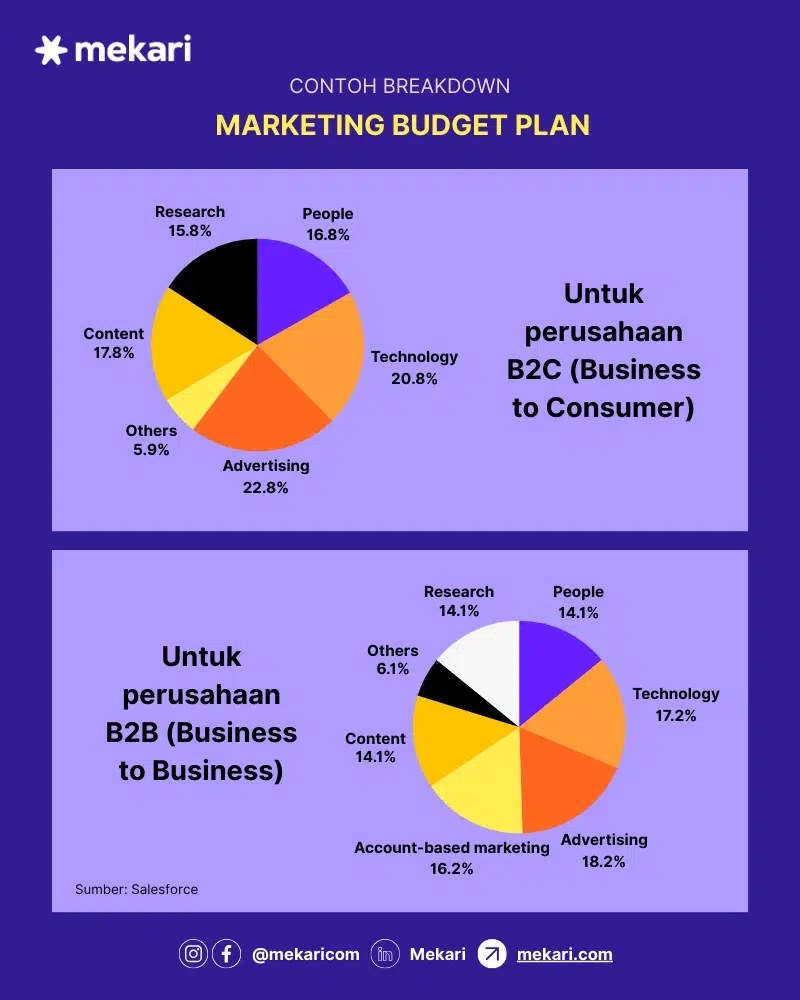
The Complete Overview of Marketing Plan and Budget
A well-constructed marketing plan and budget begins with a ruthless prioritization of goals. Too many businesses start with a blank sheet and a wishlist of initiatives, only to realize mid-campaign that their budget can’t support the ambition. The first step is clarity: Define whether the primary objective is acquisition, retention, or brand building. Each requires a distinct allocation of resources, from ad spend to content production.
The marketing plan and budget then translates these goals into actionable tactics, assigning costs to each phase—research, execution, and measurement. This isn’t just about numbers; it’s about sequencing. For example, a $50,000 budget allocated 60% to paid ads and 40% to content may yield quick wins, but if the content fails to nurture leads, the ads become a leaky funnel. The marketing plan and budget must account for dependencies: what comes first, what scales, and what gets phased out.
Historical Background and Evolution
The concept of a structured marketing plan and budget emerged in the mid-20th century as businesses moved away from intuition-driven spending. Early adopters like Procter & Gamble pioneered the idea of allocating budgets based on market research, shifting from "spray and pray" to data-informed decisions. The rise of digital marketing in the 1990s further refined this approach, introducing real-time analytics that allowed for dynamic adjustments—something impossible with traditional media.
Today, the marketing plan and budget has become a hybrid of art and science. While legacy brands relied on seasonal promotions and broad demographic targeting, modern strategies leverage AI-driven audience segmentation, predictive modeling, and cross-channel attribution. The evolution hasn’t eliminated guesswork entirely, but it has replaced it with probabilistic forecasting. The best marketing plan and budget now integrates historical performance with emerging trends, ensuring agility without abandoning discipline.
Core Mechanisms: How It Works
The backbone of any marketing plan and budget is the SWOT analysis—identifying strengths, weaknesses, opportunities, and threats—followed by a gap analysis to determine where resources should be concentrated. For instance, a brand with strong organic social media engagement but weak paid search may reallocate funds to Google Ads while maintaining content marketing. The budget isn’t set in stone; it’s a living document that adjusts based on performance data.
Execution hinges on three pillars: channel selection, creative allocation, and measurement frameworks. A marketing plan and budget might allocate 30% to performance marketing (PPC, affiliate), 25% to brand-building (video, influencer), and 20% to retention (email, loyalty programs). The remaining 25% acts as a contingency for testing new channels. The key is balancing efficiency (quick wins) with effectiveness (long-term growth). Without this equilibrium, even a well-funded marketing plan and budget can fail.
Key Benefits and Crucial Impact
A disciplined marketing plan and budget doesn’t just optimize spend—it transforms marketing from a cost center into a revenue driver. Companies that align their budgets with strategic goals see a 20–30% improvement in campaign ROI, according to Gartner. The discipline also reduces waste: unplanned ad spend can inflate budgets by 15–25%, while a structured marketing plan and budget ensures every dollar works toward a defined outcome.
Beyond financial efficiency, a marketing plan and budget enhances cross-departmental collaboration. Sales, product, and marketing teams can align on KPIs, ensuring that lead quality matches the sales pipeline’s capacity. Without this alignment, miscommunication leads to overpromising or underserving customers—both of which erode trust and profitability.
"A marketing plan and budget is like a financial diet: it forces you to confront what’s working, what’s not, and where to redirect resources before the problem becomes unsustainable."
— Philippe de Comarmond, former CMO of L’Oréal
Major Advantages
- Resource Optimization: Eliminates ad-hoc spending by tying every dollar to a measurable objective (e.g., CAC, LTV, brand lift).
- Data-Driven Decision Making: Uses historical performance and real-time analytics to shift budgets dynamically (e.g., pausing underperforming campaigns).
- Scalability: Allows for phased investments—testing new markets or channels without overcommitting upfront.
- Stakeholder Alignment: Provides a single source of truth for executives, agencies, and internal teams to track progress.
- Risk Mitigation: Includes contingency funds (10–15% of total budget) for unforeseen opportunities or crises.
Comparative Analysis
| Traditional Marketing Plan and Budget | Modern Data-Driven Approach |
|---|---|
| Static annual allocations; adjustments made quarterly. | Agile monthly/weekly reallocations based on real-time KPIs. |
| Focus on broad demographics (e.g., "women 25–34"). | Hyper-segmentation using first/third-party data (e.g., behavioral triggers, lookalike modeling). |
| Measurement relies on vanity metrics (impressions, likes). | Attribution modeling (multi-touch, incremental lift testing). |
| Budget silos (e.g., separate teams for paid, organic, PR). | Unified budget with cross-channel synergy (e.g., retargeting from organic content). |

Future Trends and Innovations
The next frontier for marketing plan and budget lies in predictive analytics and automation. Tools like Google’s Performance Max and Meta’s Advantage+ Campaigns are already reducing manual optimization, but the real shift will come from AI-driven budget allocation. Machine learning can now forecast which channels will deliver the highest ROI weeks in advance, allowing brands to pre-allocate funds before campaigns launch.
Another emerging trend is the integration of sustainability metrics into the marketing plan and budget. Consumers and regulators alike demand transparency on carbon footprints and ethical sourcing. Brands that allocate even 5% of their budget to "green marketing" (e.g., carbon-neutral ad campaigns) will gain a competitive edge, as 66% of global consumers are willing to pay more for sustainable brands (Nielsen). The marketing plan and budget of tomorrow won’t just track revenue—it will track impact.
Conclusion
A marketing plan and budget is more than a spreadsheet; it’s a strategic framework that separates high-performing brands from those stuck in reactive cycles. The brands that succeed in the next decade will be those that treat their marketing plan and budget as a dynamic asset—one that evolves with consumer behavior, technological shifts, and market conditions. The goal isn’t perfection; it’s iterative improvement.
Start with clarity on objectives, then build a marketing plan and budget that reflects both ambition and pragmatism. Test, measure, and reallocate relentlessly. And above all, ensure every dollar spent moves the needle—not just today, but in the long term.
Comprehensive FAQs
Q: How do I determine the right budget allocation across channels?
A: Begin with a 70/30 split between performance (PPC, affiliate, SEO) and brand-building (content, influencer, PR). Use historical data to adjust: if 60% of conversions come from paid search, allocate 40–50% of the budget there, but reserve 20% for testing new channels. Always include a 10–15% contingency for unplanned opportunities.
Q: What’s the difference between a marketing plan and a budget?
A: The marketing plan outlines strategies, tactics, and timelines (e.g., "Launch a LinkedIn campaign in Q3 to target C-level prospects"). The budget assigns financial resources to each tactic (e.g., "$20K for ads, $10K for content"). A marketing plan and budget combines both into a cohesive framework.
Q: Can small businesses create an effective marketing plan and budget?
A: Absolutely. Start with a minimal viable budget (e.g., $5K–$10K/month) and focus on 1–2 high-impact channels (e.g., Google Ads + email nurturing). Use free tools like Google Analytics and Meta’s Business Suite to track performance. The key is prioritization—even $1K/month can drive results if spent on the right audience.
Q: How often should I review and adjust my marketing plan and budget?
A: Monthly for active campaigns, quarterly for strategic pivots. If using agile tools (e.g., Google Ads Smart Bidding), adjust bids and budgets weekly. Major reviews should align with business cycles (e.g., pre-holiday season, product launches). The marketing plan and budget should never be set-and-forget.
Q: What’s the biggest mistake companies make with their marketing plan and budget?
A: Over-optimizing for short-term vanity metrics (e.g., likes, clicks) at the expense of long-term value (e.g., customer lifetime value). Another common error is failing to account for seasonality—allocating the same budget to summer and winter campaigns when demand fluctuates. Always stress-test your marketing plan and budget against worst-case scenarios.
Leave a Comment
Comments are moderated before appearing. The data you submit is processed according to the Privacy Policy of versiliasolutions.oneagency.co.