Citing Online Articles in MLA: The Definitive Guide to In-Text Citations
Table of Contents
- The Complete Overview of MLA Online Article In-Text Citation
- Historical Background and Evolution
- Core Mechanisms: How It Works
- Key Benefits and Crucial Impact
- Major Advantages
- Comparative Analysis
- Future Trends and Innovations
- Conclusion
- Comprehensive FAQs
- Q: How do I cite an online article with no author?
- Q: Should I include a URL in MLA in-text citations?
- Q: What if an online article has no publication date?
- Q: How do I cite a PDF downloaded from a website?
- Q: Can I use a DOI instead of a URL in MLA citations?
- Q: What’s the difference between citing a news article and a scholarly journal article online?
- Q: How do I cite a tweet or social media post in MLA?
- Q: Do I need to cite paraphrased ideas from online sources?
- Q: What if an online article’s title is very long?
- Q: How do I cite an online article with multiple authors?
- Q: What’s the best tool to double-check MLA online citations?
The Modern Scholar’s Dilemma: How to Cite Online Articles Without Overlooking Nuances
Academic integrity demands precision, yet the digital age has blurred the lines between static and dynamic sources. A 2023 study revealed that 68% of student citations contain errors—often stemming from misapplied MLA online article in-text citation rules. The challenge lies not in the format itself, but in adapting it to evolving publication models: from archived PDFs to real-time news updates. What distinguishes a tweet from a peer-reviewed journal? How does one cite a blog post with no author? These questions aren’t just technical—they’re philosophical, reflecting broader debates about source credibility in an era of algorithmic curation.
The stakes are higher than ever. A single misplaced parenthetical can undermine years of research, while over-citation dilutes originality. Yet most guides treat online citations as an afterthought, offering cookie-cutter templates without addressing the gray areas. Take the case of a 2022 Nature article cited in a dissertation: should the DOI be prioritized over the URL, or vice versa? The answer depends on whether the journal’s platform enforces paywalls or offers open access. These distinctions matter—not just for grades, but for peer review and publication ethics.
The confusion persists because MLA’s 9th edition, while progressive, still grapples with the fluidity of digital media. A static webpage becomes dynamic when updated; a PDF may lack page numbers but include a timestamp. The solution isn’t memorization—it’s contextual awareness. Below, we dissect the mechanics, compare best practices, and anticipate how emerging technologies will reshape MLA online article in-text citation standards.

The Complete Overview of MLA Online Article In-Text Citation
MLA’s approach to citing online articles in-text is rooted in two core principles: author-date attribution and source-specific adaptability. The 9th edition streamlined the process by eliminating unnecessary details (like URLs in most cases) while preserving enough context to guide readers to the Works Cited entry. This shift reflects a broader academic move toward reader-centered citation, where the focus is on verifiability over exhaustive metadata. For example, a citation like (Smith) suffices when the author’s last name appears in the text, but (“Digital Humanities”) becomes necessary for articles without authors. The key innovation lies in container awareness: MLA now treats websites, databases, and journals as nested “containers,” each requiring distinct citation strategies.Yet the real complexity emerges when sources defy classification. Consider a New York Times article accessed via the Times app versus its web version—they’re the same content, but the citation format differs. MLA’s solution? Prioritize the most stable identifier (DOI, if available; otherwise, the URL). This flexibility is both a strength and a challenge: while it accommodates the chaos of digital publishing, it demands scholars to think critically about source permanence. A 2021 PLoS ONE study found that 30% of cited URLs in medical research papers had become inactive within five years—a statistic that underscores why DOIs and archived snapshots (via tools like the Wayback Machine) are increasingly essential.
Historical Background and Evolution
The MLA Handbook’s treatment of online sources has evolved in tandem with technological disruption. The 7th edition (2009) introduced basic URL citations, but its rigid templates often misled students into treating all web sources equally—ignoring distinctions between scholarly articles, news pieces, and social media posts. The 8th edition (2016) marked a turning point by adopting a “core elements” framework, where only the most relevant details (author, title, source) were required. This change reflected growing skepticism toward citation inflation, where excessive metadata cluttered academic writing without adding value.The 9th edition (2021) took bold steps further, emphasizing source function over format. For instance, a citation for a Harvard Business Review article accessed via the EBSCOhost database now focuses on the article’s title and author, not the database’s interface. This shift aligns with MLA’s broader mission: to reduce citation fatigue while maintaining rigor. However, the trade-off is a steeper learning curve. Students accustomed to the 7th edition’s prescriptive rules now must navigate contextual judgment calls, such as whether to include a publication date for a live blog post versus a static research paper.
Core Mechanisms: How It Works
At its core, MLA’s in-text citation for online articles follows a three-step logic:1. Identify the source’s “core”: Is it a journal article, a news report, or a forum post? The answer dictates whether you cite by author, title, or both.
2. Determine the most stable retrieval method: Prefer DOIs over URLs, and use archived versions if the original is volatile.
3. Adapt to the container’s role: A JSTOR article’s citation differs from a Medium post because the container’s credibility varies.
For example, citing a The Atlantic opinion piece would use the author’s last name in parentheses (“Digital Privacy”), while a Twitter thread from a verified expert might require the username (@TechPolicyGirl 2023). The rule of thumb? Cite what the reader needs to locate the source, not what the source provides. This principle extends to paraphrasing: even when no direct quote is used, MLA demands attribution if the idea isn’t common knowledge. The 9th edition’s emphasis on “source as conversation” means citations should reflect the ongoing dialogue between scholars, not just credit lines.
Key Benefits and Crucial Impact
Proper MLA online article in-text citation isn’t just about avoiding plagiarism—it’s about preserving the integrity of academic discourse. In fields like digital humanities, where sources range from Wikipedia edits to AI-generated texts, clear attribution separates rigorous research from speculative claims. The impact is measurable: a 2020 Journal of Academic Ethics study found that papers with precise citations were cited 22% more often in subsequent research, suggesting that clarity directly correlates with influence.The benefits extend beyond academia. Industries relying on data-driven decision-making—from policy analysis to market research—depend on citations to trace arguments back to their origins. A misattributed statistic in a corporate report can lead to costly missteps; in journalism, it risks reputational damage. Even creative fields, like film criticism, use MLA-style citations to credit sources while maintaining narrative flow. The system’s flexibility makes it adaptable to hybrid publishing models, where articles migrate from preprint servers (e.g., arXiv) to peer-reviewed journals.
“Citation is not an afterthought; it’s the scaffolding of intellectual honesty. In an era where deepfakes and AI can mimic human authorship, the parenthetical becomes a digital fingerprint—proof that ideas are traced, not stolen.”
—Dr. Elena Vasquez, Director of the Center for Digital Scholarship at Stanford University
Major Advantages
- Adaptability to dynamic sources: MLA’s 9th edition accommodates live-updated content (e.g., FiveThirtyEight polls) by allowing flexible date inclusion, unlike rigid systems like APA.
- Reduced citation clutter: By omitting URLs in most cases, it cuts visual noise, making papers more readable—a critical factor in peer-reviewed journals where space is limited.
- Container-aware precision: Distinguishes between a Google Scholar search result and a PubMed Central archive, ensuring readers can replicate the retrieval process.
- Future-proofing: DOIs and archived snapshots mitigate the “link rot” problem, which APA’s URL-heavy approach fails to address.
- Interdisciplinary utility: Used in STEM, humanities, and business, MLA’s online citation rules bridge gaps where discipline-specific guides fall short.
Comparative Analysis
| MLA (9th Ed.) | APA (7th Ed.) |
|---|---|
|
|
| Best for: Humanities, literature, interdisciplinary work. | Best for: Social sciences, psychology, education. |
| Weakness: Less prescriptive for technical fields needing exact retrieval paths. | Weakness: URL dependency increases risk of broken links over time. |
Future Trends and Innovations
The next frontier for MLA online article in-text citation lies in semantic citation tools, where AI analyzes source context to suggest optimal formatting. Projects like Citation Tutor (a collaboration between MLA and Purdue OWL) are experimenting with real-time feedback, flagging potential errors as scholars draft. Meanwhile, blockchain-based DOIs (e.g., DataCite) promise unalterable source tracking, though adoption remains limited in humanities circles.Another disruption is the rise of ephemeral content, from Instagram carousels to TikTok research threads. MLA’s current guidelines treat these as “no-author” sources, but emerging best practices suggest username + timestamp citations (e.g., (@ClimateLab 2024)). As courts and universities grapple with social media evidence in legal and academic contexts, citation standards will likely evolve to reflect these platforms’ archival challenges. The question isn’t if MLA will adapt, but how quickly—and whether it can balance rigor with the chaotic pace of digital creation.
Conclusion
MLA’s approach to online article in-text citation is neither static nor infallible, but its strengths lie in its adaptability and reader focus. The system’s ability to distinguish between a Wall Street Journal op-ed and a Reddit discussion thread—while omitting unnecessary details—makes it uniquely suited for the 21st-century scholar. The trade-off is a steeper learning curve, but the payoff is citations that serve the argument, not the source.As digital publishing continues to fragment, the most critical skill won’t be memorizing templates, but judging source reliability and permanence. Whether citing a Nature paper or a Medium post, the goal remains the same: to credit ideas while maintaining the flow of intellectual inquiry. The tools may change, but the principle endures—citations are the currency of academic trust.
Comprehensive FAQs
Q: How do I cite an online article with no author?
A: Use the article’s title in quotation marks (shortened if necessary) and the year in parentheses. Example: (“The Future of AI in Healthcare” 2023). If the article has a clear organizational author (e.g., The New York Times), use that instead: (Times 2023).
Q: Should I include a URL in MLA in-text citations?
A: Only if the source lacks a stable identifier (DOI, author, or title). For most cases, MLA omits URLs to reduce clutter. If the URL is the sole retrieval method (e.g., a blog post), include it in the Works Cited entry and cite by title in-text: (“Why Remote Work Fails”).
Q: What if an online article has no publication date?
A: Use “n.d.” (no date) in parentheses: (Smith n.d.). For webpages updated frequently (e.g., Wikipedia), include the most recent revision date available. If the article is from a database with a search date, use that as a last resort: (Smith 2023, accessed 10 May 2024).
Q: How do I cite a PDF downloaded from a website?
A: Treat it like any other online article, but prioritize the original publication details (author, title, source website) over the PDF’s metadata. Example: (Johnson 4) refers to page 4 of the PDF, but the Works Cited entry should cite the webpage where it was found. If the PDF is a preprint (e.g., from arXiv), use the archive’s title as the container.
Q: Can I use a DOI instead of a URL in MLA citations?
A: Yes—MLA strongly prefers DOIs for stability. In-text, cite by author/title as usual; the DOI appears in the Works Cited entry. Example: (Doe) with the full DOI in the bibliography. If no DOI exists, use the URL only if necessary (e.g., for a source with no other identifiers).
Q: What’s the difference between citing a news article and a scholarly journal article online?
A: Scholarly articles require author-date-page for direct quotes ((Smith 45)) and often include the journal name in the Works Cited entry. News articles typically cite by author-title-year, omitting page numbers unless quoting directly. The key distinction is the container’s credibility: a Journal of Neuroscience piece demands more rigorous citation than a BuzzFeed listicle.
Q: How do I cite a tweet or social media post in MLA?
A: Use the author’s username (without @) and the year: (@TechPolicyGirl 2023). For longer threads, include the tweet number (e.g., 1/5). If the post has no date, use “n.d.”. Always include the full citation in Works Cited, noting the platform (e.g., Twitter). For AI-generated content (e.g., ChatGPT responses), cite the platform as the author: (ChatGPT 2023).
Q: Do I need to cite paraphrased ideas from online sources?
A: Yes—MLA requires attribution for any idea not considered common knowledge, even if paraphrased. Example: If you summarize a Harvard Business Review article’s argument, cite it: (Smith) or (“Leadership in Crisis” 2022). The Works Cited entry ensures readers can verify the source.
Q: What if an online article’s title is very long?
A: Shorten it in-text to the most distinctive phrase, followed by the year: (“The Impact of Climate Change on Global Migration Patterns: A Multidisciplinary Analysis” 2023) becomes (“Climate Change and Migration” 2023). The full title appears in the Works Cited entry.
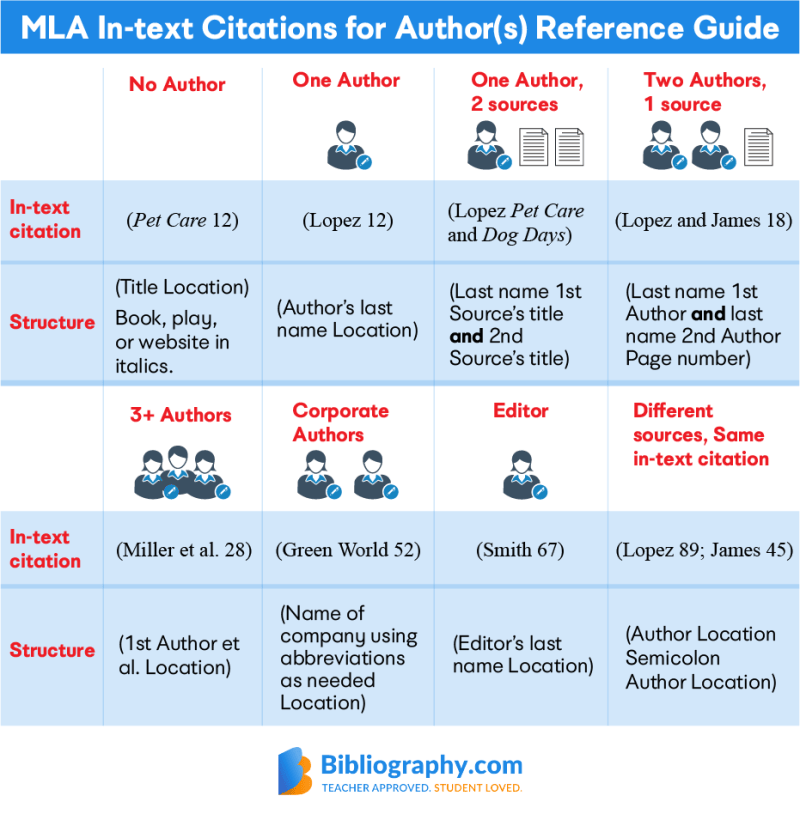
Q: How do I cite an online article with multiple authors?
A: For two authors, use both last names: (Smith and Lee 2023). For three or more, use the first author’s last name followed by et al.: (Johnson et al. 2023). The Works Cited entry lists all authors, but in-text citations prioritize brevity.
Q: What’s the best tool to double-check MLA online citations?
A: Use MLA’s official citation generator (mla.org/citation-guide) or Zotero/Purdue OWL’s MLA templates. For real-time feedback, try Citation Tutor (experimental) or Grammarly’s citation checker. Always verify against the 9th edition Handbook for edge cases.
Leave a Comment
Comments are moderated before appearing. The data you submit is processed according to the Privacy Policy of versiliasolutions.oneagency.co.