How the Morningstar Risk Rating Shapes Smarter Investment Decisions
Table of Contents
- The Complete Overview of Morningstar Risk Rating
- Historical Background and Evolution
- Core Mechanisms: How It Works
- Key Benefits and Crucial Impact
- Major Advantages
- Comparative Analysis
- Future Trends and Innovations
- Conclusion
- Comprehensive FAQs
- Q: How often is the Morningstar risk rating updated?
- Q: Can a fund’s Morningstar risk rating change significantly in a short period?
- Q: Does a higher Morningstar risk rating always mean higher potential returns?
- Q: How does Morningstar handle funds with illiquid assets (e.g., private equity, real estate)?
- Q: Is the Morningstar risk rating applicable to individual stocks or only mutual funds?
- Q: Can investors use the Morningstar risk rating to compare funds across different countries?
- Q: How does Morningstar’s risk rating differ from a fund’s Sharpe ratio?
Morningstar’s risk rating isn’t just another metric—it’s a framework that redefines how investors perceive volatility. Unlike traditional standard deviation models, which measure past fluctuations in isolation, Morningstar’s approach integrates forward-looking risk assessments, blending statistical rigor with behavioral insights. This duality makes it indispensable for both institutional asset managers and individual investors navigating uncertainty. The rating’s ability to distill complex risk profiles into a simple five-point scale (from Low to Extreme) has earned it a place in financial planning software, robo-advisors, and even regulatory disclosures.
Yet its influence extends beyond numbers. The Morningstar risk rating has become a cultural touchstone in investment circles, shaping ESG integration, retirement planning, and even media narratives about market turbulence. When a fund’s risk rating spikes, headlines follow—because investors now instinctively trust this metric as a proxy for stability. But this trust isn’t arbitrary; it’s built on decades of refinement, where Morningstar’s analysts have iterated on the model to account for liquidity risks, tail events, and even macroeconomic regime shifts. The result? A tool that doesn’t just describe risk but predicts how it might evolve.
What separates the Morningstar risk rating from competitors is its dynamic nature. While static beta coefficients or Sharpe ratios freeze risk at a single point in time, Morningstar’s system recalculates quarterly, adjusting for changes in market conditions, fund manager behavior, and even investor sentiment. This adaptability is why pension funds and endowments rely on it to benchmark their own risk-adjusted returns. But the real power lies in its accessibility: a retail investor can grasp a fund’s risk profile in seconds, while a quant can layer it into algorithmic models. The question isn’t whether the Morningstar risk rating matters—it’s how deeply it will reshape investment strategies in the next decade.

The Complete Overview of Morningstar Risk Rating
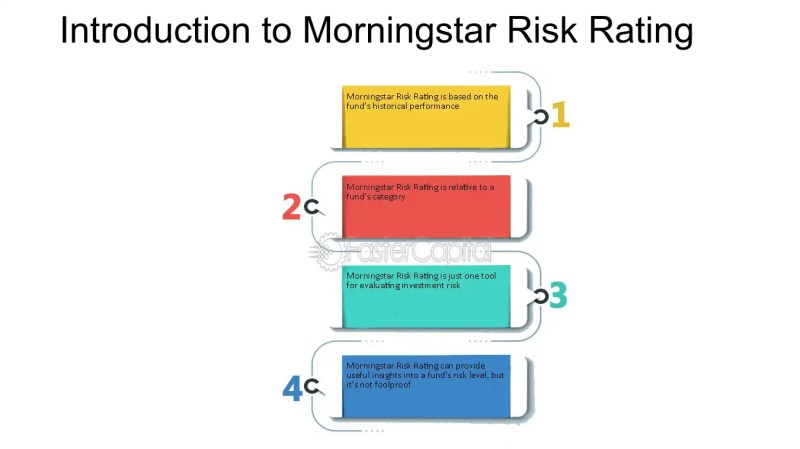
The Morningstar risk rating system is a quantitative framework designed to evaluate the potential volatility of an investment relative to its peers. Unlike traditional risk measures that focus solely on historical price swings, Morningstar’s methodology incorporates forward-looking risk factors, including asset allocation, manager discretion, and macroeconomic exposure. This holistic approach allows investors to assess not just how much a fund has moved in the past, but how it might react under stress—critical information for constructing resilient portfolios.At its core, the rating assigns funds a score from 1 (Lowest risk) to 5 (Highest risk), with intermediate categories (Low, Below Average, Average, Above Average, High) providing granularity. The scale is normalized against Morningstar’s universe of funds, ensuring comparability across asset classes. For example, a U.S. equity fund with a rating of 3 (Average) would be positioned similarly to 60% of its peers in terms of historical volatility and drawdown risk. This normalization is what makes the rating actionable: investors can quickly see if a fund’s risk profile aligns with their tolerance.
Historical Background and Evolution
The origins of the Morningstar risk rating trace back to the late 1990s, when the firm sought to address a critical gap in investor education. At the time, risk disclosures in fund prospectuses were often opaque, relying on vague terms like “moderate volatility” without concrete benchmarks. Morningstar’s early iterations of the risk rating were simple: they measured a fund’s standard deviation of returns over a three-year period and ranked it against similar funds. This approach was revolutionary because it translated statistical jargon into a digestible format, empowering investors to make apples-to-apples comparisons.However, the 2008 financial crisis exposed limitations in the model. Many funds with low historical volatility suffered severe drawdowns due to liquidity constraints or concentrated exposures. In response, Morningstar overhauled its methodology in 2010, introducing a multi-factor model that incorporated:
Core Mechanisms: How It Works
The current Morningstar risk rating is calculated using a proprietary algorithm that blends three key components:1. Historical Volatility: Standard deviation of monthly returns over the past three years, adjusted for survivorship bias.
2. Drawdown Analysis: Maximum observed loss from peak to trough, with emphasis on recovery speed.
3. Forward-Looking Factors: Macro models that estimate how the fund’s holdings might perform under stress scenarios (e.g., rising interest rates, geopolitical shocks).
The algorithm then maps these inputs onto a percentile rank within the fund’s peer group. For instance, a global equity fund with a 70th-percentile risk score would be deemed “Above Average” because 70% of comparable funds exhibit lower volatility. Crucially, the model is rebalanced quarterly to reflect changing market conditions, ensuring the rating stays current. This dynamic recalibration is what sets it apart from static risk metrics like beta, which can become obsolete as market regimes shift.
Key Benefits and Crucial Impact
The Morningstar risk rating’s most significant contribution is its ability to demystify risk for investors of all levels. For retail investors, it eliminates the guesswork in fund selection, providing a clear signal about whether a fund’s volatility aligns with their goals. Institutional investors, meanwhile, use it to stress-test portfolios and identify systemic risks before they materialize. The rating’s integration into platforms like Morningstar Direct and eMoney Advisor has also standardized risk communication across the industry, reducing misalignment between advisors and clients.Beyond individual decisions, the rating has influenced broader market behavior. Fund managers now optimize their strategies to target specific risk ratings, knowing that a “Low” rating can attract conservative investors while a “High” rating may appeal to aggressive allocators. Regulators have also taken note, with the SEC’s recent emphasis on risk disclosures partially inspired by Morningstar’s transparency framework.
“Risk is not an abstract concept—it’s the difference between a portfolio that sleeps at night and one that keeps you up. The Morningstar risk rating bridges that gap by turning data into actionable insight.”
— John Rekenthaler, Vice President of Research at Morningstar
Major Advantages
- Peer Benchmarking: Normalizes risk across asset classes, allowing direct comparisons between a U.S. bond fund and an emerging-market equity fund.
- Dynamic Adjustments: Quarterly recalibrations ensure the rating reflects current market conditions, not outdated historical data.
- Investor Alignment: The 1–5 scale is intuitive, reducing cognitive load for decision-making, especially for non-professional investors.
- Regulatory Compliance: Many funds now include the Morningstar risk rating in their disclosures to meet transparency requirements.
- ESG Integration: The model can incorporate sustainability risks (e.g., carbon exposure) into its volatility assessments, aligning with modern portfolio construction.
Comparative Analysis
| Metric | Morningstar Risk Rating | Standard Deviation (Traditional) ||--------------------------|----------------------------------------------------|---------------------------------------------|
| Time Horizon | Forward-looking (3-year rolling window) | Historical (fixed period) |
| Volatility Focus | Downside deviation + liquidity adjustments | Total volatility (upside/downside) |
| Peer Normalization | Ranked against similar funds | Absolute measure, no peer comparison |
| Update Frequency | Quarterly recalibration | Static unless manually updated |
| Investor Use Case | Risk-tolerance matching, portfolio construction | Academic analysis, backtesting |
Future Trends and Innovations
The next frontier for the Morningstar risk rating lies in artificial intelligence and alternative data. Morningstar is already experimenting with machine learning models that incorporate satellite imagery (e.g., supply chain disruptions), social media sentiment, and even weather patterns to refine risk predictions. These innovations could transform the rating from a static volatility measure into a real-time stress-testing tool, capable of flagging risks before they crystallize in markets.Another evolution will be deeper integration with environmental, social, and governance (ESG) factors. As investors demand transparency on sustainability risks, the Morningstar risk rating may expand to include metrics like climate scenario analysis or human rights exposure. This would address a growing pain point: many funds with low traditional risk ratings still face hidden ESG-related volatility. By embedding these dimensions into the core model, Morningstar could redefine what “risk” means in the 2020s.
Conclusion
The Morningstar risk rating is more than a scoring system—it’s a language that unifies investors, managers, and regulators around a common understanding of volatility. Its ability to simplify complexity has made it a staple in financial planning, while its adaptability ensures it remains relevant amid shifting market paradigms. As asset classes diversify and new risks emerge (from cyber threats to geopolitical fragmentation), the rating’s framework will need to evolve further. But its core strength—balancing rigor with accessibility—will endure, cementing its role as the gold standard for investment risk assessment.For investors, the takeaway is clear: the Morningstar risk rating isn’t just a tool for evaluating funds—it’s a lens through which to view the entire investment landscape. Whether you’re a retiree preserving capital or a growth investor chasing returns, understanding this metric is the first step toward building a portfolio that aligns with your risk tolerance and objectives.
Comprehensive FAQs
Q: How often is the Morningstar risk rating updated?
The rating is recalculated quarterly to reflect changes in market conditions, fund holdings, and historical performance. This ensures the score remains current and predictive rather than a snapshot of past volatility.
Q: Can a fund’s Morningstar risk rating change significantly in a short period?
Yes, especially if the fund undergoes major portfolio shifts (e.g., shifting from stocks to bonds) or experiences a sharp drawdown. The model is sensitive to both structural changes and performance deviations, which can lead to rapid reclassifications.
Q: Does a higher Morningstar risk rating always mean higher potential returns?
Not necessarily. While higher-risk funds may offer higher returns over time, the rating reflects volatility, not expected performance. A fund with a “High” risk rating could underperform a “Low” risk fund if its bets don’t pay off, or if it suffers from liquidity constraints.
Q: How does Morningstar handle funds with illiquid assets (e.g., private equity, real estate)?
The model incorporates liquidity risk adjustments, downgrading funds that hold significant illiquid exposures. For example, a private equity fund might receive a higher risk rating not just for its volatility but for the potential delays in realizing losses during market downturns.
Q: Is the Morningstar risk rating applicable to individual stocks or only mutual funds?
The rating is primarily designed for funds, but Morningstar extends similar risk assessments to stocks via its “Risk” metric in stock reports. This uses a comparable methodology, though with adjustments for single-stock idiosyncratic risk.
Q: Can investors use the Morningstar risk rating to compare funds across different countries?
Yes, but with caveats. The rating normalizes risk within each fund’s peer group, so a “Low” risk rating in Japan may reflect different market conditions than in the U.S. Investors should cross-check with local volatility benchmarks when making international comparisons.
Q: How does Morningstar’s risk rating differ from a fund’s Sharpe ratio?
The Sharpe ratio measures risk-adjusted returns (excess return per unit of volatility), while the Morningstar risk rating focuses solely on volatility relative to peers. A fund could have a high Sharpe ratio but a “High” risk rating if its returns are volatile, or a low Sharpe ratio with a “Low” risk rating if it underperforms despite stability.
Leave a Comment
Comments are moderated before appearing. The data you submit is processed according to the Privacy Policy of versiliasolutions.oneagency.co.